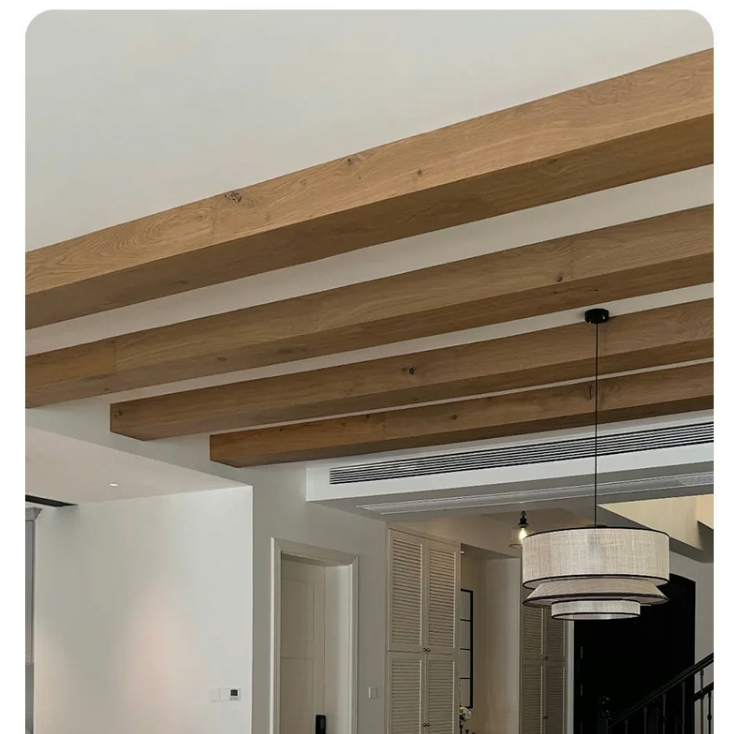
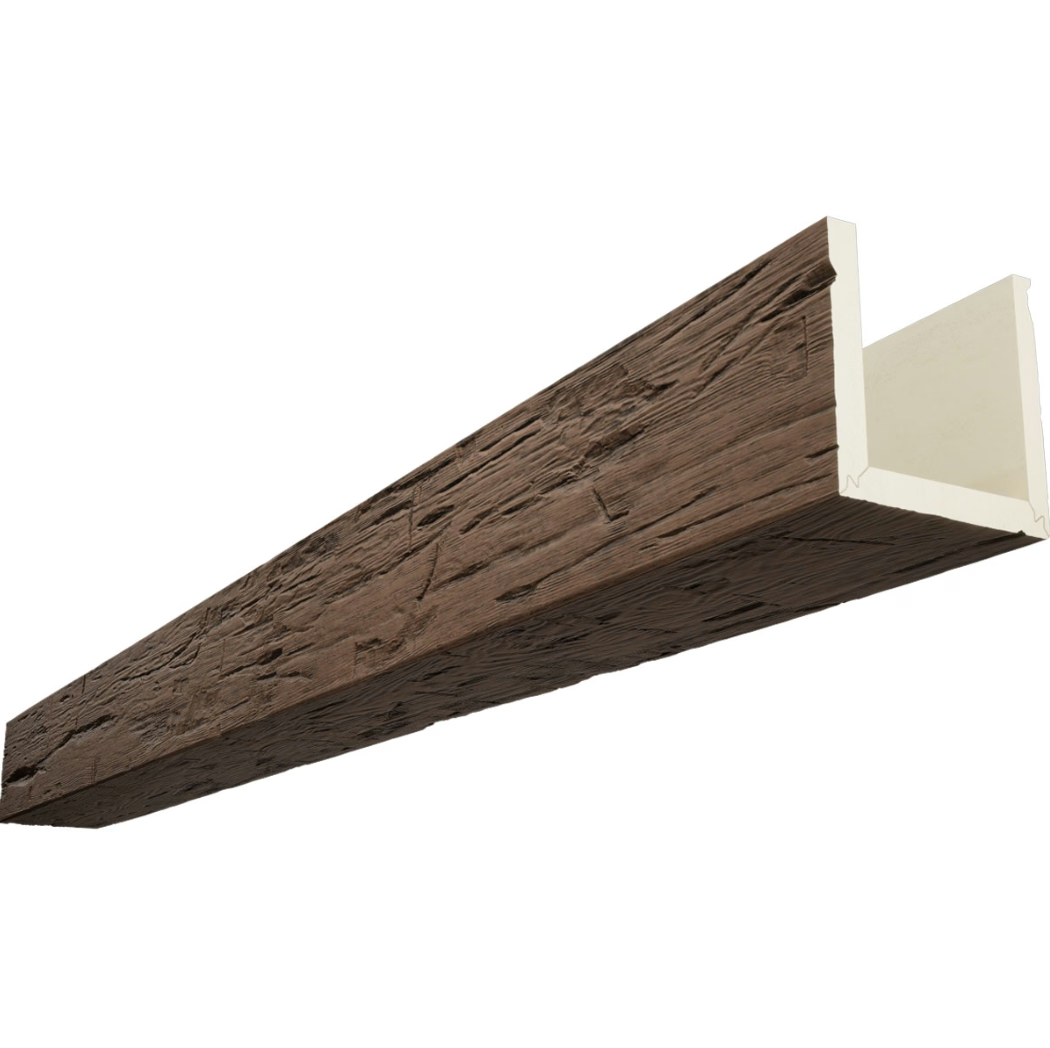
The global marketplace for polyurethane faux wood beams encompasses manufacturers ranging from small workshops producing handcrafted pieces to large industrial operations shipping container loads to distributors worldwide. For commercial buyers, architects, and contractors evaluating potential suppliers, distinguishing between these operations can feel overwhelming. ISO9001 certification provides an objective benchmark for evaluating manufacturer quality management systems, offering assurance that certified producers maintain consistent standards across their operations.
This internationally recognized quality management standard has become increasingly important in the faux wood beam industry as project specifications have grown more demanding and supply chains have extended across greater distances. Understanding what ISO9001 certification represents, how it is achieved, and what it means for product quality helps buyers make informed decisions when selecting suppliers for projects of any scale.
Understanding ISO9001 Certification
ISO9001 is part of the ISO9000 family of standards published by the International Organization for Standardization, a non-governmental body that develops and publishes international standards for a vast range of products and processes. ISO9001 specifically addresses quality management systems, establishing criteria for organizations that wish to demonstrate their ability to consistently provide products and services that meet customer and regulatory requirements.
Certification to ISO9001 is granted by independent third-party auditors who assess the manufacturer's quality management system against the standard's requirements. This assessment examines documentation, processes, personnel competence, equipment maintenance, product inspection and testing, nonconformance handling, and continuous improvement activities. Manufacturers that satisfy all applicable requirements receive certification, which is subject to periodic surveillance audits and renewal.
The standard itself focuses on several core principles. Customer focus ensures that understanding and meeting customer requirements remains paramount. Leadership establishes clear quality objectives and organizational commitment. Engagement of people ensures that all employees understand their role in quality achievement. Process approach treats activities as interconnected processes rather than isolated tasks. Continuous improvement drives ongoing enhancement of the quality management system and its outputs.
What Certification Means for Product Quality
For polyurethane faux beam manufacturers, ISO9001 certification influences virtually every aspect of production. The systematic approach required by the standard creates consistency that directly benefits customers receiving the finished products.
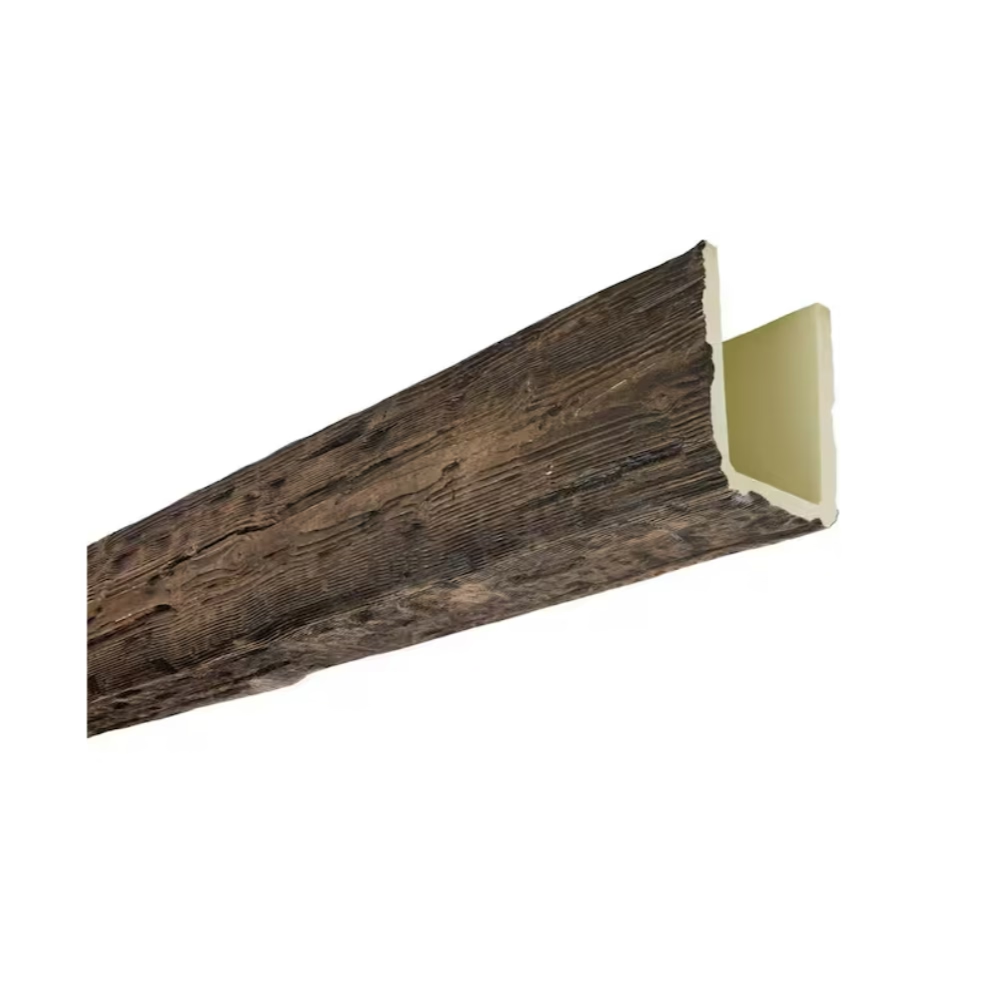
Mold consistency represents one area where certified manufacturers demonstrate clear advantages. Premium PU beams require precision-molded surfaces to achieve realistic wood grain textures and authentic profiles. ISO9001 documentation of mold maintenance procedures, inspection frequencies, and replacement criteria ensures that every beam produced maintains surface quality consistent with samples and specifications. Without such controls, mold wear can gradually degrade product quality in ways that might not become apparent until significant quantities of substandard product have been produced.
Material specifications and incoming inspection procedures affect beam performance characteristics. Certified manufacturers document requirements for polyurethane formulations, verify that received materials meet specifications, and maintain records demonstrating compliance. This traceability proves valuable when investigating any performance concerns and ensures that material changes do not inadvertently affect product characteristics.
Dimensional consistency across production runs enables reliable installation. When contractors plan beam layouts based on manufacturer specifications, they expect beams to match those specifications precisely. ISO9001 controls on equipment calibration, production processes, and finished product inspection ensure that beams arrive on-site fitting the installation plan as expected. The alternative—beams that vary dimensionally from piece to piece—creates installation problems that cost time and money to resolve.

Evaluating Certified Manufacturers
Requesting proof of ISO9001 certification should be a standard step in the supplier evaluation process for any significant faux beam purchase. Reputable manufacturers readily provide copies of their certificates and welcome questions about their quality management systems.
The certificate itself provides useful information. Verify that the certificate is current and has not expired. Check that the scope of certification includes polyurethane faux beam production rather than just general manufacturing. Note the certifying body—accreditation bodies in different countries have varying reputations for rigor. A certificate from a well-known accredited registrar carries more weight than one from an unknown or unaccredited organization.
Beyond the certificate, request information about the manufacturer's specific quality practices. How are production molds maintained and inspected? What incoming material testing occurs? How are customer complaints handled? What percentage of production receives inspection? The answers to these questions reveal how seriously the manufacturer takes the principles behind their certification.
Consider requesting product samples from current production rather than older inventory. Testing these samples against specifications verifies that the quality system is operating effectively in current production rather than potentially reflecting older processes or practices. Any reputable manufacturer will provide samples to serious commercial buyers.
Benefits for Long-Term Relationships
Establishing relationships with ISO9001 certified manufacturers offers advantages beyond individual project success. The systematic approach that certification requires creates a foundation for productive ongoing partnerships.
Documentation practices benefit repeat buyers who need to match existing installations. Certified manufacturers maintain records of formulations, colors, and production specifications that enable close matching of replacement beams to installations completed years earlier. This proves invaluable for hotels, restaurants, and commercial properties where ongoing maintenance requires consistency across beam replacements.
Communication standards established by ISO9001 create clearer channels for addressing questions, resolving issues, and planning future orders. Formal procedures for order acknowledgment, production scheduling, shipping notification, and complaint handling mean that buyers know what to expect and how to escalate concerns when necessary. The structure benefits both parties by reducing misunderstandings and ensuring accountability.
Certified manufacturers typically offer better responsiveness to urgent needs or custom requirements. The discipline of documented procedures creates efficiency that allows faster processing of non-standard orders. Production planning capabilities documented under the quality system enable accurate lead time estimates and reliable delivery commitments. For buyers managing projects with critical schedules, this reliability proves invaluable.
The Cost-Quality Equation
Working with certified manufacturers sometimes involves pricing that appears higher than alternatives from non-certified suppliers. Evaluating this differential requires understanding what is being purchased beyond the physical beams themselves.
Reduced risk of quality problems represents the most direct benefit. Non-conforming products create costs that may not be immediately apparent—installation delays, customer dissatisfaction, potential rework or replacement. These costs can easily exceed any initial price advantage from lower-priced suppliers. Certified manufacturers' systematic approach minimizes the probability of such problems occurring.
Consistency across large orders affects total project cost more significantly than many buyers initially appreciate. When ordering hundreds or thousands of beam sections, even small percentages of non-conforming product create substantial problems. Certified manufacturers' statistical process controls and inspection procedures catch deviations before they result in significant quantities of defective product.
Administrative efficiency also contributes to the value proposition. Clear specifications, documented communications, and standardized procedures reduce the back-and-forth often required when working with less organized suppliers. Order clarifications, specification questions, and issue resolution all require time that has real cost in any business operation.
ISO9001 certification has become a differentiator that serious buyers use to narrow their supplier lists. The investment in finding and qualifying certified manufacturers pays returns through better products, smoother transactions, and stronger partnerships built on shared commitment to quality.
Technical References
ASTM standards cited in every specification
Test Data
Lab results from internal testing program
Updated 2026
Reviewed against current product specs