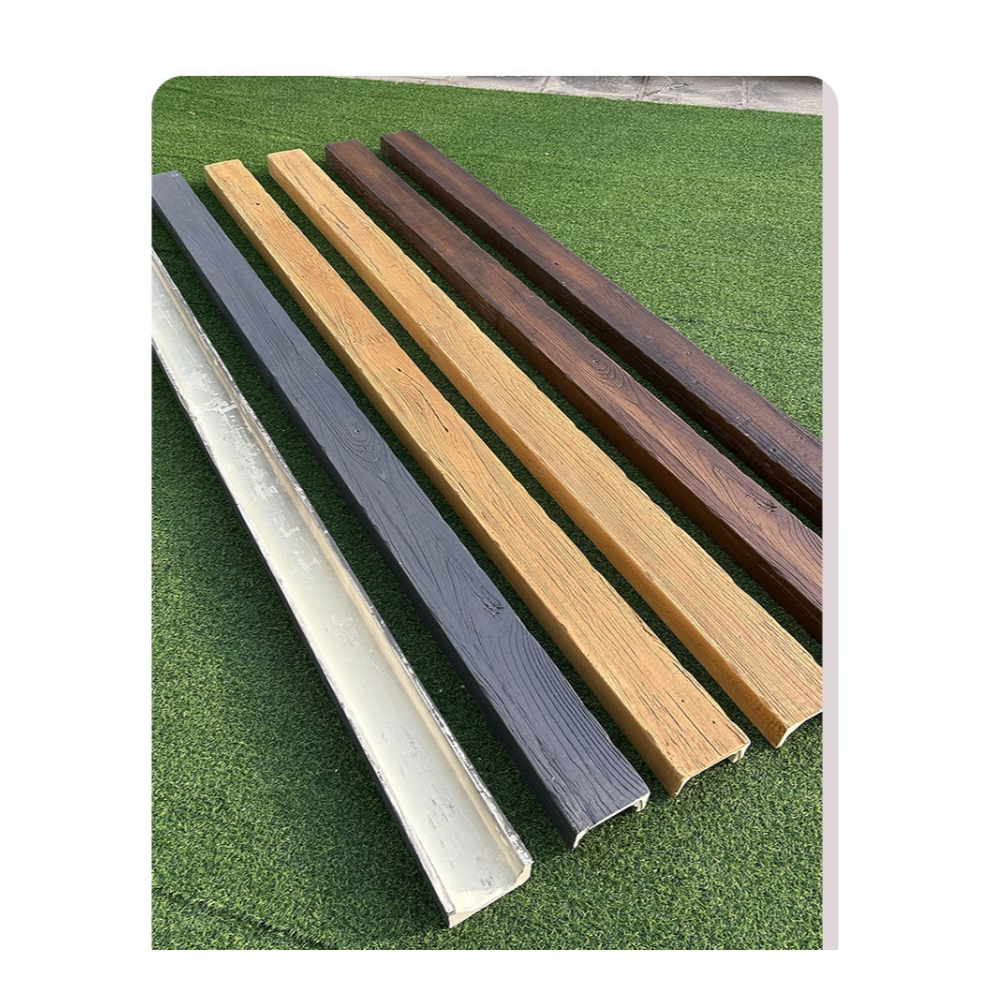
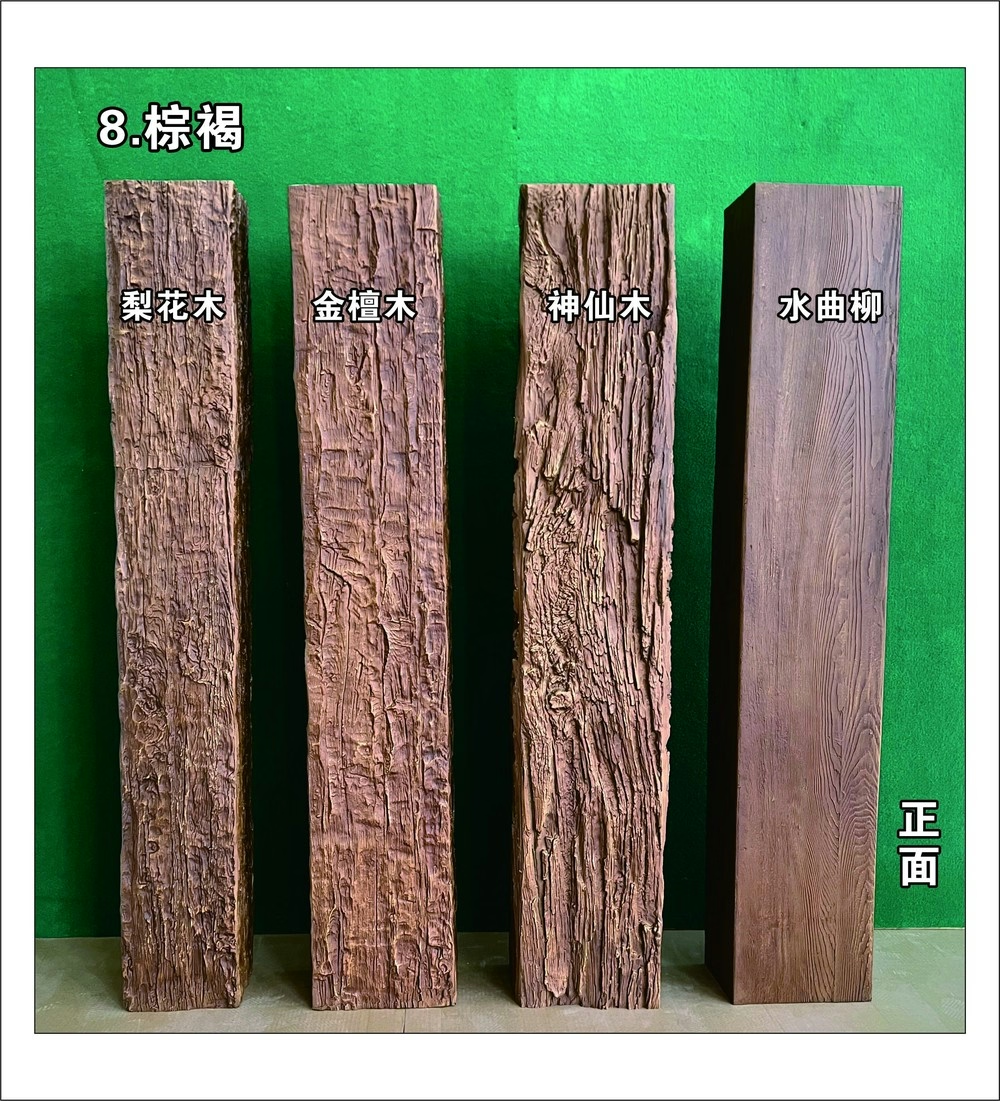
Budgeting for ceiling beam installations requires accurate labor cost estimates, yet many project planners underestimate the differences between material choices. The apparent similarity between faux and real wood beams masks substantial variations in installation requirements that directly impact project costs. Understanding these differences helps contractors bid accurately and helps homeowners budget realistically.
This analysis examines labor costs across the full installation process, from site preparation through final finishing. Specific time estimates, equipment needs, and workforce requirements provide concrete data for project planning. While actual figures vary by location, market conditions, and project specifics, relative comparisons between material types remain consistent.
Initial Site Assessment and Preparation
Both beam types require site assessment before installation begins. Crews must verify measurements, confirm ceiling conditions, and plan mounting approaches. This preparatory work takes similar time regardless of beam material—the intellectual work of planning doesn't change based on what you're installing.
However, the weight of real wood beams creates additional assessment requirements. Ceiling structure must be evaluated for load capacity. In some cases, structural engineering consultation becomes necessary to confirm that heavy timber won't compromise building integrity. This assessment adds cost and time before installation can proceed.
Lightweight faux beams eliminate structural evaluation requirements in most situations. The minimal weight imposes negligible ceiling loads, so engineering assessment isn't needed. This savings may seem small individually, but it eliminates a potential obstacle that can delay projects and add unexpected professional fees.
Handling and Material Transport
Moving beams from delivery truck to installation location represents the first real labor difference between material types. Real wood beams are genuinely heavy—typical dimensional lumber used for beams weighs three to five pounds per linear foot. A twelve-foot beam might weigh forty to sixty pounds; larger beams can exceed one hundred pounds.
Handling these weights requires multiple workers for each beam. One person cannot safely transport and position a heavy timber beam. The coordination required—communicating through lifts, turns, and doorway passages—slows progress considerably. What should be simple material movement becomes a logistics exercise.
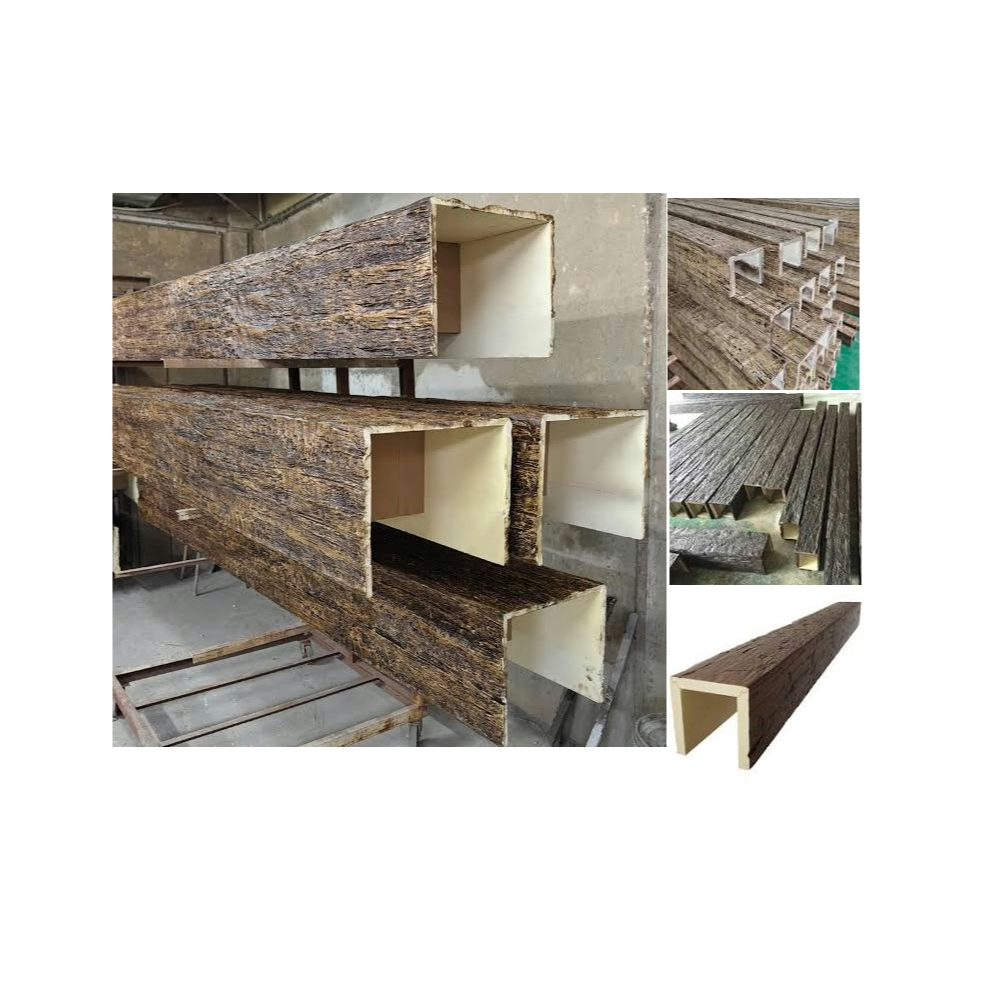
Faux beams of equivalent visual impact might weigh five to ten pounds total. One person carries multiple beams in a single trip, navigating doorways and stairs without coordination difficulty. The material handling phase that might take a full morning with timber completes in an hour with lightweight faux beams.

Equipment and Tool Requirements
Installing real wood beams typically requires equipment beyond standard hand tools. High ceiling installations need lifts or scaffolding capable of supporting both workers and heavy beams simultaneously. Standard step ladders won't safely support the combined weight and awkwardness of timber beam positioning.
Lift rental adds significant project cost. Daily rental rates for powered lifts range from one hundred fifty to three hundred dollars depending on type and location. Delivery and pickup fees add to this base cost. Set-up and breakdown time consumes additional hours. For projects requiring multiple days of installation, equipment costs accumulate substantially.
Faux beam installations often proceed with standard ladders or lightweight scaffold systems. The load reduction means ordinary access equipment handles the work safely. No lift rental, no delivery coordination, no equipment set-up. The tools needed are the same ones most contractors already have on hand.
Installation Time Per Beam
Controlled timing comparisons reveal the installation speed advantage of lightweight faux beams. Under similar conditions—a standard eight to ten foot residential ceiling—professional installers typically report the following:
Real wood beam installation, including positioning, aligning, and securing a single beam, averages fifteen to twenty-five minutes with a two-person crew. This time includes the coordination required when two people must work together to handle the material.
Faux beam installation of the same length typically requires five to ten minutes per beam with a single installer. The time reduction comes from eliminating coordination delays, from easier positioning, and from simpler fastening approaches.
A room requiring six beams illustrates the cumulative impact. Timber installation might consume four to six hours of crew time total, spread across multiple workers. Faux beam installation might require only one to two hours of single-worker time. The labor cost difference is substantial even before applying hourly rates.
Finishing and Detailing Work
Real wood beams frequently require finishing work after installation. Even pre-finished timber may show gaps, joint inconsistencies, or fastener locations that need attention. Staining, sealing, or painting to match existing woodwork adds additional labor beyond basic installation.
The finishing phase extends project timelines significantly. Stain application requires drying time between coats. Sealers need cure time before handling. Paint finishing involves multiple steps and drying intervals. A two-day timber beam installation might extend to three or four days when finishing is included.
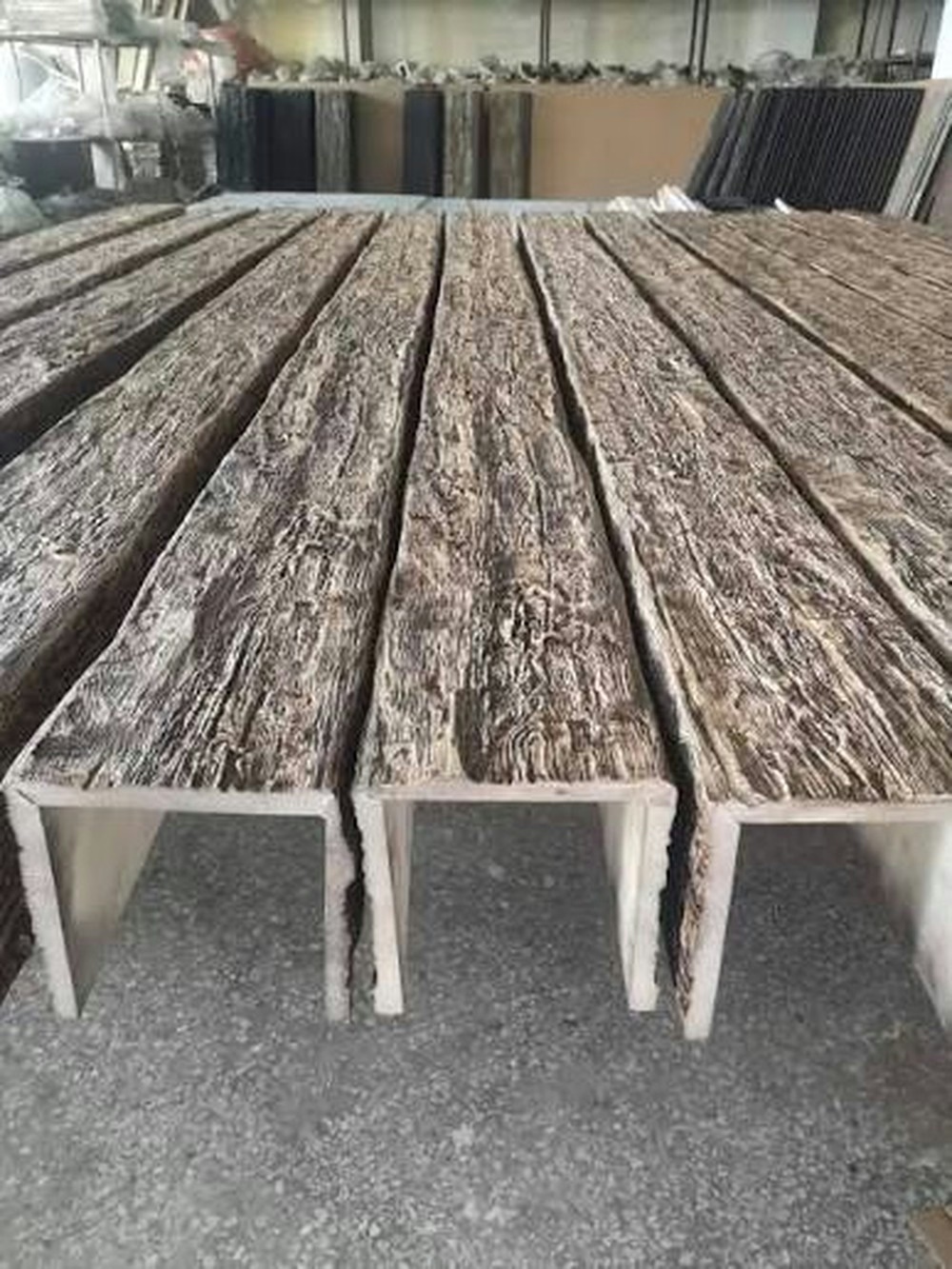
Faux beams arrive pre-finished with consistent color and texture throughout. Gaps between pieces close cleanly without putty or filler. Fastener locations are minimal or concealed. The installation phase is truly complete when the last beam is secured—no additional finishing steps required.
Correction and Adjustment Needs
Installation rarely proceeds perfectly on the first attempt. Beams may need adjustment for alignment, repositioning for better fit, or correction of mounting failures. These corrections are a normal part of any construction process, but the cost impact differs between materials.
Moving a heavy timber beam after initial mounting is difficult and potentially dangerous. The beam must be supported while fasteners are removed, repositioned, and redriven. If the beam has been secured with construction adhesive, correction becomes even more complicated. Each adjustment may require additional labor and potentially additional materials.
Lightweight faux beams adjust easily. One person can shift beam position, correct alignment, or redo mounting without specialized support. Adhesive that hasn't fully cured allows repositioning. Even cured adhesive separates more easily than with heavy timber. The flexibility to make corrections without major effort reduces both time and frustration.
Structural Mounting Complexity
Real wood beams require robust mounting systems capable of supporting their weight indefinitely. Typical approaches include heavy-duty cleats, through-bolting to structural elements, and steel support brackets. Each mounting point requires careful installation to ensure load capacity.
The mounting phase for timber involves more than simply driving fasteners. Workers must locate structural members, confirm adequate backing, and install hardware rated for the loads involved. Ceiling conditions may require additional blocking or reinforcement. These preparations add labor that doesn't apply to lightweight alternatives.
Faux beams mount using lighter-duty systems appropriate for their minimal weight. Adhesive applications, bracket systems, and simpler cleats provide adequate support. The mounting hardware itself is less expensive, and installation requires less precision since load calculations are less critical. The entire structural mounting phase simplifies substantially.
Cleanup and Disposal
Construction generates debris, and beam installation creates its share. Wood cutoffs, packaging materials, fastener waste, and miscellaneous debris must be清理干净 before project completion. This cleanup phase adds labor that shouldn't be overlooked in project planning.
Real wood installations generate more waste material. Cutoffs from fitting beams to specific lengths become waste rather than usable material. Damaged or dented pieces may need replacement. The volume of waste correlates with installation difficulty—more handling increases damage risk.
Disposal costs for heavy timber waste exceed those for lightweight faux beam packaging. Construction dumpsters charge by weight, and timber debris weighs considerably more than foam and plastic packaging. Hauling away timber waste costs more than equivalent faux beam disposal.
Long-Term Labor Considerations
Labor costs don't end when installation completes. Throughout a building's life, maintenance and repair labor continues to accrue. These ongoing costs affect the true lifecycle labor comparison between materials.
Real wood beams require periodic inspection for moisture damage, insect activity, and fastener condition. Any issues discovered require repair labor—replacing damaged sections, treating insect problems, or refreshing surface finishes. These maintenance demands recur throughout the beam's service life.
Faux beams require minimal ongoing attention. Occasional cleaning is the extent of typical maintenance. No moisture concerns, no insect issues, no surface deterioration requiring refinishing. The maintenance labor burden essentially disappears with quality faux beams.
Total Cost of Ownership
Summing the various labor components reveals the comprehensive cost comparison. Initial installation labor may favor faux beams by fifty to seventy percent depending on specific conditions. Equipment requirements add substantial additional savings. Finishing labor, often overlooked in initial planning, favors faux beams decisively.
Maintenance labor over ten years shows even greater divergence. Timber beams likely require professional attention at least once, potentially multiple times, for inspection, repair, or refinishing. Faux beams require none of this attention. The cumulative labor savings over a beam's service life can substantially exceed the initial installation cost difference.
Contractors who understand these differences can bid more accurately. Homeowners who recognize the full scope of labor requirements make better-informed material decisions. The economic case for faux beams strengthens considerably when comprehensive labor costs receive appropriate consideration.
Labor cost comparisons between faux and real wood beam installations reveal consistent advantages for lightweight faux alternatives. From handling through installation to long-term maintenance, each phase of the project lifecycle favors materials that are easier to work with and less demanding to maintain.
Accurate project budgeting requires accounting for all labor—not just the visible installation phase. The complete picture reveals that faux beams often provide superior economic value despite potentially higher material costs, with labor savings that compound throughout the ownership experience.
Technical References
ASTM standards cited in every specification
Test Data
Lab results from internal testing program
Updated 2026
Reviewed against current product specs