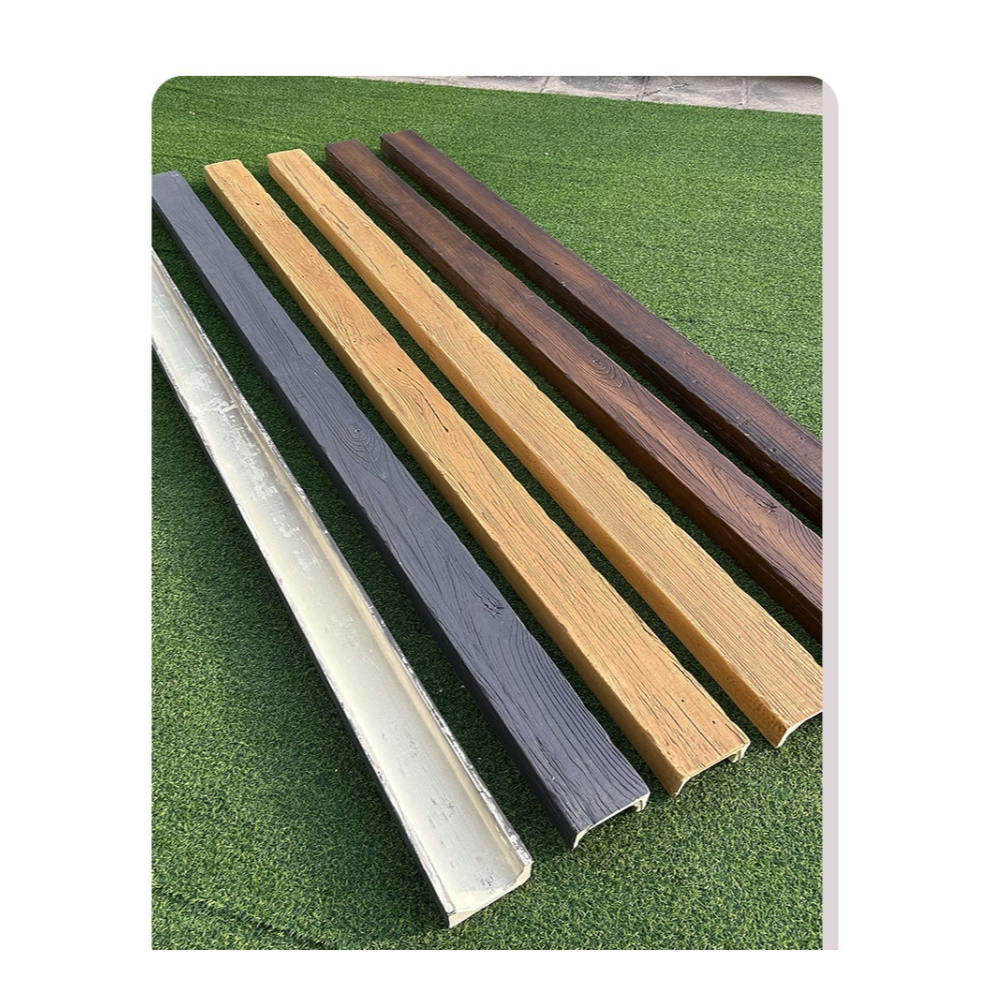
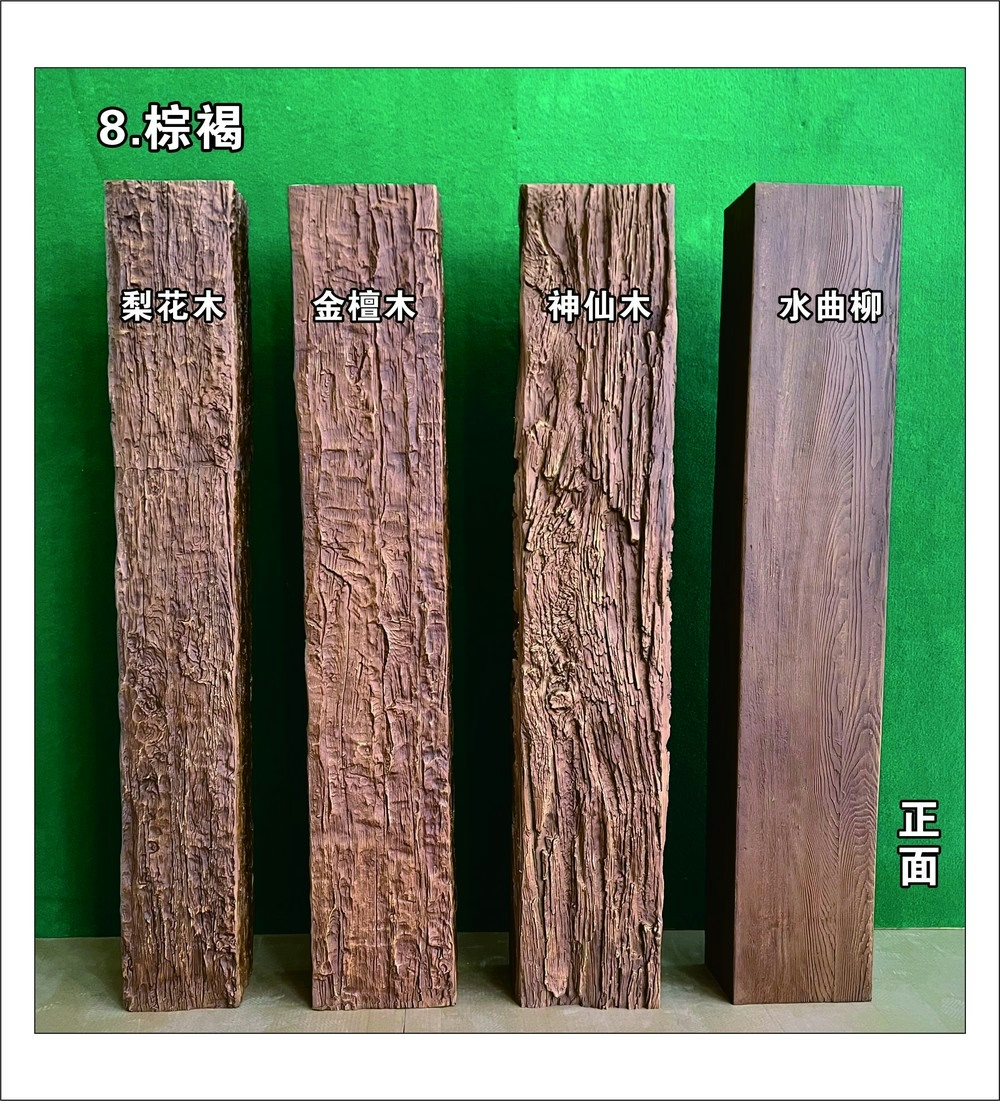
Every contractor who has wrestled a solid oak beam into position on a vaulted ceiling understands the physical toll that traditional wood installation demands. The aching shoulders, the need for multiple workers, the careful choreography of positioning heavy timber against gravity—these realities have shaped ceiling design decisions for generations. Polyurethane faux wood beams are changing this equation fundamentally, offering the same stunning aesthetic impact with a fraction of the physical burden.
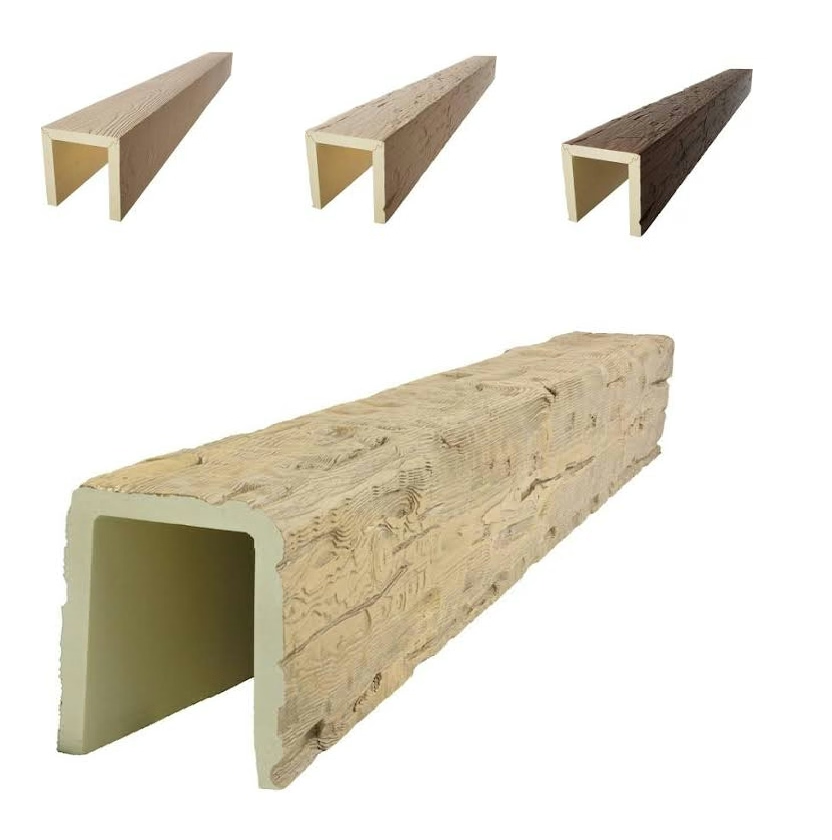
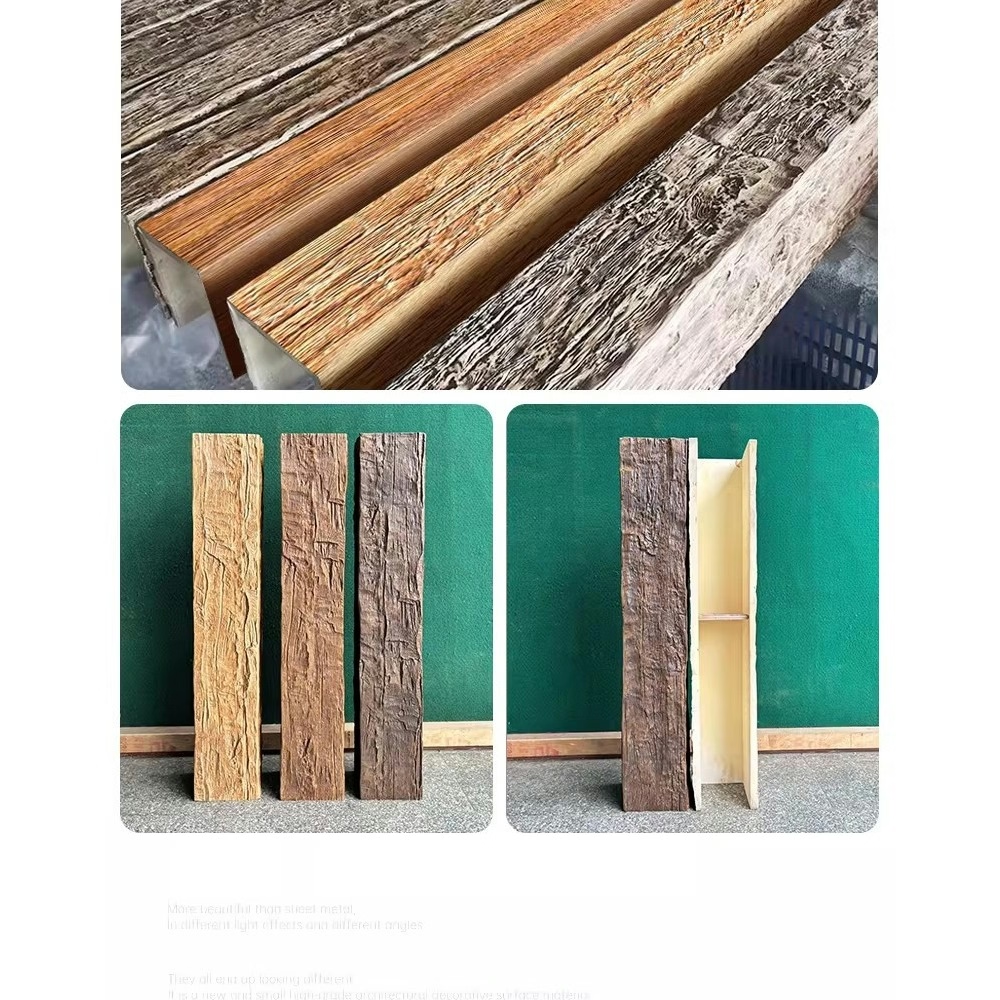
The weight differential between genuine timber and quality polyurethane faux beams is striking. A six-foot section of reclaimed barn beam might weigh 80 to 120 pounds, requiring at least two strong workers and specialized lifting equipment for ceiling mounting. The equivalent polyurethane faux beam weighs merely 8 to 15 pounds, a difference that transforms what was once a team job into something a single skilled installer can accomplish in minutes rather than hours. This weight reduction does not come at the cost of visual authenticity—modern manufacturing techniques capture wood grain textures, color variations, and even weathered distressing with remarkable precision.

Installation crews working with polyurethane faux beams consistently report completion times that exceed their initial expectations. The material accepts screws, nails, and construction adhesive just like natural wood, allowing standard tools and familiar techniques to transfer directly. There is no need to wait for specialized hardware or novel attachment methods—the learning curve is essentially flat for anyone who has installed traditional wood trim. Pre-finished surfaces eliminate the sanding, staining, and sealing steps that consume hours with natural timber, compressing what would traditionally be a multi-day project into a single productive session.
The practical advantages extend beyond the installation process itself. Because polyurethane beams arrive pre-finished and ready to mount, there is no debris from cutting operations to clean up, no cloud of sawdust settling on furniture and floors, no lingering odors from stains or sealants. Jobsites remain cleaner, clients are more satisfied with the process, and workers do not spend post-installation hours cleaning up after themselves. For renovation projects in occupied homes or commercial spaces, this cleanliness factor proves as valuable as the labor savings themselves.
Cutting and Adjusting PU Beams On-Site
Despite arriving pre-finished, jobsite modifications often prove necessary. Window returns may require trimming, ceiling runs may demand custom lengths, and architectural features might need incremental adjustments to fit perfectly. Polyurethane faux beams accommodate these modifications with standard woodworking tools—no special blades, no exotic equipment, no unfamiliar techniques. A circular saw or table saw cuts through the material cleanly, leaving smooth edges that require minimal finishing.
The cellular structure of quality polyurethane beams holds screws securely without splitting or crumbling. Unlike some synthetic materials that reject fasteners, polyurethane provides solid holding power for brackets, hangers, and decorative hardware. Installers can confidently load beams with lighting fixtures, ceiling fans, and decorative elements knowing that the material will maintain its grip over years of use. This reliability eliminates the callbacks and warranty claims that plague inferior products.
Fitting beams around existing infrastructure presents fewer challenges with polyurethane than with natural wood. Electrical conduit, HVAC ductwork, and structural elements that would require elaborate notching and fitting with heavy timber can often be accommodated with simple cuts or flexible trim pieces. The material's workability means that custom adaptations happen quickly, without the extended labor hours that complex ceiling geometries demand with traditional materials.
Structural Mounting Systems for Various Ceiling Types
Different ceiling construction demands different mounting approaches, and polyurethane beams adapt readily to the full range of scenarios. Suspended grid ceilings, common in commercial spaces, accept surface-mounted brackets that secure beams without disrupting the ceiling plane. Wood joist ceilings permit direct attachment with structural screws driven through the beam into the joists above. Concrete and steel structures require mechanical anchors or welding plates, but the lightweight nature of polyurethane reduces the hardware requirements significantly compared to natural timber.
Vaulted and cathedral ceilings present the most demanding installation scenarios, where access is limited, angles are dramatic, and the visual impact is magnified. Here the labor advantages of polyurethane beams become most pronounced. A single installer can position and secure beams that would otherwise require scaffolding teams and lifting equipment. The reduced weight means faster positioning, easier alignment, and more precise placement—factors that matter enormously when every imperfection is visible against an open ceiling plane.
Engineered mounting systems designed specifically for polyurethane beams provide additional installation flexibility. French cleat systems allow beams to hang securely while remaining removable for access to utilities or future modifications. Crown molding profiles integrate seamlessly with beam installations, creating cohesive transitions between vertical walls and horizontal ceilings. These specialized components expand the design possibilities while maintaining the straightforward installation philosophy that makes polyurethane beams so appealing.
Project Timeline Advantages
When planning a ceiling installation project, contractors and homeowners alike benefit from understanding the timeline compression that polyurethane beams provide. A typical residential great room ceiling that might consume three to four days of labor with natural timber beams can often be completed in a single day with polyurethane alternatives. This acceleration applies whether the project involves a complete ceiling redesign or selective beam installation as an accent feature.
The cascading benefits of faster installation extend throughout the project lifecycle. Shorter labor time means lower labor costs, enabling either project savings or allocation of budget to additional design features. Faster completion enables quicker transitions to subsequent project phases—furniture placement, final cleaning, client inspection, and occupancy all move forward without delay. For commercial projects, reduced installation time translates directly to earlier reopening and revenue generation.
Quality assurance benefits from the simplified installation process as well. When workers are not fatigued from heavy lifting and awkward positioning, their attention to detail improves. Joints align more precisely, connections secure more thoroughly, and final inspection reveals fewer imperfections requiring correction. The human factor in construction quality improves substantially when physical strain does not compromise focus and precision.
Long-Term Performance and Maintenance
The labor-saving advantages of polyurethane faux wood beams continue throughout their service life. Unlike natural wood, polyurethane does not require periodic refinishing, sealing, or pest treatment. The color and texture remain stable for decades without intervention, standing up to UV exposure, humidity changes, and normal wear with remarkable resilience. This maintenance-free quality continues the labor efficiency story, eliminating the recurring costs and scheduling challenges that natural wood surfaces demand.
Cleaning these beams requires nothing more than occasional dusting or wiping with a damp cloth. The non-porous surface resists staining and does not harbor mold or mildew, making these beams suitable for bathrooms, kitchens, and other environments where natural wood might suffer. For commercial spaces with high ceilings, this easy maintenance means that aesthetic quality persists without requiring specialized cleaning equipment or suspended access platforms.
The initial investment in polyurethane beams, while slightly higher than natural timber in some cases, delivers ongoing returns through reduced labor costs at every stage. From transport and handling through installation, finishing, and maintenance, the total cost of ownership consistently favors these engineered alternatives. For both professional contractors calculating bids and homeowners evaluating options, the labor equation makes polyurethane faux wood beams an increasingly obvious choice for ceiling design projects of every scale.

Technical References
ASTM standards cited in every specification
Test Data
Lab results from internal testing program
Updated 2026
Reviewed against current product specs