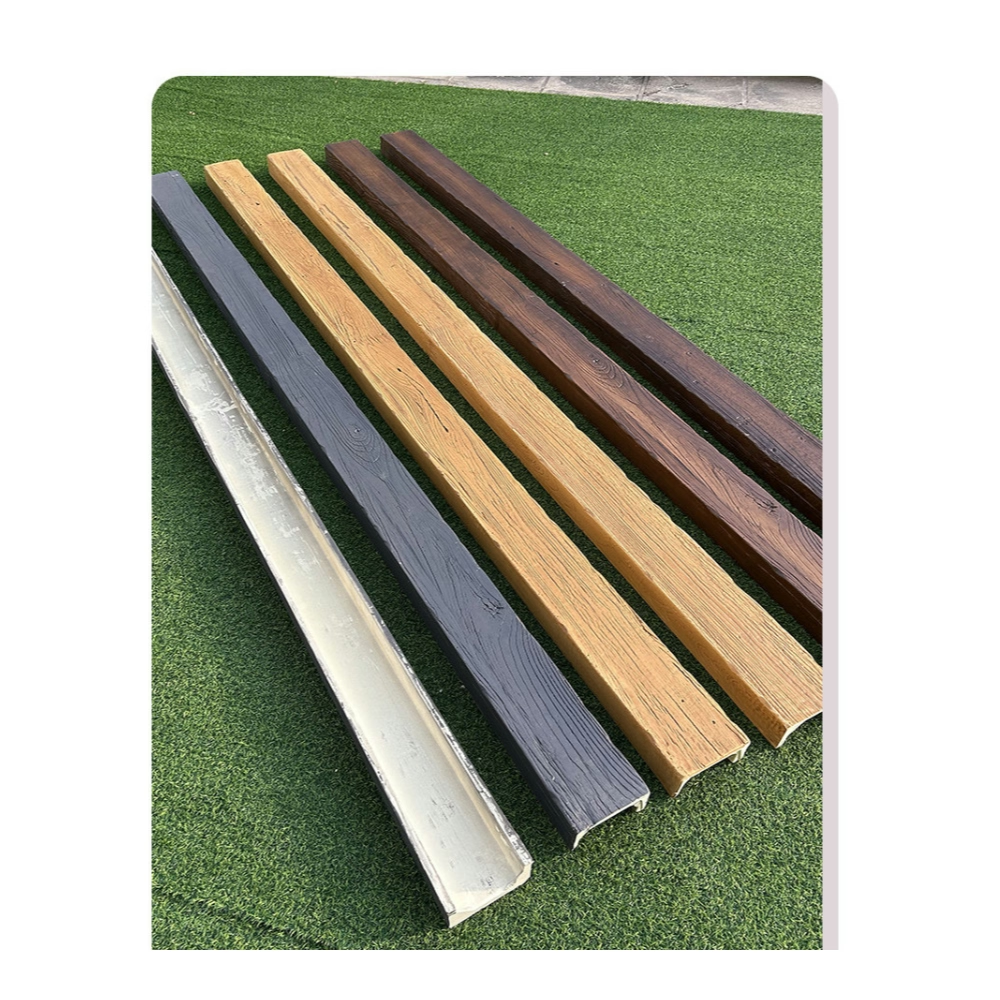
The statistics on falls from height in construction are sobering, and ceiling installation work occupies a significant portion of these incidents. While polyurethane faux wood beams reduce the physical burden of handling heavy materials, the work still happens high above the floor where gravity makes no allowances for shortcuts or carelessness. Establishing solid safety practices before beginning any ceiling beam project protects not just the immediate workers but everyone who will occupy the finished space.
Ladder selection forms the foundation of safe ceiling work. The right ladder for the job depends on working height, available floor space, the weight it must support (including tools and materials), and the duration tasks will require at elevation. Extension ladders remain the workhorse for most ceiling installations, providing access to heights beyond step ladder reach. Platform ladders offer stability for extended work periods, allowing installers to stand with both feet on a secure surface rather than perched on rungs. Rolling scaffolding delivers the most stable elevated work surface for large projects, though it requires more setup time and floor space.
Selecting the Right Ladder Type and Rating
Understanding ladder duty ratings prevents overloading scenarios that lead to catastrophic failure. Household-grade ladders support up to 200 pounds total weight—often insufficient when a worker carrying tools and materials approaches or exceeds that limit. Commercial-grade ladders rated for 250 pounds provide a meaningful safety margin for most installation work. Heavy-duty ladders rated at 300 pounds accommodate two-person scenarios or installers using power tools and supplies throughout the workday.
Extension ladder length requirements often surprise those who have not worked extensively at height. A common misconception holds that a 20-foot extension ladder reaches 20 feet high. In reality, the effective working height is considerably less due to the overlap required between ladder sections, the angle at which the ladder must be set, and the safe climbing zone near the top. For ceiling work where beams might be 14 to 16 feet above the floor, a fully extended 24-foot ladder often provides the minimum appropriate reach.
Material selection matters as well. Aluminum ladders conduct electricity and should never be used near electrical sources or during storms. Fiberglass ladders provide insulation but weigh more and require more careful maintenance. For most indoor ceiling work, aluminum remains practical given appropriate electrical safety protocols, though fiberglass offers peace of mind for projects involving any electrical proximity.
Ladder setup demands attention to fundamentals that experienced workers sometimes neglect through familiarity. The 4-to-1 rule states that for every four feet of working height, the ladder base should sit one foot from the wall. This 75-degree angle provides optimal balance between reach and stability. Measuring this ratio with every setup might seem tedious, but it becomes automatic with practice and prevents the overextension that causes countless falls.
Proper Ladder Positioning and Stability
The surface beneath a ladder matters enormously. Indoor flooring seems stable until a ladder load tests its limits, revealing squeaky subfloors, flexible joists, or coverings that shift under point loading. Securing ladders on solid surfaces, using ladder mitts or stabilizer feet on delicate floors, and checking for movement before ascending all contribute to stable positioning. On carpeted floors, hard rubber feet grip effectively, but the carpet padding beneath can compress, changing the angle and stability over extended work periods.
Ladder feet should sit level, with both feet firmly planted. Sloped surfaces require leveling attachments or a way to secure the top that compensates for the angle below. Ladder jacks and support bars redistribute weight to structural elements when ceiling geometry prevents conventional positioning. These accessories often prove essential for faux beam work where beams run perpendicular to the ladder approach direction.
Securing the top of extension ladders prevents lateral movement that undermines stability. Ladder straps, hooks, or specialized ceiling attachments anchor the top against sliding or rotation. For very high ceilings, having a second worker stationed at the base to hold the ladder steady provides additional security during setup and while workers transition between heights. This two-person approach costs little time while providing substantial safety improvement.

Accessing and Working at Beam Installation Height
Reaching beam installation height safely requires establishing a stable work platform before beginning actual installation. Climbing the ladder with tools creates risk; carrying materials separately and staging them at height once the installer is positioned reduces the exposure. For heavy beams, a gin pole or pulley system enables lifting without the balance challenges of climbing with awkward loads.
When installing beams, installers must maintain three points of contact at all times. This requirement often surprises those who envision traditional beam work as requiring both hands free. In practice, modern fastening systems—construction adhesive, screw guns with positioning jigs, bracket systems—enable one-handed installation while the other maintains ladder contact. Planning the installation sequence to work from stable positions rather than reaching or leaning maximizes safety throughout the process.
Working near the ladder top requires particular attention. The top few rungs provide less stability than lower positions due to increased flex and the consequences of any loss of balance. Whenever possible, positioning beams so that work happens at chest to waist height rather than overhead reduces strain and maintains better stability. If overhead work is unavoidable, keeping the body centered over the ladder and avoiding full arm extension keeps the center of gravity safely positioned.
Equipment and Personal Protective Considerations
Personal protective equipment completes the safety system. Slip-resistant footwear with ankle support provides the foundation—athletic shoes and sandals have no place on ladder work. Tool lanyards prevent dropped objects that could injure workers below and create hazardous conditions on floors where people walk. Hard hats protect against accidental impact from overhead materials or structural elements.
Communication systems between ground crews and elevated workers prevent misunderstandings that lead to unsafe situations. Hand signals or radios enable coordination when line of sight is limited. Workers on the ground should understand what support tasks the elevated installer needs and anticipate those needs rather than waiting to be asked. This proactive communication prevents the elevated worker from making dangerous position adjustments to direct ground crew activities.
Weather conditions affect indoor safety even when the work happens inside. Humidity affects ladder grip and material handling. Poor lighting creates shadows that obscure ladder rungs and beam edges. Background noise masks sounds that might indicate problems. Addressing these environmental factors before beginning elevated work prevents conditions that compromise otherwise sound safety practices.
Emergency Planning and Incident Response
Even with excellent preparation, incidents can occur. Having an emergency response plan before beginning work enables faster response if someone does fall or suffer an injury at height. First aid supplies should be accessible, and at least one person on site should have current first aid training. For projects where help might be delayed, cell phones should be charged and accessible rather than left in vehicles or bags.
Knowing when to stop work prevents incidents that occur from fatigue or frustration. Rushing to complete a task leads to shortcuts that cause accidents. When visibility decreases, energy wanes, or conditions change, pausing work to address the situation safely often proves faster than pushing through and creating a problem that stops the entire project.
Regular safety discussions at the beginning of each workday reinforce good practices and address project-specific hazards that might not be obvious. These conversations take only minutes but establish a safety culture that protects everyone throughout the project. Workers who feel comfortable speaking up about safety concerns should be encouraged to do so, and those concerns should receive genuine consideration and response.
The goal of safety practices is not to add burden to the work but to enable the work to proceed confidently. When everyone understands the risks and the protocols for managing them, the mental burden of uncertainty lifts, and installers can focus their attention on doing the work well. Quality installation and worker safety are not competing priorities—they are complementary aspects of professional craft that should guide every ceiling beam project.

Technical References
ASTM standards cited in every specification
Test Data
Lab results from internal testing program
Updated 2026
Reviewed against current product specs