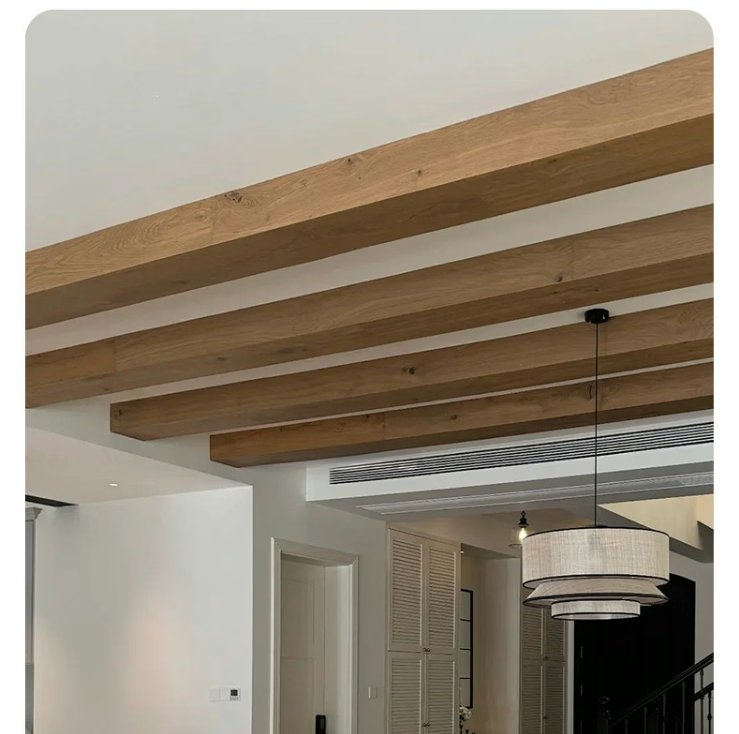
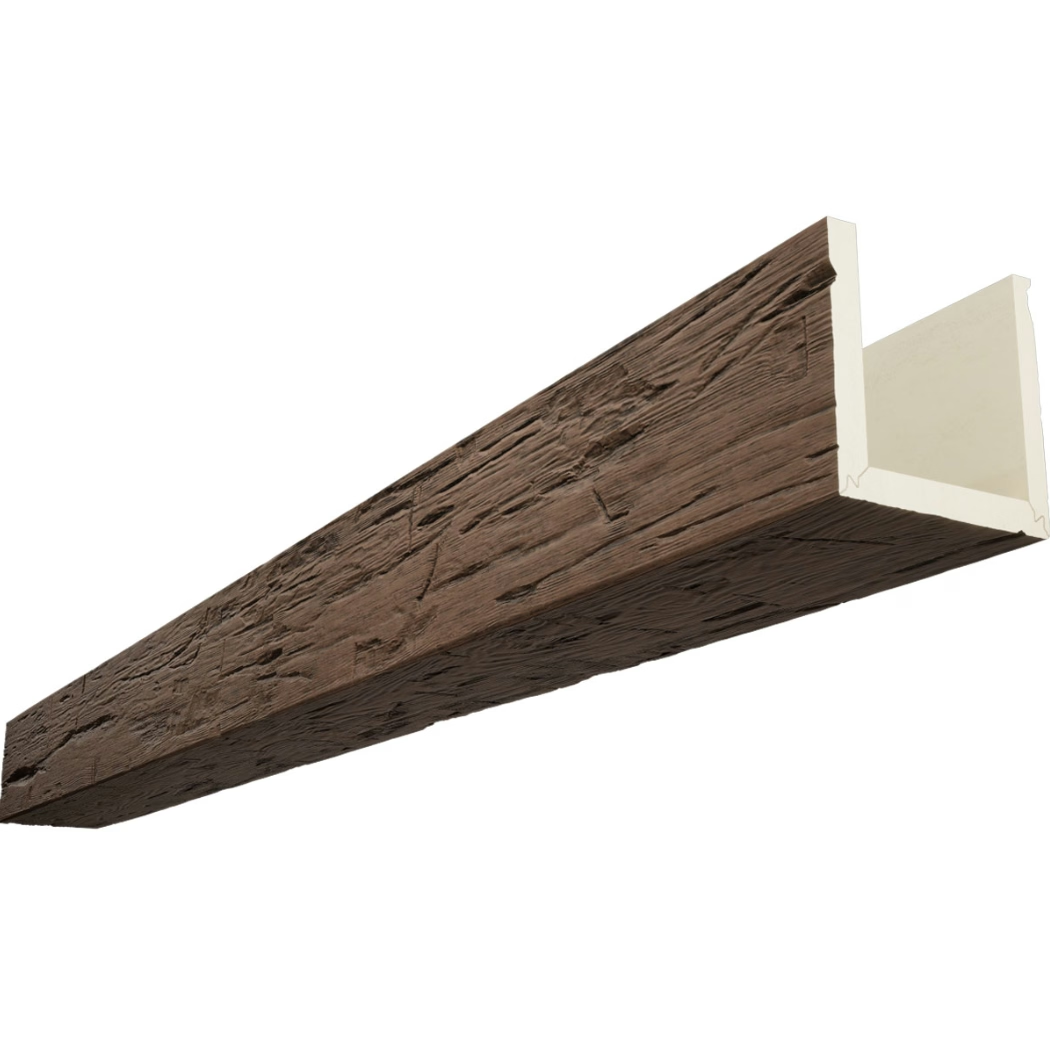
The hospitality industry discovered polyurethane faux beams years ago, and commercial construction has followed suit as developers and designers recognize the value proposition these materials offer. Hotels, restaurants, retail spaces, and office buildings increasingly feature the warmth and character that wood ceiling beams provide, but they cannot accommodate the weight, installation time, or maintenance requirements of genuine timber. Polyurethane faux beams solve these problems without compromising the aesthetic outcomes that commercial spaces require to differentiate themselves.
Commercial projects differ from residential work in scale, complexity, and consequence. A restaurant ceiling installation must withstand high humidity, temperature fluctuations, and rigorous cleaning schedules while maintaining appearance across years of service. Office building installations must coordinate with complex HVAC systems, lighting arrays, and acoustic treatments while meeting fire safety codes. Hotel lobbies demand the premium appearance that justifies higher room rates. These varied requirements all point toward polyurethane beams as practical solutions.
Supply Chain Reliability for Large Commercial Orders
Large commercial projects live or die on material availability. Construction schedules involve numerous interdependent activities where delays cascade through the entire project timeline. A beam delivery that arrives two weeks late can push back ceiling completion, which delays lighting installation, which postpones final inspection, which extends the period before revenue generation begins. Commercial buyers select suppliers based partly on reliability records rather than solely on initial pricing.
Professional commercial suppliers maintain inventory levels and production capacity that residential suppliers cannot match. These operations anticipate demand patterns, stock popular profiles and finishes, and schedule production runs to ensure availability for anticipated orders. When special requirements arise, they have engineering and production capabilities to respond quickly. This infrastructure enables the reliability that commercial schedules demand.
Lead time commitments from suppliers provide schedule certainty for project planning. Reputable suppliers provide specific availability dates and fulfill those commitments because they understand the commercial consequences of failure. The documentation of these commitments—their specificity and the supplier's track record in meeting them—distinguishes professional commercial relationships from casual residential transactions.
Quality Consistency Across Large Quantities
A commercial project requiring two hundred beam units cannot tolerate variation between pieces. Guests in a chain hotel expect the same appearance whether they stay in the Chicago property or the Dallas location. Restaurant owners planning to replicate a successful design in a new location need confidence that beam appearance will match the original installation. This consistency requirement demands manufacturing processes and quality control systems that produce uniform results across large production runs.
Production batch management addresses this consistency challenge. Quality manufacturers track which production batches supply which orders, enabling replacements and expansions to match original materials. When a commercial project requires additional beams months after initial installation, the supplier can identify and ship from the same batch, ensuring color and texture match. This traceability represents an essential capability for commercial applications.
Quality specifications for commercial work should address surface finish durability, colorfastness under lighting exposure, fire resistance ratings, and structural performance under various conditions. Suppliers experienced in commercial work understand these requirements and offer products designed to meet them. Requesting documentation of relevant testing and certification provides assurance that the specified materials will perform as required over the project lifespan.

Customization Capabilities for Brand Requirements
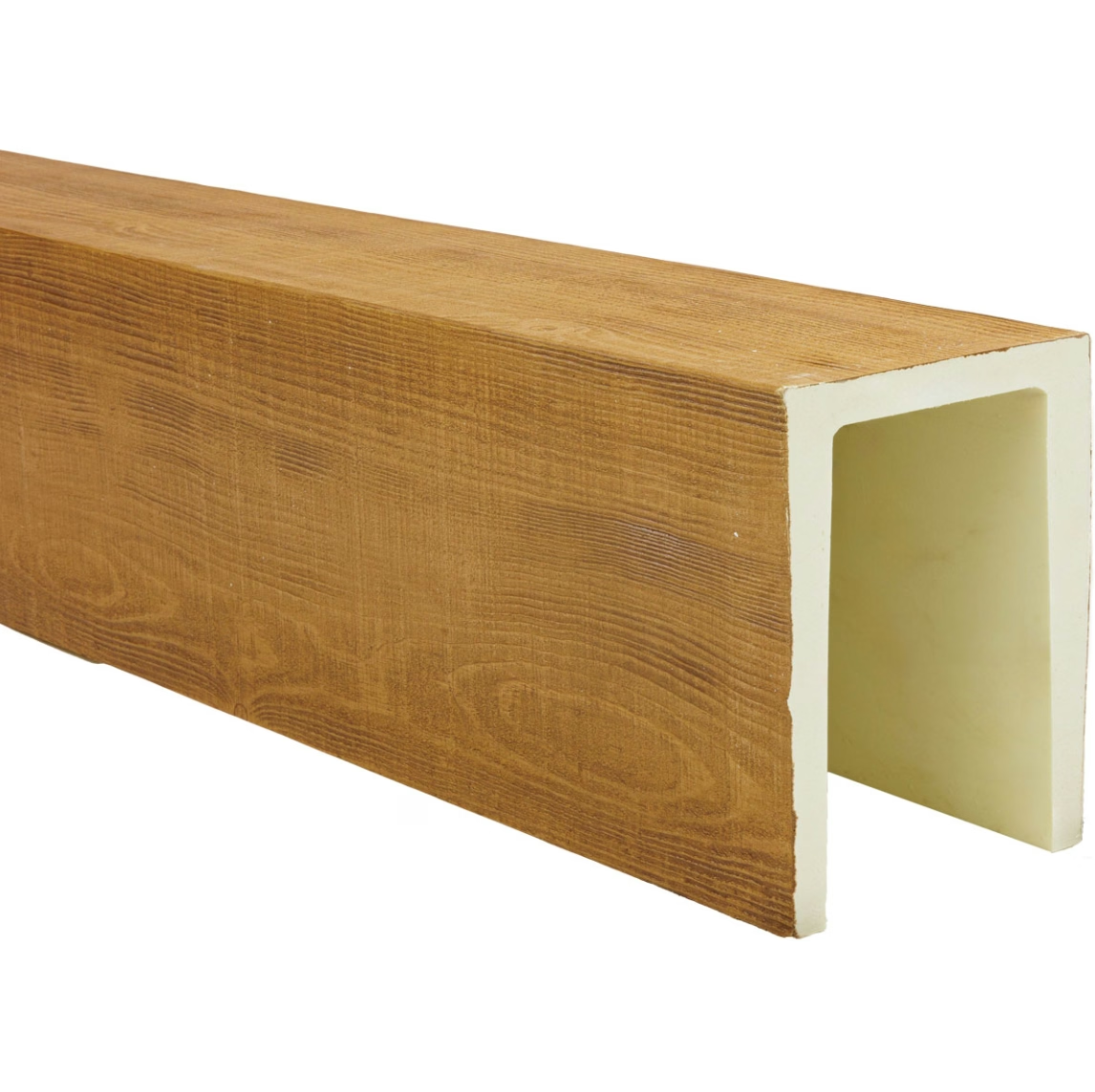
Commercial projects frequently require customization beyond standard product offerings. Brand colors might demand specific stain matching. Architectural designs might require non-standard profiles. Installation scenarios might need custom lengths or configurations. Professional commercial suppliers offer these capabilities, transforming from standard product distributors to project partners contributing to design success.
Custom color matching for commercial projects ensures brand consistency across multiple locations or throughout large spaces. Suppliers can work from color specifications, physical samples, or brand guidelines to produce beams in precisely matching colors. This capability enables design flexibility without compromising brand integrity—a consideration that matters enormously to commercial clients protecting their visual identity.
Profile customization addresses architectural requirements that standard shapes cannot satisfy. Coffered ceiling systems, ornamental feature beams, and structural-looking decorative elements often require custom manufacturing. The tooling and production capabilities to produce these custom profiles represent significant supplier investments, and the suppliers who have made those investments serve commercial clients far more effectively than those without such capabilities.
Project Management and Coordination Support
Large commercial orders involve coordination far beyond simple product delivery. Scheduling deliveries to match construction phases, coordinating with other trades, managing site logistics, and handling issues that inevitably arise all require supplier engagement. Commercial suppliers understand these dynamics and provide account management support that residential suppliers cannot match.
Dedicated account representatives become familiar with ongoing projects, anticipate needs, and proactively communicate about status and issues. This relationship enables faster issue resolution and more personalized service than transactional purchasing models. Commercial buyers who develop these relationships find that suppliers become genuine partners invested in project success rather than simple vendors fulfilling purchase orders.
Site coordination for large deliveries addresses logistics challenges that smaller orders never encounter. Scheduling deliveries around crane availability, coordinating with general contractors, managing offloading requirements, and staging materials for sequential installation all require planning and communication. Suppliers experienced in commercial work have established processes for these activities, reducing the management burden on general contractors and project managers.

Fire Safety and Building Code Compliance
Commercial buildings face stricter fire safety requirements than residential structures, and ceiling materials must meet relevant codes. Polyurethane faux beams can achieve various fire ratings depending on formulation and additives, and commercial projects should specify products meeting the appropriate class ratings for their occupancy type and location. Understanding which codes apply and ensuring compliance protects both immediate project approval and long-term occupant safety.
Sprinkler systems and fire suppression infrastructure interact with ceiling beam installations in ways that require coordination. The positioning of beams must accommodate sprinkler heads, and beam materials must not interfere with suppression system effectiveness. Working with suppliers who understand these requirements enables designs that satisfy both aesthetic and safety objectives.
Documentation of fire ratings and code compliance facilitates the approval process and protects building owners from future liability. Commercial projects should retain records of material specifications, testing documentation, and installation compliance for reference throughout the building lifespan. This documentation also proves valuable during ownership transitions, tenant improvements, and renovation projects.
Commercial polyurethane faux beam supply extends far beyond simply ordering materials. The reliability, quality, customization, and support that large projects require demand supplier relationships built on professional infrastructure and commercial expertise. Projects that invest in establishing these relationships find that beam installation becomes a straightforward project component rather than a potential source of delay or difficulty.

Technical References
ASTM standards cited in every specification
Test Data
Lab results from internal testing program
Updated 2026
Reviewed against current product specs