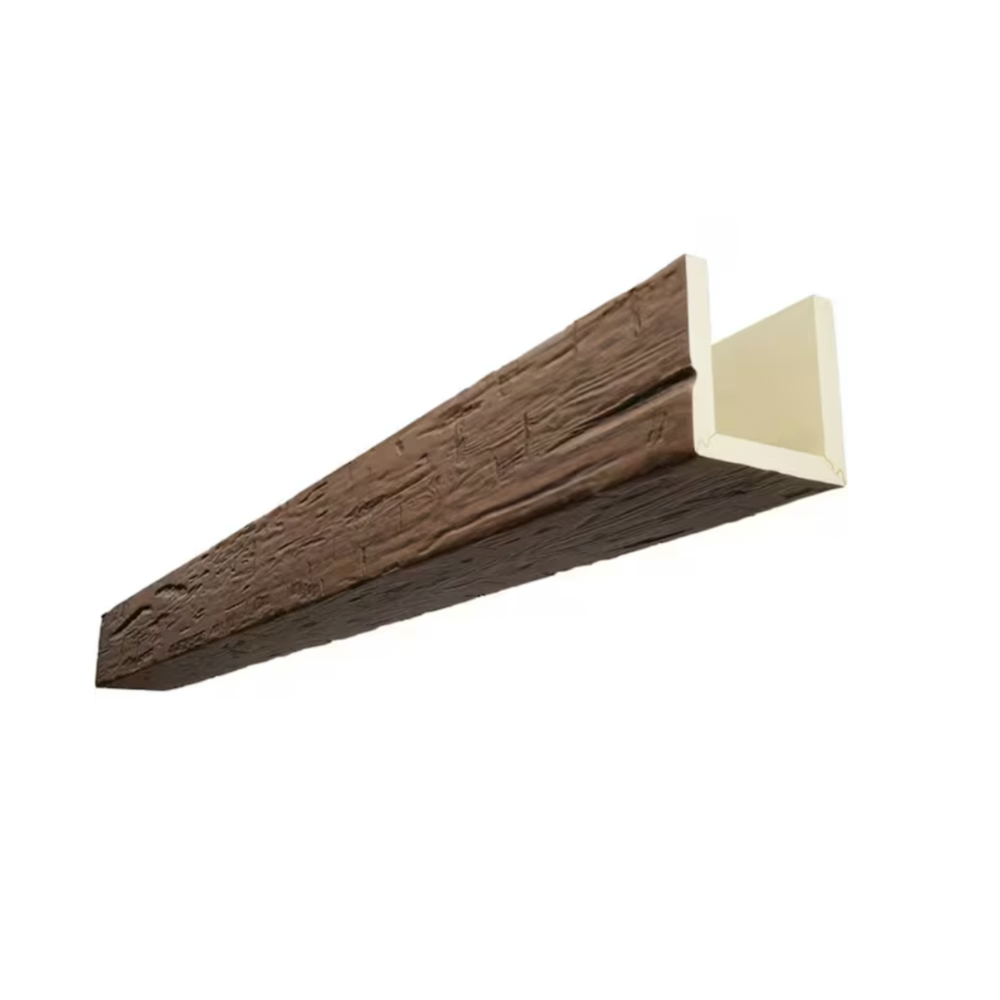
Great rooms present design challenges that their openness amplifies rather than simplifies. The same spatial freedom that makes these rooms feel expansive also means that ceiling design carries unusual visual weight. What might be a pleasant accent in a modest dining room becomes a defining feature in a space where walls disappear and the ceiling becomes the primary horizontal plane. Large size faux wood beams address this challenge with presence and authority that small-scale treatments cannot achieve.
The scale of ceiling beams in great rooms should relate to the room's dimensions in ways that feel intentional rather than arbitrary. A beam that looks comfortable in an intimate breakfast nook will disappear entirely against a twenty-foot ceiling. Proportionate scaling means that great room beams often measure twelve to eighteen inches in depth, with widths that match or exceed those dimensions. These substantial profiles create the visual anchor that large open spaces require.
Scaling Beams to Great Room Proportions
Understanding proportional scaling requires setting aside assumptions derived from smaller spaces. In a standard living room with eight or nine foot ceilings, beams might span six to eight inches deep—substantial but not overwhelming. The same proportional relationship in a great room with fourteen or sixteen foot ceilings suggests beams eighteen to twenty-four inches deep. The mathematics are simple; the results are dramatic.
Width affects perceived mass as significantly as depth. Square or near-square beam profiles feel more solid and substantial than narrow deep profiles of equivalent depth. For great rooms demanding maximum presence, beams measuring eighteen inches deep by sixteen inches wide create a visual weight that fills the overhead space appropriately. These dimensions would overwhelm a standard room but perfectly balance a cathedral-vaulted great room.
Length creates additional design considerations at large scale. Beams spanning twenty or thirty feet without interruption make strong visual statements, but practical factors like transport limitations, installation access, and structural coordination sometimes require seams. Thoughtfully positioned joints, matching the beam profile seamlessly, can maintain visual continuity while addressing these practical constraints. The key is ensuring that joints fall at locations where they read as intentional design features rather than construction expediency.

Finish Selection for Large Scale Impact
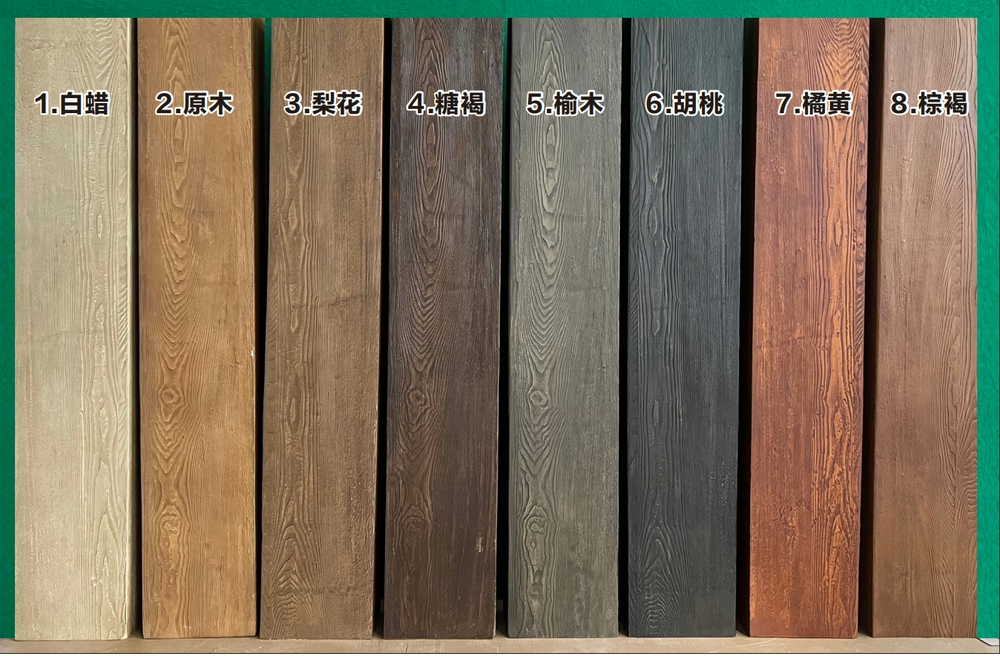
The finish applied to large beams determines their visual temperature within the room's overall color scheme. Dark finishes create drama and intimacy, anchoring the ceiling plane with substantial visual weight. Light finishes recede more, creating a sense of airiness that maximizes the feeling of openness. Mid-tone finishes provide balance, offering presence without the extremes of either approach.
Weathered and distressed finishes work particularly well at large scale because they introduce texture that reads from below. The visual complexity of aged wood—checking, grain variation, color streaking—maintains interest across the full height of tall spaces. Flat or uniformly smooth finishes can feel bland when viewed from distance, lacking the detail that draws the eye and rewards extended observation. Great room beams should reward the full visual experience of the space.
Color coordination with other wood elements in the room creates either cohesive harmony or intentional contrast. Beams matching nearby exposed timber, built-in millwork, or flooring establish material continuity that grounds the design. Beams in contrasting tones create deliberate separation that emphasizes the ceiling as a distinct design layer. Both approaches succeed when executed with understanding of the overall design intent.

Installation Strategies for Oversized Beams
The installation of large beams requires planning that begins before materials arrive on site. Ceiling structure must be evaluated for load capacity, attachment point locations, and any reinforcement requirements. Even though polyurethane beams weigh far less than solid timber, large surface area creates wind load considerations in some conditions, and proper attachment remains essential for safety and long-term performance.
Support systems for oversized beams often involve concealed steel mounting hardware. Heavy-duty steel brackets, welded plates, or threaded rods attach to structural elements and support the beams from above. The steel elements remain completely concealed once beams are in position, maintaining the appearance of solid timber support without visible hardware. Coordinating these mounting systems with ceiling structure and other systems above the finished ceiling plane requires detailed planning and sometimes coordination with structural engineers.
The physical process of positioning large beams benefits from equipment assistance even with polyurethane's reduced weight. A beam eighteen inches by sixteen inches by thirty feet long, while light compared to timber, still requires careful handling to prevent damage and ensure proper positioning. Forklifts, ceiling hoists, or powered lift equipment make the process safer and faster than manual handling alone.
Design Integration with Other Ceiling Elements
Great room ceilings often incorporate multiple elements beyond beams—coffered sections, soffited areas, recessed lighting, decorative millwork. Large beams should integrate with these elements rather than competing against them. Coordination requires understanding how different ceiling treatments interact visually and ensuring that the overall composition creates a coherent design rather than a collection of unrelated features.
Coffered beam systems create formal grid patterns that work beautifully in traditional and transitional great rooms. The coffers themselves might feature smaller scale beam work, with larger primary beams defining the major grid lines. This layered approach creates visual complexity while maintaining proportional relationships that feel natural. The interplay of light and shadow within coffered sections adds dimension that flat surfaces cannot achieve.
Integrating beams with skylights and clerestory windows requires careful positioning to maintain natural light flow while incorporating beams as design features. Beams that interrupt window views create visual confusion, while beams that frame and emphasize windows reinforce both elements. The relationship between beams and natural light sources deserves early design attention to achieve successful outcomes.
Long-Term Design Considerations
Great room ceiling treatments represent significant investments, and their impact extends across the entire lifespan of the space. Design decisions that feel exciting during installation should be evaluated against how they will feel years later, after the novelty fades. Will the chosen beam scale and style remain appealing through changing design trends? Will the selected finish age gracefully, or will it show wear patterns that compromise the initial impression?
The durability of polyurethane faux beams serves these long-term considerations well. Unlike natural wood that may warp, crack, or deteriorate over time, quality polyurethane maintains its appearance and structural integrity indefinitely. This permanence makes the initial design investment more secure, knowing that the ceiling treatment will continue performing as designed throughout the space's useful life.
Flexibility for future changes also deserves consideration. Beams that accommodate lighting additions, ceiling fan installations, or architectural modifications without significant difficulty serve evolving needs better than rigid designs that require extensive rework for any change. Discussing these potential modifications with installers during the design phase ensures that mounting systems and beam specifications support future flexibility.
Large size polyurethane faux beams transform great room ceilings from overlooked construction surfaces into the defining design elements these spaces deserve. The combination of substantial visual presence, practical installation advantages, and long-term durability makes oversized beams an increasingly popular choice for homeowners and designers seeking to maximize the impact of great room architecture.

Technical References
ASTM standards cited in every specification
Test Data
Lab results from internal testing program
Updated 2026
Reviewed against current product specs