Luxury interior design operates by different rules than standard residential work. Spaces designed to impress demand details that command attention, materials that convey quality, and proportions that establish hierarchy. In grand interiors, every element competes for visual significance, and ceiling treatments must assert themselves forcefully enough to hold their own against the other design investments throughout the space. Large-size polyurethane faux wood beams meet these demanding requirements with presence that justifies their position as primary design elements.
The psychology of grand interior spaces relies on proportion to create emotional response. Rooms that dwarf their occupants by substantial margin generate feelings of awe and importance—the emotional experience that luxury seeks to create. Ceiling treatments that fail to participate in this proportion game undermine the spatial drama that makes grand interiors desirable. Oversized beams ensure that the overhead plane contributes meaningfully to the overall impression.
Establishing Visual Hierarchy in Grand Spaces
Every successful interior establishes visual hierarchy—the ordered importance of design elements that guides the eye and communicates what matters most. In grand spaces, ceiling beams can occupy different positions in this hierarchy depending on design intent. They might serve as primary focal points that everything else supports, secondary elements that complement but do not compete with other features, or background elements that provide texture without demanding attention.
Beams designed as primary focal points should be substantial enough to dominate the visual field when viewed from any angle. Their positioning, finish, and detailing should maximize impact while maintaining coherence with other design elements. These installations represent significant investments that require correspondingly significant design attention to ensure successful outcomes.
Secondary beam treatments support primary design elements without overwhelming them. A fireplace might be the true focal point of a grand living room, with beams positioned to frame and emphasize that focus rather than compete with it. These more restrained treatments still add warmth and character but do so within the context established by other prominent features.
Proportion Guidelines for Luxury Interiors
Luxury interiors often employ proportion principles borrowed from classical architecture. The golden ratio, classical orders, and established architectural precedents inform sizing decisions in ways that feel intuitively correct even when buyers cannot articulate the specific principles involved. These principles suggest that grand interior beams should scale to the space in ways that create pleasing relationships between elements.
A practical sizing approach relates beam dimensions to human scale at the scale of the room. Human scale in a grand room differs from standard rooms—taller occupants, larger furniture, more substantial finishes all contribute to a sense of generous proportion. Beams should feel substantial relative to the human activity in the space, which in grand interiors means larger than intuition developed in smaller spaces might suggest.
Width often receives less attention than depth in beam sizing but affects presence equally. Square or nearly square profiles feel more massive and substantial than deep narrow profiles of equivalent depth. For truly grand statements, profiles approaching square create presence that deep but narrow profiles cannot match. The trade-off is that square profiles require more mounting depth and create more visual weight on the walls.

Finish Selection for Luxury Contexts
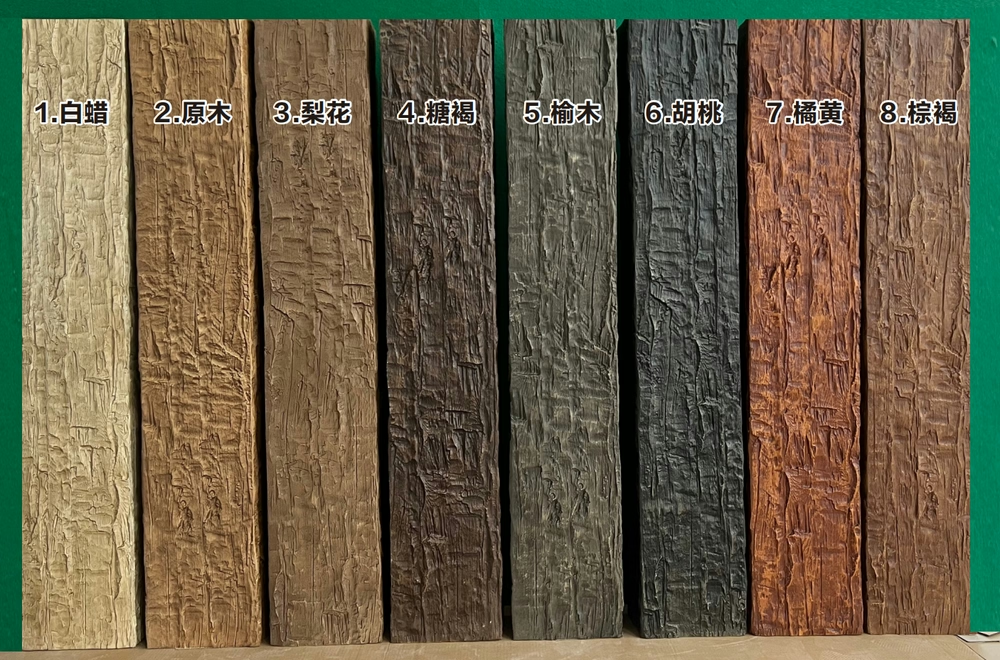
Luxury interiors demand finishes that convey quality through color richness, surface refinement, and attention to detail. The finish applied to grand interior beams must meet standards established by other premium elements throughout the space. Beams finished at a quality level appropriate for a standard home will read as inferior in a luxury context, undermining the overall design investment.
Custom finish development addresses the specific color requirements that luxury interiors often demand. Working with finish specialists to create proprietary colors ensures that beam treatments align precisely with the design vision. These custom finishes command premiums but ensure that beam installations contribute to rather than detract from the premium positioning of luxury interiors.
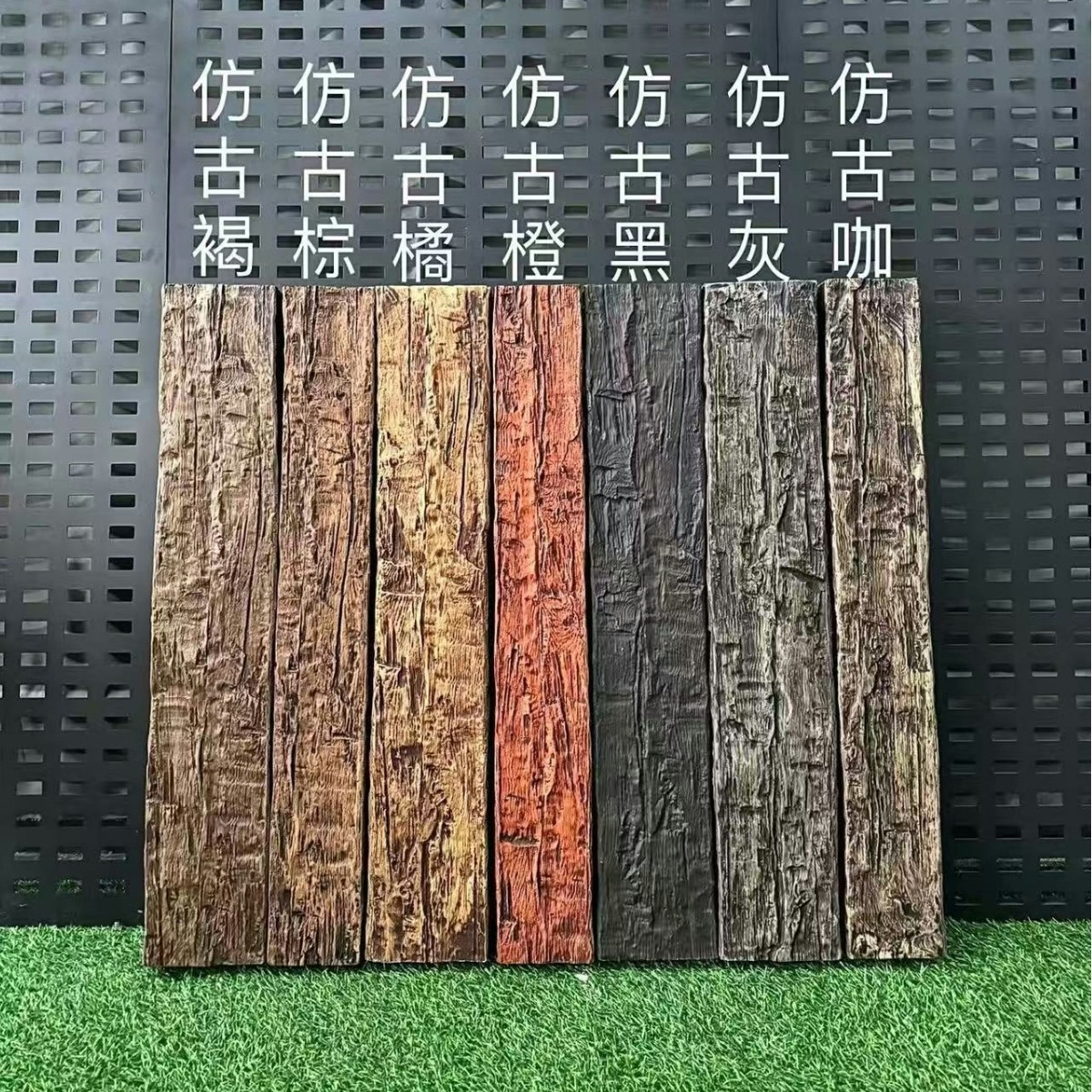
Finish durability in luxury contexts extends beyond simple maintenance to the preservation of design intent. Finishes that show wear, fade unevenly, or require periodic restoration fail the luxury standard. Polyurethane's resistance to UV degradation, moisture damage, and surface wear ensures that initial finish quality persists indefinitely, supporting the long-term design integrity that luxury interiors require.
Integration with Architectural Details
Grand interiors typically feature architectural details that extend beyond basic ceiling treatment. Crown molding, wall paneling, built-in millwork, and decorative trim all interact with ceiling beams in compositions that must function as unified designs. The relationships between these elements—their proportions, alignments, and material continuity—determine whether the overall result feels considered and refined or arbitrary and confused.
Beam and crown molding combinations require careful proportion matching. Both elements occupy the ceiling-wall intersection but at different scales and with different profiles. The transition between them should feel natural rather than abrupt, with size changes that feel intentional rather than arbitrary. Mockup development helps verify these relationships before commitment to final installation.
Wall paneling and beam installations interact spatially, with beams either penetrating paneled surfaces or creating visual separation from them. Each approach creates different effects—the beam penetrating paneling suggests integrated construction, while the beam floating above creates layered depth. Understanding these effects enables choices aligned with overall design direction.
Long-Term Value Considerations
The investment in grand interior beam installations should deliver returns throughout the space's useful life. Quality materials and craftsmanship that maintain their appearance over decades represent better value than lower initial costs that require ongoing maintenance or eventual replacement. The total cost of ownership perspective reveals that premium products often provide better long-term value despite higher initial prices.
Design flexibility for future changes extends the value of initial beam investments. Spaces that might be renovated in future years benefit from beam installations that accommodate various design directions without requiring replacement. Mounting systems that allow beam removal, finishes that can be refinished in alternative colors, and modular configurations that can be reconfigured all contribute to long-term value.
Property value enhancement from quality beam installations can exceed the direct installation cost. Grand interior features that create memorable impressions contribute to property appeal and market valuation. For high-value properties, the ceiling treatment represents one of several premium features that collectively establish market position.
Grand interior design with oversized polyurethane faux wood beams achieves design outcomes that justify the investment these spaces demand. The combination of substantial presence, practical installation advantages, and enduring quality makes these beams the appropriate choice for interiors aspiring to genuine luxury.

Technical References
ASTM standards cited in every specification
Test Data
Lab results from internal testing program
Updated 2026
Reviewed against current product specs


