Some interior design elements earn the description "statement piece"—they assert themselves in spaces with such confidence that no visitor can overlook them. Statement ceiling beams operate in three dimensions, defining the overhead plane that visitors cannot help but notice upon entering a room. The scale required for true statement impact demands materials and installation approaches that polyurethane faux beams handle with particular elegance.
Statement installations differ from accent treatments in both proportion and intention. Accent elements complement existing design frameworks, adding interest without fundamentally reshaping the space. Statement elements reorient the design around themselves, becoming the reference point against which other elements are evaluated. Ceiling beams aspiring to statement status must commit fully to that role, with sizing, positioning, and styling that reinforces the dramatic intent.
What Makes a Beam Statement-Worthy
Genuine statement elements achieve their impact through multiple reinforcing characteristics rather than single dramatic features. Size alone does not create statement status—a modestly sized beam installed with exceptional craft in the right context can make as strong a statement as a massive beam in different circumstances. The relationship between beam characteristics and overall space design determines whether the statement succeeds.
Scale relative to human experience defines how beams register in consciousness. Beams that appear to barely clear heads as people pass beneath create different reactions than beams positioned at the full height of tall spaces. Both can make statements; they make different statements. Understanding how scale perception affects emotional response helps designers choose sizing that supports the intended message.
Visual complexity contributes to statement impact by providing detail that holds attention over extended viewing. Simple smooth beams can make strong statements through sheer presence, but beams with grain texture, color variation, and surface interest reward extended observation more fully. The interplay between bold form and nuanced surface creates the depth of impression that true statements require.

Profile Selection for Maximum Impact
Beam profile—the cross-sectional shape—influences statement impact significantly. Traditional profiles featuring stepped details, decorative edges, and complex profiles work well in spaces with complementary architectural styles. Contemporary spaces often favor clean-lined profiles with minimal detailing, letting the sheer scale carry the design message. Ranch and farmhouse styles frequently employ rough-hewn profiles that emphasize the rustic character of the timber aesthetic.
Coffered profiles create statement impact through pattern repetition rather than individual beam scale. A coffered ceiling featuring beams every four to six feet creates a composition that reads as a unified design rather than a collection of individual elements. This approach works particularly well in rectangular rooms where the grid aligns naturally with the architecture. The coffer depth and beam proportion determine the intensity of the statement.
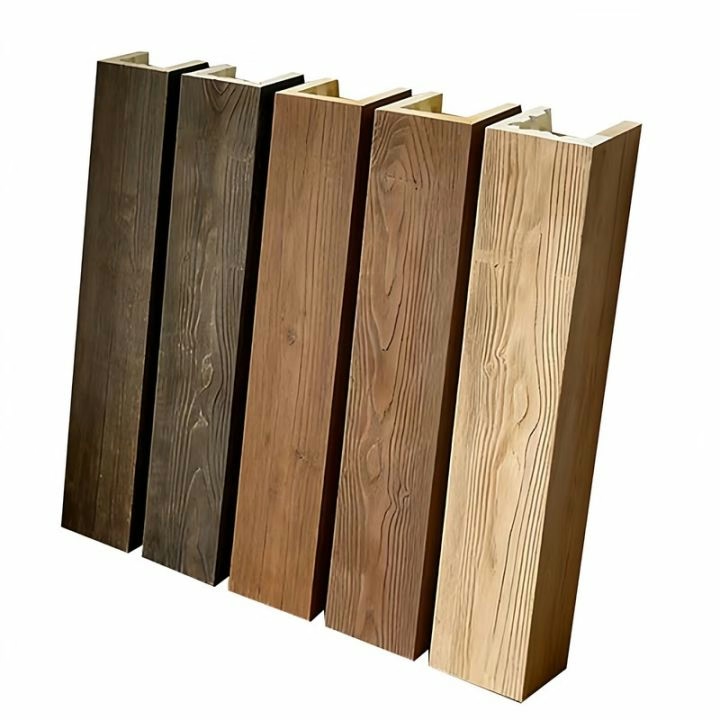
Box beam profiles— beams that appear as square or rectangular columns mounted flush against the ceiling—offer the boldest contemporary statement option. Their clean geometry and substantial presence anchor contemporary spaces with architectural confidence. The hollow nature of box beams means that even very large sizes remain lightweight, enabling installations that would be impractical with solid timber.
Positioning Strategies That Amplify Impact
Where beams are positioned fundamentally affects how they read in the space. Single beams or parallel pairs create different statements than grid arrangements or radial patterns. The spatial distribution of visual weight across the ceiling plane determines the overall composition and emotional character of the installation.
Feature beams positioned over focal points—fireplaces, primary seating areas, grand dining tables—create natural connections between overhead drama and below-floor activity. These beams feel intentional because they relate to how the space is used, drawing the eye toward the action below while adding overhead interest. The psychological satisfaction of this alignment reinforces the positive impression the statement makes.
Asymmetric arrangements create more dynamic statements than predictable symmetry. A single oversized beam crossing a space at an unexpected angle, or three beams of graduated lengths creating a cascading pattern, generates visual interest through surprise and movement. These arrangements require more careful design attention than grids but reward that investment with installations that distinguish spaces from more conventional approaches.
Lighting Integration for Enhanced Drama
Strategic lighting elevates statement beams from impressive to unforgettable. The interplay of light across beam surfaces reveals texture, emphasizes form, and creates shadow patterns that change throughout the day as natural light shifts. This dynamic quality keeps statement beams engaging over time rather than becoming static background elements.
Uplighting from beam ends or concealed fixtures above creates pools of light that wash across beam surfaces, emphasizing grain and depth. This approach works particularly well for beams with substantial texture where shadows within the grain add visual complexity. The contrast between illuminated surfaces and shadowed recesses creates the three-dimensional drama that makes statement beams memorable.
Accent lighting positioned to graze beam surfaces at low angles maximizes texture visibility. The shadows cast by grain patterns and surface irregularities under raking light create richness that flat lighting cannot achieve. For beams selected specifically for their surface character, this lighting treatment reveals that character fully while adding the dimensional quality that distinguishes statement installations.

Maintenance of Statement Impact Over Time
Statement elements face a particular challenge: they must remain impressive despite constant visibility. Accent pieces can recede into background when their novelty fades; statement elements have no such option. Materials that maintain their appearance without regular intervention serve statement purposes better than those requiring ongoing attention.
Polyurethane's resistance to moisture, temperature fluctuation, and UV exposure enables it to maintain statement appearance indefinitely without refinishing or repair. This durability proves particularly valuable in statement applications where any visible degradation would compromise the design intent. The material performs consistently across decades, ensuring that the initial statement remains as powerful years later as it was on installation day.
Cleaning requirements for statement beams should be minimal and simple. Surfaces that can be dusted or occasionally wiped maintain their appearance without specialized products or professional services. This accessibility ensures that building owners can preserve statement impact through simple maintenance rather than expensive restoration.
The investment in statement ceiling beams pays dividends in the ongoing character and appeal of interior spaces. These installations define rooms in ways that furniture and finishes cannot match, creating architectural presence that adds value to properties while providing daily aesthetic rewards. For spaces deserving of memorable design, statement ceiling beams deliver impact that justifies the investment.

Technical References
ASTM standards cited in every specification
Test Data
Lab results from internal testing program
Updated 2026
Reviewed against current product specs


