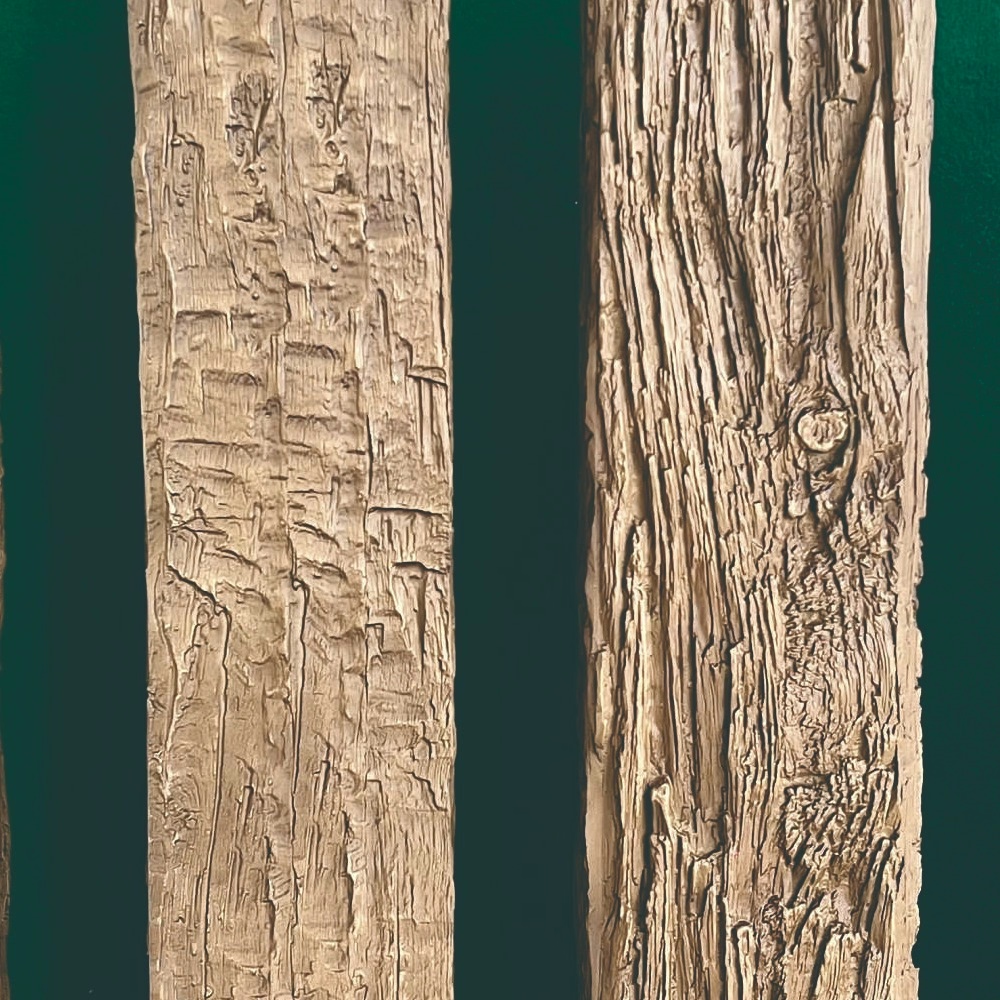
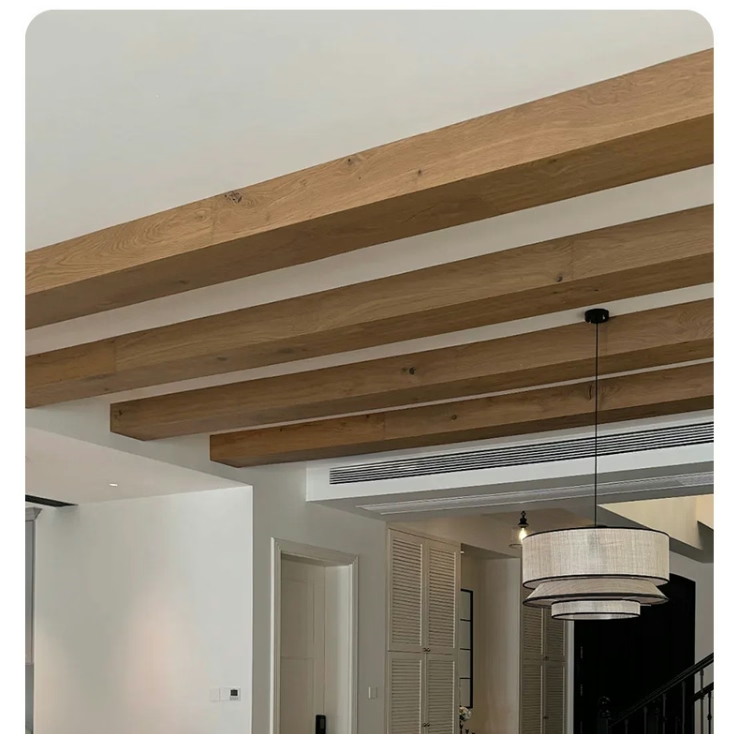
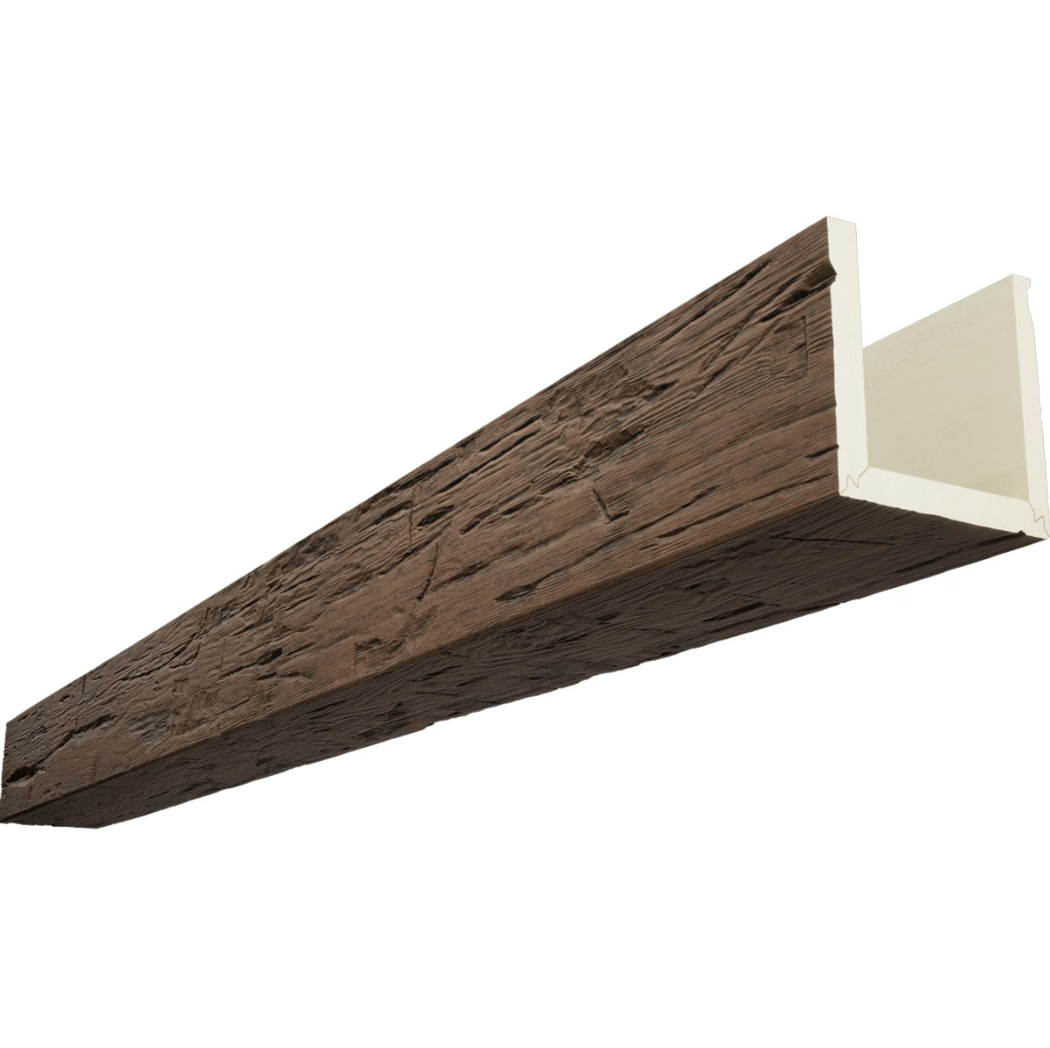
Architecture has always included curved elements—from Roman arches to Baroque flourishes, the curve represents architectural expression beyond the purely functional. Contemporary design continues this tradition, incorporating curved beams in spaces that demand visual movement, organic flow, or simply variety from the rectilinear dominance of most construction. Custom curved polyurethane faux timber beams enable these designs with practical advantages that curved timber simply cannot offer, and large-volume orders of these specialized elements require understanding the unique considerations they present.
The curve in architectural beams serves purposes beyond decoration. Curved beams can follow roof structures, bridge awkward transitions between planes, or create visual interest that breaks monotony in long runs. The psychological effect of curves differs from straight lines—curves feel more organic, dynamic, and flowing, creating emotional responses that straight elements do not. Understanding when curves serve design purposes versus when they are applied unnecessarily distinguishes thoughtful architectural use from decorative excess.
Design Possibilities with Curved Beams
Radius curves create smooth arcs that can follow structural archways, bay window formations, or decorative schemes requiring organic flowing forms. The radius of these curves determines their visual character—tight radius curves create dramatic bending, while gentle sweeps maintain subtle curvature that reads as elegant rather than aggressive. Specification of radius requirements enables manufacturers to produce beams matching design intent precisely.
S-curve and compound curves present more complex manufacturing challenges but enable designs that straight beams cannot achieve. These shapes might follow serpentine ceiling features, create ornamental intersections, or achieve visual effects that justify their additional complexity. Understanding the manufacturing implications of complex curves helps designers balance ambition with practicality.
Spiral and helical curves create the most dramatic applications but require the most sophisticated manufacturing and installation approaches. These forms work best in spaces where the curve can be appreciated from multiple angles, revealing the three-dimensional quality that distinguishes spiral treatment from planar alternatives. Such applications represent significant investments that should emerge from genuine design requirements rather than novelty-seeking.

Manufacturing Capabilities and Limitations
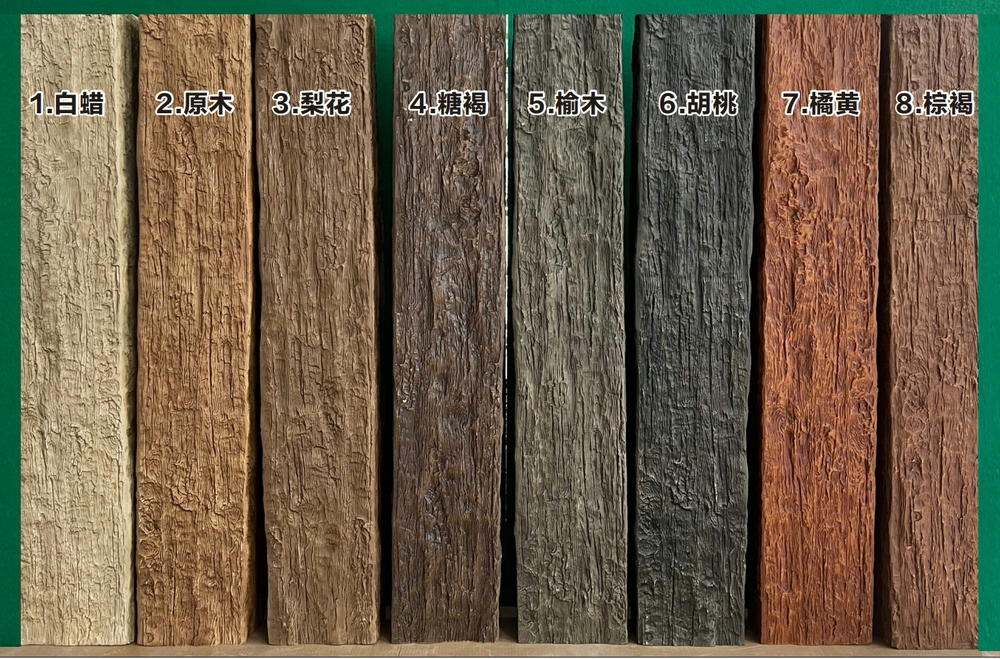
Polyurethane foam accepts mold-based forming that enables complex curved shapes with surface textures and finishes baked in during production. The foam expands into molds that capture precise curvature along with any surface detailing—grain patterns, weathering effects, or decorative carvings. This integrated manufacturing reduces finishing labor that would be required with other materials.
Mold creation represents the primary investment in custom curved beam production. Single-radius curves can often be achieved through bending of straight-formed beams, but compound curves and tight radii require dedicated tooling. The mold cost amortizes across order volume, making larger orders more economically attractive than small quantities of highly customized shapes.
Tolerance management in curved beam production addresses the accumulated variation that complex shapes can introduce. Each point along a curved beam must position correctly relative to adjacent elements and architectural features. Production processes that maintain tight tolerances throughout the forming and finishing stages ensure that curved beams install successfully without requiring extensive on-site adjustment.
Structural Considerations for Curved Applications
Curved beams create different structural behaviors than straight beams, even when the structural loads are similar. The curved geometry introduces bending stresses that straight beams do not experience, though decorative beams carry no structural loads regardless of shape. Understanding the distinction between structural and decorative applications prevents specification errors that could have serious consequences.
Support requirements for curved beams differ from straight installations. The natural tendency of curved elements to straighten under load requires support strategies that counteract this tendency. Concealed steel armatures within or behind beams provide support while maintaining the appearance of unsupported spans. Engineering coordination ensures that these support systems perform correctly.
Connection details where curved beams meet walls, other beams, or architectural features require custom approaches that straight beam installations avoid. These connection points become more visually prominent when the adjacent beam surfaces are curved, demanding careful detailing that maintains appearance while providing adequate connection strength. Collaboration between designers, engineers, and manufacturers during detailing resolves these challenges before production begins.
Bulk Order Planning and Lead Times
Custom curved beam orders require substantially longer lead times than standard straight beam purchases. Mold creation, sample approval, production scheduling, and quality verification extend the timeline in ways that simple ordering processes cannot accommodate. Project schedules must account for these extended timelines during design and procurement planning.
Large-volume orders of custom curved beams face challenges that standard product ordering does not. Quality consistency across large production runs becomes more critical when quantities are high—any systematic variation will appear across many pieces rather than a single item. Manufacturers must implement quality processes that maintain consistency throughout extended production runs.
Production capacity planning with manufacturers ensures that order volumes can be accommodated within required timeframes. Large orders competing with other customer commitments may face scheduling pressure that affects delivery timing. Early engagement with manufacturers allows capacity reservation that protects delivery schedules while enabling the production quality that large orders demand.
Cost Optimization Strategies
The economics of custom curved beams improve significantly with volume. Mold costs spread across more units, production efficiency improves with repetition, and shipping density increases as orders grow. Strategic consolidation of curved beam requirements across multiple project locations or phases captures these efficiencies while ensuring design consistency.
Standardization of curved beam specifications across a project portfolio reduces the variety of custom tooling required. When different locations or phases can use identical curved shapes, a single mold serves multiple needs, eliminating redundant tooling investment. This standardization requires coordination during design development but yields ongoing cost benefits.
Prototype development before full production commitment identifies problems that would be expensive to address in large runs. Investing in sample production and installation testing reveals fit, finish, or appearance issues that can be corrected before manufacturing resources are committed to full volume. This prototyping discipline prevents costly production errors that would otherwise affect entire order quantities.
Custom curved polyurethane faux timber beams enable architectural expressions that straight beams cannot achieve, expanding the design vocabulary available to architects and designers. Large-volume orders of these specialized elements require planning, supplier relationships, and project management approaches suited to their complexity. Projects that invest in these capabilities access design possibilities that simpler approaches cannot reach.

Technical References
ASTM standards cited in every specification
Test Data
Lab results from internal testing program
Updated 2026
Reviewed against current product specs