Surface finish is the soul of a faux wood beam. No matter how precisely the mold captures a wood profile, a poorly matched or executed finish will undermine the illusion. Fortunately, advances in polyurethane molding technology and finishing chemistry have produced a wider range of convincingly realistic surface treatments than ever before. Understanding these finishes—and the design philosophies behind them—can help designers, contractors, and homeowners specify the right look for any interior concept.

Hand-Scraped Finishes: Authenticity Through Imperfection
The hand-scraped finish emerged from the hardwood flooring industry and migrated naturally into beam applications, where its authentic, labor-intensive appearance resonates strongly with homeowners seeking character-rich interiors. The technique involves applying a base coat, then using hand tools to selectively remove finish from high points and edges, simulating the natural wear patterns that develop on real timber over decades of use.
What makes hand-scraped finishes convincing in polyurethane applications is their inconsistency. Unlike machine-applied textures that repeat predictably, hand scraping produces unique marks that vary subtly across each beam's surface. Modern finishing manufacturers have refined the technique for PU substrates by developing base coats with appropriate adhesion and flexibility, preventing the finish from cracking or delaminating as the underlying material expands and contracts with temperature changes.
The current trend in hand-scraped finishes emphasizes restraint compared to the heavily distressed looks that dominated a decade ago. Designers are favoring more subtle variations—gentle transitions rather than dramatic color shifts, lighter scraping that enhances rather than overwhelms the base tone. This refinement suits contemporary interiors where the goal is warmth rather than rustic extremes.
Whitewash and Limewash Treatments
Whitewash and limewash finishes have experienced a significant resurgence, particularly in coastal and transitional design schemes. These treatments originated as protective coatings for exterior masonry and timber, but their translucent, breathable aesthetic has made them favorites in interior applications where a soft, luminous quality is desired.
On faux wood beams, whitewash finishes create the impression of aged, sun-bleached timber without the investment required to source genuinely weathered wood. The key to a convincing whitewash lies in the degree of translucency. A finish that is too opaque will read as paint, eliminating the wood grain visibility that makes the effect appealing. Properly applied whitewash should obscure roughly sixty to seventy percent of the underlying color, allowing grain patterns and surface texture to remain visible.
Limewash represents a related but distinct treatment, using calcium hydroxide as the primary binder to create a chalky, mineral-rich appearance. On beams, limewash produces a more textured, almost foggy quality that works particularly well in Scandinavian-inspired andJapandi interiors. The finish dries to a matte surface with subtle variations in opacity that respond beautifully to natural light.


Reclaimed and Weathered Finishes
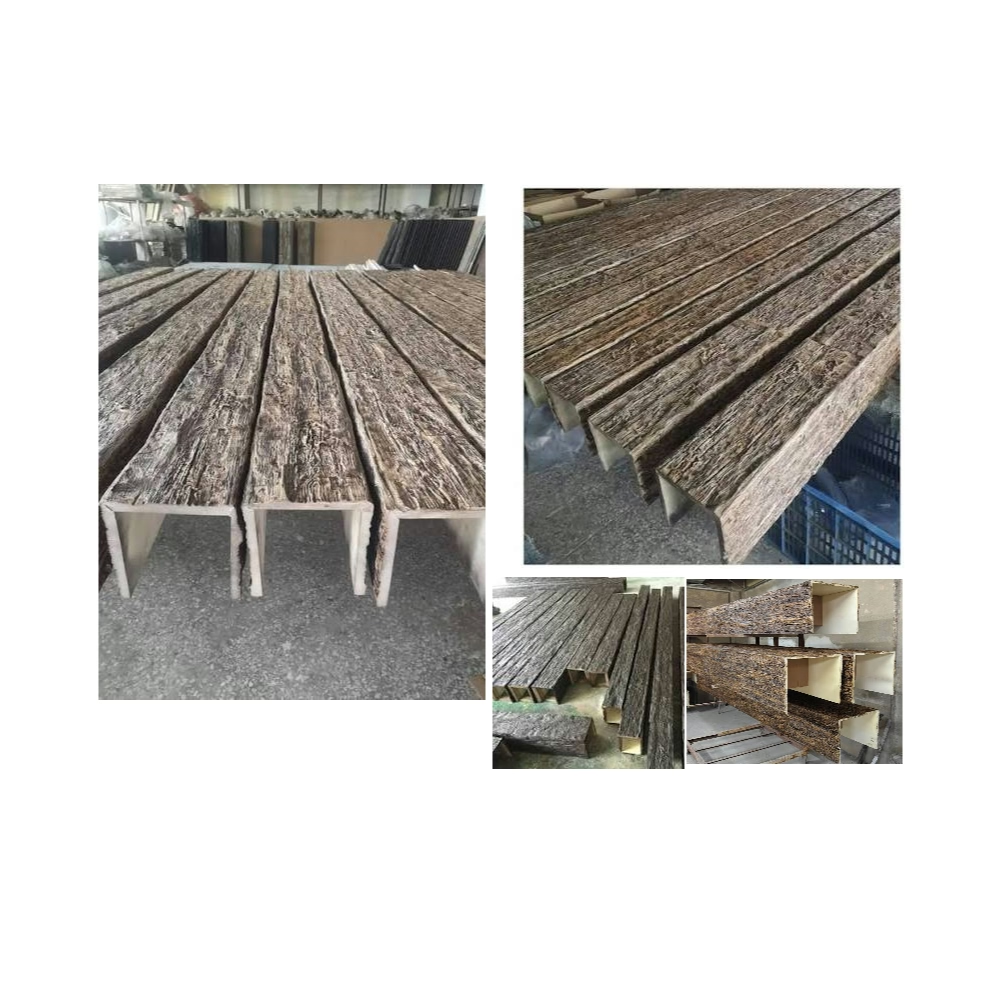
Reclaimed wood finishes continue to dominate in farmhouse, industrial, and lodge-inspired interiors, but the approach to achieving these looks has evolved. Early faux beam products attempted to simulate reclaimed wood through color alone—dulling fresh polyurethane with brown or gray pigments that approximated aged timber. Today's finishing techniques are far more sophisticated, combining color, texture, and surface chemistry to produce results that fool experienced eyes at normal viewing distances.
The most convincing reclaimed finishes address multiple visual cues simultaneously. Color variation across the beam surface replicates the uneven exposure to light and air that affects genuine reclaimed timber. Subtle surface oxidation, often achieved through controlled application of iron acetate solutions, creates the gray-green undertones found in weathered exterior wood. End-grain darkening, achieved through targeted staining of exposed cross-sections, addresses the distinctive appearance of beam ends that are absent from smooth-surfaced imitations.
An emerging trend within the reclaimed category is the "salvage yard" aesthetic, which references industrial and agricultural timber rather than structural demolition salvage. Beams with visible bolt holes, metal stains, and notched connections—effects achieved through molds or post-molding texturing—add narrative interest that appeals to buyers who want their interiors to suggest a history rather than merely evoke a style.
Matte Versus Satin: The Sheen Conversation
Sheen level is frequently overlooked in finish specifications but dramatically affects the perceived authenticity of faux wood beams. Real timber consistently reads as matte or very low-sheen regardless of species or age, because wood fiber surfaces scatter light diffusely rather than reflecting it specularly. High-gloss finishes on faux beams immediately signal artificial material to observant viewers.
The current consensus in the industry favors matte to low-lustre sheens, typically measured at five to fifteen percent on a sixty-degree glossmeter. These levels maintain the diffuse light behavior of natural wood while providing sufficient protection against dirt accumulation and moisture absorption. Satin finishes at twenty to thirty percent sheen are acceptable in more formal or transitional interiors but should be applied selectively rather than across all visible beam surfaces.
One subtle technique gaining traction involves applying different sheen levels within a single beam finish. Higher sheen on exposed edges and lower sheen on broad faces more closely mimics how real timber weathers, as edges typically accumulate more protective oils and waxes that create a slightly glossier surface. This variation adds dimensionality that uniform finishes cannot achieve.
Multi-Step Finishing Processes
Premium faux wood beam finishes increasingly employ multi-step processes that build depth through layered application. A typical high-end sequence might include a base stain layer, followed by a sealer coat, then one or two glaze layers with targeted application to recesses and texture valleys, and finally a protective topcoat. Each layer contributes distinct visual qualities while serving functional purposes.
The base stain establishes the fundamental color character and provides the canvas on which subsequent layers build. Glaze layers, applied with cloth, brush, or sponge, collect in recesses and texture details to create the shadow and highlight patterns that define the final appearance. The topcoat protects the entire system from scuffing, moisture, and ultraviolet degradation while contributing to the final sheen level.
Multi-step finishing is labor-intensive and requires skilled application, which explains the price premium associated with premium finished products. However, the investment pays dividends in longevity and visual quality. A well-executed multi-step finish will maintain its appearance for years with minimal maintenance, whereas single-coat finishes may fade, chalk, or wear unevenly within a few seasons in high-exposure applications.
Color Matching and Custom Finishes
The sophistication of custom color matching has expanded dramatically as digital color technology has become more accessible. Manufacturers can now produce finishes that match specific references—pantone chips, paint swatches, cabinetry samples, or even photographs of existing timber—with remarkable accuracy. This capability is essential for renovation projects where new beams must coordinate with existing wood elements.
The process begins with detailed color reference material and often involves iterative sampling until the match satisfies the designer's requirements. Most manufacturers maintain libraries of standard finish formulations while offering custom matching as a premium service. For large projects or brands with consistent design standards, custom-finished beams represent a significant investment in visual coherence.
Custom finishes also enable architectural branding that would be impossible with standard catalog options. Hospitality brands, restaurant chains, and vacation rental companies increasingly specify proprietary beam finishes that align with their visual identities, creating consistent atmosphere across multiple properties while differentiating their spaces from competitors using mass-market products.
Maintaining Finish Quality Over Time
Even the highest-quality faux wood beam finishes require appropriate care to maintain their appearance. Unlike natural wood, polyurethane does not require periodic refinishing or resealing, but it does benefit from regular cleaning and attention to environmental conditions that might affect adhesion or appearance.
Dust and airborne particles accumulate on beam surfaces over time, particularly in rooms with central heating and cooling systems that continuously recirculate air. Periodic dusting with a soft microfiber cloth removes surface contamination without abrading the finish. For kitchen applications where grease and cooking residues may accumulate, gentle cleaning with a diluted mild detergent followed by a clean water rinse is appropriate.
Environmental factors that warrant attention include prolonged direct sunlight, which can cause some finish formulations to yellow or fade over time, and high-humidity conditions that might affect the bond between finish layers and the polyurethane substrate. UV-resistant topcoat formulations have improved considerably, but positioning beams away from intense direct sunlight where possible will extend the finish life in south-facing or clerestory applications.
Technical References
ASTM standards cited in every specification
Test Data
Lab results from internal testing program
Updated 2026
Reviewed against current product specs

