The convergence of LED lighting technology and polyurethane faux wood beams has opened a new dimension in interior lighting design. Where traditional incandescent and fluorescent fixtures struggled to integrate naturally with decorative beam installations, modern LED systems offer the flexibility, efficiency, and aesthetic refinement that beam-based lighting applications demand. Pre-cut faux beams designed with LED compatibility in mind make this integration more accessible than ever, enabling homeowners, designers, and contractors to achieve professional-quality results without custom fabrication.

Why LED Technology Transforms Beam-Based Lighting
LED lighting fundamentally changes the economics and aesthetics of beam-integrated illumination in ways that previous lighting technologies could not achieve. Incandescent bulbs embedded in wooden or faux wood beams created fire hazards and heat management challenges that severely limited practical applications. Compact fluorescent sources were more efficient but suffered from color rendering limitations and the bulky fixtures they required. LED strips and modules solve both problems, providing high-quality illumination in thin, flexible form factors that fit within or behind beam structures.
The thermal characteristics of LED systems deserve particular attention in beam applications. LEDs operate most efficiently and longest at moderate temperatures, typically between forty and sixty degrees Celsius. Polyurethane foam has a higher thermal tolerance than many plastics, but sustained exposure to elevated temperatures can eventually affect finish adhesion and foam integrity. LED fixtures that generate significant heat must be positioned with adequate clearance or equipped with thermal management features that prevent temperature buildup in the surrounding beam material.
Color rendering quality—the ability of a light source to reveal the true colors of surfaces it illuminates—matters significantly in beam applications. Poor color rendering can distort the appearance of wood finishes, making stain colors appear muddy or washed out. Modern LED products with high Color Rendering Index ratings, typically above ninety, preserve the intended appearance of beam finishes and surrounding surfaces, ensuring that the designer's intended aesthetic is maintained.
Pre-Cut Beams with Integrated Channel Systems
Pre-cut faux wood beams designed for LED compatibility incorporate channel systems that accommodate LED strip lighting, wiring, and mounting hardware within the beam structure. These channels may run continuously along the beam length, terminate at specified intervals for individual fixture mounting, or branch to accommodate multiple lighting circuits. The specific channel configuration depends on the lighting design intent and the types of fixtures being installed.
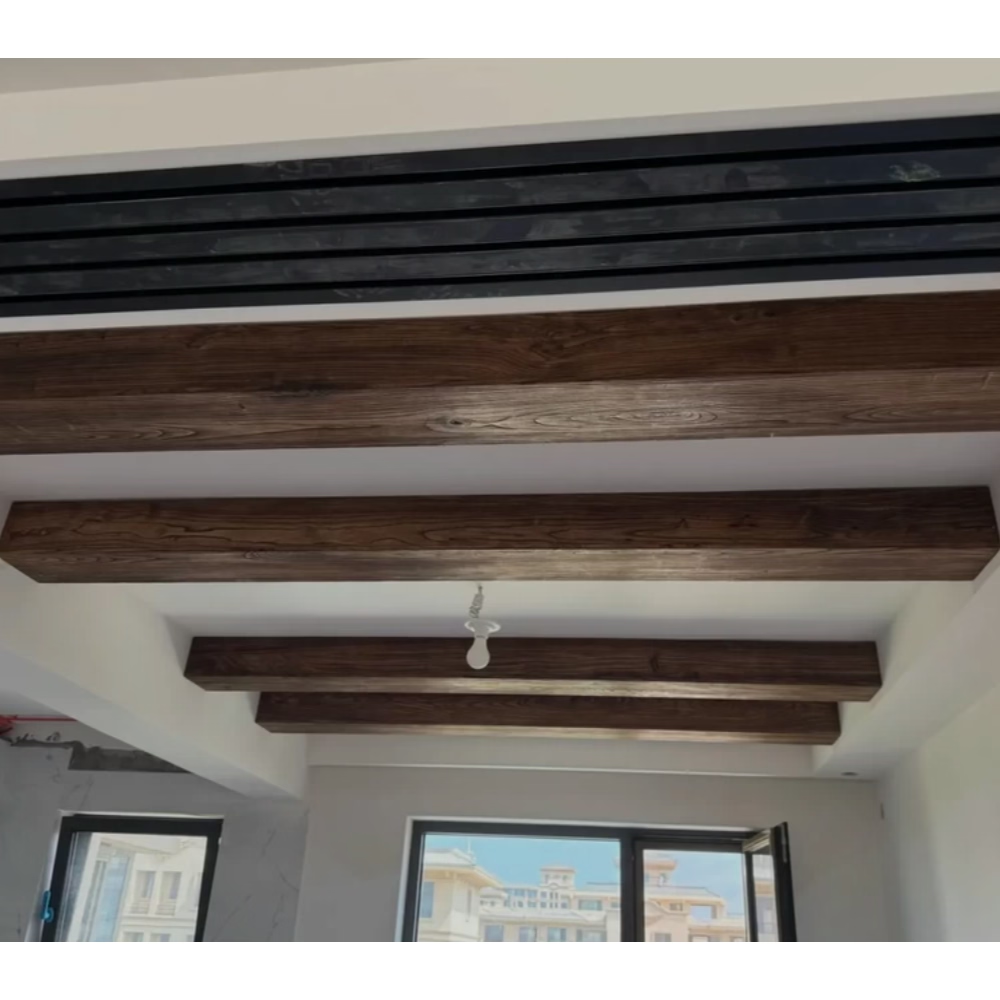
The most common channel configuration places the LED strip in a recessed groove along the bottom face of the beam, directed downward to provide task or ambient illumination in the space below. This arrangement creates a strip of light that appears to emerge from within the beam itself, producing a clean, architectural effect that reads as intentional rather than add-on. The groove depth and width are sized to accommodate standard LED strip profiles, typically ranging from eight to twelve millimeters wide and four to eight millimeters deep.
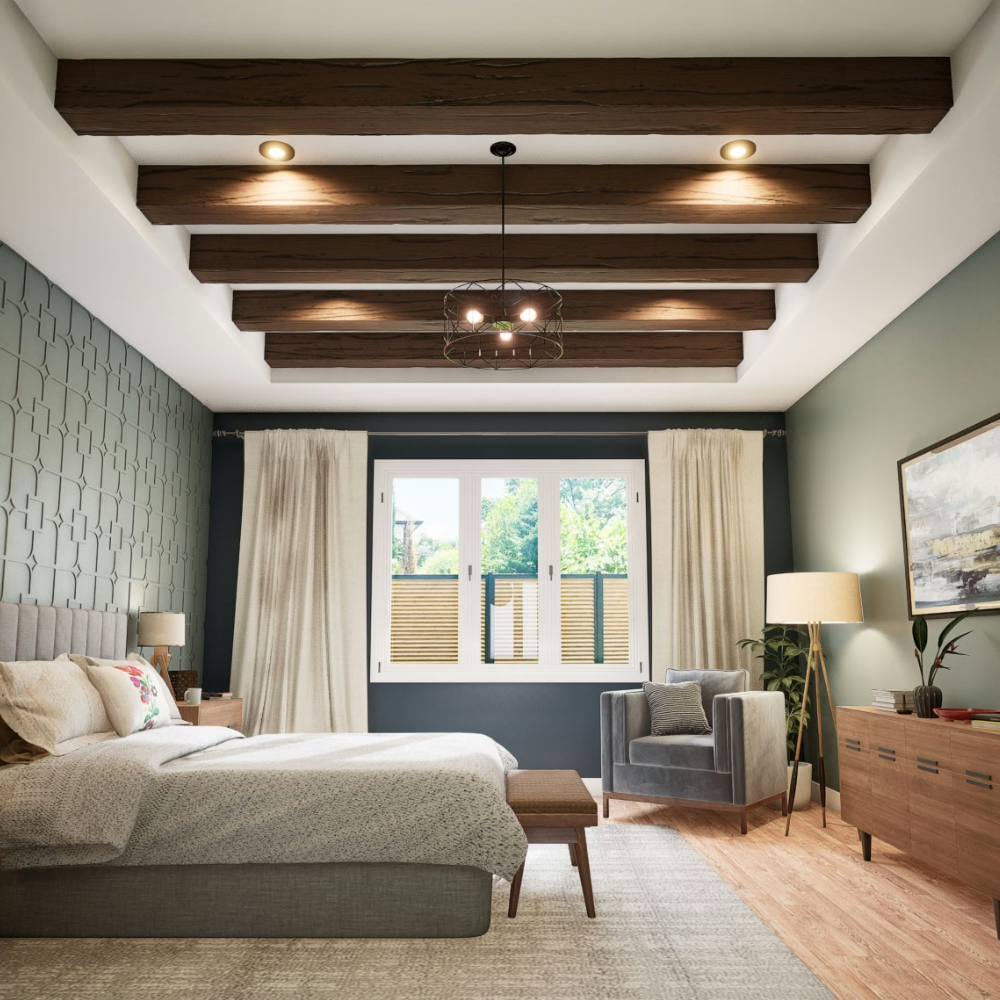
Upward-directed channel configurations create grazing light effects on the ceiling plane above the beam, highlighting the beam's profile and texture against the ceiling surface. This approach works particularly well with textured or hand-scraped beam finishes, where the grazing light emphasizes surface irregularities that might be invisible under direct illumination. The visual drama of grazing light makes it a favorite technique for hospitality spaces and high-end residential applications.

Selecting LED Products for Beam Integration
The LED product category encompasses a vast range of options, and selecting the right products for beam integration requires attention to several technical specifications beyond the basic wattage and color temperature ratings. Strip lighting products vary significantly in LED density, driver compatibility, dimming performance, and outdoor rating—all factors that affect suitability for beam applications.
LED strip density, measured in LEDs per meter, determines both brightness and the continuity of the light output. Densities of sixty LEDs per meter produce reasonably continuous light lines when viewed from normal angles, while higher densities of one hundred twenty or more produce truly seamless illumination without visible individual LED dots. For beam applications where the light source may be visible to occupants, higher density strips are generally preferable despite their slightly higher cost and power consumption.
Driver selection and compatibility deserve careful attention. LED strips operate at low voltage—typically twelve or twenty-four volts DC—and require a driver to convert incoming AC power to the appropriate DC voltage. Drivers come in two basic varieties: fixed output and dimmable. Dimmable drivers enable brightness control through wall-mounted dimmers, smart home systems, or remote controls, and their compatibility with specific dimmer types varies. Magnetic low-voltage dimmers generally work well with LED drivers, while older triac-style dimmers designed for incandescent loads may produce flickering or reduced dimming range with LED systems.
Color Temperature and Tunable White Options
Color temperature—the visual warmth or coolness of white light—significantly affects the mood and functionality of beam-integrated lighting. The standard warm white range of 2700K to 3000K produces the amber glow familiar from incandescent bulbs and complements traditional and farmhouse-inspired beam finishes beautifully. Neutral white around 4000K suits contemporary and transitional interiors, while cool whites of 5000K or higher read as clinical in residential applications and are generally better suited to commercial or task lighting contexts.
Tunable white LED systems that enable adjustable color temperature represent an emerging option for beam-based lighting. These systems can shift between warm and cool whites through the course of a day, supporting circadian lighting principles that align artificial light with natural daylight patterns. Morning transitions toward cooler whites support alertness and energy, while evening shifts to warmer tones promote relaxation and sleep readiness. Tunable white systems require more sophisticated drivers and controls but offer lighting flexibility that fixed-temperature systems cannot match.
RGB and RGBW LED systems that add color-changing capability open creative possibilities for beam lighting that goes beyond white illumination. Colored accent lighting within beams can complement seasonal decorations, reinforce brand colors in commercial spaces, or create dramatic atmospheric effects in entertainment venues. The key to successful color applications is restraint—using color as accent rather than primary illumination, and ensuring that color choices align with the overall design intent rather than creating visual discord with surrounding finishes and furnishings.
Smart Home Integration and Controls
The smart home revolution has reached beam-integrated LED lighting, with several integration options available for homeowners who want connected control over their beam lighting. Wi-Fi and Bluetooth-enabled LED drivers support direct smartphone app control without requiring additional hub hardware. Integration platforms such as Amazon Alexa, Google Home, and Apple HomeKit enable voice control and automation routines that incorporate beam lighting with other smart home devices.
Scene programming allows beam lighting to participate in broader home automation scenarios. A "movie night" scene might dim the main room lighting while setting beam accent lights to a soft amber glow. A "morning" scene could transition beam lighting from warm night-light levels to energizing cool whites over a thirty-minute wake-up period. These programmed scenarios transform beam lighting from a static decorative element into an interactive component of the home environment.
Energy monitoring features in smart LED drivers provide visibility into lighting energy consumption that appeals to both environmentally conscious homeowners and those managing commercial operating costs. Real-time wattage display and historical consumption data support informed decisions about lighting use patterns and potential efficiency improvements.
Installation Considerations and Best Practices
Installing LED systems within pre-cut faux beams requires coordination between the electrical and finish carpentry trades, even though the actual work is relatively straightforward. Planning should address driver location, wire routing, switch placement, and beam mounting sequence before any work begins. Retrofitting LED systems into existing beam installations is possible but typically more challenging than new construction installation, as wire routing must navigate existing finishes and structural elements.
Driver mounting location requires consideration of accessibility, thermal environment, and distance from the LED strips they power. Drivers should be mounted in accessible locations—above ceiling access panels, inside adjacent cabinetry, or within junction boxes—where they can be serviced or replaced without significant disruption. Excessive heat exposure degrades driver performance and lifespan, so mounting locations near heat sources should be avoided.
Wire connections in LED systems require care to ensure reliable operation. Wire nuts, which work well for standard household wiring, can loosen over time in the vibration environments that some building structures experience. Lever-lock connectors or sealed butt connectors provide more secure terminations that are less prone to failure. All wiring should comply with applicable electrical codes, and low-voltage wiring running through building cavities should be protected against accidental damage from nails or screws driven into walls and ceilings.
The result of thoughtful LED integration with faux wood beams is an architectural lighting installation that enhances the visual impact of the beams themselves while providing functional illumination for the spaces they occupy. The combination of aesthetic appeal, energy efficiency, and controllability makes LED-compatible faux beams a compelling specification for projects where lighting design receives the attention it deserves.
Technical References
ASTM standards cited in every specification
Test Data
Lab results from internal testing program
Updated 2026
Reviewed against current product specs


