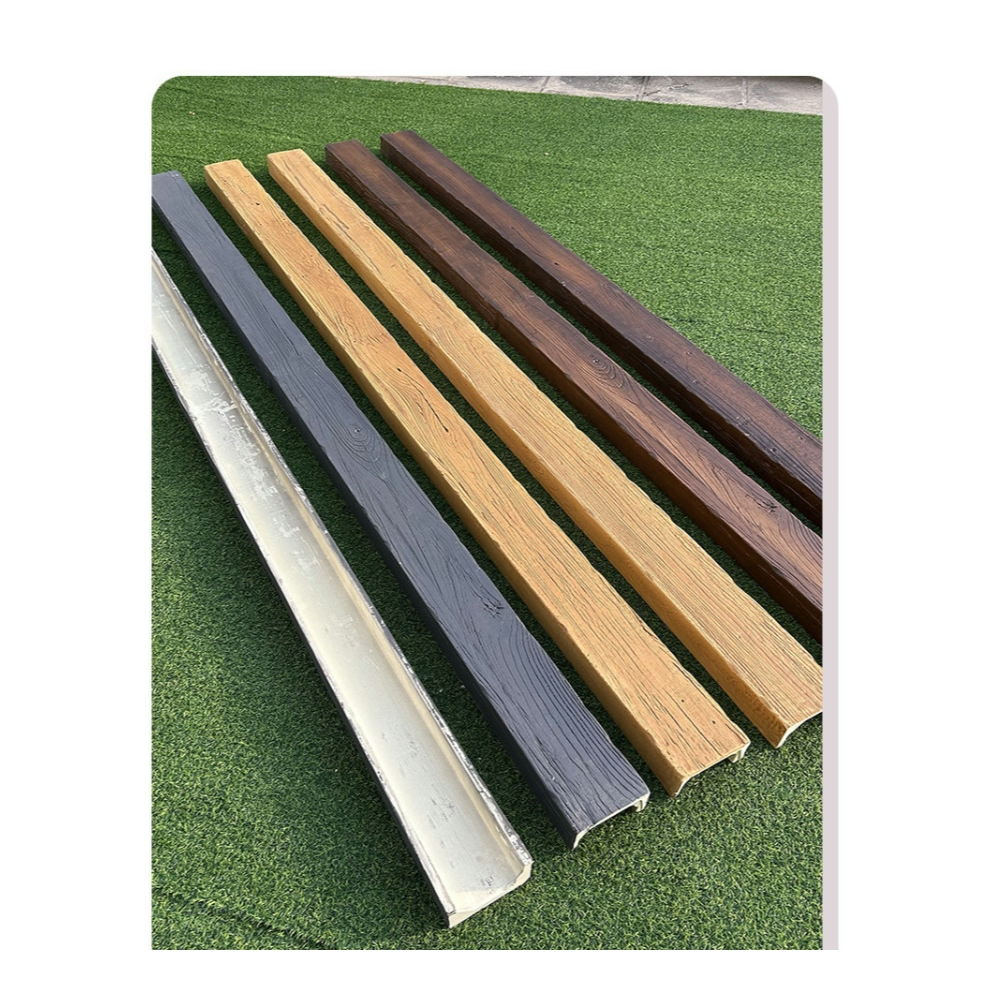
The installation of polyurethane faux wood beams, while more straightforward than installing genuine timber beams, still demands technical skill, appropriate tools, and attention to detail that most homeowners do not possess. Professional installation services bring specialized expertise that results in cleaner joints, more secure attachments, and faster project completion. Understanding what professional installation involves, how to select a qualified contractor, and what to expect during the process helps property owners make informed decisions that protect their investment.

The Case for Professional Installation
The arguments for hiring a professional to install decorative beams are both practical and aesthetic. On the practical side, professional installers understand ceiling and wall structural conditions, know how to locate and work around structural elements, and can ensure that attachment methods meet applicable building code requirements. Their experience with the specific products they install means they can anticipate and prevent common problems that would frustrate a first-time installer.
From an aesthetic perspective, professional installers produce results that look effortless but require significant skill to achieve. Achieving seamless joints where beam sections meet, maintaining consistent alignment across long runs, and creating clean transitions between beams and adjacent trim elements are challenges that experienced installers handle routinely. The difference between a professional installation and an amateur attempt becomes immediately apparent once the room is furnished and lit.
Commercial installations present additional considerations that generally require professional services. Larger spaces with higher ceilings, complex architectural geometries, and compliance requirements for public occupancy all increase the technical demands of beam installation. Commercial contractors carry liability insurance that protects property owners against damage or injury during the installation process—a protection that is typically absent when homeowners attempt their own installations.
What Licensed Installation Involves
Licensed professional beam installers bring a structured approach to project execution that begins long before the first beam is mounted. The process typically includes a pre-installation site survey, precise measurement and layout, product preparation, mounting, finishing, and final inspection.
The site survey allows the installer to assess ceiling conditions, identify structural elements, evaluate existing finishes, and confirm that delivered products match specifications. This survey often reveals conditions that affect installation approach—uneven ceiling surfaces that require shimming, obstructions that require beam notching, or finish conditions that require preparation before installation can proceed. Identifying these conditions in advance prevents mid-project surprises that delay completion and add cost.
Measurement and layout require the precision that professional results demand. Installers use laser levels, chalk lines, and careful calculation to position beams so that they appear centered, aligned, and proportionate within the room. The layout must account for beam dimensions, room proportions, window and door positions, and the overall design intent. A poorly planned layout produces beams that look crooked or disproportionate even if every individual joint is perfectly executed.
Product preparation involves cutting beams to specified lengths, cutting internal channels or mounting provisions, and performing any touch-up finishing that the installation process requires. Experienced installers have the saws, sanders, and finishing equipment to make precision cuts and maintain finish quality during preparation. They also know how to handle beams to avoid damage during the preparation and mounting phases.

Selecting a Qualified Contractor
Contractor selection is the most consequential decision in the installation process, and it requires more than a casual review of local listings. The ideal approach combines verification of credentials, assessment of relevant experience, and direct evaluation of previous work quality.
Licensing requirements for millwork and finish carpentry contractors vary by state and municipality, so buyers should first confirm that any contractor under consideration holds current licenses in the relevant categories. A general building contractor license may cover beam installation as part of broader renovation work, while specialized finish carpentry or millwork licenses indicate more focused expertise. State licensing boards typically provide online verification tools that confirm license status and check for disciplinary actions.
Insurance coverage protects both the contractor and the property owner. Minimum requirements typically include general liability insurance of at least one million dollars per occurrence and workers' compensation coverage for any employees. Property owners should request certificates of insurance directly from the contractor's insurance carrier rather than relying on verbal assurances, and should verify that coverage remains current before work begins.
Relevant experience specifically with faux wood beam installation is the strongest predictor of quality outcomes. Contractors who have installed dozens or hundreds of beam projects have encountered and resolved the challenges that arise in diverse conditions. They know which mounting methods work best in different ceiling configurations, how to handle beams around light fixtures and HVAC registers, and which finishing techniques produce seamless results. Portfolio review—visiting or viewing photographs of previous installations—provides direct evidence of this experience.

Commercial Versus Residential Installation Differences
Commercial beam installations differ from residential projects in several important dimensions that affect contractor selection, pricing, and project management. Ceiling heights in commercial spaces typically exceed residential standards, requiring scaffolding, lifts, or other access equipment that residential installers rarely need. Larger beam quantities and more complex geometries increase the demands on layout precision and coordination.
Building code compliance is more stringent in commercial occupancies, with requirements for fire-rated assemblies, accessibility considerations, and inspection requirements that residential installations typically do not face. Professional commercial installers are familiar with these requirements and know how to document compliance in ways that satisfy building officials.
Scheduling constraints also distinguish commercial work. Commercial properties often operate under time pressure that residential installations do not face. A retail store losing sales because a renovation takes longer than planned, or a hotel with limited guest room availability, creates urgency that professional commercial contractors are equipped to manage. They maintain adequate crews, coordinate with other trades, and work within compressed schedules while maintaining quality standards.
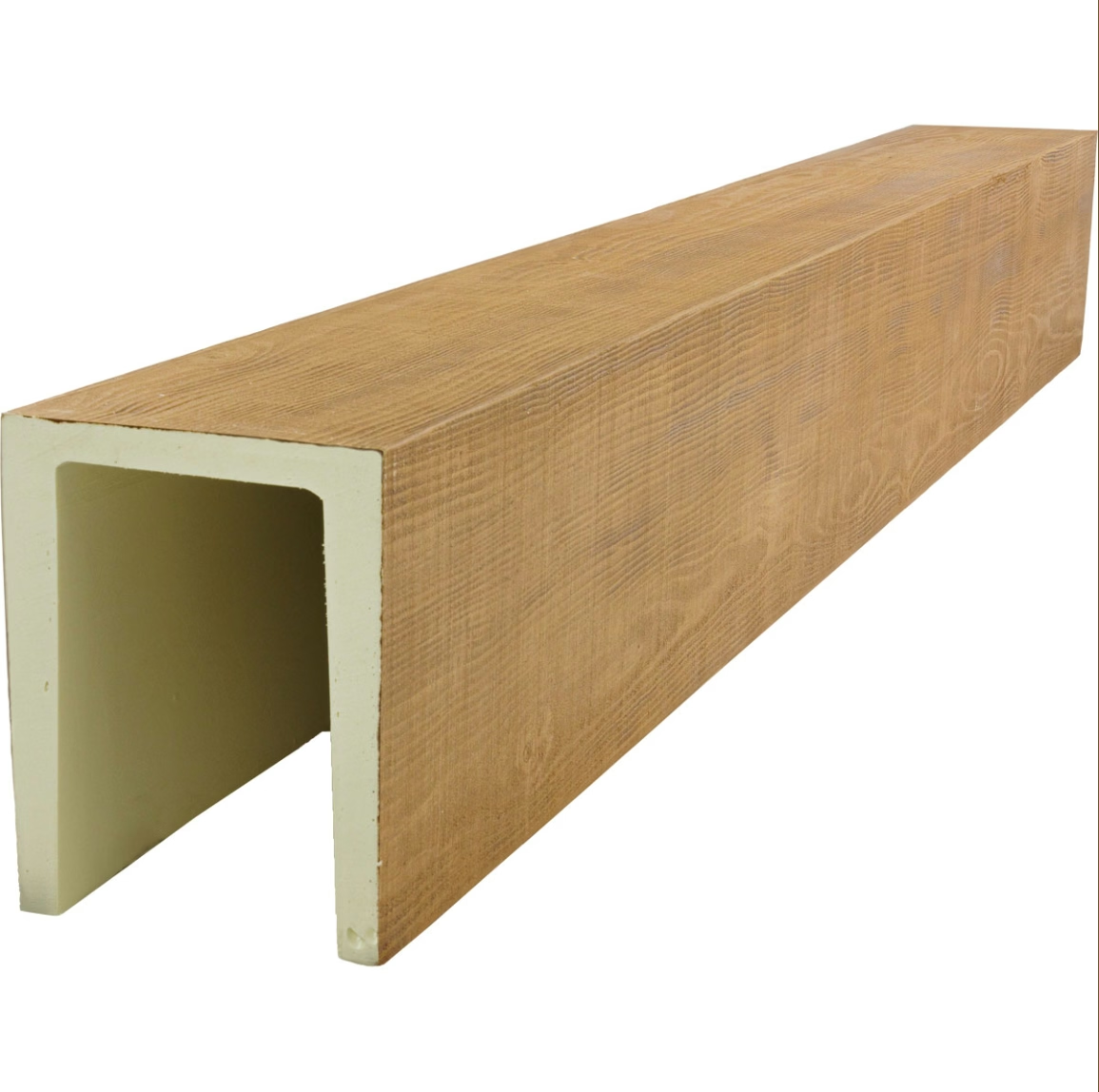
Pricing and Project Estimates
Professional beam installation pricing reflects the skill, equipment, and project management that quality execution requires. Pricing models vary but typically fall into one of three structures: lump-sum bids for well-defined projects with clear scope, time-and-materials arrangements that provide flexibility for projects with uncertain scope, and per-beam or per-linear-foot rates that simplify budgeting for straightforward installations.
Factors that influence installation pricing include ceiling height and access difficulty, beam size and weight, installation pattern complexity, finish requirements, and geographic location. Projects requiring scaffolding or lifts for high-ceiling applications add significant cost relative to standard-height residential installations. Custom finish work, pattern matching to existing architectural elements, and coordination with other trades during complex renovations all add to baseline pricing.
The estimate review process should include detailed scope documentation that specifies exactly what is and is not included. Ambiguity about what constitutes completion—touch-up finishing, cleanup, removal of packaging materials—creates disputes that are best prevented through explicit scope definition before work begins. A professional contractor will provide a written proposal that addresses these details comprehensively.
Warranties and Post-Installation Service
Professional installation services typically include workmanship warranties that protect against installation-related defects. These warranties, typically ranging from one to five years depending on the contractor and project type, cover issues such as loose fasteners, joint separation, and finish defects that arise from improper installation rather than product defects or customer-caused damage.
Understanding warranty scope and limitations helps property owners maintain coverage. Most workmanship warranties require that the property owner report defects within the warranty period and allow the contractor to make repairs. Modifications to the installed beams, damage from other trades' work, or normal wear and tear typically void warranty coverage. Documenting the installation with photographs and retaining the contractor's documentation simplifies any future warranty claims.
Beyond formal warranties, professional contractors often provide informal post-installation support that addresses minor adjustments, finishing touch-ups, or questions that arise after the project is complete. This responsiveness reflects the contractor's confidence in their work and builds the customer relationships that generate referrals and repeat business.
Preparing for Professional Installation
Property owners who prepare properly for professional beam installation enable faster, cleaner, and higher-quality results. The preparation process begins with clearing the work area—removing furniture, artwork, and fragile items from the space where installers will work. While professional crews use drop cloths and debris collection systems, the inherent dust and activity of ceiling work make complete area clearance preferable to partial clearing.
Access to the installation space should be unimpeded. Professional installers need room to position ladders, scaffolding, or lifts, and they need clear paths for carrying beams into the space and maneuvering them into position. Doors should be unlocked and accessible throughout the work period, and any security systems should be disarmed to allow unrestricted access.
Communication with the installation crew throughout the project helps align expectations and catch issues early. Confirming start times, discussing any questions that arise during the work, and conducting a walkthrough at completion all contribute to a successful project outcome. Professional installers welcome this engagement because it produces better results and stronger customer relationships.
Investing in professional installation services for decorative beams pays dividends that extend well beyond the initial project completion. The quality of the result, the security of the installation, and the assurance of warranty protection combine to deliver peace of mind that amateur installations cannot provide. For property owners who value both the aesthetic impact of their beam investment and the safety of everyone who occupies their space, professional installation is not an optional luxury—it is the appropriate standard of care.
Technical References
ASTM standards cited in every specification
Test Data
Lab results from internal testing program
Updated 2026
Reviewed against current product specs