Scandinavian interior design is not about a specific look. It is about a philosophy: that living spaces should serve the people who inhabit them, that beauty and function are inseparable, and that natural materials used with restraint create environments that support wellbeing. Light oak polyurethane faux beams align with every one of these principles. They are natural in appearance, functional as ceiling accents, and restrained enough to serve a space without dominating it. For homeowners and designers working within the Nordic design tradition, understanding how to integrate faux beams into this aesthetic requires attention to the specific qualities that define Scandinavian interiors.
The Scandinavian approach to color is disciplined. White walls, light wood floors, and neutral textiles form the foundation. Accents appear in muted earth tones — dusty rose, sage green, slate blue — applied sparingly. The overall effect is one of calm spaciousness, where every element has room to breathe. A ceiling beam in this context must earn its presence. It cannot be heavy, dark, or excessively textured. It must contribute warmth and character while remaining subordinate to the overall design.
Light Oak: The Ideal Scandinavian Beam Finish
Among wood finishes, light oak sits at the intersection of warmth and restraint that Scandinavian design demands. It is lighter than honey oak or walnut, which would introduce too much visual weight into a white-walled room. It is warmer than natural pine or birch, which can feel too pale and cool in a room that already relies heavily on white surfaces. The light oak finish provides exactly the right amount of warmth: enough to prevent the room from feeling clinical, not enough to compete with the dominant white palette.
The grain pattern in light oak is relatively subtle compared to more dramatic timbers, which suits the refined, understated character of Scandinavian interiors. A quality polyurethane faux beam in light oak will replicate this subtlety convincingly: the grain lines are present and visible but do not create the busy, rustic texture that would feel out of place. This is a beam finish that rewards close inspection but does not demand it.
Beam Configurations for Scandinavian Spaces
The placement of ceiling beams in a Scandinavian interior should follow the same principles that govern furniture placement: intentional, uncluttered, and respectful of negative space. A single beam installed across the center of the ceiling makes a clear statement without filling the ceiling with competing elements. The beam becomes a design feature that can anchor the room's furniture arrangement and provide a reference point for the eye.
For slightly larger rooms, a parallel pair of beams spaced symmetrically across the ceiling creates a more substantial ceiling treatment while maintaining the balance and proportion that Scandinavian design values. The beams should be positioned to frame the primary functional area of the room — typically the seating group in a living room or the bed in a bedroom — rather than running at random across the ceiling plane.
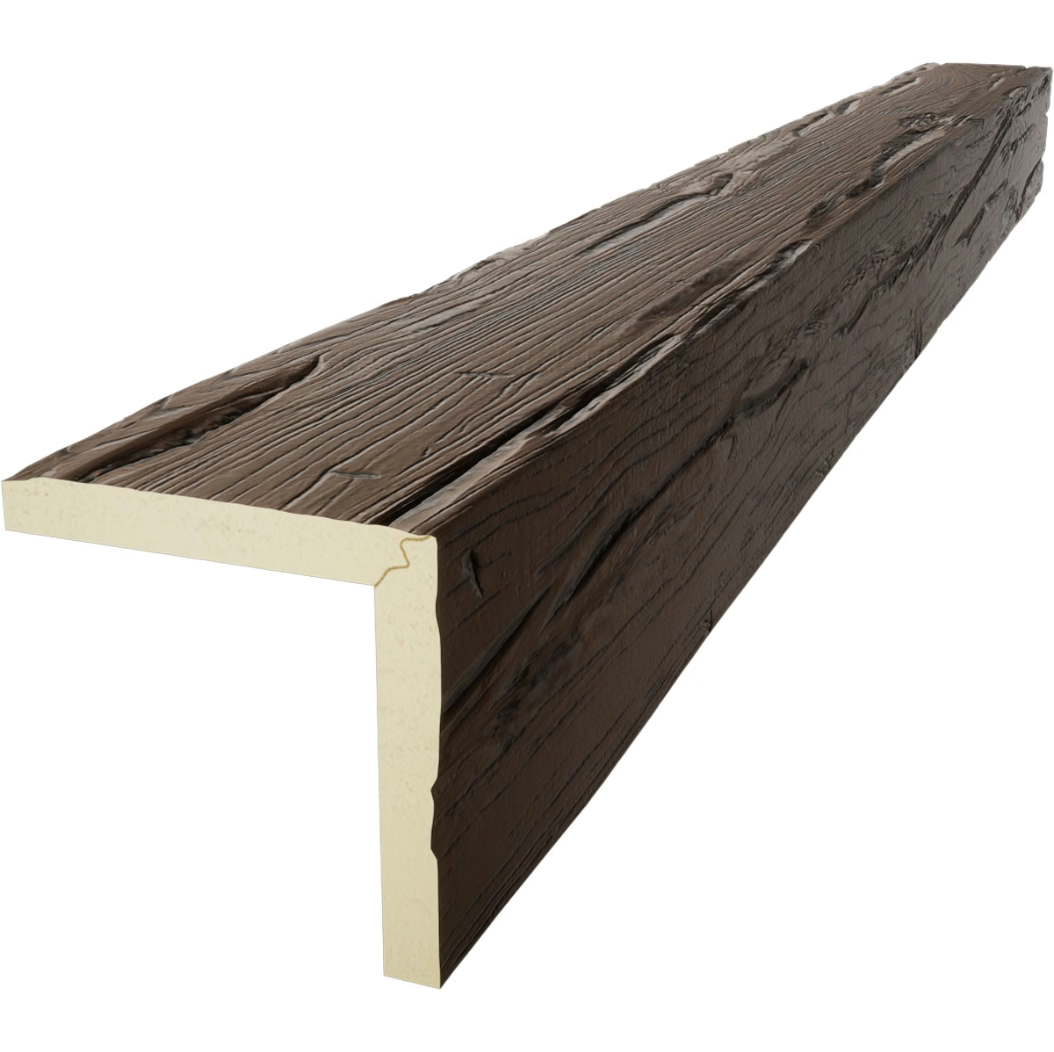
Box beam configurations work particularly well in Scandinavian interiors because of their clean, geometric lines. A single box beam installed as a border around the perimeter of the ceiling, or as a frame around a recessed light fixture, adds architectural interest without introducing the rustic irregularity of solid timber beams. The straight, precise edges of box beams complement the clean-lined furniture and architectural trim common in Scandinavian spaces.

Furniture and Material Pairings
Scandinavian furniture design favors clean forms, natural materials, and functional simplicity. A sofa with straight arms, a dining table with tapered legs, a bookshelf with open compartments — each piece does its job with elegance and without excess. Light oak faux beams reinforce this material language by introducing wood into the ceiling plane in a way that relates directly to the wood used in furniture and flooring.
The trick is to let the ceiling beams echo rather than match the other wood elements in the room. If the floors are pale oak, the ceiling beams should be slightly warmer or slightly lighter — close enough to feel related, different enough to create visual interest. If the furniture includes darker wood elements, such as a walnut sideboard or a teak armchair, the light oak beams provide a bridge between the white walls and the darker wood below.
Textiles in a Scandinavian room with light oak beams should be natural and simple. Undyed linen curtains in a loose weave, wool throws in heather gray or oatmeal, cotton rugs in natural fiber tones — these elements layer warmth and texture without introducing color competition for the beams overhead.
Lighting Design for Scandinavian Beam Ceilings
The quality and character of light is central to Scandinavian design philosophy. In Nordic countries, where winter days are short and summer nights are long, the way a room handles available light is a practical concern as much as an aesthetic one. A Scandinavian room with light oak beam ceilings should feel bright and welcoming during the day and warm and intimate in the evening.
Pendant lights are the natural choice for rooms with beam ceilings in the Scandinavian tradition. A single oversized pendant in a natural material — rattan, bamboo, or unbleached linen — centered over the primary furniture group, provides focused light and a sculptural element that connects to the beam above. Multiple smaller pendants in a linear arrangement work well above dining tables or kitchen islands.
For evening lighting, the uplighting effect of the beams deserves consideration. Even without dedicated uplighting fixtures, the light oak beam surface reflects and softens the light from general room fixtures, creating a gentle warmth overhead that enhances the room's cozy evening character. In winter months, when the low light and short days make a room's atmosphere particularly important, this subtle contribution to the room's warmth is more valuable than it might seem.

Trade Positioning for Scandinavian Beam Applications
For trade buyers marketing faux beams for Scandinavian-style applications, the positioning is clear: quality, restraint, and material authenticity. This market segment values craftsmanship and is willing to pay more for products that demonstrate it. A light oak finish that looks convincing and performs well over time will outperform cheaper alternatives in this segment, where customers can distinguish quality and appreciate it.
Providing room-set imagery and mood boards that show the beams in context — white walls, natural wood floors, clean-lined furniture — helps customers visualize the product in their own spaces. Samples are essential for this market, as the subtle warmth and grain quality of light oak are difficult to appreciate from a photograph alone.
The Scandinavian interior is a testament to the power of restraint. Light oak faux beams, used with the same discipline that governs every other element in the room, contribute warmth and character without undermining the calm, spacious quality that makes these interiors so appealing.
Technical References
ASTM standards cited in every specification
Test Data
Lab results from internal testing program
Updated 2026
Reviewed against current product specs


