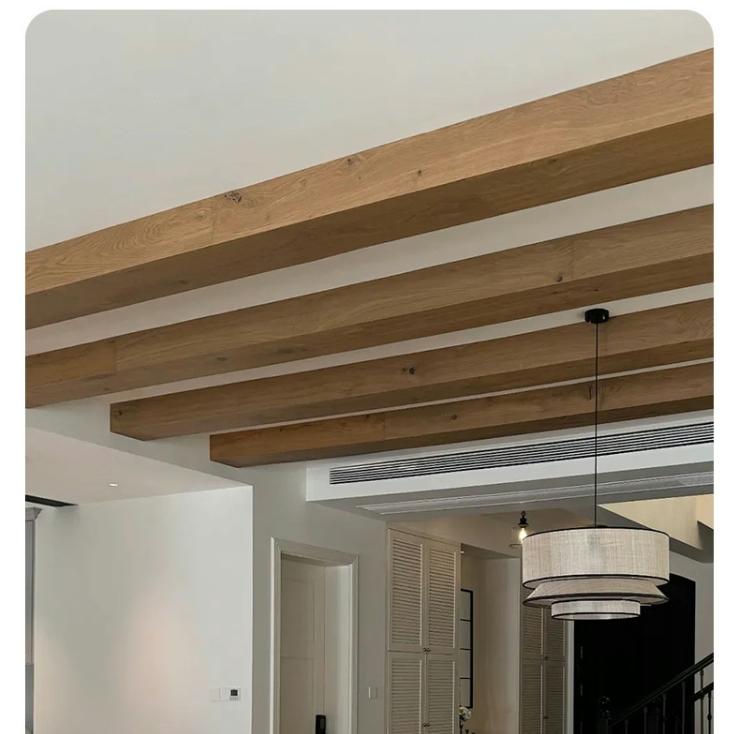
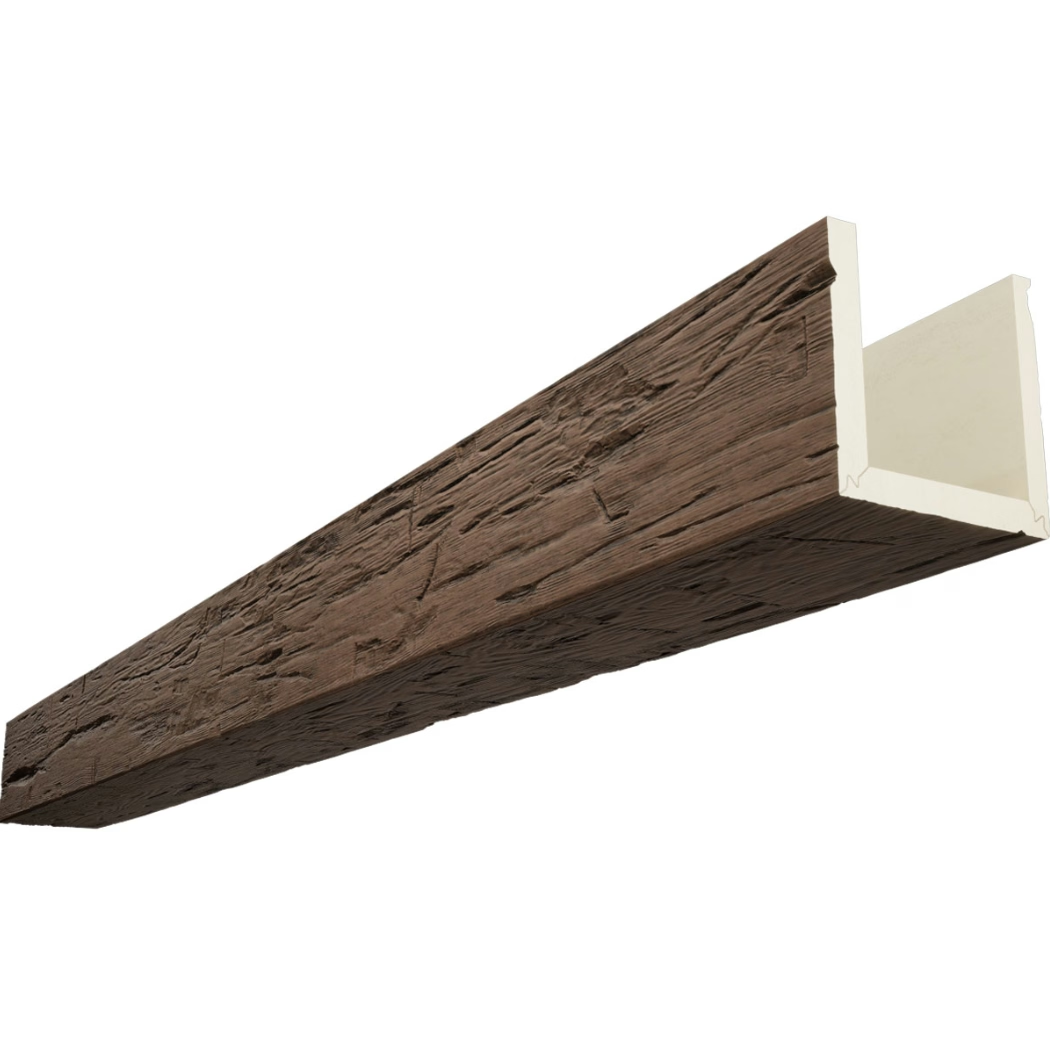
Every contractor who has sourced real timber beams for a project remembers the moment the freight quote arrived. The material cost was manageable, but the shipping bill turned what seemed like a reasonable budget into a scramble. Solid Douglas fir beams at 12 feet long, for instance, might weigh 180 to 220 pounds per beam depending on their cross-section. Freight carriers charge by weight and dimensions, and timber's density makes it an expensive commodity to move over long distances. This is the problem that polyurethane faux wood beams have systematically solved, and the logistics benefits ripple through the entire supply chain in ways that matter to importers, retailers, and end customers.
The Weight Math That Changes Everything
To appreciate why weight matters so much in decorative beam procurement, consider a concrete example. A container loading project for a hospitality chain with 40 guest rooms, each featuring exposed beam accents in the corridor ceilings, might require 120 linear meters of beam material across various sizes and profiles. If sourced in solid timber, that volume could represent 8 to 12 metric tons of cargo. Shipping that weight internationally adds substantial cost at every leg of the journey — from mill to port, across ocean, through customs, and from warehouse to final installation site.
The same volume in hollow polyurethane faux beams might weigh under 1 metric ton. That is not a typographical error. Polyurethane foam cores with densities in the 6 to 10 pounds per cubic foot range produce beams that are 80 to 90 percent lighter than comparable solid wood sections. The reduction changes the freight class, lowers carrier charges, and often allows the material to qualify for different shipping arrangements that further reduce per-unit cost.
For overseas buyers in the import trade, these savings compound across multiple shipments. A buyer ordering four times per year can redirect budget freed up by lighter shipping into higher-margin products or competitive pricing that wins more projects. The supply chain becomes more responsive too — lighter packages ship faster and are easier to handle at consolidation points, reducing the risk of damage during loading and unloading.

Handling Savings at Every Stage of the Project
Shipping cost is only part of the weight story. The real-world impact becomes visible when the material arrives at its destination and workers need to move it from truck to storage to the installation location. Solid timber beams of any significant span require at least two people to safely maneuver them through corridors, up stairwells, or across finished flooring without risking damage to the material or the building.
Lightweight polyurethane beams change this equation entirely. A single worker can carry a 12-foot hollow beam under one arm, walk it through a finished space, and position it for installation without calling for backup. This sounds like a convenience, but it has measurable effects on labor scheduling and job site efficiency. Projects that would otherwise need two-person carrying teams can proceed with one person handling material movement while another focuses on the installation itself.
Warehouse and retail operations benefit from the same dynamics. Polyurethane beams stack more compactly, ship in denser bundles, and can be stored in locations where the floor load from solid timber inventory would be a structural concern. For retailers, this opens up display possibilities in upstairs showrooms or buildings with weight-restricted mezzanine levels.
Freight Class and Carrier Optimization
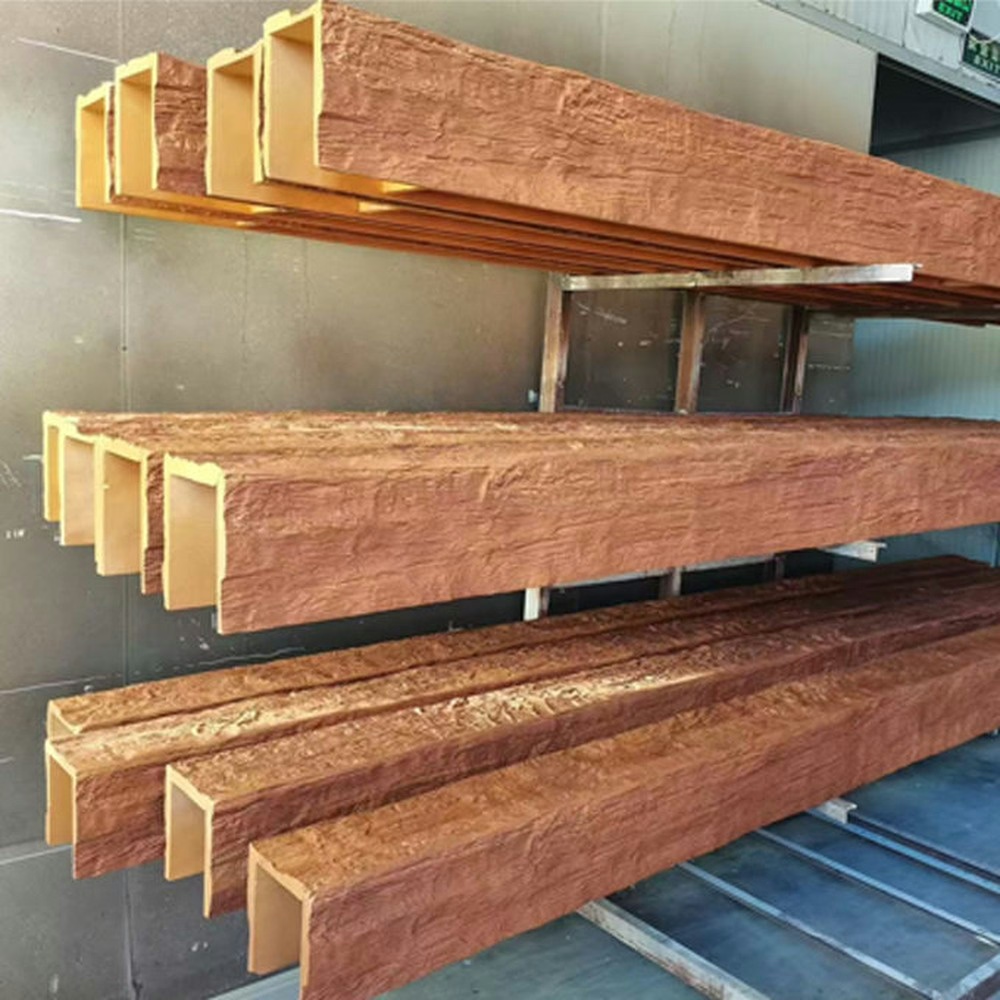
Freight carriers classify cargo using National Motor Freight Classification codes that group products by density, stowability, handling characteristics, and liability. Heavy timber beams typically fall into freight classes that carry higher per-hundredweight rates. Hollow polyurethane beams, due to their lighter weight and more uniform dimensions, often qualify for more favorable freight classifications.
This classification difference can amount to 20 to 40 percent savings on the base freight rate for comparable distances and shipment volumes. For large project orders representing tens of thousands of dollars in freight spend, those percentages translate into real dollar amounts that improve project margins or allow room for competitive bidding.
The dimensional consistency of manufactured polyurethane beams also helps with truck loading efficiency. Because each beam is produced to exact specifications rather than being a unique piece of lumber, bundles pack neatly and utilize trailer cube space efficiently. This is harder to achieve with solid timber, where natural variation in cross-section and length can leave significant void space in a loaded trailer.
Supply Chain Responsiveness and Inventory Management
Light weight doesn't just save money — it changes what's possible in terms of supply chain flexibility. When individual shipments are lighter, it becomes practical to hold smaller buffer inventories at distribution points without tying up excessive capital in heavy stock. Buyers can order closer to their actual project timelines rather than pre-purchasing materials months in advance to ensure availability.
For importers working with overseas manufacturing partners, lighter weight opens up air freight as a viable option for urgent reorders or sample requests. A 20-kilogram sample shipment of polyurethane beams can fly instead of sail, arriving in days rather than weeks when a project runs into unexpected changes or client requests for expedited delivery.
The reduced weight also makes it practical for suppliers to offer dropped-shipment programs where materials go directly from the manufacturing facility to the job site. This eliminates one or two handling steps from the traditional distribution path, reducing transit time and the risk of surface damage from repeated loading and unloading.
Environmental and Sustainability Considerations
While weight reduction is fundamentally a logistics story, it carries environmental implications that are increasingly important to buyers across commercial and residential segments. Lighter shipments mean fewer truck miles, lower fuel consumption, and reduced carbon emissions per unit of material delivered. For projects pursuing green building certifications such as LEED or WELL, the embodied carbon reduction from lighter building materials contributes to better scores in the Materials and Resources category.
The polyurethane itself, being a synthetic material, prompts questions about recyclability and lifecycle impact that honest suppliers address directly. Quality manufacturers increasingly offer take-back programs or use recycled content in their core formulations. The dramatically extended service life of finished polyurethane beams — they resist rot, insect damage, and moisture absorption in ways that natural timber cannot — also factors into their long-term environmental profile.
Choosing a Supplier Who Understands Logistics
Not every manufacturer or exporter approaches logistics with the same level of sophistication. When evaluating potential suppliers for polyurethane faux wood beams, ask about their standard packaging configurations, palletization approach, and container loading optimization. Suppliers who have worked extensively with international buyers will have tested packaging that prevents shifting and surface damage during ocean transit, and they will be able to provide accurate dimensional weight calculations for freight quoting.
Experienced suppliers also understand the importance of providing detailed product specifications — exact weights per linear foot, bundle dimensions, and stacking configurations — that allow buyers to accurately estimate shipping costs before placing orders. This transparency prevents the unwelcome surprise of freight quotes that differ significantly from initial estimates, which is one of the most common pain points in cross-border building material procurement.
Technical References
ASTM standards cited in every specification
Test Data
Lab results from internal testing program
Updated 2026
Reviewed against current product specs