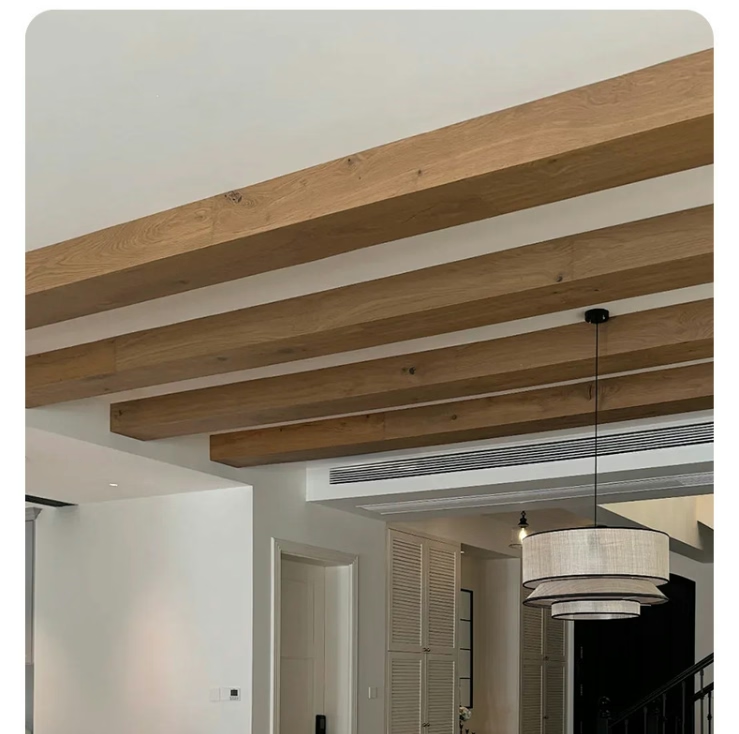
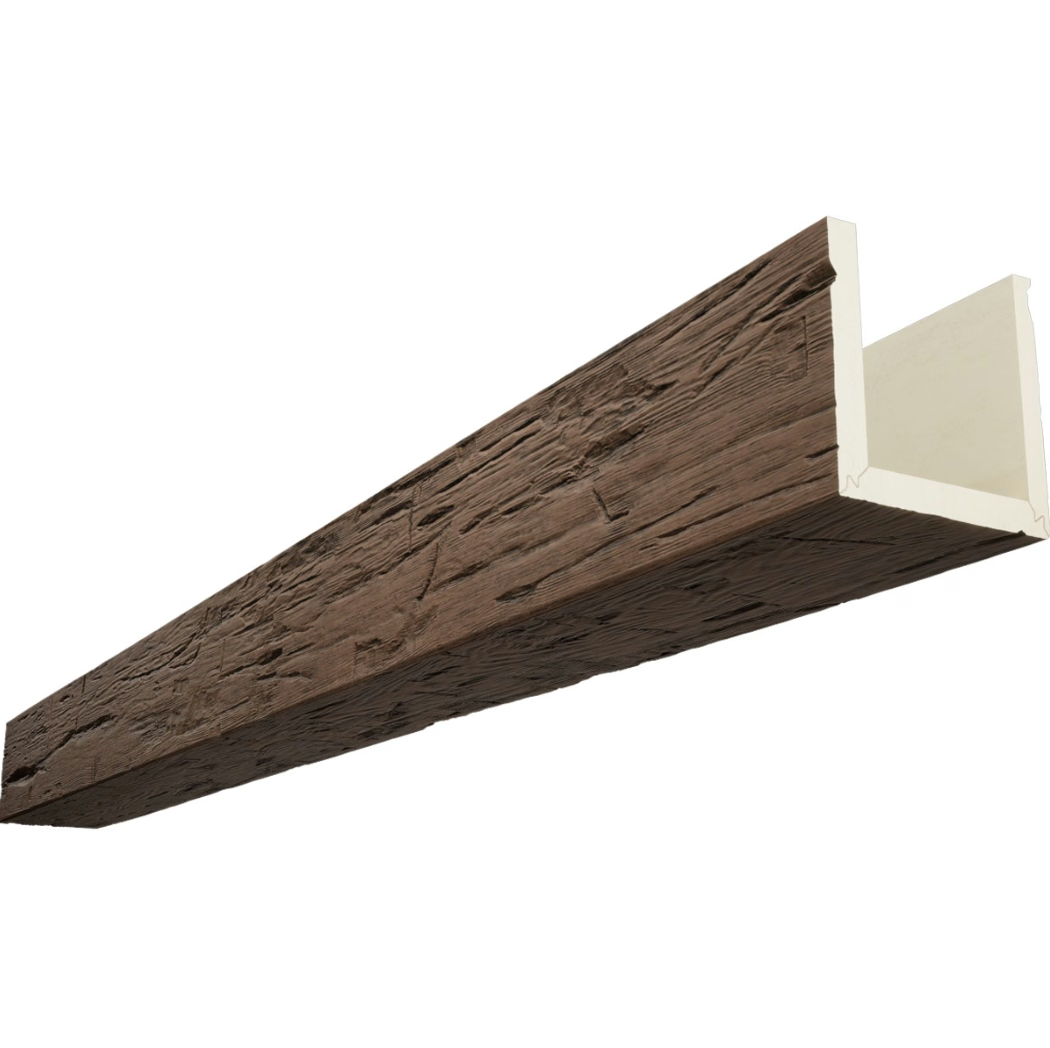
Finding a building material supplier who actually understands the products they sell is harder than it should be. The faux wood beam market has grown rapidly, and with that growth has come a wide range of suppliers whose knowledge of their own products ranges from deep expertise to barely adequate. For contractors, designers, and importers who need to source polyurethane beams confidently for residential and commercial projects, knowing what separates a genuinely capable supplier from a passive reseller can save significant time, money, and frustration.
What Professional Buyers Look for in a Beam Supplier
Experienced buyers evaluate suppliers across several dimensions that go well beyond unit price. The first is product consistency — whether beams from the same order or from different production batches arrive with matching profiles, colors, and textures. Inconsistent product quality is one of the most common complaints in the decorative building materials trade. A designer specifying beam accents for a restaurant with twelve identical ceiling runs needs all twelve beams to match closely enough that the finished ceiling looks intentional rather than cobbled together from mismatched parts.
The second dimension is lead time reliability. Projects run on schedules, and material delays cascade into labor inefficiencies, extended site rentals, and missed client deadlines. Suppliers who have established manufacturing and logistics processes can quote realistic lead times and meet them consistently. Those who overpromise and underdeliver create downstream problems that buyers quickly learn to avoid.
The third dimension is logistics sophistication. A supplier who understands how their products ship — optimal bundle configurations, palletization that prevents transit damage, accurate weight and dimension reporting for freight quoting — adds real value to the procurement process. This is especially important for international buyers who are calculating landed costs before committing to orders.
Lightness as a Supplier Selection Criterion
Weight should be a primary consideration when evaluating polyurethane faux beam suppliers, but it is often treated as secondary to aesthetics and price. The reason it deserves more attention is that beam weight affects everything downstream of the order: storage requirements, handling equipment needs, installation labor costs, and the risk of damage during shipping and handling.
Suppliers who invest in optimizing their foam formulations and wall thicknesses produce beams that are genuinely lightweight without sacrificing surface durability. The target weight for a hollow beam with a 6-inch visible face and 8-inch depth should fall in the range of 1 to 2 pounds per linear foot. Beams significantly heavier than this may indicate over-dense foam formulations that add unnecessary shipping cost, or under-optimized profiles that use more material than the visual requirements demand.
Quality suppliers will provide weight-per-linear-foot specifications for every product in their catalog. If a supplier cannot or will not provide this information, it is a warning sign that they may not have rigorous quality control processes in place, or that their product specifications are not well-defined.

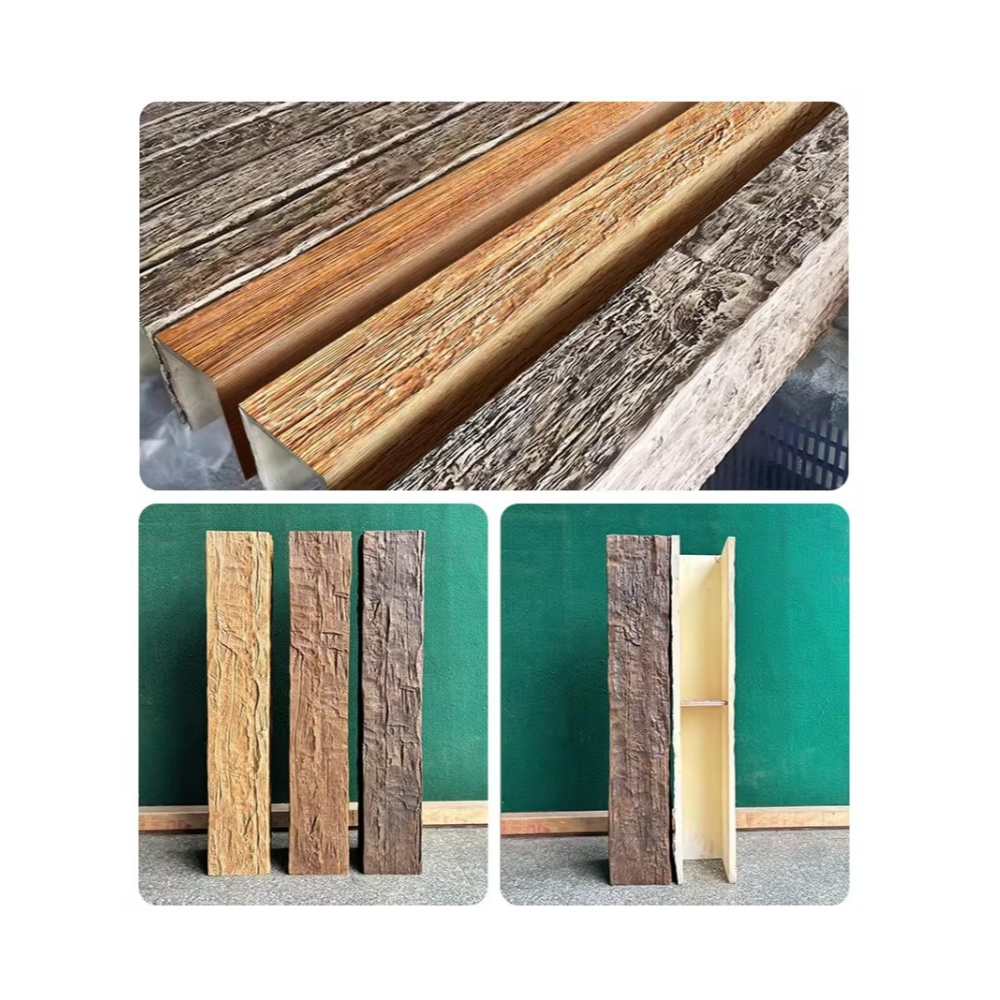
Technical Support and Installation Guidance
The best suppliers treat their relationship with buyers as ongoing rather than transactional. This means providing detailed installation guides, technical data sheets, and responsive support channels that help buyers and their contractors navigate tricky installation scenarios. The supplier who answers questions about mounting hardware selection, adhesive recommendations, and finishing touch-up procedures adds tangible value to every project they supply.
For international buyers, this support dimension often includes documentation assistance — helping with customs classification, providing certificates of origin, preparing commercial invoices that meet the requirements of importing country customs authorities. These services reduce the friction that makes some buyers reluctant to source from overseas suppliers despite potentially favorable pricing.
Product sampling is another indicator of supplier confidence and service orientation. Suppliers who offer sample pieces — either at no cost or at a nominal charge that is credited against subsequent orders — demonstrate willingness to let buyers verify quality before committing to full project volumes. Samples allow designers to confirm color, texture, and profile accuracy against project specifications, and they give contractors a chance to test mounting methods on the actual product before starting a full installation.
Customization Capabilities and Production Flexibility
Standard catalog beams serve the majority of projects well, but many residential and commercial applications require custom specifications. Common customizations include non-standard lengths beyond what most catalogs stock, special finish colors that match existing millwork, modified profiles that integrate with specific architectural details, and reinforced mounting provisions for unique installation configurations.
A capable supplier should be able to discuss these custom requirements openly, provide realistic timelines and pricing for non-standard orders, and produce samples or renderings that confirm the custom work will meet expectations before full production begins. Suppliers who treat customization requests as burdensome or who add excessive premiums for non-standard work may be working from limited manufacturing capabilities that constrain their flexibility.
The ability to produce custom tooling for unique profiles is particularly valuable for specialty architectural projects. Suppliers who invest in dedicated tooling development for significant custom orders demonstrate long-term commitment to the market and the capability to support projects that generic catalog-only suppliers cannot handle.

Pricing Structures and Volume Considerations
Professional buyers understand that unit pricing is only part of the total cost picture. Freight costs, minimum order quantities, payment terms, and return policies all factor into the effective cost of doing business with a given supplier. A supplier offering slightly lower unit prices but with high minimum order quantities, expensive shipping, and no returns policy may be more expensive overall than a supplier with slightly higher unit pricing but favorable terms across all other dimensions.
Volume discount structures deserve careful review. The best suppliers offer tiered pricing that rewards larger orders without creating artificial pressure to overbuy. Clear documentation of volume tiers, lead times associated with each tier, and any conditions attached to volume pricing builds trust and allows buyers to make informed decisions about order sizing.
Payment terms matter for international buyers in particular. Suppliers who accept letters of credit, have established relationships with export financing institutions, or offerNET payment terms through trade finance platforms reduce the risk and cash flow pressure associated with cross-border procurement. Suppliers who demand full payment upfront without established escrow or dispute resolution mechanisms should be approached with caution.
Building a Long-Term Supplier Relationship
The most successful buyer-supplier relationships in the faux wood beam trade are built on repeated interactions, mutual learning, and growing trust. A supplier who understands your project types, design preferences, and installation challenges becomes a genuine partner rather than a passive vendor. Over time, that supplier can anticipate your needs, suggest product improvements, and help you win projects by providing technical support that your competitors cannot match.
Cultivating these relationships means communicating clearly, providing feedback on product performance, and paying promptly. It also means being honest when something goes wrong rather than silently switching suppliers. Good suppliers want to know about problems so they can address them. The feedback loop that develops from honest communication leads to better products, more responsive service, and a supplier relationship that generates competitive advantage on both sides.
Technical References
ASTM standards cited in every specification
Test Data
Lab results from internal testing program
Updated 2026
Reviewed against current product specs