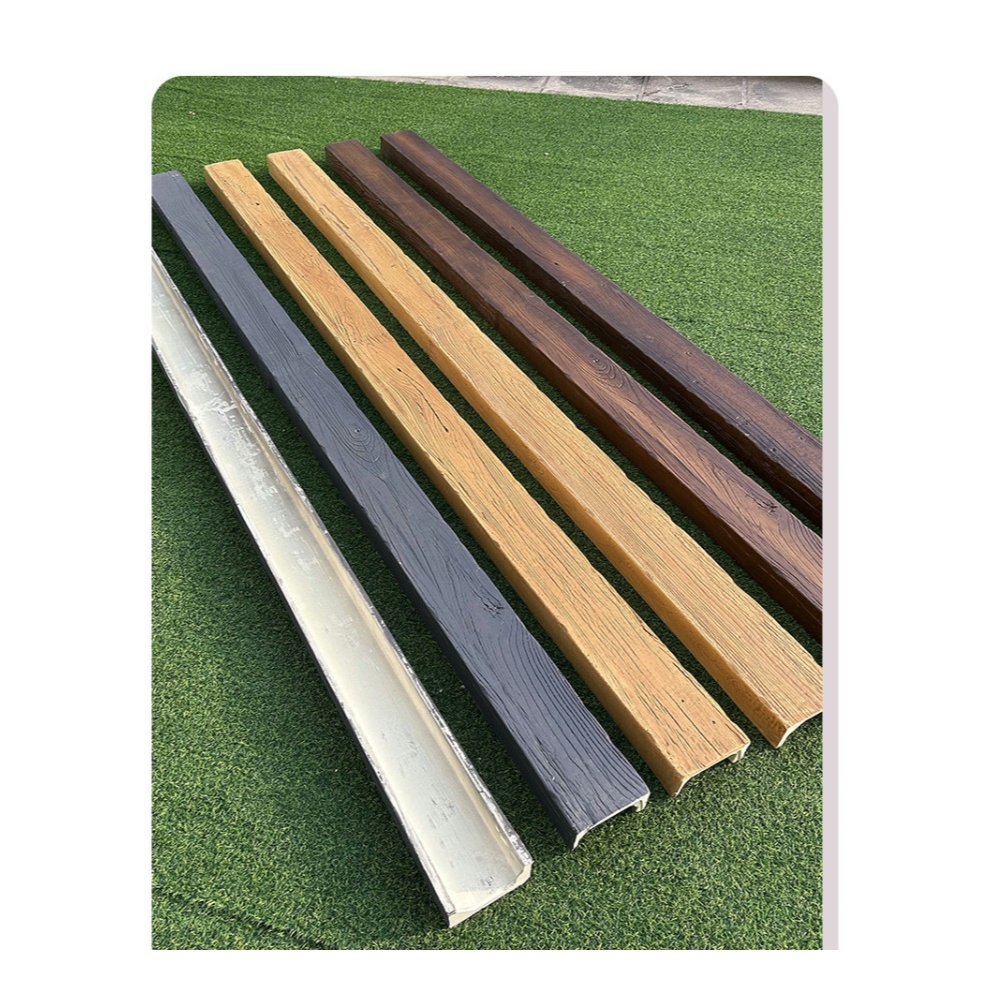
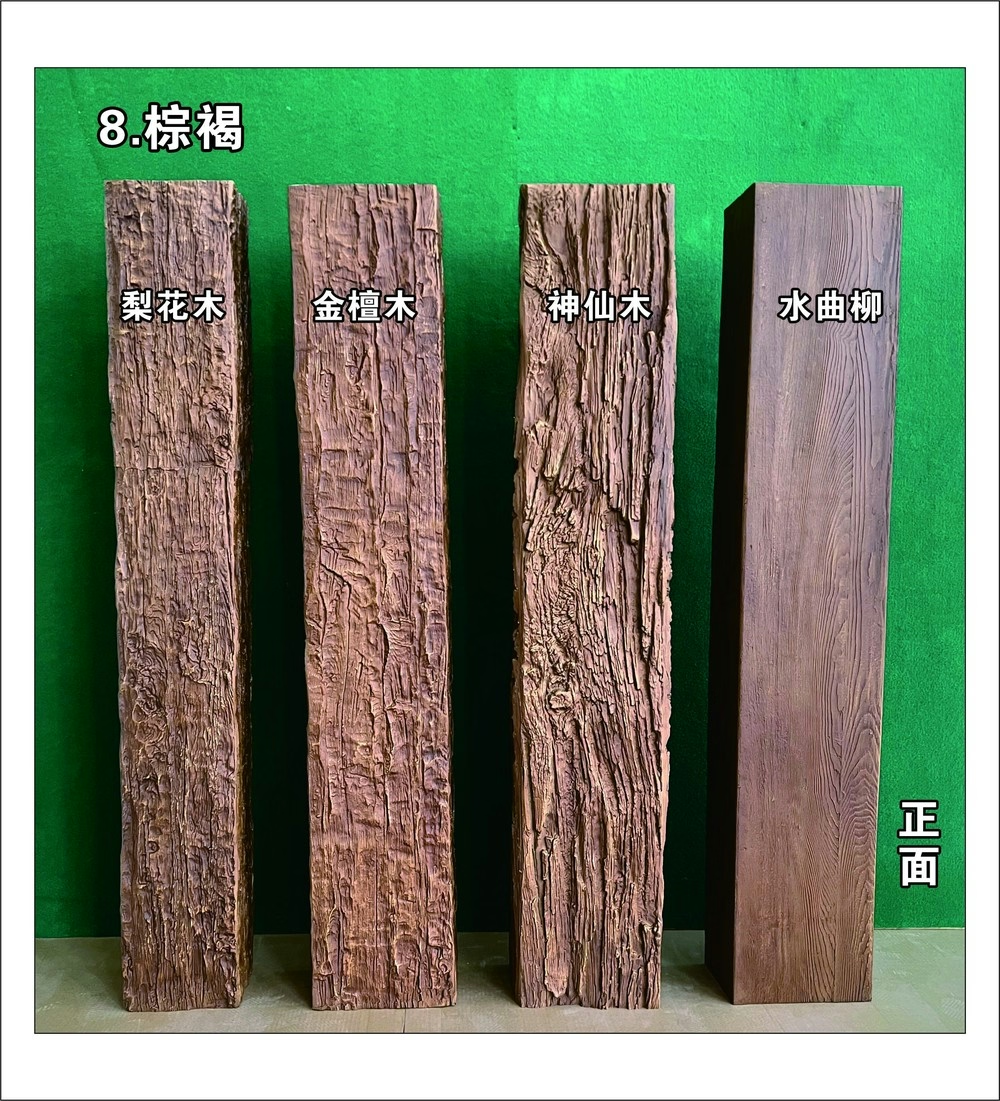
The gap between a product looking good in a showroom and performing well on a real job site can be enormous. In the world of decorative ceiling beams, this gap has historically been significant. Natural timber beams that photograph beautifully in design publications arrive at the job site as awkward, heavy pieces that require careful coordination of personnel, equipment, and timing. The moment a beam needs a crane or a specialized lifting rig is the moment the project budget starts climbing in directions that were not anticipated at the design stage. Polyurethane faux beams have narrowed this gap considerably, and understanding how their handling characteristics affect the realities of construction logistics is valuable for anyone involved in specifying or installing decorative beam systems.
What Happens When Materials Arrive on Site
The arrival of beam materials on a job site is a moment that experienced contractors approach with a specific set of concerns. Are the pieces the right size and finish? Are they damaged from shipping? How many workers will be needed to move them to the installation area? How will they be protected from other trades during the often-lengthy period between delivery and installation?
With polyurethane faux beams, the answers to these questions are reassuring. The weight of individual beams — typically 10 to 20 pounds for 10 to 12-foot lengths in common sizes — means that two workers can easily transport a full order of beams from the delivery truck to the staging area in a single trip. No equipment beyond a standard moving dolly is needed for longer pieces. Contrast this with the multiple trips, dedicated material handling personnel, and protective equipment required for a comparable volume of solid timber.
The consistent dimensions of manufactured polyurethane beams also simplify staging. Bundles pack predictably into designated storage areas, and the uniform lengths allow neat stacking without the irregularity that natural timber introduces. The risk of damage from improper stacking is minimal because the material does not warp, twist, or develop checking while sitting in storage — problems that affect natural wood even during short storage periods.
Protecting Beams During Multi-Trade Construction Phases
Modern construction projects involve multiple trades working in sequence or sometimes concurrently. The period between delivery of finish materials and final installation can expose those materials to risks from other activities — paint overspray, dust, impact from tools or materials, and foot traffic from workers moving through the space. Protecting finish materials during this vulnerable period is a constant challenge on busy job sites.
Polyurethane beams tolerate storage conditions that would challenge natural timber. They are not susceptible to moisture absorption, so they can be stored in spaces where humidity is not yet controlled. They do not require climate-controlled storage to prevent movement or checking. A simple protective wrapping of cardboard or moving blankets over stacked beams provides adequate physical protection against dust and impact, and this covering can be left in place for weeks without concern about the material degrading underneath.
For projects in active renovation or tenant improvement situations where other trades continue working in or near the beam installation area, this durability profile reduces stress and risk significantly. The installer's attention can focus on the installation itself rather than on monitoring environmental conditions or rushing to protect beams from unexpected paint jobs or drywall finishing work.


Setup Sequence and Workflow Optimization
Efficient beam installation on a job site follows a logical workflow that takes advantage of the material's handling characteristics. The preparation phase — marking joist locations, installing mounting cleats, checking alignment — can proceed at a measured pace without the time pressure that would accompany heavy timber handling. Multiple cleats can be installed across a run before any beams are positioned, allowing the installer to work efficiently rather than alternating between installation steps.
When the beams themselves are ready to go up, the lightweight nature of polyurethane allows a single worker to handle the process with minimal assistance. The beam is lifted from its storage location, carried to the installation position, and guided over the mounting cleats in a continuous motion. If alignment adjustment is needed, the beam can be shifted laterally or longitudinally by hand without tools, unlike heavy timber that requires leverage or prying tools to reposition.
The ability to work single-handedly has a meaningful effect on labor cost calculations. Projects that would require two or three-person teams for solid timber installation can proceed with one primary installer and an assistant who helps with preparation and cleanup rather than active lifting. The labor savings accumulate across the full installation and can represent a significant portion of the project's total cost.
Adapting to Site Conditions Without Delays
Job sites rarely match design drawings precisely. Ceiling joists may be offset from their nominal positions. HVAC ductwork may occupy space where a beam was planned to run. Lighting fixtures may be repositioned during the electrical planning phase. These variations require adaptation at the point of installation, and the ability to respond to site conditions without delay depends significantly on how accommodating the materials are.
Polyurethane beams are more forgiving of site adaptation than natural timber in several ways. The material cuts cleanly with standard circular or miter saws without splintering or tear-out, making length adjustments quick and precise. When a beam must be notched or cut to accommodate an unexpected obstruction, the cut edge can be sealed with a simple application of polyurethane adhesive and left to cure — no staining or sealing of raw wood surfaces is required because the cut surface matches the beam's inner core material rather than exposing a different wood species or grain pattern.
Drilling holes for electrical runs or mounting hardware through the beam is equally straightforward. Standard twist drills or hole saws cut cleanly through polyurethane without binding or burning. The holes require no additional finishing. This adaptability in the field is one of the practical advantages that experienced installers consistently report as a key benefit of choosing polyurethane over timber for onsite work.
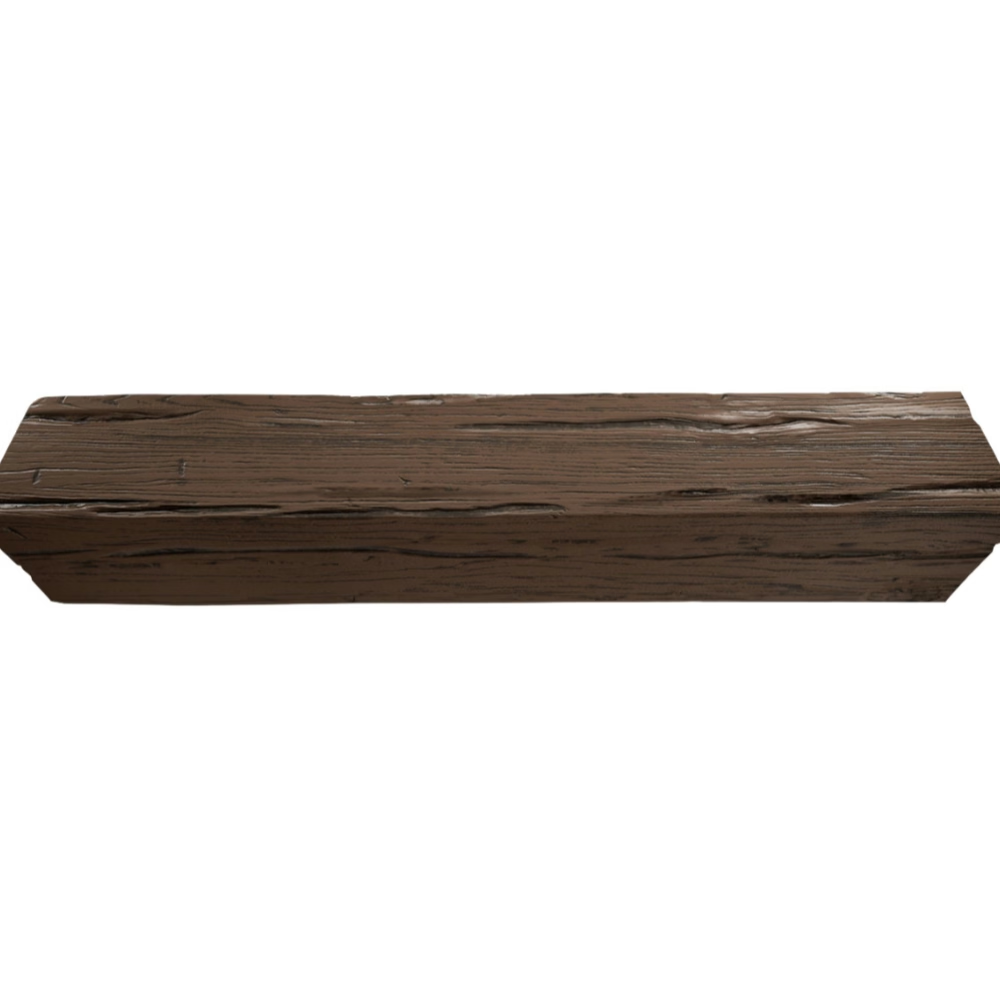
Reducing Site Cleanup and Post-Installation Repair
Every construction project generates cleanup tasks, and the condition of the space after installation affects both the final project value and the client's satisfaction. Polyurethane beams produce minimal cleanup compared to natural timber installations. There is no sawdust cloud from cutting and fitting solid wood, no stain or finish spills to address, no wood chips to sweep from crevices and corners.
The installation process itself generates only small amounts of adhesive squeeze-out and drill cuttings — both of which clean up easily with a damp cloth or shop vacuum. The beams themselves arrive pre-finished, so there is no post-installation finishing work — no stain application, no sealer coats, no drying time that would temporarily close a room from use.
This reduction in cleanup and post-installation work translates directly into faster project completion. The gap between finishing the physical installation and turning the space over to the client is shorter with polyurethane beams than with timber alternatives, which benefits everyone involved in the project from the contractor's project manager to the end client eager to occupy their newly completed space.
Technical References
ASTM standards cited in every specification
Test Data
Lab results from internal testing program
Updated 2026
Reviewed against current product specs