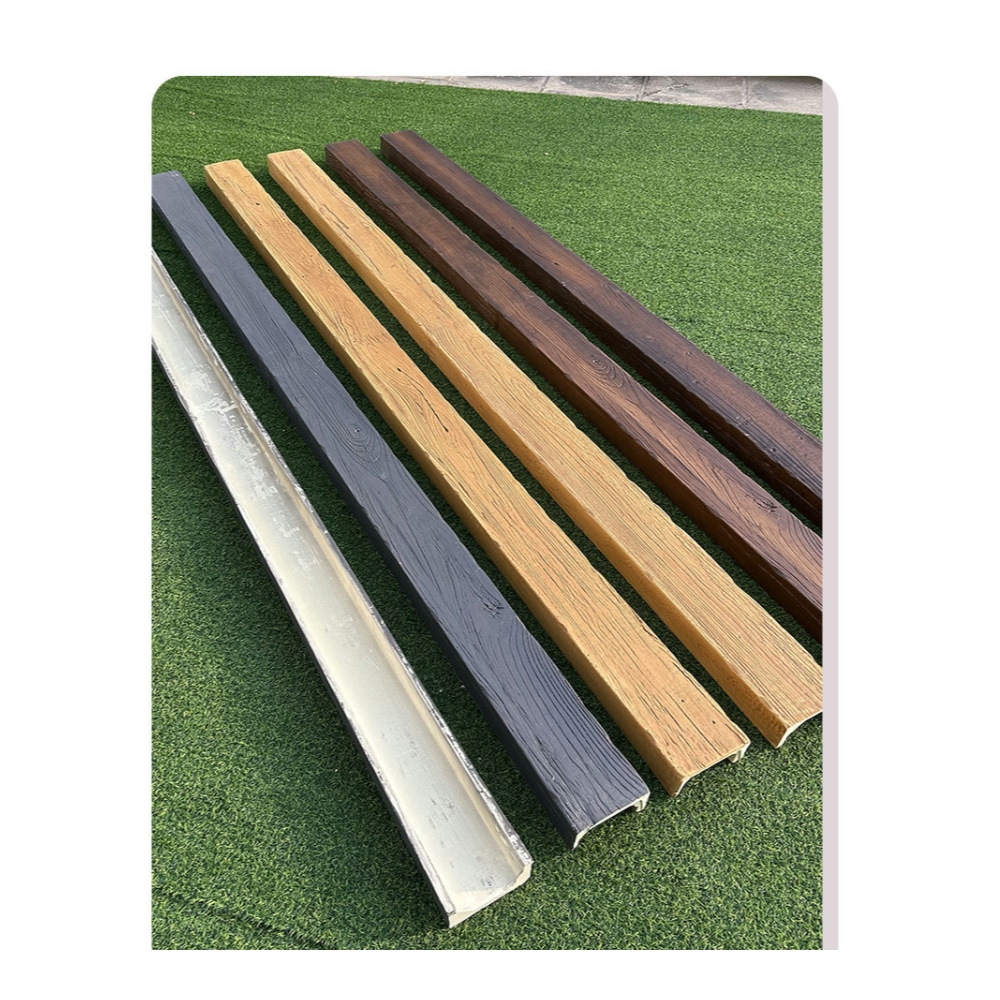
The appeal of barnwood in interior design runs deeper than a passing trend. There is something inherently satisfying about living with materials that carry the marks of time, use, and weather. The nail holes, the uneven grain, the grey-silver patina that develops over decades of exposure to sun and rain, these are the qualities that make reclaimed barnwood irreplaceable for certain design visions. But the realities of working with genuine barnwood, especially overhead in a ceiling installation, are considerably less romantic.
Consider the physical demands: an eight-foot reclaimed barn beam might weigh 60 pounds or more, and moving that weight up a ladder while simultaneously aligning it with ceiling markings requires at minimum two people and often specialized lifting equipment. The beams themselves may arrive warped, cracked, or harboring insects that require treatment before they can be brought indoors. None of these challenges exists with modern foam barnwood faux beams, which is why installers who have worked with both materials consistently choose the lightweight alternative for projects where aesthetic goals allow.
The Manufacturing Process Behind Realistic Barnwood Appearance
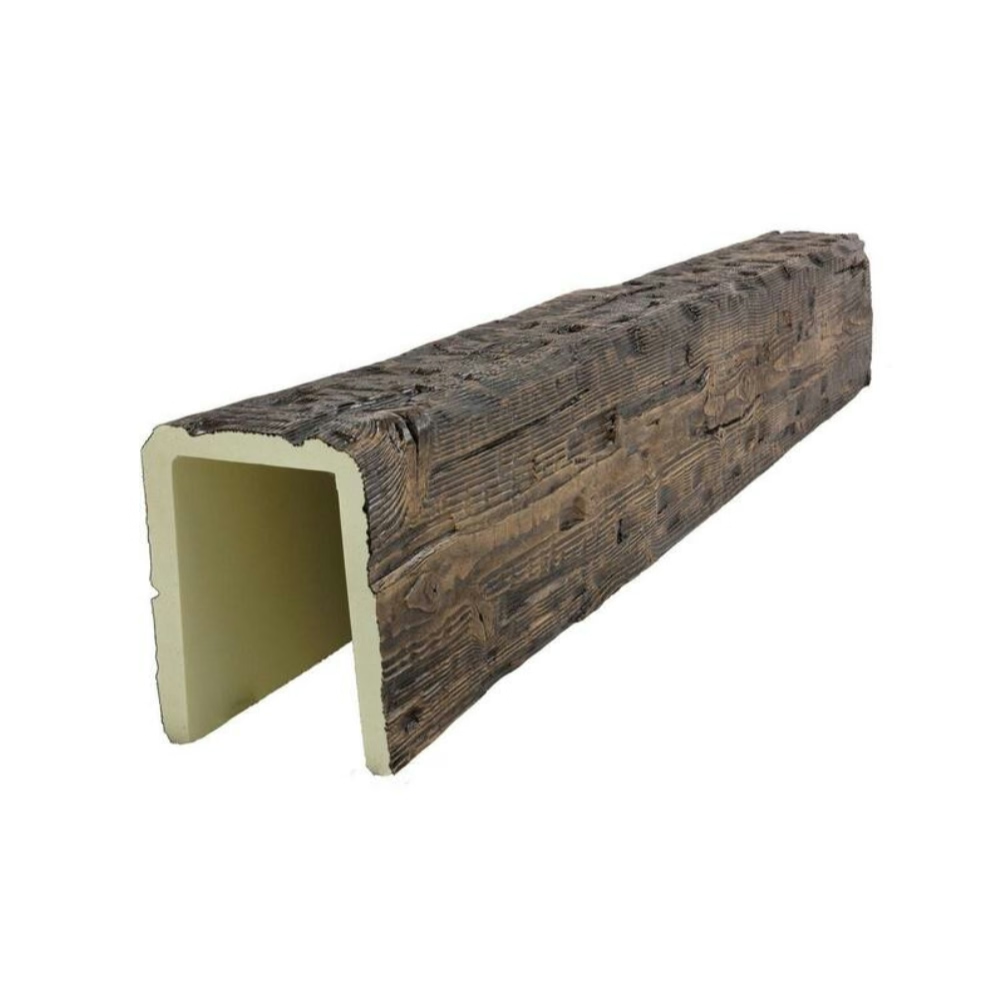
Creating convincing barnwood faux beams from polyurethane foam involves a multi-step process that balances material science with artistic craftsmanship. The process begins with molds taken from genuine aged barn boards, capturing every crack, nail hole, and grain irregularity that defines authentic weathered wood. When liquid polyurethane is poured into these molds, it fills every detail, producing a surface that reproduces the look of century-old timber with remarkable accuracy.
After the initial molding, each beam undergoes a hand-finishing process that applies color layers using techniques borrowed from the furniture restoration trade. Workers layer stains and glazes to build depth, adding darker tones in recessed areas and lighter highlights on raised grain features. The result is a finish that shows the natural color variation characteristic of aged wood rather than the flat, uniform appearance of lesser imitations.
The foam core beneath the detailed surface is formulated for specific performance characteristics. Higher-density foams provide structural rigidity for long-span applications, while medium-density formulations offer a good balance of weight and durability for standard ceiling installations. All formulations used in quality barnwood beams resist moisture absorption, which prevents the swelling, softening, and delamination issues that plagued early generation faux wood products.
Distressing techniques applied during manufacturing create the impression of boards that have endured years of weathering. Some beams feature intentional surface blemishes like dents and scratches, while others showcase the checking and splitting patterns that develop as wood dries and ages. The specific distressing pattern can often be selected based on design preferences, with options ranging from lightly weathered boards with subtle aging marks to heavily distressed beams that appear to have survived decades of harsh conditions.

Ceiling Installation Simplified Through Material Innovation
The installation advantages of foam barnwood beams begin before any tool comes out of the toolbox. Because these beams are manufactured to precise dimensions, each piece arrives with consistent cross-sectional measurements and straight alignment. There is no sorting through stacks of reclaimed boards to find the straightest pieces, no planing or trimming to achieve uniform width, and no negotiation between pieces with incompatible grain patterns or color variations.
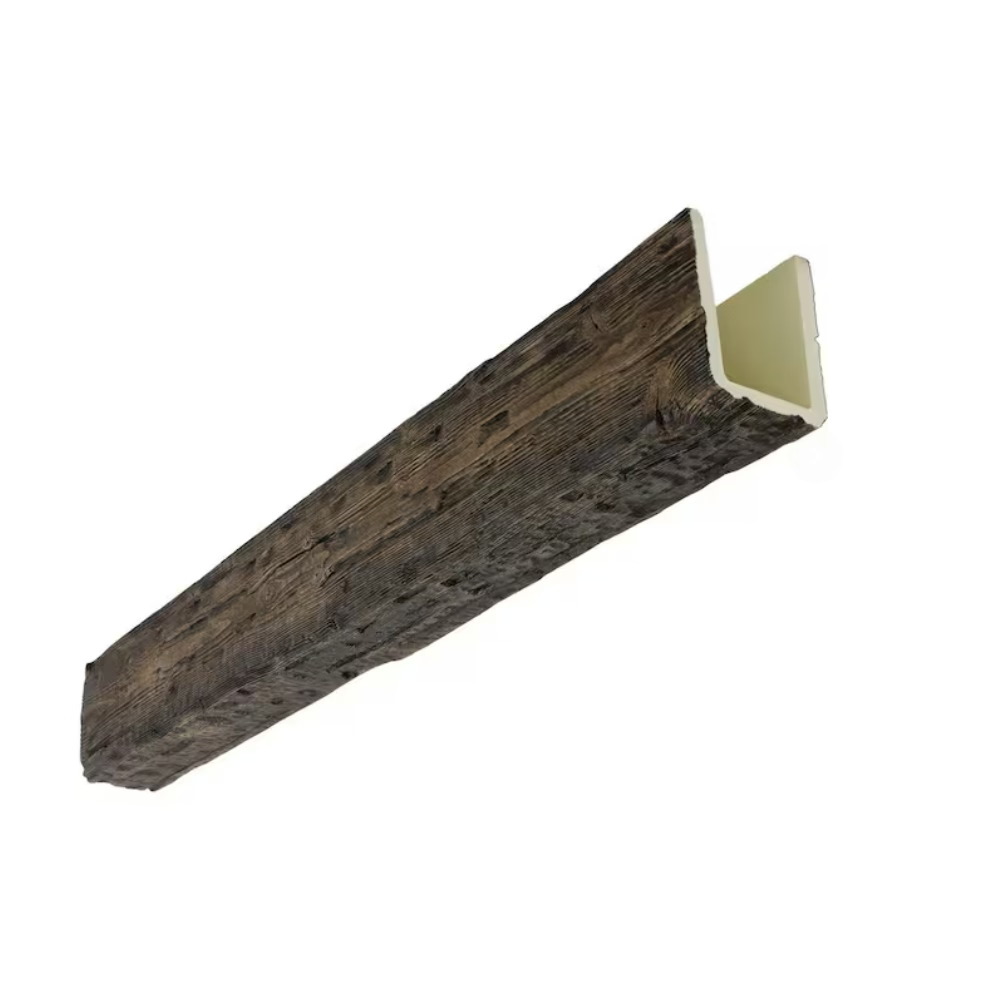
The mounting system for foam barnwood beams follows principles similar to those used for standard ceiling beams but accounts for the specific properties of foam material. Keyed mounting rails attach to ceiling joists at the desired spacing, with the rails sized to nest inside the beam's hollow core. Once the rails are secured and leveled, the beam simply slides into position and locks with friction fit and construction adhesive. The entire process from opening the shipping box to a secured beam takes minutes rather than the hours required to prepare and lift genuine barnwood.
For rooms requiring beams that span particularly long distances, manufacturers offer reinforced profiles with internal structural supports that prevent sagging over time. These internal supports distribute loads across the beam length, maintaining straight alignment and preventing the gradual deformation that can occur in any spanning member subjected to persistent downward force. The reinforcement is typically concealed within the beam's profile, invisible once installation is complete but providing reliable long-term performance.
Contractors who specialize in ceiling renovations have documented dramatic time savings when switching from genuine barnwood to foam alternatives. A renovation company in Ohio documented a recent project where they installed twelve eight-foot barnwood beams in a farmhouse kitchen in under four hours. The same crew estimated that genuine reclaimed barn beams of equivalent size would have required at least two full workdays, accounting for the additional labor needed for handling, preparation, and the more complex mounting methods required for heavy timber.
Matching Barnwood Beams to Different Room Configurations
The farmhouse aesthetic works well in more settings than many designers initially assume. While the connection to agricultural architecture is obvious in country homes and rural properties, barnwood beams integrate equally successfully into urban loft conversions, industrial-chic apartments, and contemporary houses seeking a grounding counterpoint to sleek finishes. The key lies in selecting the right barnwood style and proportioning it appropriately for the space.
Lightly weathered barnwood with a primarily grey palette suits modern interiors where the beams serve as texture rather than focal point. In these applications, the beams should be sized to complement rather than dominate, with consistent spacing that creates rhythm without overwhelming the room. A kitchen with white cabinetry, stainless appliances, and light countertops can accommodate barnwood beams that add warmth without introducing a heavy country feeling that conflicts with the clean aesthetic.
Heavily distressed barnwood beams with rich brown and amber tones make a stronger design statement, better suited to rooms with equally bold finishes. Great rooms with stone fireplaces, leather furniture, and earthy color palettes can carry the visual weight of dramatically distressed beams with authenticity. In these spaces, the beams become a central design element, drawing the eye upward and anchoring the room's rustic character.
The spacing between beams affects both the visual impact and the room's perceived proportions. Tight spacing, with beams installed 24 to 36 inches apart, creates a coffered ceiling effect that reads as formal and architectural. Wider spacing, with beams 48 inches apart or more, maintains openness while still introducing the barnwood aesthetic as an accent feature. The choice between these approaches depends on ceiling height, room function, and the overall design intent for the space.
Maintaining Barnwood Faux Beams Over Time
One of the most appealing aspects of choosing foam over genuine reclaimed barnwood is the dramatically reduced maintenance burden. Natural barnwood requires ongoing attention to moisture levels, pest protection, and surface condition. Even well-maintained barnwood beams may develop new cracks or show signs of age-related movement that need addressing. Foam barnwood beams sidestep these concerns entirely, maintaining their appearance with minimal intervention.
The polyurethane surface resists moisture absorption, which means these beams can be installed in areas with ambient humidity variations without the dimensional instability that affects natural wood. Kitchens with cooking activity, bathrooms with shower steam, and basements with variable moisture levels all present no particular challenge for foam barnwood beams. This durability expands the range of appropriate applications well beyond what would be practical with genuine barnwood.
Cleaning is straightforward and requires no specialized products. A soft brush attachment on a vacuum cleaner removes dust from crevices and textured areas, while a damp cloth with mild detergent handles any smudges or marks that accumulate over time. The color layers applied during manufacturing are designed to resist fading from UV exposure, though positioning beams away from direct sunlight through windows or skylights will further extend their like-new appearance.
For homeowners concerned about the long-term appearance of their installation, periodic inspection of mounting points is the only regular maintenance task required. Checking that adhesive bonds remain secure and that mounting brackets have not loosened over time ensures that beams stay firmly in position through years of use. This simple annual check takes only a few minutes per beam and provides peace of mind that the installation remains safe and stable.
The combination of authentic appearance, easy installation, minimal maintenance, and broad design flexibility makes foam barnwood faux beams a practical choice for virtually any ceiling project where rustic character is desired. Whether applied in a full farmhouse renovation or as a single accent feature in an unexpected setting, these beams deliver the aesthetic impact of reclaimed timber with a fraction of the investment in labor, time, and ongoing care.
Technical References
ASTM standards cited in every specification
Test Data
Lab results from internal testing program
Updated 2026
Reviewed against current product specs