There is something deeply satisfying about a room where every design element has been considered and executed with intention. The furniture, the lighting, the wall finishes, the window treatments, and the ceiling architecture all work together to create an environment that feels complete and coherent. Ceiling beams play an important role in this composition, providing visual structure that draws the eye upward and creates a sense of architectural completeness that flat, unfinished ceilings simply cannot achieve.
The challenge historically has been that bringing ceiling beams into a design requires either incorporating genuine timber during initial construction or undertaking a renovation project substantial enough to accommodate the weight, cost, and complexity of timber beam installation. These barriers have excluded ceiling beams from countless renovation plans where the budget, timeline, or structural constraints simply could not accommodate the demands of authentic timber. Hollow decorative polyurethane faux beams have dissolved these barriers entirely, making ceiling beam aesthetics accessible to any project regardless of its constraints.
The distinction between decorative and structural elements is worth acknowledging explicitly. Decorative beams, as the name suggests, exist to provide visual interest and architectural character without bearing any load or contributing to the building's structural system. This distinction is not a compromise; it is a clarification that allows designers and homeowners to pursue aesthetic goals without unnecessary structural engineering. A decorative beam can be made from any material that achieves the desired appearance, which is precisely why lightweight polyurethane has become the material of choice for this application.
The Design Flexibility of Hollow Decorative Beams
The range of design possibilities with hollow decorative polyurethane beams spans virtually every aesthetic category from rustic farmhouse to sleek contemporary. This flexibility arises from the manufacturing process, which can produce beams in any profile shape, surface texture, and finish color that the design might require. The mold-based production method accommodates custom profiles without the premium pricing or extended lead times that custom woodworking typically involves.
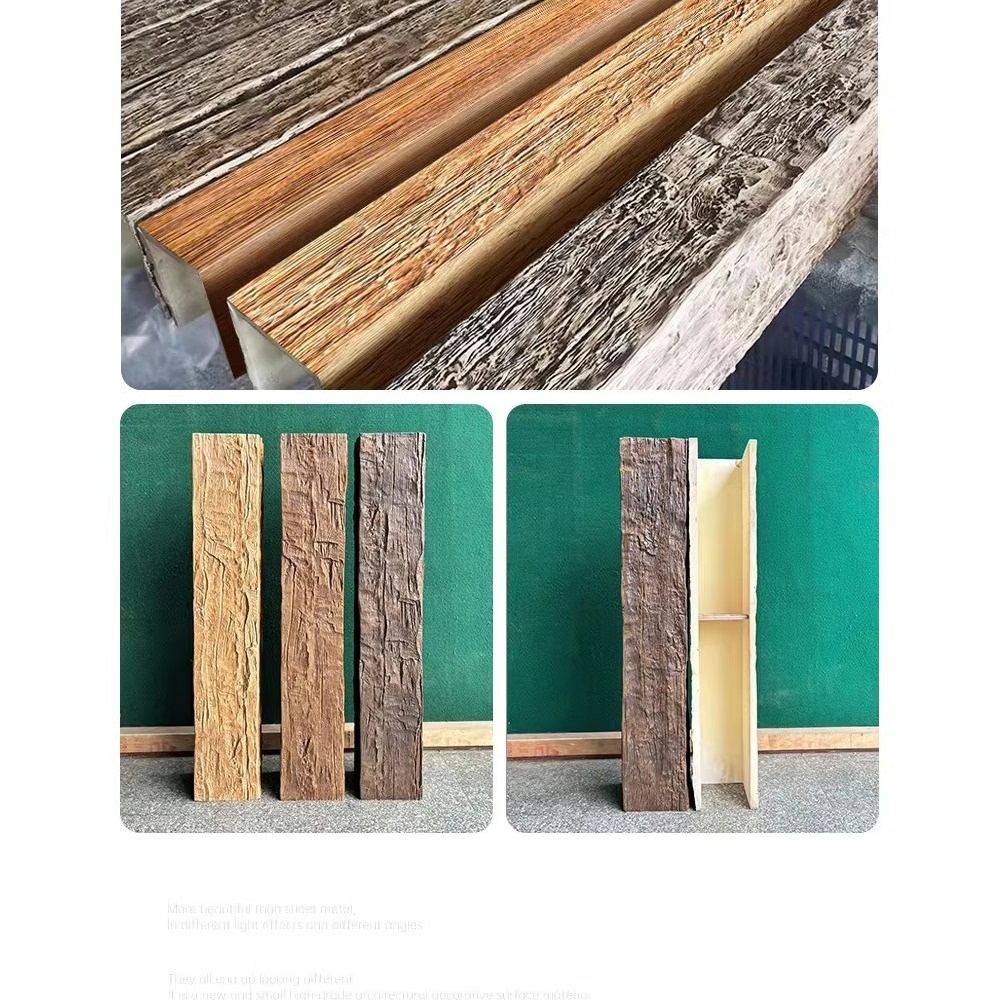
Rustic and farmhouse aesthetics benefit from beams with deeply textured surfaces, prominent grain patterns, and finishes that suggest aged, weathered timber. Hollow decorative beams in this category often feature knot patterns, checking effects, and surface distressing that evoke decades of natural aging. The lightweight construction makes it practical to install these character-rich beams in rooms throughout the home, including upper-floor ceilings where structural limitations would prohibit genuine timber entirely.
Contemporary and transitional interiors often call for cleaner, more refined beam profiles that complement modern furniture and minimal ornament. Hollow decorative beams in this category feature smooth surfaces, precise edge geometry, and refined finishes in natural wood tones, pure whites, or even bold painted colors. The dimensional consistency of manufactured beams supports the clean, orderly aesthetic that contemporary design demands, with each beam matching every other beam precisely.
Traditional and classical interiors, with their emphasis on craftsmanship and rich detail, can be served equally well by hollow decorative beams styled to evoke period-appropriate millwork. Beaded surfaces, complex molding profiles, and deep rich finishes in mahogany, walnut, or cherry tones create the impression of hand-crafted joinery without the expense and weight of authentic period beams. These installations often incorporate decorative corbels, end treatments, and ceiling medallions that enhance the traditional aesthetic further.

Installation Patterns and Design Strategies
The arrangement of decorative beams on a ceiling affects the visual outcome as much as the beams themselves. Grid patterns, with beams running perpendicular to each other in regular intervals, create a formal coffered ceiling effect that works well in dining rooms, entry halls, and other spaces where a sense of order and symmetry is appropriate. The regular spacing and precise alignment of this pattern showcases the dimensional consistency of manufactured beams, producing an effect that is difficult to achieve with genuine timber.
Running bond or offset patterns, where beams in one direction are staggered relative to beams in the perpendicular direction, introduce visual interest and movement that breaks the formality of the grid pattern. This approach works particularly well in larger rooms where the repeating nature of a strict grid might become monotonous. The offset pattern creates natural visual groupings that can correspond to functional zones within an open-plan space.
Single-beam accent installations, where one or two prominent beams cross a ceiling without covering the entire surface, provide architectural interest at minimal material cost. This approach suits rooms with interesting existing ceiling features like exposed ductwork, skylights, or architectural bumps that the single beam can highlight rather than conceal. The accent beam draws the eye across the room, creating a sense of movement and visual adventure that enriches the space without overwhelming it.
Diagonal installations add dynamic energy that works particularly well in contemporary settings. Diagonal beams create visual movement that makes rooms feel more energetic and less static than perpendicular patterns, which can contribute to the sense of contemporary dynamism that modern interiors often seek. The diagonal approach requires more careful planning and cutting, as mitered joints become necessary at wall intersections, but the visual result rewards the additional effort.
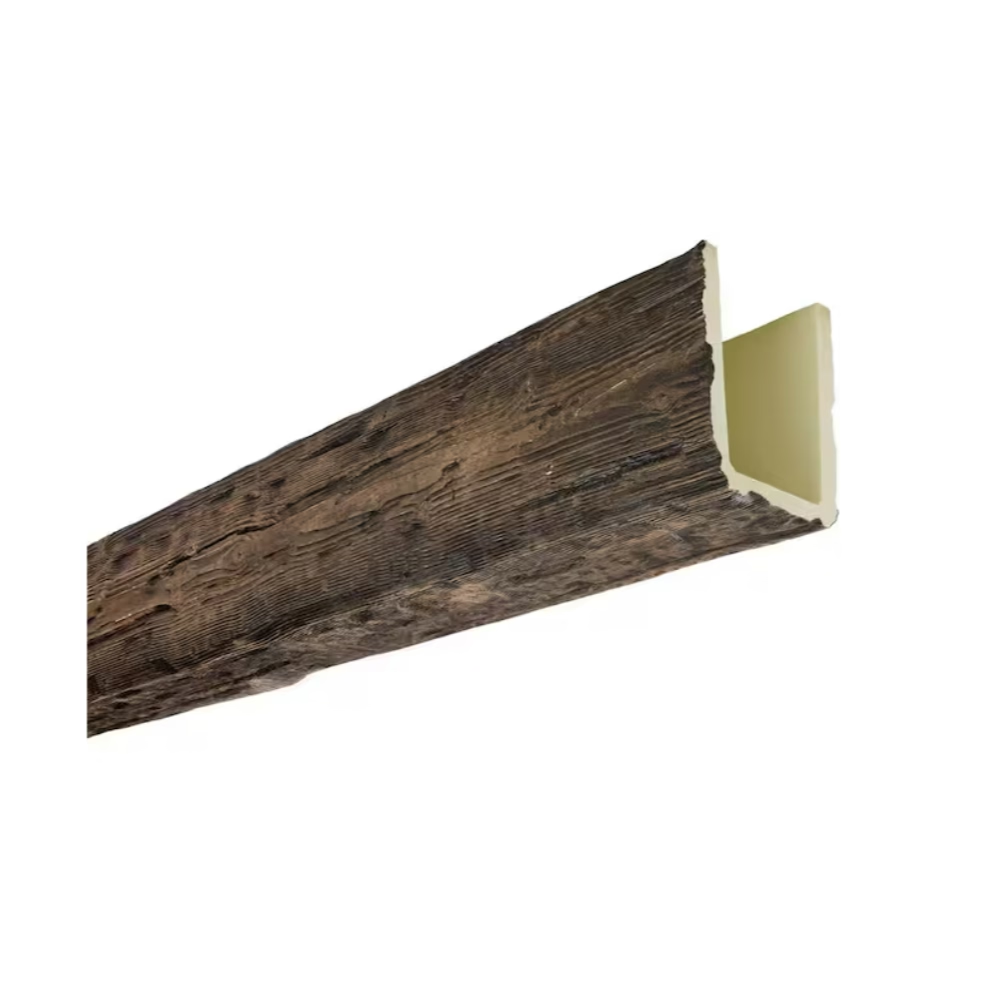
Why Hollow Construction Maximizes Value
The hollow core construction of decorative beams contributes to their value proposition in ways that extend beyond the handling advantages already discussed. Material cost reduction from using less foam translates directly to lower purchase prices, making hollow beams more accessible to budget-conscious projects. This democratization of design options means that homeowners who might otherwise forgo ceiling beams entirely due to cost can achieve the aesthetic they want at a price that fits their renovation budget.
The reduced material consumption also carries environmental benefits that appeal to environmentally conscious consumers. Less raw material consumption per beam means less energy required for manufacturing, less packaging waste generated, and lighter shipping loads that consume less fuel in transportation. While individual purchasing decisions may not be driven primarily by environmental considerations, the cumulative impact of preferring hollow over solid construction across millions of beam installations is genuinely significant.
Storage and inventory advantages also favor hollow construction for retailers and contractors who need to maintain beam inventory. Hollow beams stack more compactly than solid alternatives, consuming less warehouse space and reducing shipping costs for restocking orders. The lighter weight makes inventory handling safer and more efficient, reducing labor costs and injury risk in warehouse operations. These efficiencies in the supply chain ultimately benefit end customers through more competitive pricing and better product availability.
Pairing Decorative Beams With Other Design Elements
Successful ceiling beam installations often incorporate complementary design elements that enhance the overall visual impact. Crown molding where beams meet walls creates a finished transition that elevates the installation from merely attractive to genuinely refined. The molding adds a layer of detail that frames the beams architecturally, tying them into the room's broader design scheme.
Light fixtures deserve consideration in beam installation planning, as the relationship between beams and overhead lighting affects both aesthetics and function. Beams positioned to frame or accent light fixtures create focal points that draw the eye upward, while fixtures installed between beams can create shadow patterns that add depth and interest to the ceiling plane. Recessed lighting positioned between beams provides ambient illumination without interrupting beam lines, combining functional lighting with architectural interest.
Ceiling medallions around chandelier mounting points provide a traditional finishing touch that connects the light fixture to the beam treatment visually. These decorative elements come in polyurethane versions that match the material and finish of the beams, creating a cohesive design element that unifies the ceiling composition. The medallion also serves the practical function of concealing the ceiling junction box and any mounting hardware for the fixture.
Paint and finish coordination between beams and other room elements completes the design integration. Beams can be specified to match existing wood trim, complement wall colors, or provide intentional contrast that creates visual hierarchy within the room. The finish selection process benefits from obtaining physical samples and evaluating them in the actual room lighting, as digital representations rarely convey the subtle tonal qualities that distinguish excellent finishes from merely acceptable ones.
Hollow decorative polyurethane faux beams represent an elegant solution to the universal desire for beautiful, character-rich interior spaces. By removing the structural, financial, and logistical barriers that have historically limited ceiling beam installations, these beams open architectural richness to a broader audience than ever before. The result is spaces that feel more complete, more intentional, and more satisfying to inhabit, which remains the ultimate purpose of all design effort.
Technical References
ASTM standards cited in every specification
Test Data
Lab results from internal testing program
Updated 2026
Reviewed against current product specs


