There is something genuinely transformative about a well-designed ceiling. While floors and walls tend to command most of the attention during interior design conversations, the overhead plane offers perhaps the greatest untapped potential for visual drama. A coffered ceiling, a beam-crossed vault, or a simple run of timber-look elements across a flat plane can redefine an entire room's personality within hours of installation. This is the power that decorative ceiling beams bring to interior spaces, and it is precisely why hollow decorative polyurethane timber beams have become a go-to solution for designers and contractors working on ceiling ornamentation projects of every scale.
The appeal of timber as a ceiling material is deeply rooted in human architectural tradition. From medieval great halls to Craftsman bungalows to contemporary lofts, exposed structural timber carries associations with warmth, craftsmanship, and organic beauty. Yet the realities of using genuine timber beams for purely decorative purposes are often prohibitive. Solid timber beams are heavy, requiring substantial structural support. They are susceptible to moisture movement, insect damage, and the gradual warping that comes from decades of temperature and humidity fluctuation. For a decorative application where the beam carries no structural load whatsoever, these drawbacks represent pure cost with no corresponding benefit. This is the fundamental problem that hollow decorative PU timber beams solve elegantly.


Why Hollow Construction Changes Everything for Ceiling Applications
The decision to use hollow beams rather than solid ones is not merely a matter of material efficiency, though that matters too. Hollow construction fundamentally alters the physics of how these beams interact with the ceiling structures they adorn. A typical hollow polyurethane decorative beam weighs a fraction of its solid timber equivalent, often as little as five to eight kilograms per linear meter depending on profile size. This weight difference has cascading practical implications that affect everything from shipping costs to installation methodology to the types of ceiling substrates that can accommodate the beams.
In older properties, ceiling structures are frequently not designed to bear significant additional load. A plasterboard ceiling in a Victorian terraced house, for instance, could not safely support solid oak beams without substantial reinforcement work. Hollow PU beams eliminate this constraint entirely. A single installer can handle beam lengths of three meters or more without assistance, which is a remarkable feat when compared to the two-person minimum typically required for solid timber beams of equivalent size. This reduction in installation complexity translates directly into cost savings on labor, and it also expands the range of properties where decorative ceiling beams become a practical option rather than an engineering challenge.
The hollow interior of these beams also offers unexpected versatility. While the cavity serves primarily to reduce weight, it can accommodate recessed lighting, speaker wiring, or HVAC ductwork in certain configurations. Designers working on contemporary interiors have begun to exploit this feature, running low-voltage lighting cables through beam interiors to create the illusion of illumination emanating from within the timber itself. This approach requires no surface-mounted conduits and preserves the seamless appearance of the beam while adding a layer of functional sophistication that solid timber simply cannot provide in the same way.
Achieving Realistic Timber Aesthetics in Polyurethane
The challenge of making polyurethane convincingly resemble natural timber is one that material scientists and mold designers have addressed with increasing sophistication over the past two decades. Early generations of faux timber products often suffered from a telltale uniformity that betrayed their synthetic origins. The grain patterns repeated predictably, the surface texture lacked the tactile depth of real wood, and the color saturation followed an artificial gradient that never quite matched the complex tonal variations found in aged timber.
Modern high-density polyurethane formulations have changed this equation substantially. Contemporary casting techniques allow for the incorporation of multiple layers of pigmentation within a single mold, creating the natural color variation that occurs in real wood as it grows, seasons, and responds to environmental exposure. Advanced texturing processes produce surfaces that feel authentically weathered when touched, with subtle relief patterns that catch light in the same way that natural wood grain does. For ceiling applications, where beams are viewed predominantly from below and at oblique angles, this visual authenticity is absolutely essential.
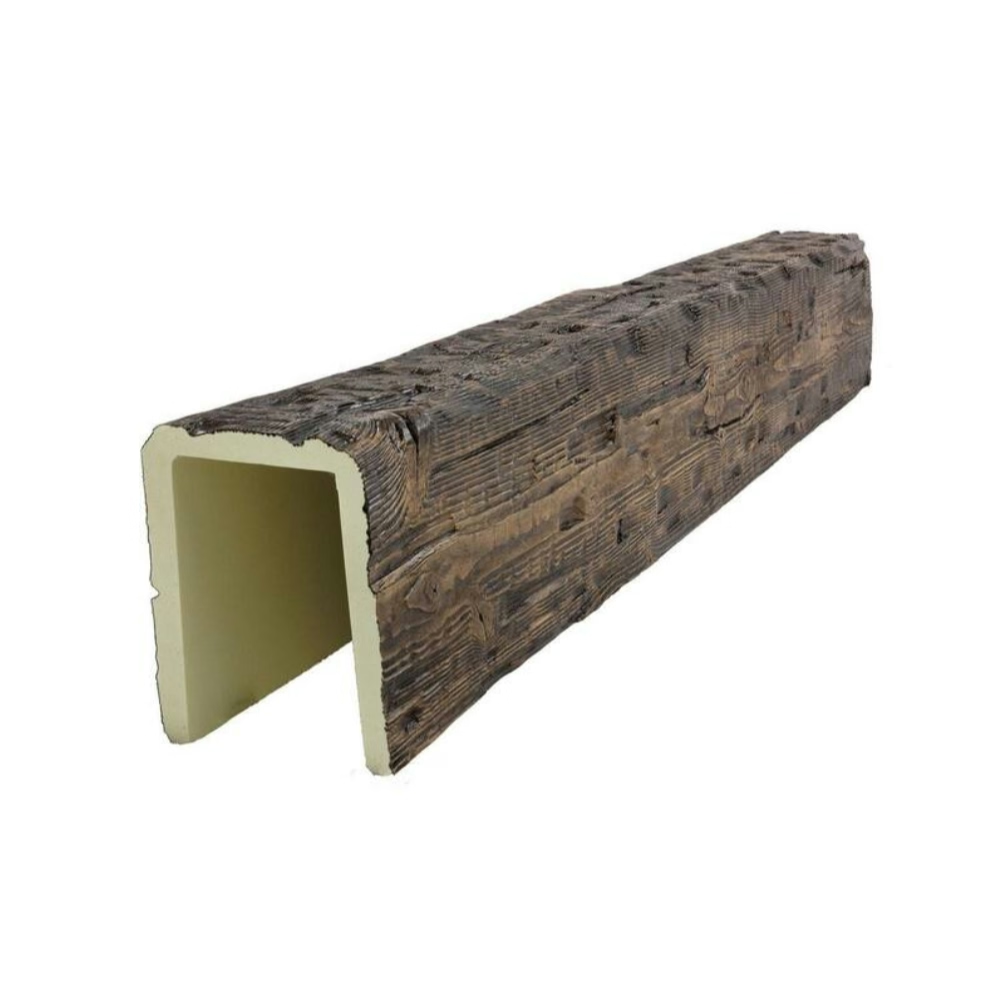
The range of available timber species represented in PU decorative beams has expanded to encompass not only common domestic varieties like oak, pine, and walnut but also exotic species that would be prohibitively expensive or ecologically problematic to source as solid timber. Reclaimed barn beam aesthetics, for instance, translate beautifully into hollow PU shells that capture the character of century-old weathered timber without the complications of sourcing genuine reclaimed materials. Similarly, the rich dark tones of aged mahogany or the distinctive figuring of quarter-sawn oak can be faithfully reproduced in a lightweight hollow format that makes these looks accessible to a much broader range of projects and budgets.
Installation Methodologies for Ceiling Ornamentation
Installing hollow decorative PU timber beams as ceiling ornamentation requires a different approach than working with genuine timber, though the fundamental principles of accurate measurement and careful alignment remain unchanged. The typical installation process begins with a thorough survey of the ceiling substrate to determine the most appropriate fixing method for the specific conditions present. In new construction or renovation projects where ceiling joists are exposed, beams can often be fixed directly to the joists using coach bolts or heavy-duty screws passed through the beam's structural inner core. For plasterboard ceilings or suspended ceiling systems, the installation may require the addition of wooden battens or metal framing channels to provide a secure anchoring substrate.
The hollow nature of these beams necessitates careful consideration of how to create the appearance of continuous structural integration with the ceiling plane. Most installers employ a combination of adhesive and mechanical fixings, using construction adhesive to create a seamless bond between the beam's upper surface and the ceiling substrate while mechanical fixings provide the primary load-bearing connection. The adhesive also serves an acoustic purpose, filling any minor gaps that might otherwise transmit vibration or produce hollow resonance when the beams are struck or when air movement occurs within the ceiling cavity.
Corner joints and beam intersections require particular attention to achieve a convincing appearance. Mitered joints work well for 90-degree intersections, while more complex angular relationships may require the creation of custom scarf joints or the use of decorative corbels and bracket elements to mask transitions. These accessories are available as matching PU components, ensuring that the material continuity extends through all visual elements of the installation. The result is a ceiling ornamentation system that reads as a cohesive architectural feature rather than a collection of individual decorative elements.
Design Applications Across Different Interior Styles
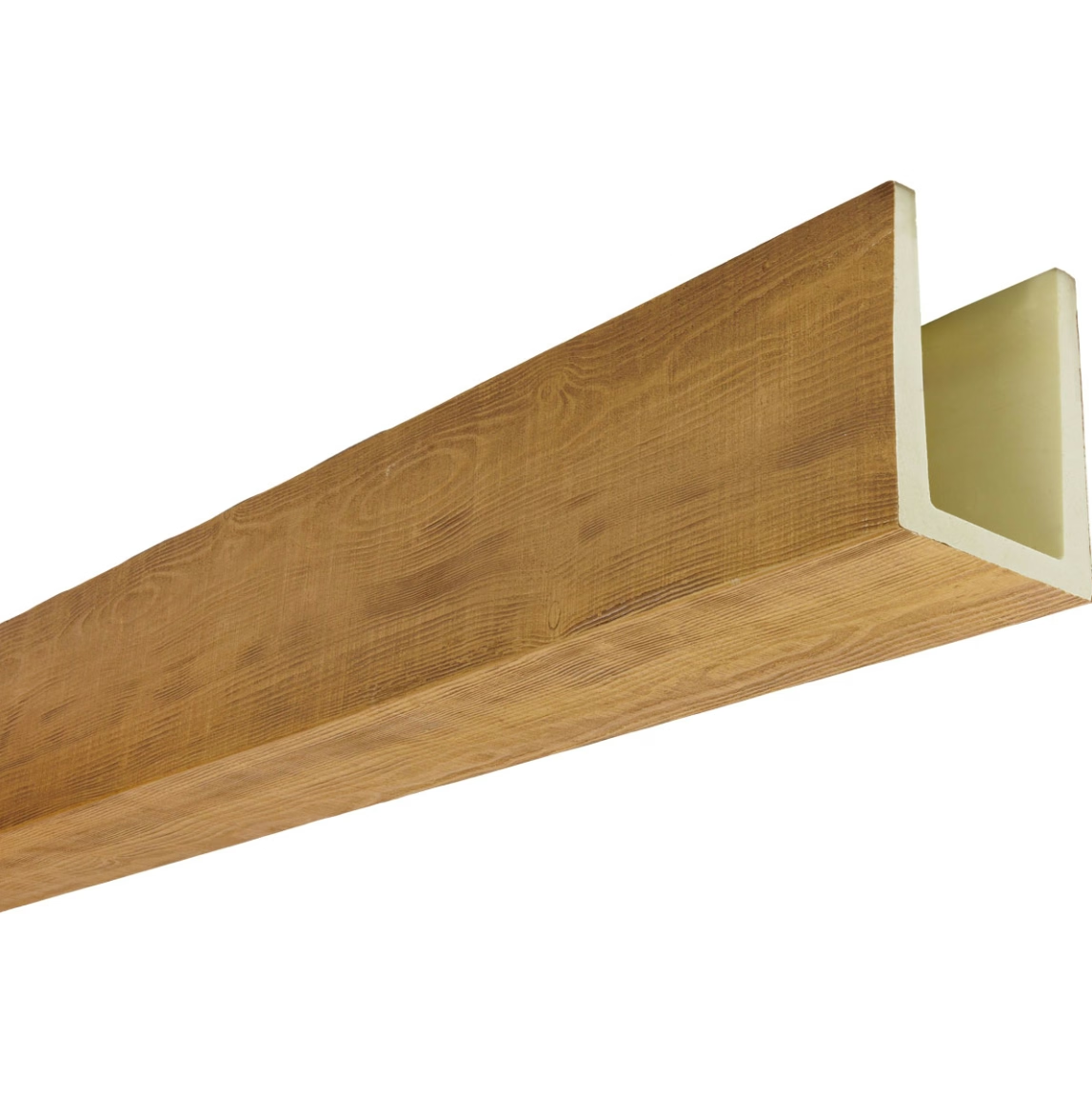
The versatility of hollow decorative PU timber beams becomes most apparent when examining the breadth of interior design styles with which they are compatible. In rustic and farmhouse interiors, wide-profile beams with pronounced grain texture and a natural or honey-toned finish create an immediate sense of pastoral authenticity. Paired with stone fireplace surrounds, natural linen textiles, and warm-toned wooden flooring, these beams anchor the visual identity of the room in a vernacular tradition that feels earned rather than decorative. The hollow construction means that even very substantial-looking beams can be installed without concern for the structural implications that would attend real timber of equivalent visual mass.
Contemporary minimalist interiors benefit equally from the clean-lined varieties of hollow PU beams. Here, the appeal lies in the precision of the beam profiles and the consistency of the surface finish. A streamlined rectangular beam with a subtle matte stain and sharp edges can read as a sophisticated design gesture rather than a rustic reference, adding visual weight and definition to an otherwise spare ceiling plane. The polyurethane material accepts paint with excellent results, which means beams can be specified in custom colors to coordinate precisely with a room's color palette without the complications of paint adhesion that sometimes affect treated timber surfaces.
Transitional spaces that blend elements of traditional and contemporary design find hollow PU beams to be particularly accommodating. The ability to specify beam profiles, finishes, and configurations on a project-specific basis allows designers to strike exactly the right balance between heritage warmth and modern restraint. A beamed ceiling in a transitional kitchen, for example, might feature medium-profile beams with a subtle hand-scraped texture in a warm grey finish, bridging the gap between a classic farmhouse aesthetic and a contemporary urban sensibility.
Long-Term Performance and Maintenance Considerations
One of the most compelling practical advantages of hollow polyurethane timber beams over their natural counterparts is their exceptional long-term dimensional stability. Unlike real timber, which expands and contracts with changes in ambient humidity, polyurethane maintains its precise dimensions across a wide range of environmental conditions. This stability is particularly valuable in ceiling applications, where any movement in the beams could potentially manifest as visible gaps at joints or as stress on the fixing system. The dimensional consistency of PU also means that the beam's surface finish remains stable over time, without the checking, splitting, or surface degradation that can affect natural timber in challenging environments.
Maintenance requirements for hollow decorative PU timber beams are minimal compared to natural timber alternatives. The non-porous surface of polyurethane does not absorb moisture, which eliminates the conditions that lead to mold growth, rot, or staining in genuine timber beams. Cleaning is straightforward, typically requiring nothing more than periodic dusting or wiping with a damp cloth. For beams installed in kitchens or other environments where grease or cooking residues might be present, a mild detergent solution is sufficient to restore the surface to its original condition without risk of damaging the finish or the underlying material.
The fire performance of modern polyurethane decorative beams is another area where significant engineering advances have been made. Manufacturers now produce PU formulations that meet stringent fire classification requirements for interior applications, including low flame spread ratings and limited smoke development characteristics. For commercial applications or multi-residential buildings where fire safety regulations apply, beams can be specified with appropriate fire-retardant properties that satisfy the relevant building codes while maintaining the aesthetic quality of the installation.
Cost-Benefit Analysis for Ceiling Ornamentation Projects
Evaluating hollow decorative PU beams against alternative materials requires consideration of the full project lifecycle rather than initial unit costs alone. When the total cost of ownership is assessed across factors including material procurement, delivery logistics, installation labor, finishing, and ongoing maintenance, hollow PU beams frequently emerge as the most economical choice for decorative ceiling applications. The dramatic reduction in weight simplifies logistics considerably, with more beam length fitting into each delivery vehicle and smaller vehicles being sufficient for many residential-scale projects.
The installation labor savings are frequently the most significant factor in the overall cost comparison. Because hollow PU beams require no special structural support and can be handled by a single operative, the labor hours required to install a given ceiling area are typically thirty to fifty percent lower than the hours required for solid timber beam installations. For commercial projects where large ceiling areas are involved, this difference can represent a substantial absolute saving. The reduced need for specialized equipment such as forklifts, lifting tackle, or additional labor personnel further contributes to the cost advantage.
The elimination of finishing costs represents another meaningful saving that is sometimes overlooked in initial price comparisons. Natural timber beams frequently require staining, sealing, or painting after installation, adding both material and labor costs to the project. Many hollow PU beam products are available in pre-finished conditions that require no on-site treatment, allowing the beams to be installed and the ceiling project to be completed in a single efficient operation. Even when custom finishing is desired, the polyurethane surface accepts paint and stain with excellent uniformity, reducing the number of coats required and the risk of finish defects.
Technical References
ASTM standards cited in every specification
Test Data
Lab results from internal testing program
Updated 2026
Reviewed against current product specs


