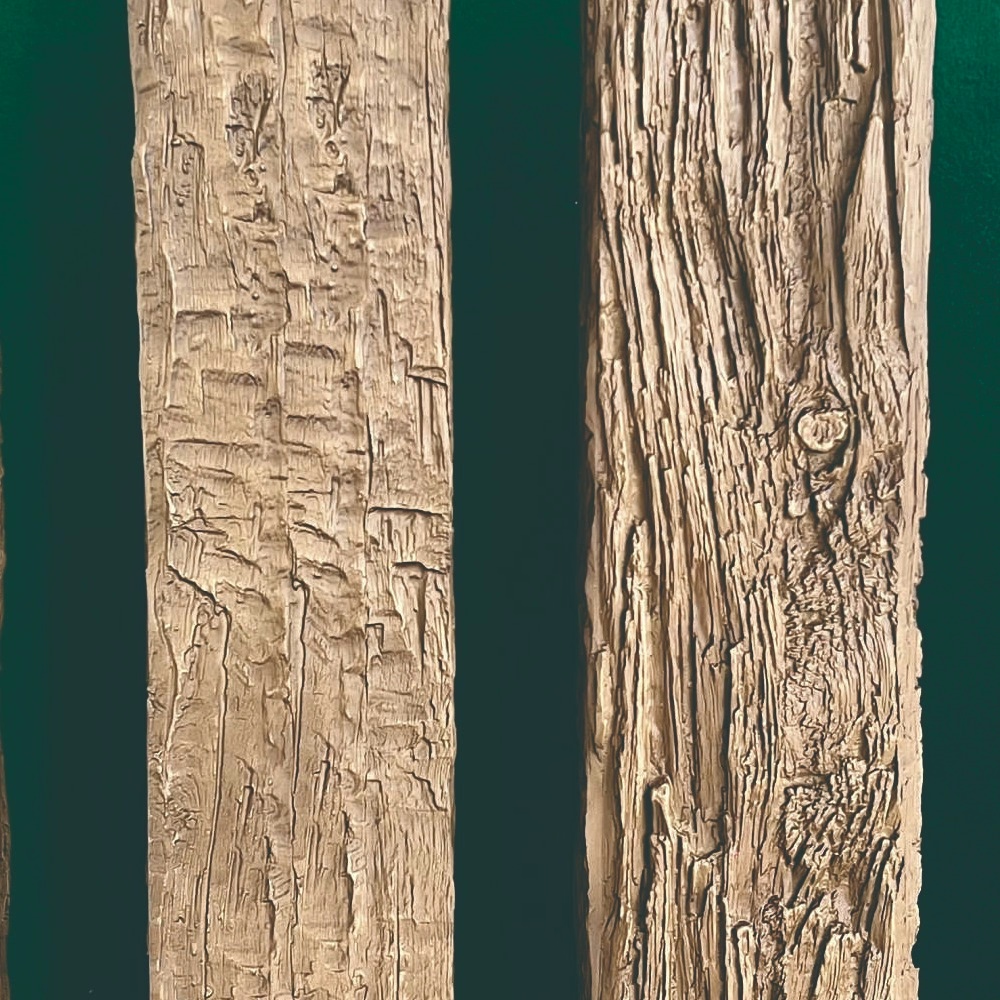
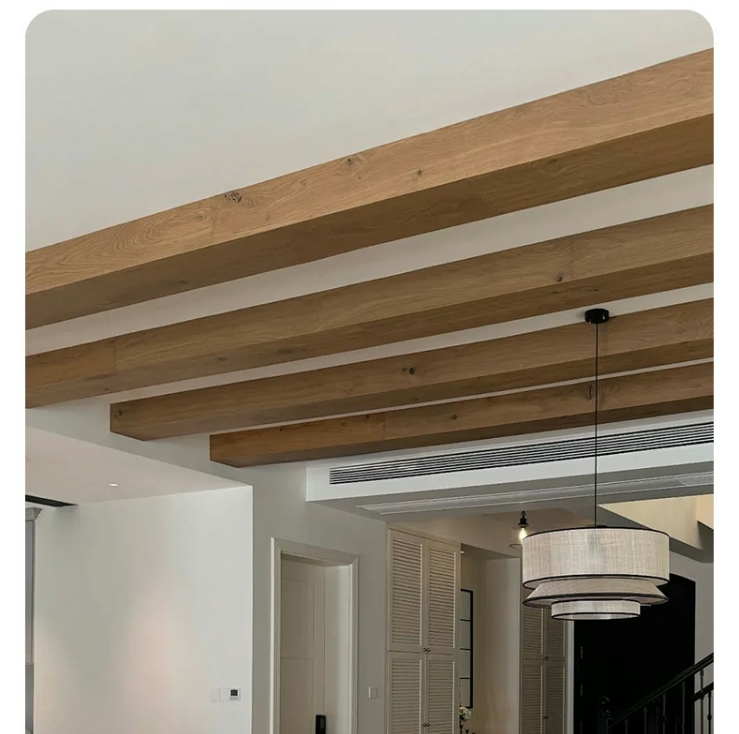
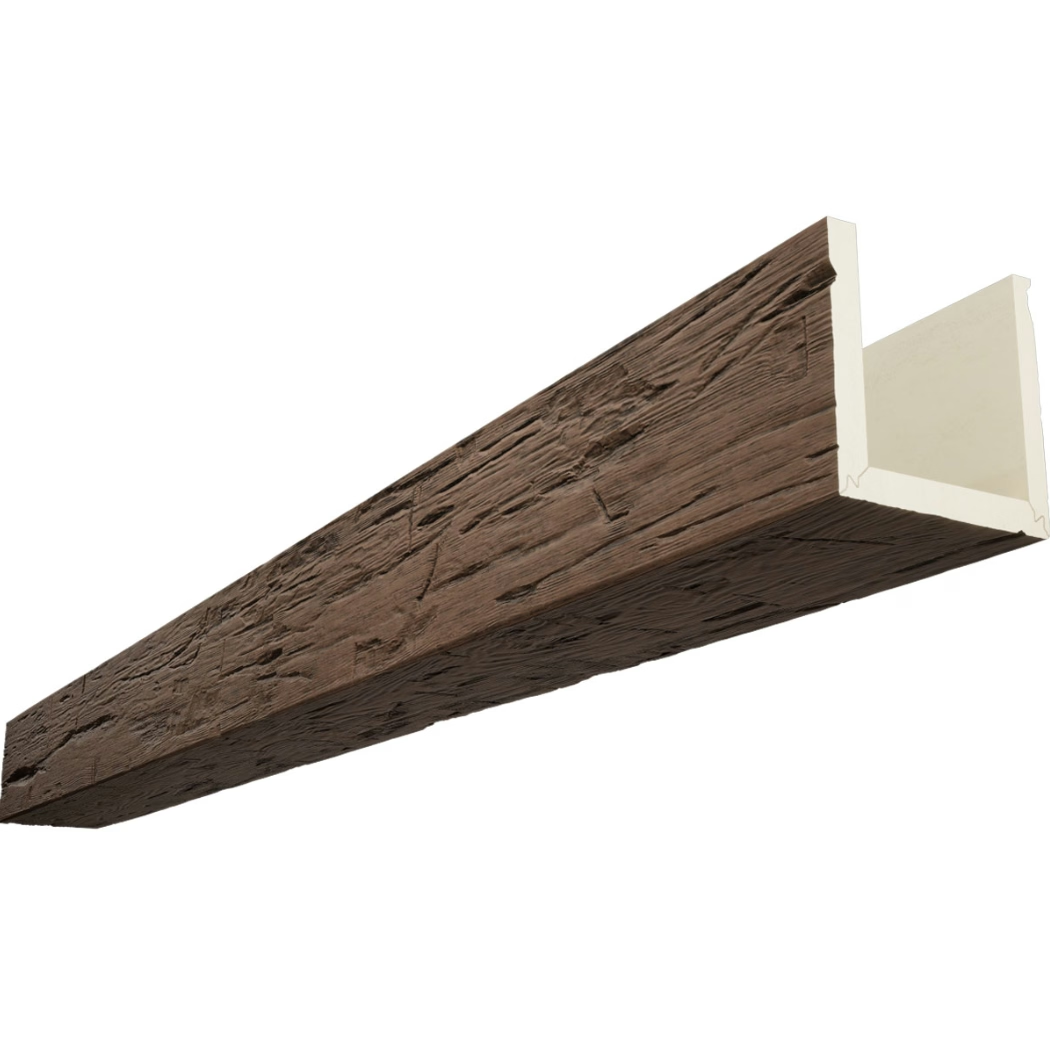
Patios, pergolas, gazebos, and covered outdoor living spaces represent some of the most demanding applications for any building material. These areas sit at the boundary between the controlled interior environment and the full force of natural weather, enduring intense ultraviolet radiation, repeated freeze-thaw cycles, driving rain, and the persistent humidity of heavily vegetated surroundings. For centuries, timber was the default material for outdoor architectural detailing precisely because it was the only material that could be worked by hand and fashioned into the profiles and forms that decorative construction demanded. But timber's performance in these conditions has always been a compromise, requiring regular maintenance to stave off the inevitable deterioration that moisture, insects, and sunlight inflict on organic material. Exterior grade hollow polyurethane faux wood beams represent a decisive break from that compromise, delivering the visual warmth and textural authenticity of timber to outdoor applications while eliminating nearly all of the maintenance burden that has traditionally accompanied it.


Understanding the Engineering Behind Exterior Grade Polyurethane
The designation "exterior grade" applied to polyurethane beams is not merely a marketing descriptor but a technical specification that reflects the material's formulation and performance characteristics under accelerated weathering conditions. Genuine exterior grade polyurethane for architectural applications is formulated with ultraviolet light stabilizers that absorb or block the UV radiation responsible for surface chalking, color fading, and material degradation in lesser formulations. These stabilizer systems work at the molecular level, intercepting the photochemical reactions that would otherwise break down the polymer chain and compromise the beam's surface integrity over time.
Beyond UV resistance, exterior grade formulations incorporate hydrophobic additives that reduce moisture absorption to negligible levels. This is a critical performance attribute because moisture penetration is the primary mechanism through which freeze-thaw damage occurs in any porous material. When water freezes, it expands by approximately nine percent in volume. In a porous material like concrete or untreated timber, this expansion creates internal pressure that manifests as surface spalling, cracking, or delamination. Polyurethane's inherently closed-cell structure, enhanced by exterior grade additives, prevents water ingress in the first place, rendering freeze-thaw cycling essentially irrelevant to the beam's long-term condition.
The impact of these engineering advances on the practical performance of exterior grade PU beams is substantial. Independent laboratory testing using accelerated weathering protocols that simulate years of natural exposure has demonstrated that exterior grade formulations maintain their original surface appearance, color stability, and mechanical integrity with remarkably little degradation. A beam that looks freshly installed after five years of outdoor exposure is not an unrealistic expectation but rather a documented performance characteristic of properly formulated exterior grade products.
Structural Considerations for Outdoor Beam Installations
Although exterior grade hollow PU beams are decorative rather than structurally load-bearing, their installation in outdoor environments requires attention to several factors that are less critical in interior applications. The primary consideration is wind load, which can impose significant uplift forces on beam installations that are not adequately anchored. In exposed locations such as rooftop terraces, lakeside pergolas, or coastal properties, the design of the fixing system must account for wind speeds that would never be encountered indoors. This typically means specifying additional mechanical fixings, using longer anchor screws or bolts that engage with structural members, and ensuring that the beam's own construction provides adequate resistance to racking or deformation under lateral load.
The relationship between the beam and its supporting structure requires careful detailing to prevent water from reaching the substrate through capillary action or direct penetration. Even though the polyurethane beam itself is highly resistant to moisture, the wooden or metal framework to which it is attached may not be. Installers commonly incorporate a small gap or drip edge at the top of the beam where it meets the supporting structure, directing any water that runs down the beam's surface away from the underlying structure rather than allowing it to pool at the junction. This simple detailing measure significantly extends the service life of the entire installation by keeping the structural elements dry.
Thermal movement is another factor that distinguishes outdoor from indoor installations. Materials expand and contract with temperature changes, and in an outdoor environment where beams may be exposed to full summer sun and winter frost, the magnitude of this movement can be significant over the full length of a beam run. Exterior grade PU beams are designed to accommodate this movement through flexible adhesive connections and oversized fixing holes that allow the beam to move independently of the substrate without creating visible distortion or stress on the fixing points. Proper detailing at the design stage prevents the accumulation of thermal stress over time, which could otherwise lead to joint separation or fastener failure.
Matching Timber Species and Finishes for Outdoor Applications
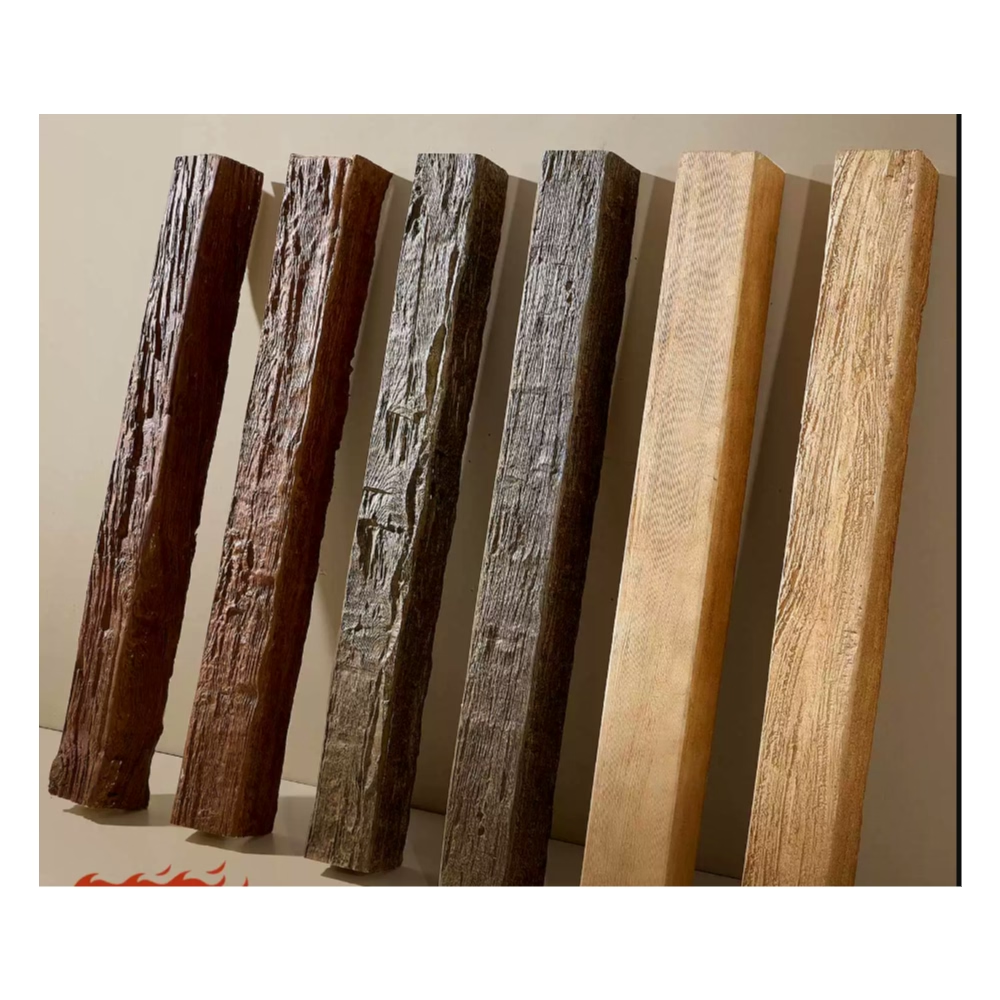
The aesthetic possibilities available in exterior grade hollow PU faux wood beams extend well beyond generic timber representations to encompass specific species, aged finishes, and surface treatments that are particularly appropriate for outdoor contexts. In garden settings, beams finished to resemble reclaimed oak or weathered cedar integrate naturally with surrounding vegetation, stone walls, and natural landscaping materials. The key to successful integration lies in selecting finishes that acknowledge the outdoor context rather than attempting to import an interior aesthetic into an exterior environment.
Reclaimed barn beam finishes have proven particularly popular for outdoor applications, capturing as they do the character of timber that has already survived decades of exposure to the elements. The natural grey patina, surface checking, and weathering patterns of genuinely reclaimed timber are difficult to achieve authentically with natural wood without years of outdoor exposure, but in polyurethane these aesthetics can be produced consistently from the first installation. This consistency is actually an advantage in large projects where multiple beams must be installed and where natural variation between individual pieces might create visual incoherence.
For contemporary architectural projects, exterior grade beams in crisp, well-defined profiles with modern stain finishes offer an alternative vocabulary that complements minimalist building forms. The ability to specify custom colors using factory-applied finishes means that beams can be color-matched to contemporary cladding materials, window frames, or exterior paint schemes with a precision that would be difficult to achieve with natural timber. The finish adheres uniformly to the polyurethane surface and maintains its color consistency across all pieces in the installation, which is particularly valuable when the beams are a prominent design feature of the building's exterior elevation.
Case Studies in Outdoor Architectural Applications
The versatility of exterior grade hollow PU beams is perhaps best illustrated by examining the range of contexts in which they have been successfully deployed. In residential settings, covered outdoor kitchens represent a particularly demanding application, combining the challenges of outdoor exposure with the presence of cooking byproducts such as grease, smoke, and moisture. Beams installed above outdoor kitchen areas must contend with these additional contaminants while maintaining their appearance, and the cleanability of exterior grade polyurethane proves invaluable in these conditions. Grease splatter can be wiped clean without affecting the finish, and the material's resistance to moisture means that the beams will not swell, warp, or develop mold even in the humid environment surrounding a cooking area.
In hospitality and commercial contexts, outdoor dining areas, poolside pavilions, and resort entrance features frequently incorporate hollow PU beams to create the impression of structural timber while meeting the performance requirements of commercial-grade durability. The lightweight nature of these beams simplifies installation on existing structures, which is particularly valuable in hotel and resort renovation projects where the underlying structure may not have been designed to accommodate the load of solid timber beams. The beams can be installed with minimal disruption to ongoing operations, and the pre-finished surfaces require no sealing, staining, or ongoing treatment that might inconvenience guests or require areas to be taken out of service.
Educational and civic architecture also benefits from exterior grade PU beam applications in covered walkways, outdoor classrooms, and community gathering spaces. The combination of timber aesthetics with the durability required for high-traffic public environments addresses a longstanding challenge in institutional design, where the desire for warm, inviting spaces has often collided with the maintenance realities of materials exposed to heavy use and public access. Schools, universities, and community centers can now incorporate decorative timber elements in outdoor spaces without the maintenance obligations that have historically made such installations impractical.
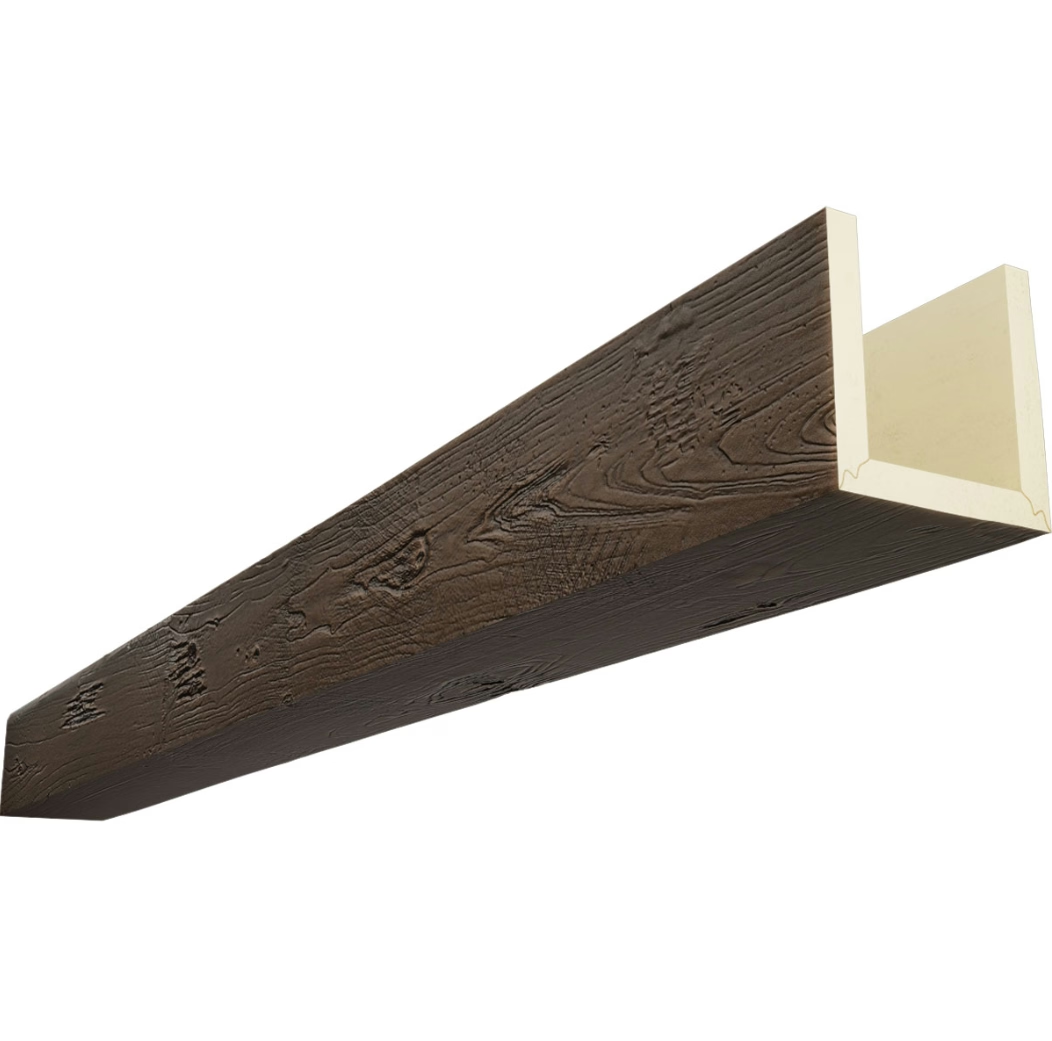
Comparing Exterior Grade PU to Alternative Materials
The material most frequently compared to exterior grade hollow PU beams in outdoor applications is naturally treated timber, and this comparison merits careful examination because the initial cost difference can appear significant to project specifiers who do not factor in the full lifecycle costs. Pressure-treated timber, cedar, and engineered timber products each offer certain advantages for outdoor use, but they all share the fundamental characteristic of being organic materials that will eventually deteriorate when exposed to outdoor conditions over extended periods. The rate of deterioration depends on the specific material, the quality of treatment, and the local climate, but the trajectory is ultimately the same: surface degradation, structural compromise, and the need for eventual replacement.
Fiber cement and glass-reinforced gypsum represent non-wood alternatives that offer improved durability compared to timber, but they bring their own limitations. Fiber cement products can be heavy, requiring structural support similar to genuine masonry, and their surface appearance is distinctly industrial rather than timber-like. Glass-reinforced gypsum offers good durability but limited profile variety and a surface quality that reads as synthetic in close proximity. Neither material delivers the tactile warmth and visual authenticity of a well-designed polyurethane beam in a timber finish.
The lifecycle cost calculation for exterior grade hollow PU beams is therefore compelling when considered over realistic project timescales. Initial material and installation costs are competitive with mid-to-high-end timber options, but when ongoing maintenance costs are factored in, the advantage shifts decisively toward polyurethane. There is no need for annual sealing, periodic staining, or repairs for insect damage or rot. The beams do not require replacement, and their appearance remains consistent year after year without intervention. For property owners and project managers who must budget for long-term maintenance, this predictability is as valuable as the material performance itself.
Technical References
ASTM standards cited in every specification
Test Data
Lab results from internal testing program
Updated 2026
Reviewed against current product specs