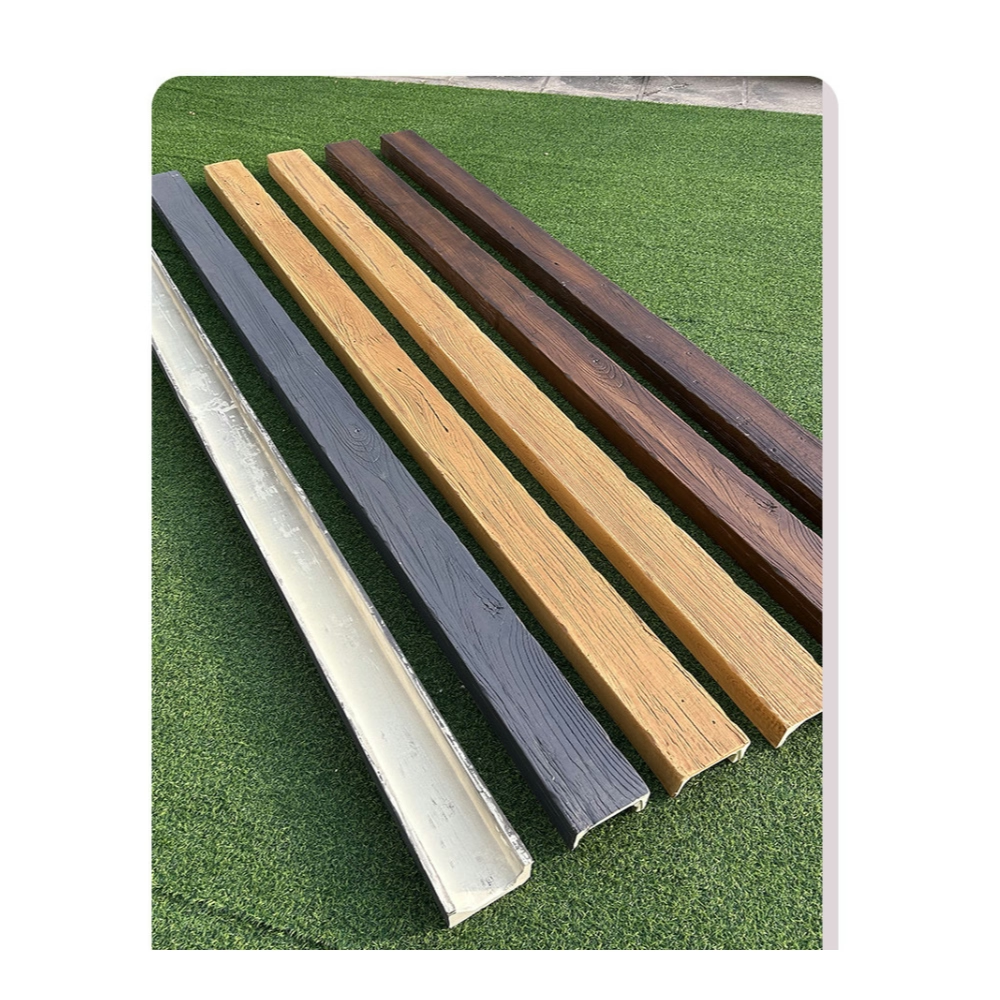
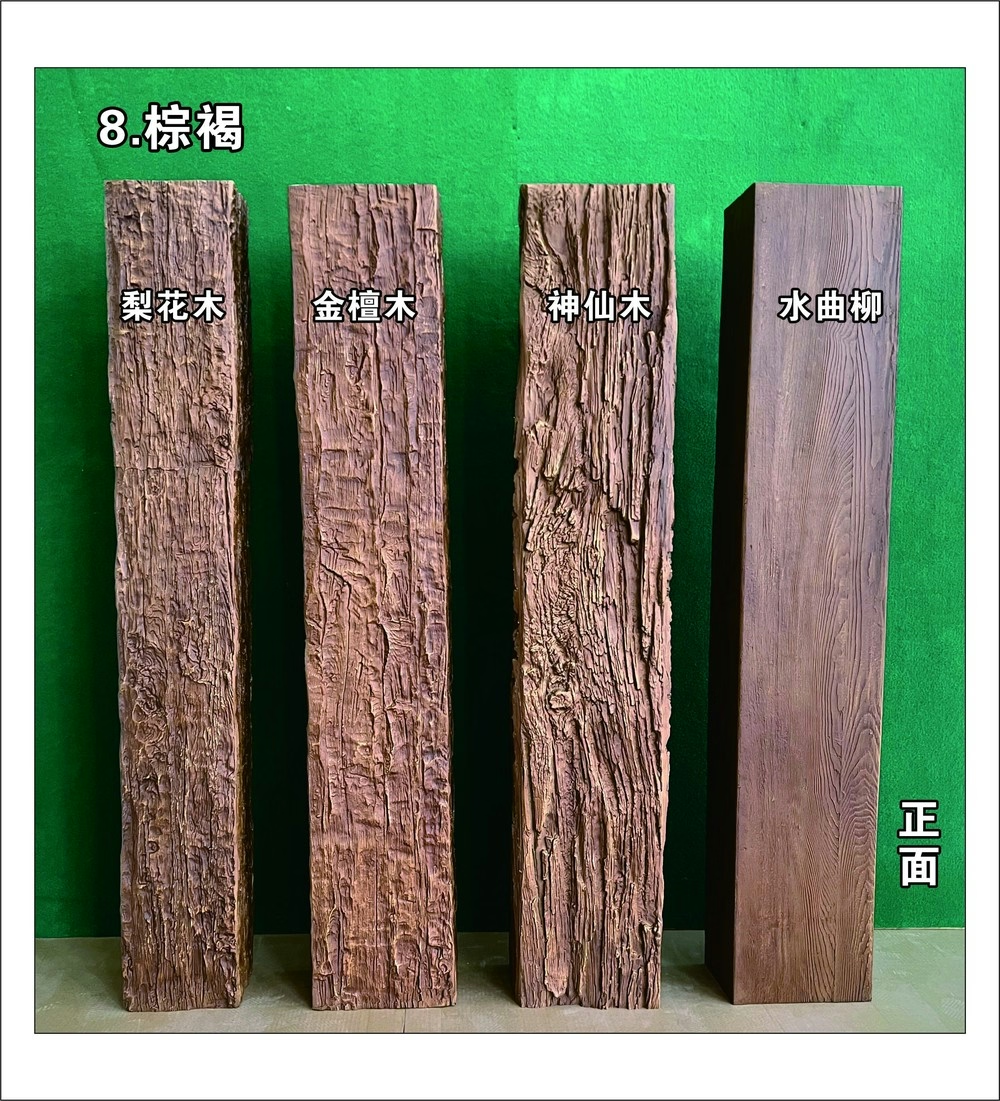
Construction economics are rarely simple, and the true cost of any building material is never fully captured by its unit price alone. The installed cost of a ceiling beam system includes the material cost, delivery and logistics, the labor required to install it, the equipment needed to support that labor, and the time during which the space is unavailable for other trades. Each of these cost components is influenced by the material choice, and the most economical option is rarely the one with the lowest unit price. When all cost components are properly accounted for, hollow polyurethane faux wood beams frequently emerge as the most cost-effective choice for decorative ceiling beam installations, with labor savings representing the largest single component of this advantage.
The labor cost calculation for beam installations is complex and varies substantially depending on the specific project conditions, the beam configuration, the access conditions, and the skill level of the available workforce. However, certain fundamental characteristics of hollow PU beams create systematic labor advantages that apply across a wide range of project types. Understanding these advantages allows project managers, contractors, and designers to make informed decisions that optimize the cost-quality-time equation for their specific project context.


Quantifying Labor Savings Across Installation Phases
The labor savings associated with hollow PU beam installation begin before the first beam is lifted toward the ceiling. Material delivery and site handling are typically the first labor-intensive phase of any beam installation project, and here hollow PU beams offer immediate advantages. The reduced weight means that more beam length can be transported in a single delivery, reducing the number of delivery trips required. Within the project site, beams can be moved manually rather than requiring trolleys, forklifts, or other materials handling equipment. Stacking and storage are simpler because the beams can be placed on standard shelving or racking without concern for the concentrated point loads that heavy solid timber beams would impose.
On site, the preparation phase for hollow PU beam installation is streamlined compared to solid timber alternatives. Natural timber beams frequently require on-site acclimatization, allowing the material to reach equilibrium with the building's humidity conditions before installation. This acclimatization period can add days to the project schedule and requires appropriate storage space within the building. Hollow PU beams require no acclimatization; they can be installed immediately upon delivery without concern for humidity-related movement that might affect joint quality or beam alignment. This immediate readiness eliminates a scheduling dependency and simplifies site logistics.
The actual fixing and fitting of hollow PU beams requires fewer labor hours per linear meter than comparable solid timber installations. Single-operator handling means that a qualified tradesperson working alone can complete beam installations that would otherwise require a two-person team. The reduced need for coordination between operators eliminates the communication overhead and positioning adjustments that multi-person timber beam installations require. In our experience, a skilled single operative can install between eight and twelve linear meters of hollow PU beams per eight-hour shift under typical residential ceiling conditions, a rate that substantially exceeds the productivity achievable with solid timber alternatives.
Fixing Methods That Minimize Time and Complexity
The fixing methods used for hollow PU beams are designed to be quick and reliable, minimizing the time spent on each individual fixing point while ensuring a durable and visually correct result. The most common approach combines continuous mounting battens with construction adhesive and mechanical fasteners, each element contributing to the overall fixing solution in a complementary way.
Construction adhesive serves multiple functions in the hollow PU beam fixing system. It bonds the beam's upper surface to the mounting batten, creating a seamless connection that prevents movement, vibration, or acoustic resonance at the interface. It fills any minor irregularities in the batten surface, ensuring even bearing along the full length of the beam. It provides secondary load-bearing capacity that supplements the mechanical fixings, distributing loads across the full beam-batten interface rather than concentrating them at the fastener points. For all these functions, the application is simple: a continuous bead of adhesive applied to the batten surface using a standard caulking gun, with the beam lowered into position before the adhesive sets.
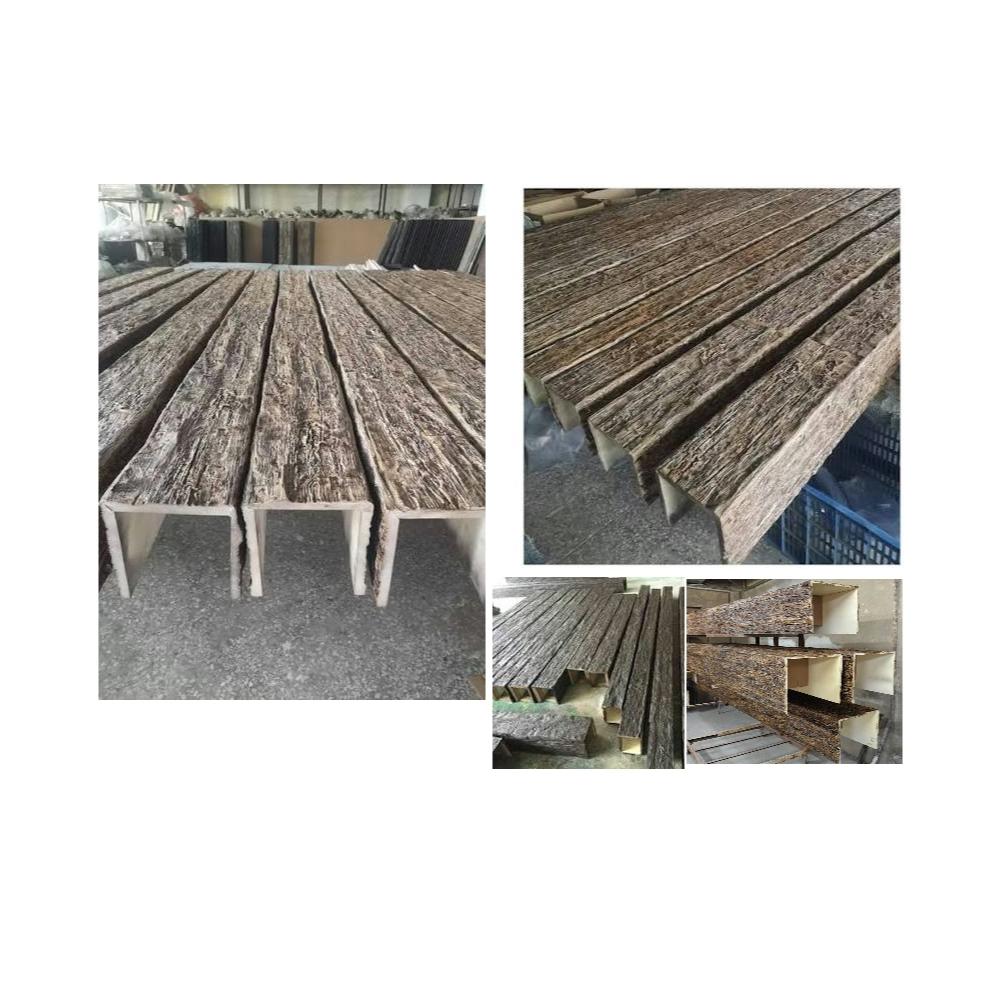
Mechanical fasteners provide the primary load-bearing connection between the beam and the mounting batten. Self-tapping screws driven through the beam's inner wall into the batten provide immediate and substantial pull-out resistance, allowing the beam to be considered secure as soon as the screw is fully driven. The hollow construction of the beam means that the screw engages only with the batten material rather than passing through a solid mass of polyurethane, which would require longer fasteners and produce a less clean fixing. Countersunk screws driven flush with the inner wall surface create no visible protrusion that might affect the beam's appearance or the fit of adjacent beams.

Impact on Project Scheduling and Coordination
The cumulative effect of labor savings on project scheduling can be substantial, particularly for projects where ceiling beam installation is on the critical path. A phase that requires two weeks with solid timber beams might be completed in one week with hollow PU beams, and this week of schedule compression can generate cascading benefits throughout the project program. Other trades can begin their work sooner, the project can reach practical completion earlier, and the risk of delay-related cost overruns is correspondingly reduced.
The simplification of fixing methods also improves scheduling reliability by reducing the number of variables that can cause unexpected delays. Solid timber beam installations are susceptible to weather-related delays, as timber swells in humid conditions and contracts in dry conditions, affecting alignment and joint quality. Adhesive curing times can be extended by low temperatures or high humidity. Heavy beam handling requires access routes and floor protection that may conflict with other trades' requirements. Hollow PU beam installations are largely immune to these complications: the material does not respond to humidity, adhesive curing is not weather-dependent within the range of conditions encountered in normal building environments, and the absence of heavy handling eliminates access and protection requirements.
For renovation projects in occupied buildings, the reduced disruption associated with hollow PU beam installation has genuine commercial value. Shorter installation periods mean that the affected spaces are available for use sooner, reducing the impact on occupants, tenants, or customers. The absence of heavy materials handling reduces the risk of damage to existing finishes and furnishings. The simplicity of the installation process means that smaller teams can be deployed, minimizing the disruption to the building's daily operations.
Workforce Considerations and Training Requirements
The labor-saving characteristics of hollow PU beams have implications for workforce management and training that are worth considering from a project planning perspective. Because these beams can be installed by a single qualified tradesperson, the workforce allocation for beam installation is more flexible than for heavy timber alternatives. A single carpenter or drywall installer with basic skills can handle the installation, which means that beam installation is not dependent on the availability of specialist crews or the coordination of multi-person teams.
For contractors who install these beams regularly, the consistent methodology and predictable material behavior create opportunities for workflow optimization and skill development. Installers who become experienced with hollow PU beams develop efficient routines for measuring, cutting, fitting, and fixing that maximize productivity while maintaining quality standards. The repeatability of the material behavior means that techniques refined on one project can be transferred directly to the next, with no adjustment for material variability or unexpected behavior.
Training requirements for hollow PU beam installation are modest compared to many specialist construction skills. A competent general carpenter or finish carpenter can acquire the specific techniques and product knowledge required for hollow PU beam installation in a short familiarization session, typically no more than half a day for an installer who is new to the specific product range. This short learning curve means that contractors can deploy trained labor quickly, even on projects with tight timelines that preclude extended training periods.
Comparative Labor Cost Analysis
Producing a meaningful comparative labor cost analysis requires careful definition of the project scope, the alternative materials being considered, and the specific cost conditions of the project location. With these caveats in mind, the following analysis provides indicative ratios based on typical residential ceiling beam installation conditions.
For a simple parallel-beam installation in a residential living room covering approximately thirty square meters, the labor hours required for hollow PU beam installation typically range from twelve to twenty hours depending on beam spacing and configuration complexity. The equivalent installation in solid timber would require approximately twenty-five to forty hours, representing a labor saving of roughly forty to fifty percent. The specific saving depends on the beam dimensions, the access conditions, and the complexity of the beam layout, with more complex configurations generally showing proportionally greater savings because the reduction in handling complexity affects each joint and intersection proportionally.
For commercial-scale installations in retail, hospitality, or office environments, the labor advantages of hollow PU beams become even more pronounced because the logistics of heavy material handling at scale are substantially more complex than in residential settings. Crane hire, specialized lifting equipment, and extended installation periods all contribute to the cost differential between hollow PU and solid timber beam installations in commercial contexts.
The labor cost comparison with other faux beam materials is less dramatic but still meaningful. Fiber cement beams, for example, are lighter than solid timber but still require two-person handling for typical installation sizes and present similar fixing complexity. Glass-reinforced gypsum beams require specialist fixing skills and can be damaged more readily during installation, creating a risk of repair-related delays. Hollow PU beams occupy the most favorable position in this comparison, combining the lowest handling weight with the most straightforward fixing methodology and the highest tolerance for the minor knocks and adjustments that are inevitable in any on-site installation.
Technical References
ASTM standards cited in every specification
Test Data
Lab results from internal testing program
Updated 2026
Reviewed against current product specs