The most enduring interior design materials are those that adapt to changing tastes rather than becoming dated with the passage of time. A material that is perfectly at home in one design era may appear dated or inappropriate in the next, forcing property owners into expensive renovation cycles to keep their spaces current. Timber, in its many forms, has proven remarkably immune to this cycle of obsolescence. Its associations with warmth, craftsmanship, and natural beauty are not tied to any specific design movement, which means that timber-look elements can move seamlessly between styles as those styles evolve. Polyurethane faux wood beams inherit this characteristic from their timber inspiration, adding the further advantage of finish flexibility that allows them to be updated alongside the spaces they inhabit without the difficulty and expense of replacing solid timber elements.
The versatility of hollow polyurethane faux wood beams manifests across multiple dimensions simultaneously. The physical properties of the material — its weight, workability, and dimensional stability — determine what configurations are achievable. The surface finish options determine what visual aesthetics are available. The profile range determines what spatial effects can be created. And the installation flexibility determines how readily the beams can be adapted to the specific conditions of each project. Each of these dimensions contributes to the overall versatility of the material, and it is the combination of all four that makes hollow PU beams genuinely adaptable to a wider range of applications than any single alternative material.


Adaptability Across Interior Design Styles
The range of interior design styles that hollow PU beams can authentically serve is broader than many designers initially expect. This breadth is a function of the wide spectrum of finishes and profiles available, combined with the material's capacity to be painted or re-finished when design requirements change. Understanding how beams function within different design vocabularies helps to identify the specification choices that will produce the most authentic and effective result in each context.
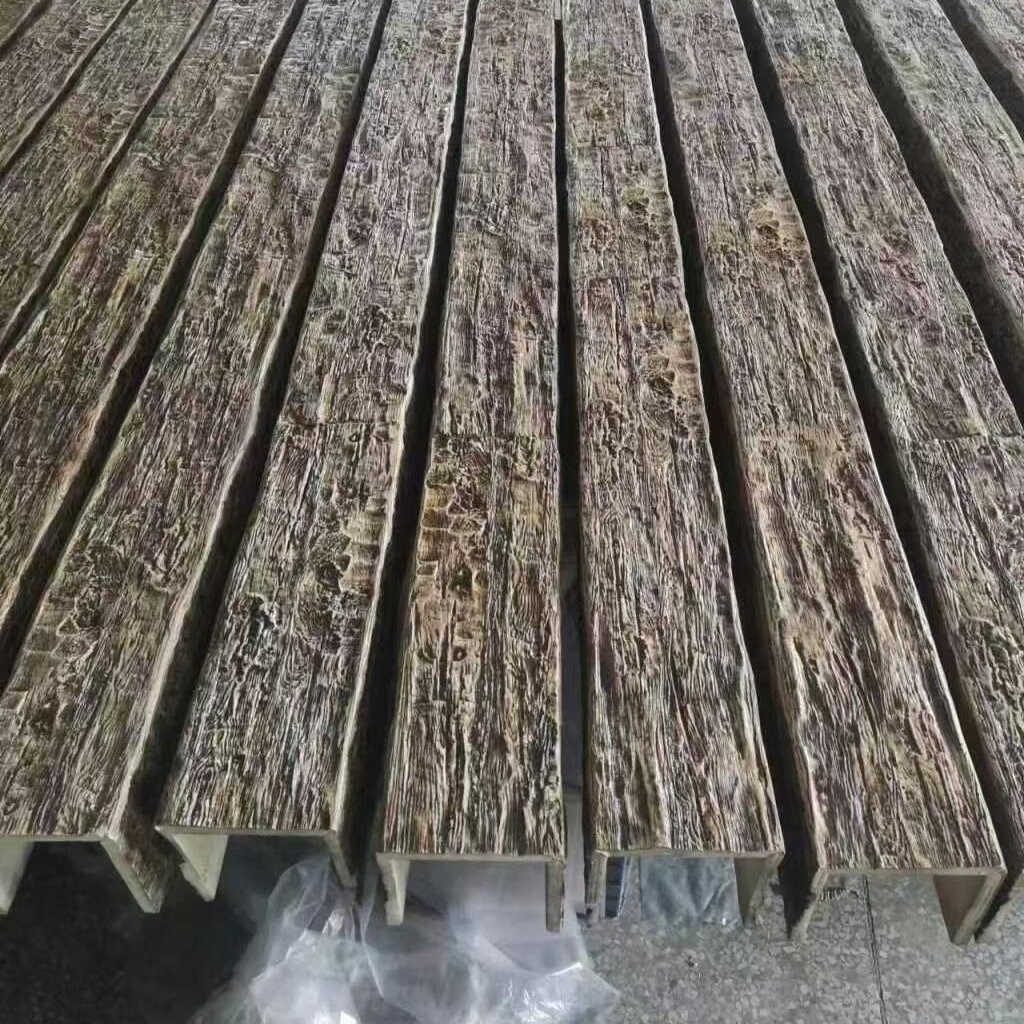
In farmhouse, country, and rustic interiors, the appropriate beam specification typically emphasizes warmth, texture, and a sense of authentic age. Wide-profile beams in honey oak, walnut, or dark timber finishes with pronounced grain texture and subtle surface weathering create an immediate sense of pastoral character that anchors these design styles. The beams should feel like honest structural elements — substantial enough to read as load-bearing, even though they are purely decorative — which means choosing profile widths and depths that are proportional to the ceiling height and room dimensions. In a room with a three-meter ceiling, a beam profile of 200 by 300 millimeters creates a credible impression of structural timber without overwhelming the space.
Contemporary and minimalist interiors require a different approach, where the beams contribute definition and visual interest to an otherwise restrained design palette. Here, the emphasis is on precision: clean profile lines, consistent finish application, and configurations that complement rather than compete with the geometric clarity of the surrounding architecture. Beams in white, grey, or natural light oak finishes with minimal surface texture read as contemporary design gestures rather than rustic references. The installation configuration often follows a more regular, systematic pattern — parallel beams at equal spacing, or a simple cross-grid — that reinforces the ordered quality of the overall design.
Transitional interiors occupy the middle ground between these extremes, and this is often where hollow PU beams are most effectively deployed. The transitional style, which combines elements of traditional and contemporary design without committing fully to either, creates an opportunity for beams that are neither aggressively rustic nor starkly modern. Medium-profile beams in warm mid-tone finishes with moderate grain texture and clean but not overly sharp edges serve this style well. The configuration can incorporate design elements from both traditions — perhaps a symmetrical cross-beam arrangement with decorative corbels — creating a layered aesthetic that rewards closer inspection.
Profile Range and Spatial Effects
The psychological and visual impact of ceiling beams is substantially influenced by profile selection, and understanding how different profiles create different spatial effects is essential for making appropriate specifications. Hollow PU beams are manufactured in an extensive range of profiles, from slim rectangular sections that add subtle texture without significant visual weight to massive, architecturally scaled sections that establish the ceiling as the dominant element of the room.
Slim profiles — typically fifty to one hundred millimeters in depth — work best in spaces where the ceiling is already detailed or where the beams should provide texture rather than structure. In rooms with intricate cornice moldings, for example, heavy beams might overwhelm the existing detail, while slim profiles add warmth and visual richness without competing with the established architectural language. In contemporary lofts with industrial concrete ceilings, slim beams can introduce a timber warmth that softens the industrial character without undermining the honesty of the existing structure.
Medium profiles — in the one hundred to two hundred millimeter depth range — represent the most versatile category for general interior applications. These profiles provide sufficient visual weight to read as genuine structural elements while remaining manageable in terms of scale and proportionality. They work well across a wide range of room sizes and ceiling heights, and they are available in the greatest variety of finishes and surface treatments.
Heavy profiles — exceeding two hundred millimeters in depth — make a bold design statement that is appropriate for grand spaces where the ceiling demands substantial treatment. In entrance halls, double-height living rooms, or hotel lobbies, these profiles create the sense of architectural occasion that the space requires. The hollow construction means that even very substantial-looking beams remain light enough for practical installation, which is particularly important in these applications because access and handling are typically more challenging in large, high-ceiling spaces.

Color and Finish Flexibility
The color and finish options for hollow PU beams represent one of their most significant practical advantages over natural timber and other faux alternatives. While natural timber is limited to the colors that occur naturally or can be achieved through staining, and some composite materials accept finishes only with difficulty, polyurethane accepts a wide range of coating systems with excellent adhesion and durability.
Factory-finished beams in standard colors and timber species represent the most convenient option for most projects. These finishes are applied under controlled factory conditions using formulations optimized for the polyurethane surface, producing a result that is consistent, durable, and immediately ready for installation. Standard finish ranges typically include popular timber species — oak, walnut, pine, mahogany, cedar — alongside contemporary colors such as white, grey, and black. The color consistency between beams in a factory-finished installation is exceptional, because each beam is finished using the same formulation and process.
Custom color matching extends the finish palette to encompass any color specified by the designer or required by the project. This capability is particularly valuable in renovation contexts where new beams must integrate with existing timber elements, or in commercial projects where brand colors or corporate design palettes must be respected. The custom color process involves color consultation, sample production, and approval before the production run, but the additional lead time is typically modest — a few weeks — and the result is a finish that is precisely matched to the project requirement.
Site-applied finishes offer the ultimate flexibility, allowing beams to be painted or stained on-site to coordinate with finishes that are determined or finalized during the installation process. This approach is common in projects where the beam finish is developed in response to the other materials and colors selected for the space, a process that may evolve throughout the design and installation phases. Water-based paints and stains are generally preferred for site application, as they dry quickly, have low odor, and are easy to apply evenly.
Reconfiguration and Future Adaptability
The adaptability of hollow PU beams extends beyond their initial installation to encompass the possibilities for reconfiguration, repainting, and reinvention that make them suitable for spaces where design requirements may evolve over time. Unlike solid timber beams, which are difficult to modify and expensive to replace, hollow PU beams can be removed, repurposed, or refinished with relatively modest effort.
If the design direction of a room changes — perhaps as a result of a change of use, a shift in personal taste, or a broader renovation — the beam finish can be updated to reflect the new direction. Dark beams that were appropriate for a formal dining room can be painted white for a more contemporary living space. Contemporary grey beams can be stained to a warm timber tone for a farmhouse renovation. This finish flexibility effectively extends the useful life of the beam installation indefinitely, deferring the replacement cost that would eventually be incurred with a less adaptable material.
The installation methodology for hollow PU beams also supports future modification. Because beams are fixed with adhesive and mechanical fasteners rather than being integrated into the building structure, they can be removed without causing significant damage to the substrate. This removal capability is valuable in rental properties where the beams may need to be taken with the tenant, in commercial spaces that are periodically rebranded or refitted, and in any context where the permanence of traditional building elements is undesirable.
Technical References
ASTM standards cited in every specification
Test Data
Lab results from internal testing program
Updated 2026
Reviewed against current product specs


