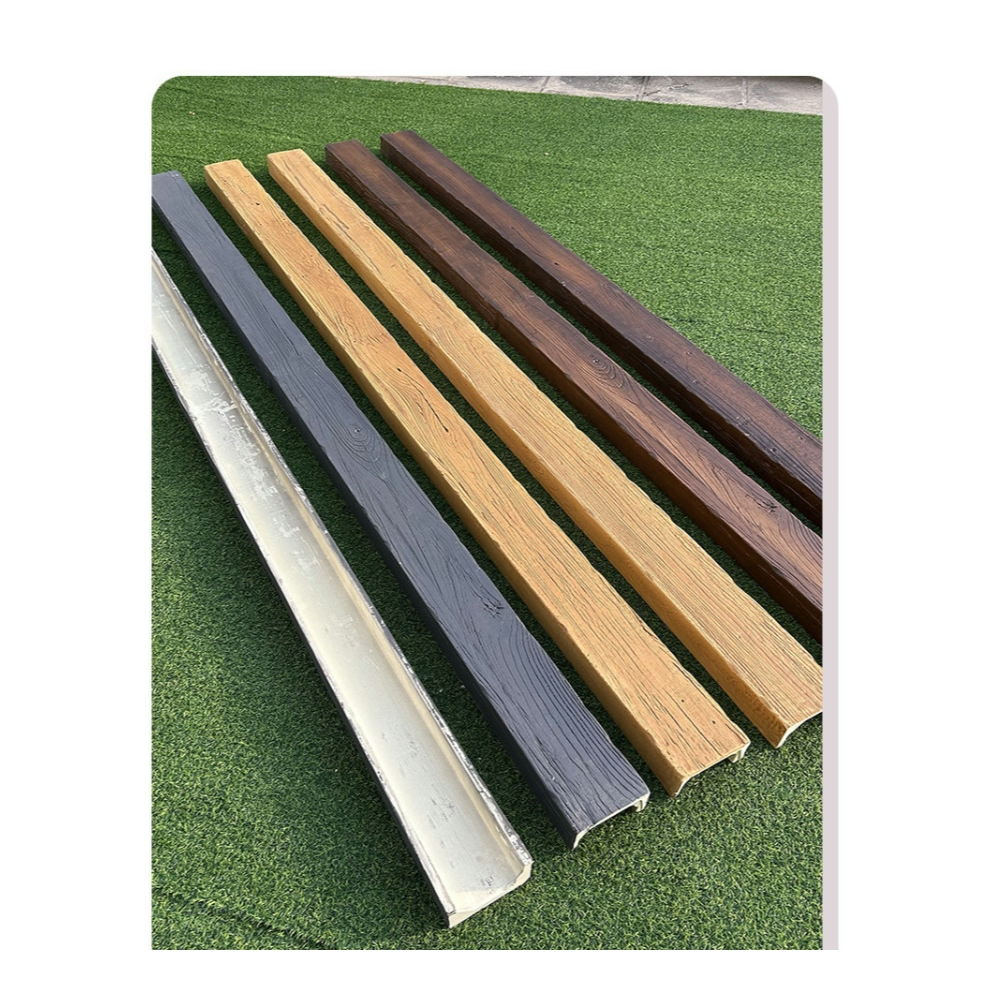
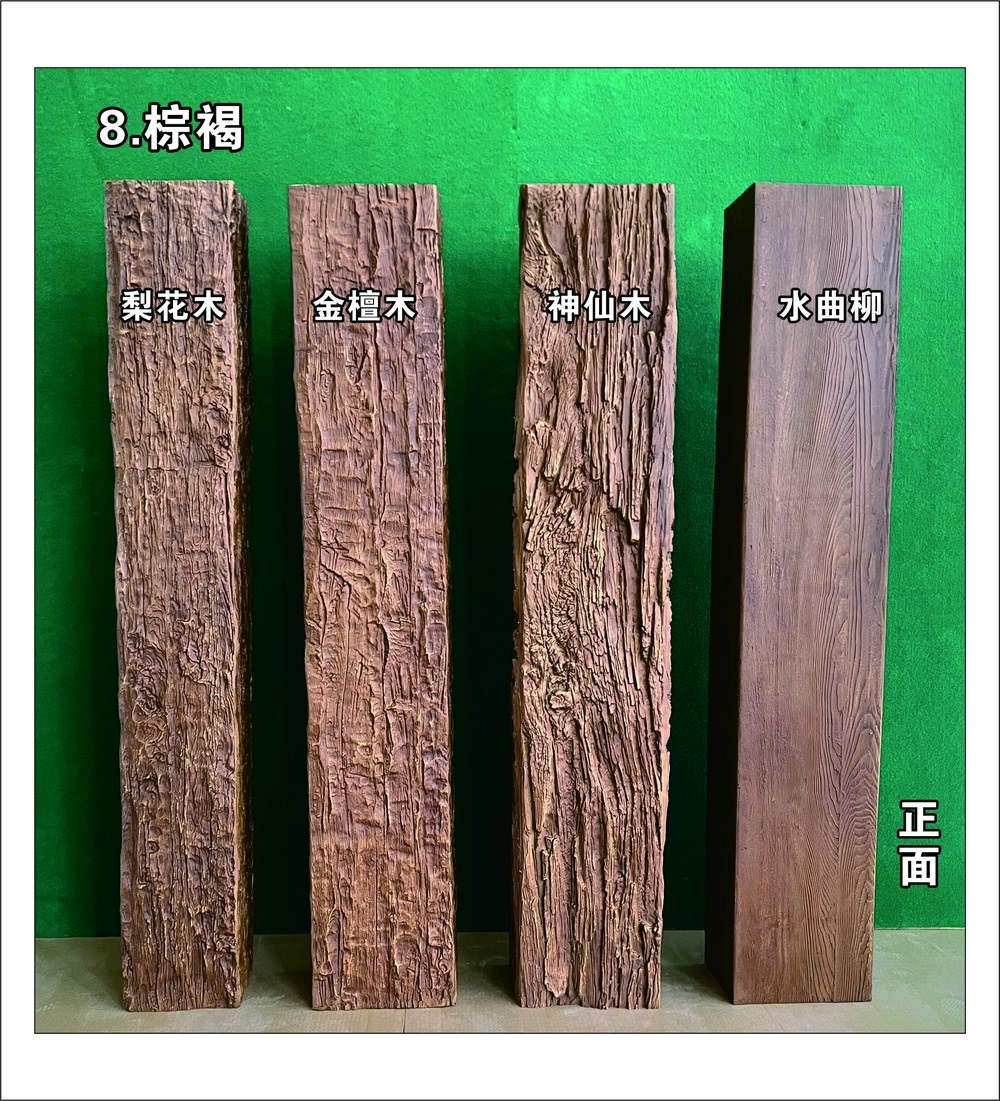
There exists a significant gap between what homeowners envision for their spaces and what they're willing to undertake physically. Ceiling beams represent precisely this kind of project—dramatically transformative, universally appealing, yet traditionally requiring heavy lifting that excludes most DIYers. No-heavy-lifting PU faux beams collapse this gap entirely, making ceiling projects achievable for anyone willing to learn basic techniques.
The weight difference between traditional beams and polyurethane alternatives isn't incremental—it's transformational. A fourteen-foot solid timber beam might require two or three people to position safely, plus scaffolding or lifts to hold it while mounting hardware installs. The same span in polyurethane weighs so little that one person can hold it in position with one hand while securing it with the other. This isn't an exaggeration—it's the fundamental characteristic that makes these products revolutionary for home improvement.
The Physics of Single-Person Beam Installation
Weight affects installation feasibility through simple physics. Lifting a 100-pound beam requires adequate upper body strength, but managing that weight overhead while simultaneously positioning and fastening creates coordination challenges that exceed most people's capabilities. The moment a beam shifts or requires adjustment, that weight becomes uncontrollable, creating safety hazards and installation quality issues.
Beams weighing 5 to 15 pounds total change this equation completely. A person can hold this weight overhead indefinitely without fatigue. Adjustments happen easily—sliding the beam left or right, raising or lowering it slightly, rotating for better fastener access. The installation becomes about precision rather than strength, about technique rather than physical capability.
Center of gravity considerations also favor lightweight beams. Heavy timber has significant mass concentrated along its length, creating torque forces when lifted at one end. Lightweight beams have gentler weight distribution, making one-person manipulation straightforward. Even extended spans can be managed by a single person using proper techniques.
Practical Techniques for Solo Installation
Successful single-person beam installation relies on techniques that work with physics rather than against it. Temporary support systems free both hands for hardware installation:
Adjustable support poles extend from floor to ceiling, providing vertical support at beam endpoints. Positioning one pole near each end holds the beam while fasteners install. Poles with adjustable lengths accommodate varying ceiling heights and provide precise height control.
T-braces fashioned from lumber scraps provide simple support alternatives. One end rests on the floor, the other supports the beam from below. While less adjustable than manufactured poles, T-braces work effectively for experienced DIYers comfortable with basic construction.
Staging areas allow beams to rest safely when not actively being installed. Saw horses, tables, or padded surfaces protect beams during preparation and prevent damage from accidental falls.
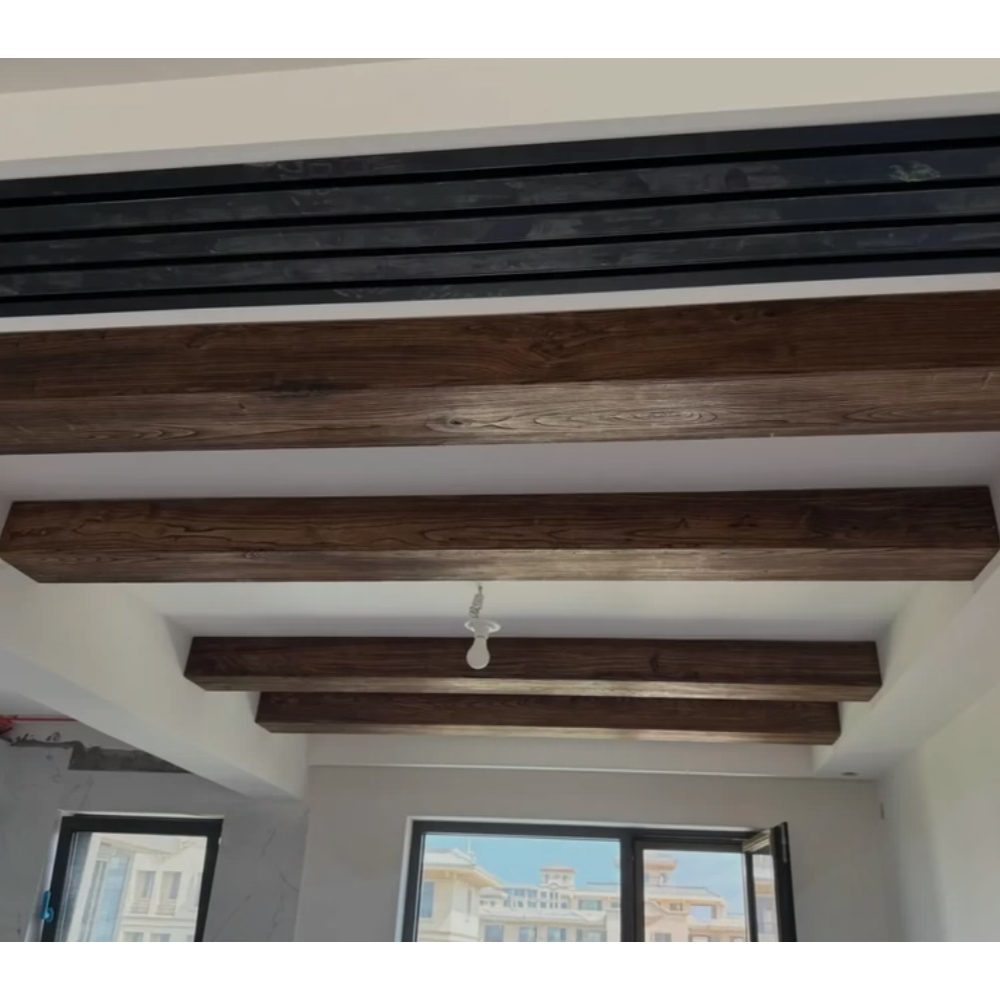
Tool Strategies for One-Person Operations
Layout and measurement require accuracy but not necessarily two people. Several strategies enable precise work solo:
Chalk lines establish reference lines for beam positioning. One person can snap lines across ceiling spans by holding one end while pulling and releasing. Self-leveling laser tools provide continuous reference lines without assistance.
Spirit levels work fine for checking individual beam levelness. Long levels spanning multiple beams verify consistent positioning across longer runs. Laser levels that project level lines across entire rooms simplify verification.
Clamps temporarily secure beams during alignment verification. One-person operation can't hold a beam and simultaneously check alignment—clamps solve this problem by freeing hands for measurement and adjustment.
Planning for Single-Person Success
Thorough planning prevents situations where assistance becomes necessary. Before beginning installation:
Map the complete installation sequence. Identify the order in which beams will install, including any prep work, cutting, or finishing that precedes mounting. Understanding the full scope prevents discovering missing steps after beams are positioned.
Verify all materials are on-site. Retrieving forgotten hardware, tools, or materials while balancing a beam overhead creates unnecessary challenges. Stocking the work area completely before climbing the ladder prevents wasted trips.
Prepare cut pieces in advance. If beams require cutting for length, corners, or penetrations, complete these operations on the ground before attempting overhead work. Save only final fitting adjustments for ceiling position.
Set realistic schedules. Fatigue affects work quality significantly. Scheduling installation for when fresh energy is available—not after a full day of other work—improves results and safety.
Safety Considerations for Solo Work
Lightweight doesn't mean safety can be ignored entirely. Working overhead presents fall hazards regardless of what you're installing. Essential precautions include:
Stable access remains critical. Ladders, scaffolding, or lifts must be appropriate for the ceiling height and provide secure footing. The weight of beams is irrelevant if an installer falls reaching for them.
Secure beam handling prevents drops that could cause injury or damage. Though lightweight, falling beams can strike people or property. Ensuring beams are fully supported before releasing grip prevents accidents.
Tool security protects both installer and others. Screws, adhesive tubes, and hardware can fall from overhead work. Positioning to avoid striking people below, or coordinating work schedules to clear areas during active installation, prevents injury from dropped objects.
Overcoming Psychological Barriers
Many capable DIYers underestimate their abilities with lightweight materials. Decades of experience with heavy timber create expectations about beam handling that no longer apply. Overcoming these psychological barriers opens possibilities:
Recognize that lightweight beams behave differently. A polyurethane beam can be pushed, pulled, rotated, and adjusted with minimal force. This responsiveness eliminates the commitment anxiety that heavy timber creates—you can always adjust a position without struggling.
Trust the mounting systems. Modern construction adhesives create bonds far stronger than beam weight could ever challenge. Once adhesive sets, beams aren't going anywhere regardless of how light they feel.
Accept that some wobble is normal. Lightweight beams flex slightly when pressure applies. This flexibility is normal, not a sign of inadequate mounting. Adhesive and fasteners will eliminate movement as they cure.

When Help Remains Valuable
Despite excellent solo capabilities, some situations benefit from assistance:
Long spans approaching twenty feet or more may be manageable alone but become simpler with a helper. The coordination required for these pieces exceeds shorter spans.
Complex multi-beam layouts involving precise intersections, overlapping configurations, or intricate patterns benefit from an extra set of eyes verifying alignment.
Finishing work like staining, sealing, or detailed trim installation may be easier on sawhorses than overhead, but assembly and mounting can involve assistance.
Working in unfamiliar spaces with unexpected obstacles benefits from someone who can observe from different angles and identify potential issues.
This doesn't negate the fundamental single-person capability of lightweight beams—it simply acknowledges that sometimes two people makes tasks easier, not possible.
Building Skills Through Practice
Installing faux beams develops skills transferable to other ceiling projects. The techniques learned—layout precision, adhesive application, fastener placement, alignment verification—apply broadly to molding installation, wainscoting, and other millwork. Each project builds capability for future work.
Starting with simpler projects develops confidence for more ambitious installations. A single accent beam over a dining table teaches fundamentals without overwhelming commitment. Expanding to full ceiling grids later draws on foundations established through initial projects.
Maintenance and Repair Accessibility
One often-overlooked advantage of lightweight beams is maintenance accessibility. Adjusting, cleaning, or repairing beams mounted by one person can often be accomplished by that same person years later. Heavy timber might require assistance for maintenance access—lightweight beams don't impose this limitation.
Inspecting mounting conditions becomes straightforward when beams can be temporarily removed without extensive equipment. This accessibility supports preventive maintenance that catches issues before they develop into problems.
Environmental and Practical Benefits
Beyond personal benefits, lightweight materials serve broader interests:
Transportation becomes simpler when individual beams can be handled by one person. Loading and unloading materials requires no equipment beyond basic hand trucks. Home delivery logistics simplify when drivers can hand off packages rather than requiring specialized equipment.
Storage flexibility increases with lightweight materials. Beams can be staged in living spaces during renovation without concern about floor loading. Basements, garages, and attics all accommodate beam storage without structural concern.
Disposal becomes manageable when materials eventually require replacement. Construction debris disposal is significantly simpler when beams are lightweight rather than heavy.
Technical References
ASTM standards cited in every specification
Test Data
Lab results from internal testing program
Updated 2026
Reviewed against current product specs