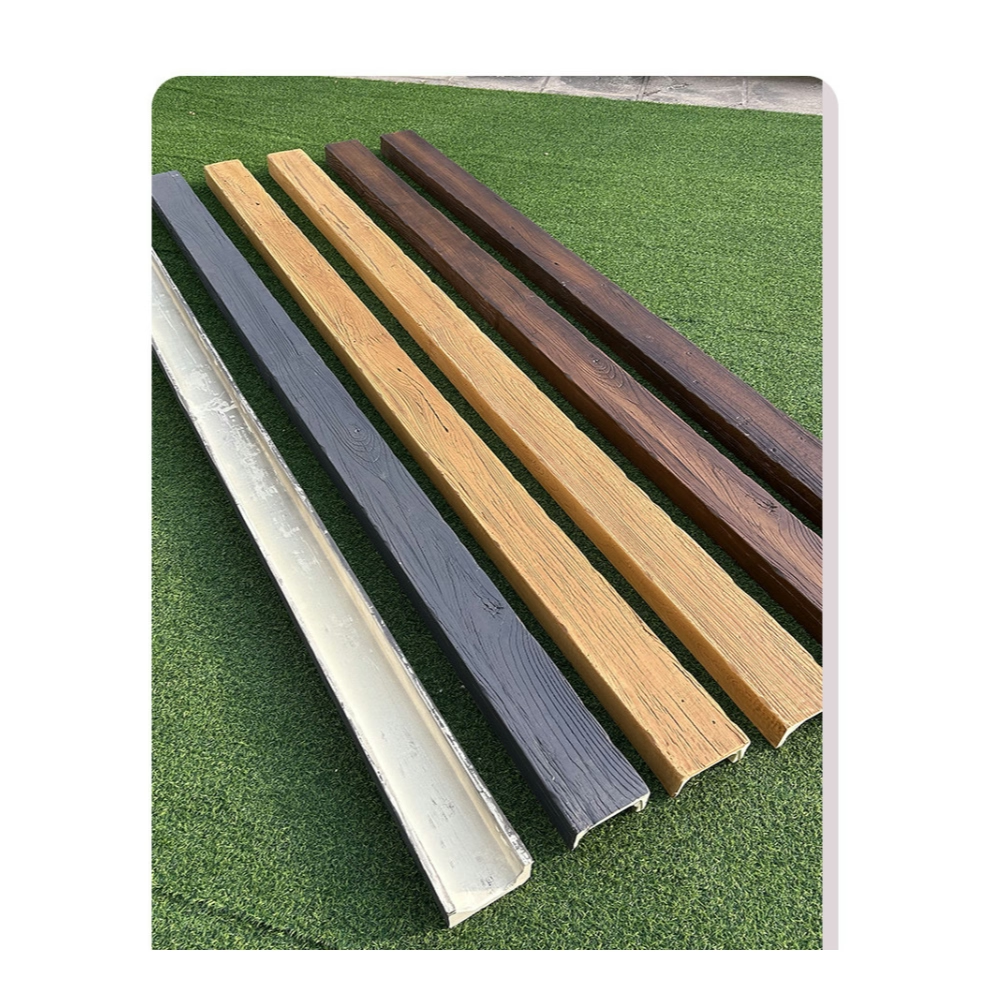
Labor costs represent the largest variable expense in construction and renovation projects. Material costs are what they are; delivery is a known quantity; but labor time multiplies through every complication, delay, and difficulty that a project presents. Polyurethane foam timber beams attack labor costs directly through lightweight construction that accelerates every installation phase. The weight reduction these beams achieve transforms the labor equation fundamentally, turning projects that would require careful coordination into straightforward work that one person can accomplish.
The connection between weight and labor isn't subtle or theoretical. A twelve-foot beam weighing 180 pounds requires multiple workers, mechanical assistance, and careful coordination. The same beam weighing 25 pounds requires one person and a ladder. Every phase of installation—unloading, staging, positioning, fastening, finishing—accelerates when weight isn't a constraint. These time savings translate directly to labor cost reduction.
Quantifying Labor Savings
The relationship between beam weight and labor time:
Handling time decreases proportionally with weight reduction. Moving a 25-pound beam takes roughly one-seventh the time and effort of moving a 175-pound timber equivalent.
Positioning time approaches zero for lightweight beams. Holding a foam timber beam in position while adjusting alignment takes seconds; wrestling heavy timber into position can take minutes and require multiple people.
Fastening time decreases when beams don't need to be wrestled into place before securing. One person can position and fasten without waiting for help.
Cleanup time is minimal when handling lightweight materials. No heavy equipment, no debris from structural work, no specialized cleanup.
Installation Phase Analysis
Breaking installation into phases reveals where labor savings accumulate:
Delivery and unloading at the job site benefits from lightweight materials. One person can unload and move foam timber beams; timber requires equipment or multiple workers.
Staging and preparation proceeds faster when materials are easy to handle. Sorting, measuring, and preparing beams for installation happens more quickly with lightweight products.
Layout and marking requires the same precision regardless of material weight, but the physical work of working overhead is less fatiguing with lighter beams.
Installation is where labor savings become most apparent. The reduction from multi-person to single-person installation represents the largest single savings.
Finishing and detailing proceeds similarly regardless of material, but starting from a well-installed beam rather than struggling to position heavy pieces creates cumulative benefits throughout.

Single-Worker Installation Reality
Foam timber beams genuinely enable single-worker installation:
Weight management for a 20-30 pound beam is manageable for most adults. The physical requirements align with typical capabilities rather than demanding exceptional strength.
Overhead work with lightweight beams doesn't require the upper body strength that heavy materials would demand. Fatigue sets in more slowly, enabling longer productive work periods.
Positioning adjustments happen easily when beams don't require wrestling. Small corrections that would require repositioning heavy pieces become simple adjustments.
Coordinating with helpers becomes unnecessary for standard installations. Scheduling work around helper availability no longer constrains project timelines.
Equipment Requirements
Lightweight foam timber reduces equipment needs:
Scaffolding may be simpler or less extensive when heavy materials aren't being positioned. Standard ladders handle the weight of foam beams easily.
Lifts and hoists become unnecessary. The weight that would require mechanical assistance with timber is trivially handled manually with foam alternatives.
Material handling equipment like forklifts or hand trucks may still serve delivery purposes but aren't required for installation positioning.
Specialized tools aren't necessary for foam timber. Standard woodworking tools handle cutting and fastening.
Professional Installation Economics
Contractors benefit from labor-saving installation:
Competitive bidding allows lower bids when labor requirements decrease. Contractors can offer competitive pricing while maintaining margins.
Project capacity increases when individual installations require less time. The same crew can complete more projects annually.
Labor efficiency improves without sacrificing quality. Faster installation doesn't mean cutting corners; lightweight materials simply install faster.
Profit margin protection in labor markets with rising wages. As labor costs increase, the labor reduction from foam timber becomes more valuable.
DIY Feasibility
Homeowners benefit from installation approaches:
No contractor required when projects fit within homeowner capabilities. The skills required are standard DIY skills; the physical requirements are manageable.
Flexible scheduling allows homeowners to work at their own pace without contractor scheduling constraints.
Learning opportunity for homeowners who want to develop construction skills. Foam timber installation provides experience applicable to other projects.
Pride of accomplishment in completing projects personally. The accessibility of foam timber enables homeowners to achieve professional-looking results.
Time Comparison Scenarios
Concrete examples illustrate labor savings:
Single beam installation that might require two workers 45 minutes with timber could require one worker 20 minutes with foam timber. The savings multiplies across multiple beams.
Full ceiling treatment that might require a two-person crew three days with timber could require one person two days with foam timber. The labor reduction is substantial.
Complex patterns involving multiple intersecting beams that might be impractical with timber become feasible with lightweight alternatives.
Renovation projects with limited access might be impossible with heavy timber but proceed smoothly with foam alternatives that one person can maneuver through tight spaces.
Skill Requirements vs. Weight Constraints
Physical requirements for foam timber installation:
Basic carpentry skills suffice for most installations. Measuring, cutting, fastening, and leveling are standard skills.
Comfort working overhead matters more than exceptional strength. The weight isn't challenging; working overhead is simply part of the task.
Attention to detail ensures accurate alignment and proper fastening. Lightweight doesn't mean imprecise.
Problem-solving ability helps when unexpected situations arise. Installation rarely proceeds perfectly; adaptability matters.
Installation Best Practices
Even with labor-saving materials, best practices improve results:
Proper preparation prevents delays that consume labor time. Having all materials, tools, and hardware ready before beginning installation avoids mid-project interruptions.
Accurate measurement eliminates remakes and corrections. The time spent measuring carefully pays back through reduced rework.
Adequate adhesive coverage ensures long-term security. Rushing adhesive application creates problems that take more time to fix than proper initial application.
Thorough fastening at appropriate intervals prevents movement that might require later correction.
Contractor Considerations
Professional contractors should consider foam timber for these situations:
Price-sensitive clients benefit from reduced installation costs. Competitive markets reward efficiency.
Tight schedules benefit from faster installation. Projects that need to complete quickly can do so when labor requirements are reduced.
Labor-constrained firms can take on more projects when individual project labor decreases.
Remote locations where bringing heavy materials is difficult benefit from lightweight alternatives that shipping handles more easily.

Safety Benefits
Labor savings include safety advantages:
Reduced injury risk follows from eliminating heavy lifting. Back injuries and strains from heavy materials are common construction injuries that foam timber avoids.
Less fatigue means workers remain alert throughout shifts. Fatigued workers make mistakes and face higher injury rates.
Simpler logistics reduce the coordination challenges where accidents often occur. Fewer people moving heavy pieces means fewer opportunities for incidents.
Insurance considerations may favor materials that reduce workplace injury risk. Safer job sites benefit everyone.
Quality Implications
Installation quality often improves with lightweight materials:
Better alignment when one person can focus on positioning rather than struggling with weight. Concentration improves accuracy.
Reduced rushing when lightweight materials don't pressure workers to complete before fatigue sets in. Taking time produces better results.
Easier corrections when adjustments are simple. Minor problems get addressed rather than ignored because fixing them would require wrestling heavy pieces.
Long-Term Labor Considerations
Initial installation labor is only part of the equation:
Maintenance requirements for foam timber beams are minimal. The reduced maintenance over product life means continued labor savings.
Repair accessibility when beams need adjustment or repair. Single-person maintenance is feasible; timber might require hiring help.
Replacement considerations if beams ever need replacement. Lightweight materials make this simpler if ever necessary.
The labor savings from foam timber beams compound throughout the product lifecycle. From initial installation through decades of service, the reduced physical requirements create value that extends beyond mere aesthetics. These products prove that practical innovation can serve both economy and beauty.
Technical References
ASTM standards cited in every specification
Test Data
Lab results from internal testing program
Updated 2026
Reviewed against current product specs