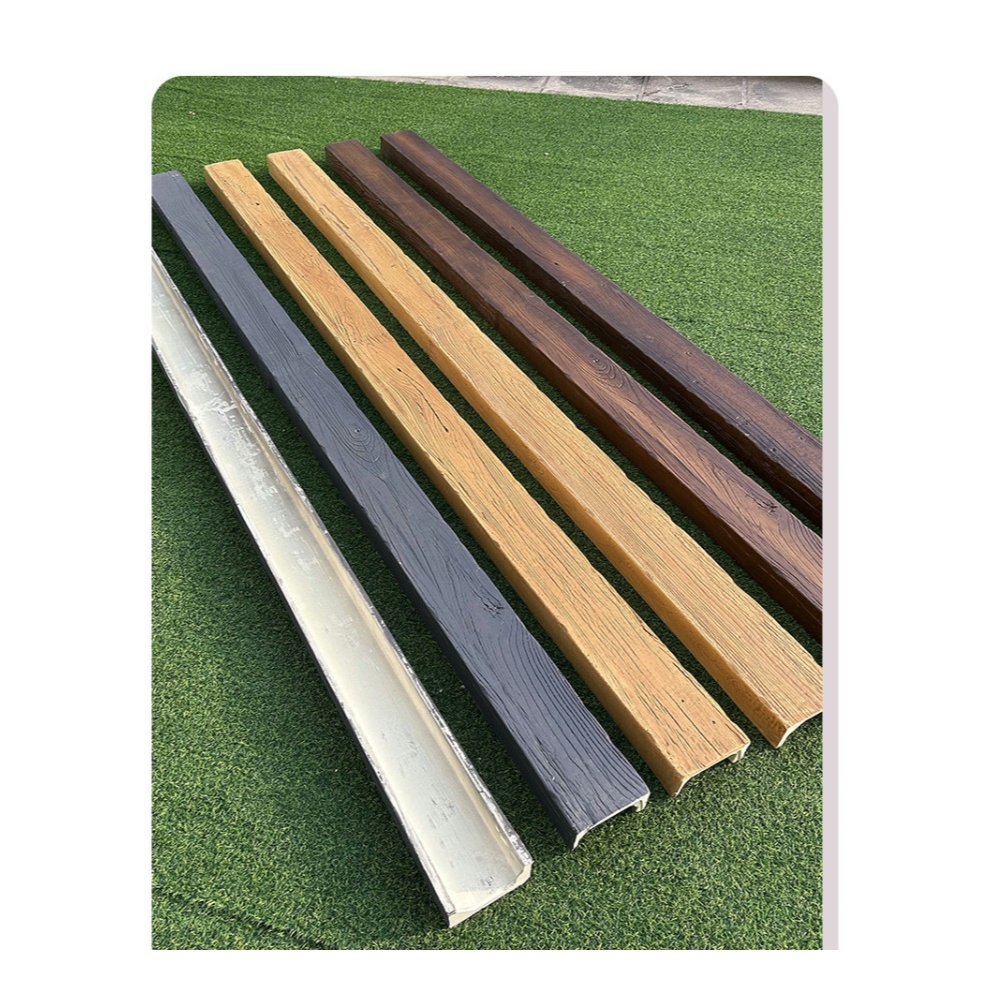
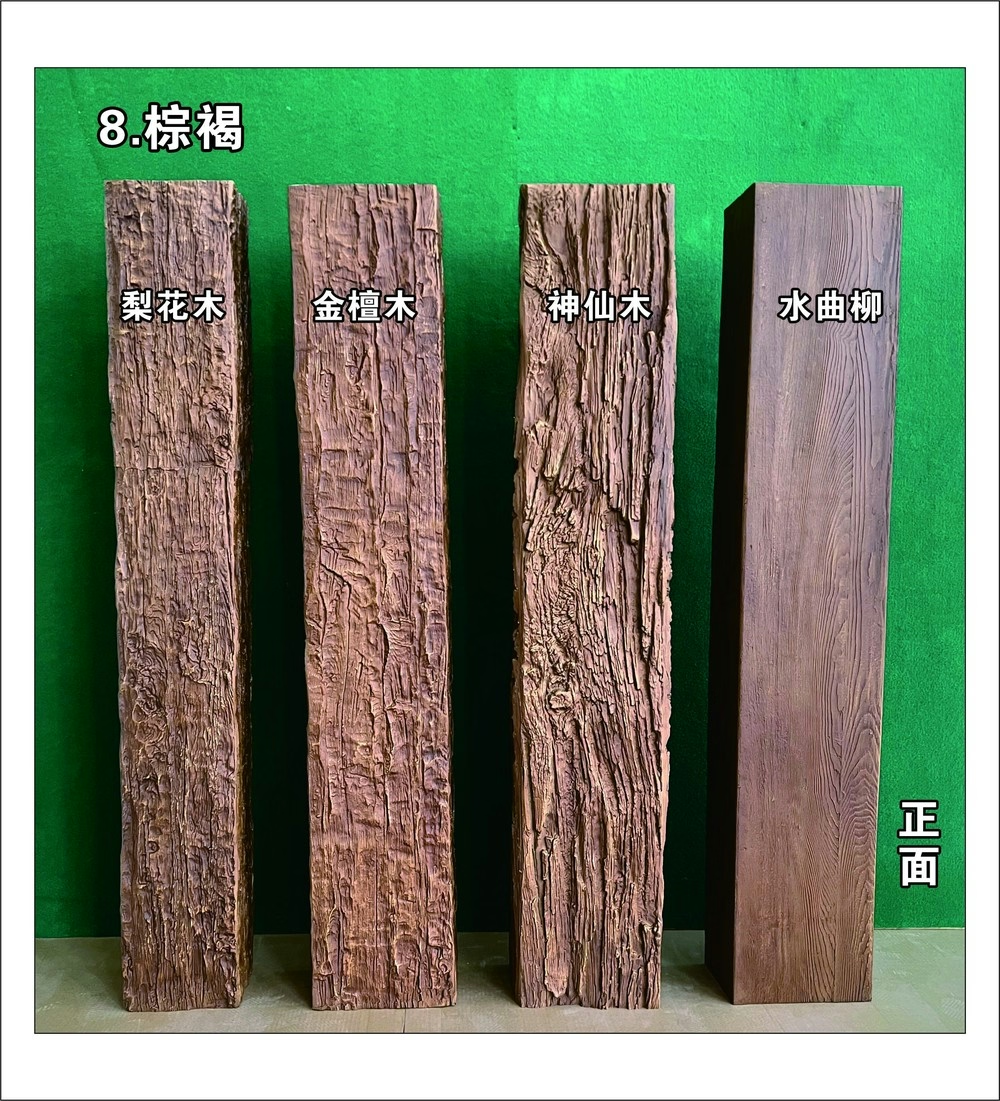
Building codes exist to protect occupants from fire hazards, and their requirements affect material selection for interior construction projects. Homeowners and contractors planning polyurethane faux beam installations naturally wonder whether these products satisfy local fire safety requirements. Understanding the regulatory landscape, available compliant products, and proper documentation practices enables installations that meet safety standards while delivering the aesthetic benefits these products provide.
The Martinez family encountered code compliance considerations when installing beams in their San Francisco condominium. Building management and the HOA required documentation that proposed beam materials met fire safety standards before approving installation. Their research and documentation preparation became a template for subsequent unit owners seeking similar improvements—a demonstration that code compliance, while requiring effort, need not prevent desired installations.
Understanding Fire Safety Ratings and Classifications
Building codes classify materials based on their fire performance characteristics. These classifications help building officials evaluate whether specific products are appropriate for specific applications.
Flame spread ratings measure how quickly flames travel across material surfaces under standardized test conditions. The most common rating system, developed by Underwriters Laboratory, assigns numerical ratings where lower numbers indicate better fire performance. Class A ratings (0-25 flame spread) represent the best performance, suitable for most commercial applications. Class B (26-75) and Class C (76-200) ratings apply in less demanding applications.
Smoke developed ratings measure the amount of smoke produced when materials burn. Even materials with low flame spread ratings may produce significant smoke, which presents its own hazards in fire situations. Comprehensive fire safety evaluation considers both flame spread and smoke development together.
Fuel contribution ratings assess how much a material contributes to fire growth once ignited. Materials with minimal fuel contribution help contain fires rather than spreading them. Most decorative interior products face fuel contribution requirements in addition to flame spread and smoke development criteria.
Polyurethane Product Fire Performance
Standard polyurethane foam, in its basic formulation, performs poorly in fire tests without flame-retardant additives. The material melts, drips, and can contribute significantly to fire spread. However, modern manufacturing techniques produce polyurethane products with substantially improved fire performance.
Quality manufacturers incorporate flame-retardant additives during production that inhibit ignition, reduce flame spread, and minimize smoke production. These additives work through various chemical mechanisms—some release water when heated, others create protective char layers, still others interrupt combustion chemical reactions. The specific formulation affects overall fire performance.
Testing and certification by independent laboratories verifies fire performance characteristics. Products tested and certified to meet Class A requirements carry documentation suitable for code compliance verification. When specifying polyurethane beams for any application, confirm that the specific products under consideration carry appropriate fire ratings from recognized testing laboratories.
The Martinez family's research revealed that their intended beam products carried Class A fire ratings from Intertek, a nationally recognized testing laboratory. This documentation satisfied building management requirements and enabled HOA approval without significant delay.
Commercial Versus Residential Requirements
Fire safety code requirements differ between commercial and residential applications, with commercial buildings typically facing more stringent requirements.
Commercial occupancies—offices, retail spaces, restaurants, hotels, and similar venues—must comply with strict fire codes that address multiple occupant protection concerns. Sprinkler systems, fire alarms, egress requirements, and material fire ratings all receive attention during permitting and inspection processes. Decorative materials like ceiling beams in commercial spaces typically require documented fire ratings meeting Class A or Class B standards depending on specific occupancy types and building characteristics.
Residential occupancies—single-family homes, apartments, condominiums—typically have more flexible material requirements. Detached single-family homes face minimal regulatory oversight for interior decorative materials. Attached housing (condominiums, townhouses) often has HOA requirements that may mandate fire-rated materials regardless of building code requirements.
The distinction matters for planning purposes. Commercial projects almost always require fire-rated products with supporting documentation. Residential projects may or may not face requirements depending on building type and local regulations.

Documentation Requirements and Practices
Satisfying code compliance often requires documentation demonstrating that specified products meet relevant requirements. Understanding what documentation is needed—and how to obtain it—simplifies the compliance process.
Product data sheets from manufacturers typically include fire performance data. These documents specify flame spread ratings, smoke development ratings, and relevant test standards. When reviewing product options, confirm that data sheets include fire performance information before specifying products for code-regulated applications.
Independent testing laboratory reports provide authoritative verification of fire performance. Reports from recognized laboratories (Intertek, UL, FM Approvals) carry credibility that self-certified claims cannot match. Request these reports during product specification and retain copies for permit applications.
Installer qualifications may be required in some jurisdictions. While beam installation itself is typically straightforward, documentation that installers understand fire safety requirements can support compliance verification. Manufacturer installation guidelines that address fire-related concerns provide useful documentation.
The Martinez Compliance Process
The San Francisco condominium project required HOA approval before installation could proceed. The building's property management company requested documentation demonstrating that proposed beam products met fire safety standards.
The Martinez family compiled documentation including manufacturer product data sheets, Intertek test reports verifying Class A fire ratings, and specification sheets confirming appropriate applications. This documentation package, delivered with their installation request, received approval within two weeks—substantially faster than anticipated.
The experience proved instructive for subsequent building residents. Word spread that beam installations were possible with proper documentation, and several neighbors subsequently undertook similar projects using the Martinez documentation as a template. The building now has multiple compliant beam installations that enhance living environments while maintaining safety standards.
Ensuring Ongoing Compliance
Fire safety compliance requires attention not only during initial installation but throughout the product's service life. Certain circumstances can affect ongoing compliance status.
Product modifications that alter fire performance void certification warranties. Cutting, drilling, or otherwise modifying beams in ways that affect their fire-retardant characteristics may change performance. When modifications are necessary, verify that they do not compromise compliance documentation.
Replacement products must carry equivalent or better fire ratings than originally installed materials. When damaged beams require replacement, source products with matching fire ratings. Differences between original and replacement products may require fresh documentation.
Periodic inspections may verify that installed materials remain in compliant condition. Maintaining documentation accessible for inspection purposes ensures smooth verification processes. Original product data, test reports, and installation records together provide comprehensive compliance documentation.
Fire safety compliance need not prevent beautiful beam installations. With appropriate product selection, documentation preparation, and attention to installation practices, code-compliant installations satisfy both safety requirements and aesthetic aspirations.
Technical References
ASTM standards cited in every specification
Test Data
Lab results from internal testing program
Updated 2026
Reviewed against current product specs