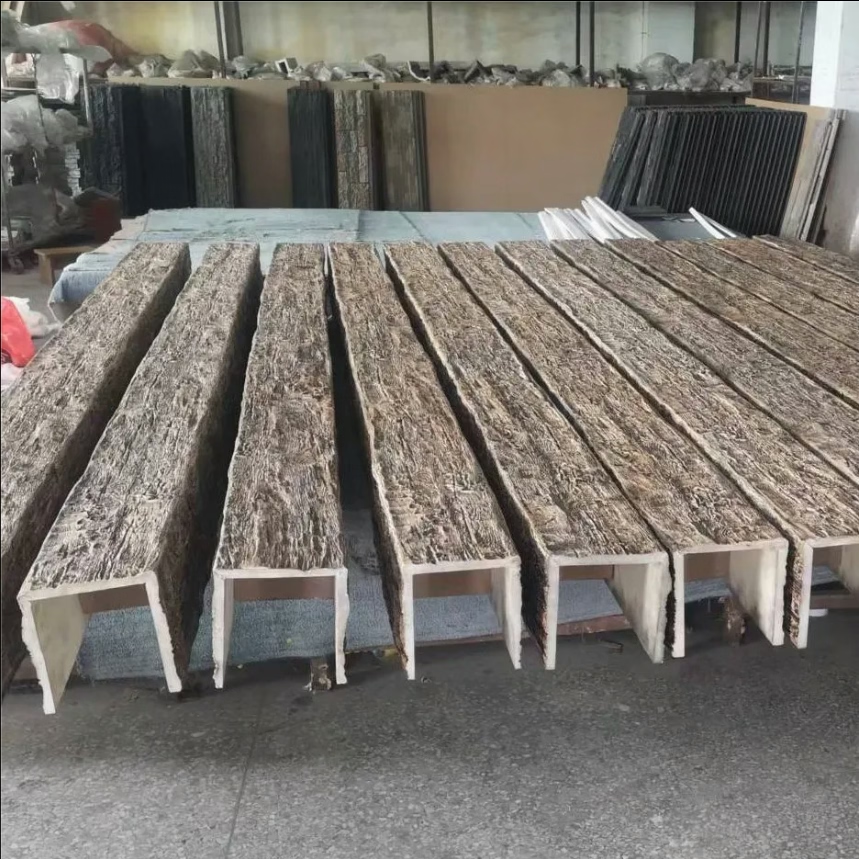
Toronto's dynamic construction and renovation industry demands reliable material suppliers who understand professional requirements. Contractors, developers, and renovation companies sourcing polyurethane faux beams for commercial or large-scale residential projects benefit significantly from local supplier relationships that provide consistent availability, competitive bulk pricing, and service calibrated to professional needs. Finding the right local supplier simplifies procurement and supports project success.
Renovation contractor Antonio Ferreira has built his Toronto-based business partly on supplier relationships that enable efficient project execution. His company completes 15 to 20 major renovation projects annually, with beam installations appearing in roughly half of these projects. Consistent supplier performance ensures that material availability never constrains his project schedules—a reliability that contributes directly to client satisfaction and business reputation.
Benefits of Local Supplier Relationships
Beyond simple convenience, local supplier relationships provide operational advantages that distant or online-only suppliers cannot match.
Immediate consultation availability enables quick problem-solving when questions arise. Product selection discussions, installation technique consultations, and specification clarifications proceed efficiently when suppliers are locally accessible. This accessibility proves particularly valuable during active projects when unexpected situations require immediate guidance.
Inventory visibility lets customers verify product availability before committing to project schedules. Visiting showrooms or calling local offices provides accurate stock information that online systems sometimes fail to reflect. This verification prevents scheduling errors that occur when promised inventory proves unavailable.
Established relationships create service priorities that benefit reliable customers. Suppliers know which contractors deliver consistent business and tend to accommodate these relationships during supply shortages or high-demand periods. This relationship value accumulates over time as purchasing patterns demonstrate reliability.
Bulk Order Pricing and Structures
Professional customers purchasing substantial quantities naturally seek pricing that reflects their volume. Local suppliers typically structure bulk pricing to reward significant orders.
Volume tier discounts reduce per-unit costs as order quantities increase. First-tier thresholds might activate discounts at 10 or more beams, with additional reductions at higher quantities. Understanding tier structures helps customers optimize order sizes to maximize discount benefits.
Project pricing accommodates the largest bulk orders through customized quotation processes. Contractors undertaking multi-unit developments or extensive renovation portfolios can negotiate project-specific pricing that reflects anticipated volume across multiple installations. These arrangements require relationship development and purchase history but deliver meaningful savings.
Standing order arrangements provide pricing advantages for customers with predictable ongoing requirements. Establishing regular ordering patterns enables suppliers to offer preferential pricing in exchange for committed purchase volumes. This arrangement benefits both parties—customers receive consistent pricing while suppliers gain reliable demand forecasting.
Antonio's company has negotiated volume pricing arrangements with his primary Toronto supplier. His consistent ordering patterns—typically 50 to 100 beams monthly across active projects—qualify for tier pricing that substantially reduces per-unit costs. The savings contribute directly to project profitability and competitive positioning.


Delivery and Logistics Services
Professional projects require reliable material delivery that integrates with construction schedules. Local suppliers typically offer logistics services designed for professional requirements.
Job site delivery brings materials directly to installation locations, eliminating handling requirements that would otherwise fall on contractor crews. Scheduling flexibility allows delivery aligned with installation readiness rather than carrier-imposed windows. This coordination improves labor efficiency and reduces material staging requirements.
Jobsite-specific packaging accommodates professional handling and storage needs. Bulk orders may receive palletization, protective packaging for transit, and labeling that simplifies on-site sorting and distribution. These services require minimal customer effort while providing meaningful operational benefits.
Will-call pickup options serve customers preferring self-managed transportation. Local suppliers maintain will-call capabilities for customers with adequate transportation resources. This flexibility accommodates diverse operational preferences across different contractor businesses.
Supporting Services for Professional Customers
Beyond product supply, local suppliers often provide supporting services that enhance professional customer capabilities.
Design consultation assists with product selection, finish coordination, and installation planning. These consultations draw on supplier expertise accumulated across numerous installations and customer projects. The guidance helps ensure that selections meet both aesthetic and practical requirements.
Installation training familiarizes contractors with product-specific techniques. New products or unfamiliar installation scenarios benefit from manufacturer-trained guidance that suppliers can provide. This training prevents common installation errors that might otherwise affect project quality.
Technical documentation including installation guides, load specifications, and warranty information supports professional specification and execution. Having this documentation readily available from local sources simplifies record-keeping and specification verification.
Building Successful Supplier Partnerships
The most valuable supplier relationships develop through consistent interaction, clear communication, and mutual commitment to successful project outcomes.
Reliability in ordering and payment builds supplier confidence that enables preferential treatment during challenging circumstances. Customers who maintain consistent ordering patterns and reliable payment receive relationship benefits that transactional purchasing cannot provide.
Problem resolution through direct communication strengthens relationships when issues arise. Rather than abandoning suppliers over minor problems, working through difficulties together builds understanding that prevents future issues. Suppliers appreciate customers who communicate problems constructively rather than simply switching sources.
Growth commitment signals to suppliers that relationship investment will generate returns. Contractors who communicate growth plans and anticipated volume increases enable suppliers to prepare inventory and capacity for anticipated demand. This collaboration creates partnerships that support business growth rather than simply transactional exchanges.
For Toronto contractors and developers seeking reliable faux beam supply, local supplier relationships provide advantages that distant or online-only sources cannot replicate. The investment in relationship building returns value across every project undertaken.
Technical References
ASTM standards cited in every specification
Test Data
Lab results from internal testing program
Updated 2026
Reviewed against current product specs