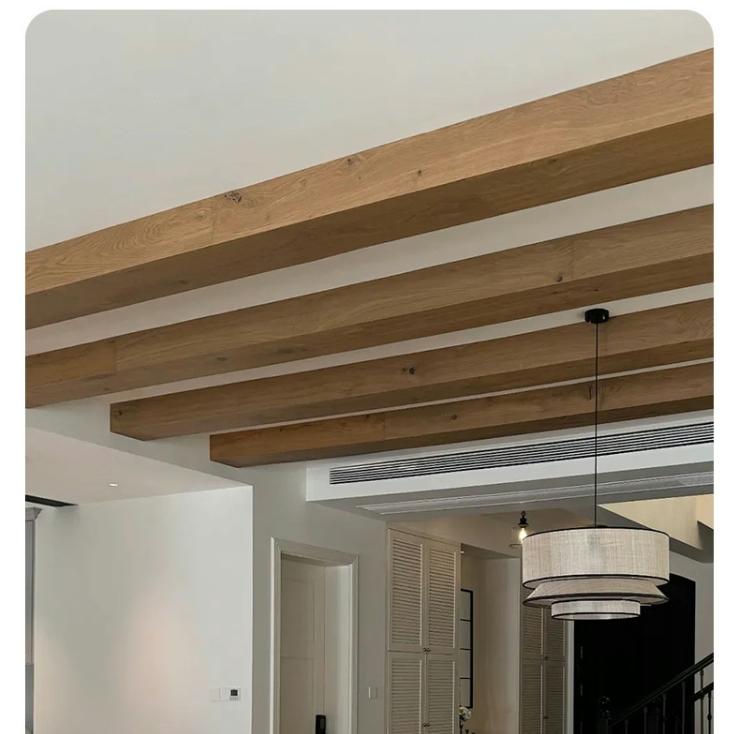
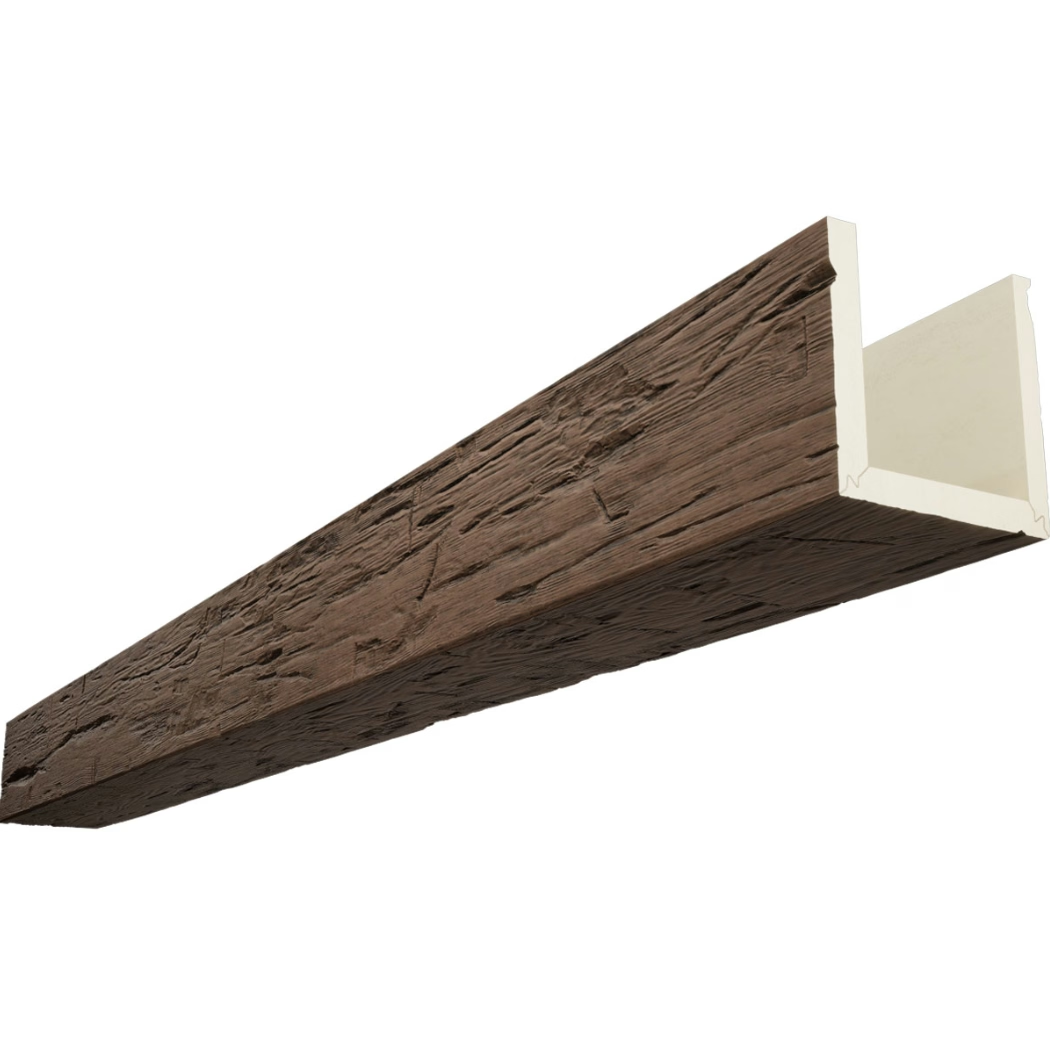
Local search has transformed how customers discover and select service providers. When homeowners search for ceiling beam installation, they rarely browse national retailers—instead, they search for nearby options with phrases like "faux wood beams near me" or "ceiling beam installation [city name]." Businesses that optimize their online presence for these local searches attract customers actively seeking their products and services. Understanding localized GEO SEO terms for ceiling faux wood beams enables effective optimization that drives qualified local traffic.
Home improvement retailer Northwest Building Supply discovered the power of local search optimization when they restructured their website content around geographic terms. Within six months, their organic search traffic from local customers increased by 340%. This traffic translated directly to sales, demonstrating how proper optimization connects businesses with customers ready to purchase.
Understanding GEO SEO Fundamentals
GEO SEO combines traditional search engine optimization with geographic targeting to attract customers in specific locations. This approach recognizes that search engines increasingly personalize results based on user location.
Local intent signals indicate when searches include geographic qualifiers. Phrases like "in [city]," "near me," or "here" signal local intent. Search engines interpret these signals to deliver location-relevant results even without explicit geographic terms. Understanding these signals helps optimize content for both explicit and implicit local searches.
Google Business Profile optimization forms the foundation of local GEO SEO. Completing and maintaining accurate business listings with correct categories, hours, contact information, and customer reviews ensures visibility in map results and local search features. For businesses selling faux wood beams, claiming and optimizing listings should be the first GEO SEO action.
NAP consistency—Name, Address, and Phone number uniformity across all online properties—reinforces geographic relevance signals. Inconsistent NAP information across directories, social profiles, and the website confuses search engines about actual business location, potentially reducing local visibility.
Primary Geographic Search Terms
Core product and service searches combined with location terms form the foundation of effective GEO SEO. These terms should appear throughout website content, metadata, and business listings.
"Ceiling beams [city]" captures customers seeking installation or purchase in specific locations. Variations include "[city] ceiling beams," "ceiling beams in [city]," and "[city] ceiling beam installation." Building content around these primary geographic terms establishes relevance for location-specific searches.
"Decorative beams [region/state]" captures broader geographic interest. Some customers search by metropolitan area or state rather than specific city names. Including regional terms alongside city-specific terms ensures coverage across these variations.
"Faux wood beams near me" represents high-intent local searching. Customers using "near me" phrases have strong purchase intent and prefer local suppliers. Optimizing for these searches requires both content optimization and Google Business Profile completeness.
Northwest Building Supply structures their product pages around city-specific content. Separate pages target "faux wood beams Seattle," "faux wood beams Portland," and "faux wood beams Vancouver" with content tailored to each market. This geographic segmentation captures searches across their service territory.

Long-Tail Geographic Terms
Extended search phrases capture more specific customer needs while facing less competition than primary terms. Long-tail optimization requires creating content that addresses specific questions and requirements.
"[City] faux wood beam installer" targets customers specifically seeking professional installation. This term indicates higher project value than product-only searches, making it particularly valuable for contractor businesses. Content addressing installation qualifications, portfolio examples, and service area should incorporate this term.
"Lightweight ceiling beams [neighborhood/district]" captures location-specific searches within larger cities. Metropolitan areas contain distinct neighborhoods with their own identities and search patterns. Optimizing for neighborhood terms reaches customers who identify with specific areas rather than city-wide searches.
"Wholesale faux wood beams [metro area]" targets contractors and businesses seeking bulk purchasing. These commercial customers represent high-value accounts worth dedicated optimization effort. Content addressing bulk pricing, delivery logistics, and trade account benefits should include wholesale-oriented geographic terms.
Content Strategy for Geographic SEO
Effective GEO SEO requires strategic content creation that incorporates geographic terms naturally while providing genuine value to readers.
Location-specific landing pages create dedicated content for each service area. These pages should include city or neighborhood name prominently in titles, headings, and body content while providing locally relevant information. Service descriptions, testimonials from local customers, and area-specific project galleries strengthen geographic relevance.
Local content development establishes authority within geographic markets. Blog posts about local design trends, regional installation considerations, and community involvement demonstrate local connection that search engines recognize. This content development requires ongoing effort but builds sustainable geographic visibility.
Customer review integration strengthens local signals through authentic customer experiences. Encouraging reviews that mention service areas reinforces geographic relevance. Featuring reviews on location-specific pages amplifies this effect while providing social proof for prospective customers.

Technical GEO SEO Considerations
Technical optimization ensures that geographic signals reach search engines clearly and consistently.
Schema markup provides structured data that search engines use to understand business location, service areas, and geographic relevance. Implementing LocalBusiness schema with complete address, phone, and geographic coordinates helps search engines correctly categorize and display business information.
URL structure should reflect geographic targeting where appropriate. URLs like /faux-wood-beams/seattle/ communicate geographic relevance directly. This structure also enables searchers to understand page relevance from URL alone.
Mobile optimization affects local search performance significantly. Most local searches occur on mobile devices, and mobile-friendly website experiences influence search rankings directly. Ensuring fast load times, easy navigation, and click-to-call functionality supports both user experience and search performance.
Northwest Building Supply implemented comprehensive technical GEO SEO alongside their content strategy. Their technical implementation included LocalBusiness schema, optimized URL structures, and mobile-first design principles. Combined with their content approach, this technical foundation contributed substantially to their local search visibility gains.
Measuring GEO SEO Success
Tracking optimization effectiveness enables continuous improvement and demonstrates return on investment.
Local search ranking tracking monitors position changes for target geographic terms. Regular tracking identifies which terms respond to optimization efforts and which require additional attention. Tools like local search rank trackers automate this monitoring for efficient performance management.
Google Business Profile insights reveal how customers find and interact with business listings. These insights show search queries, customer actions, and photo views that indicate listing effectiveness. Regular review of these insights informs optimization adjustments.
Conversion tracking connects local search traffic to actual business outcomes. Setting up conversion tracking for quote requests, phone calls, and showroom visits enables measurement of GEO SEO's business impact. This measurement demonstrates optimization value and guides resource allocation decisions.
Local GEO SEO for ceiling faux wood beams requires strategic attention to geographic terms, content development, and technical optimization. The investment returns qualified local customers actively seeking products and services, making GEO SEO one of the most valuable marketing channels for businesses in this market.
Technical References
ASTM standards cited in every specification
Test Data
Lab results from internal testing program
Updated 2026
Reviewed against current product specs