When you're sourcing polyurethane faux wood beams for a commercial project, the logistics of getting those beams from manufacturer to job site can sometimes prove more complex than the purchasing process itself. Unlike standard building materials that fit comfortably into established shipping categories, decorative beams often fall into awkward dimensional territory—too long for standard parcel carriers, too numerous for air freight, and sometimes too large for standard container configurations.
Understanding these logistics realities before you place an order prevents the kind of surprises that can delay projects and inflate costs unexpectedly. This guide walks through the key considerations that affect how faux wood beams move from overseas manufacturing facilities to your project location.

Dimensional Classification and Why It Matters
Shipping carriers classify cargo by dimensional characteristics because space on trucks, ships, and aircraft is sold by volume or weight, whichever yields the higher charge. For faux wood beams, the critical dimension is almost always length. A beam that measures 8 feet fits in standard shipping configurations with minimal premium. Push to 12 or 16 feet, and you start entering specialized handling territory. Anything beyond 20 feet requires dedicated transport arrangements that significantly affect cost and lead time.
The length classification matters because different carriers have different length limits for their standard equipment. Standard shipping containers come in 20-foot and 40-foot lengths, but the usable interior length is slightly less due to door openings and structural elements. A 20-foot container provides approximately 19 feet of usable length, while a 40-foot container offers roughly 39 feet. Beams longer than these dimensions require flat rack containers or specialized lowboy trailers, both of which command premium pricing.
Width and height matter too, though less dramatically. Most beams ship in protective packaging that adds several inches to the effective dimensions. Understanding the packaged dimensions of your beams helps you calculate how many units fit within a container or trailer, which directly affects your per-unit shipping cost.
Understanding Freight Classes
Freight classification systems like the National Motor Freight Classification (NMFC) assign products to categories based on characteristics including density, stowability, handling requirements, and liability. Polyurethane faux wood beams typically fall into classes based on their packaged density—lighter beams might occupy classes 150 or 175, while heavily reinforced or densely packaged beams could land in class 300 or higher.
The freight class directly influences the rate you'll pay per hundred pounds. A lower class number generally indicates lower shipping cost, assuming other factors remain constant. However, the relationship between class and cost varies by carrier and lane, so obtaining quotes from multiple carriers with detailed beam specifications helps identify the most economical routing.
For international shipments, freight class matters less than the harmonized tariff code that classifies your beams for customs purposes. Polyurethane decorative architectural elements typically fall under specific HS codes that determine import duties and regulatory requirements. Verify the applicable code with your customs broker before ordering, as duty rates can significantly affect landed cost.
Packaging Standards for Transit Protection
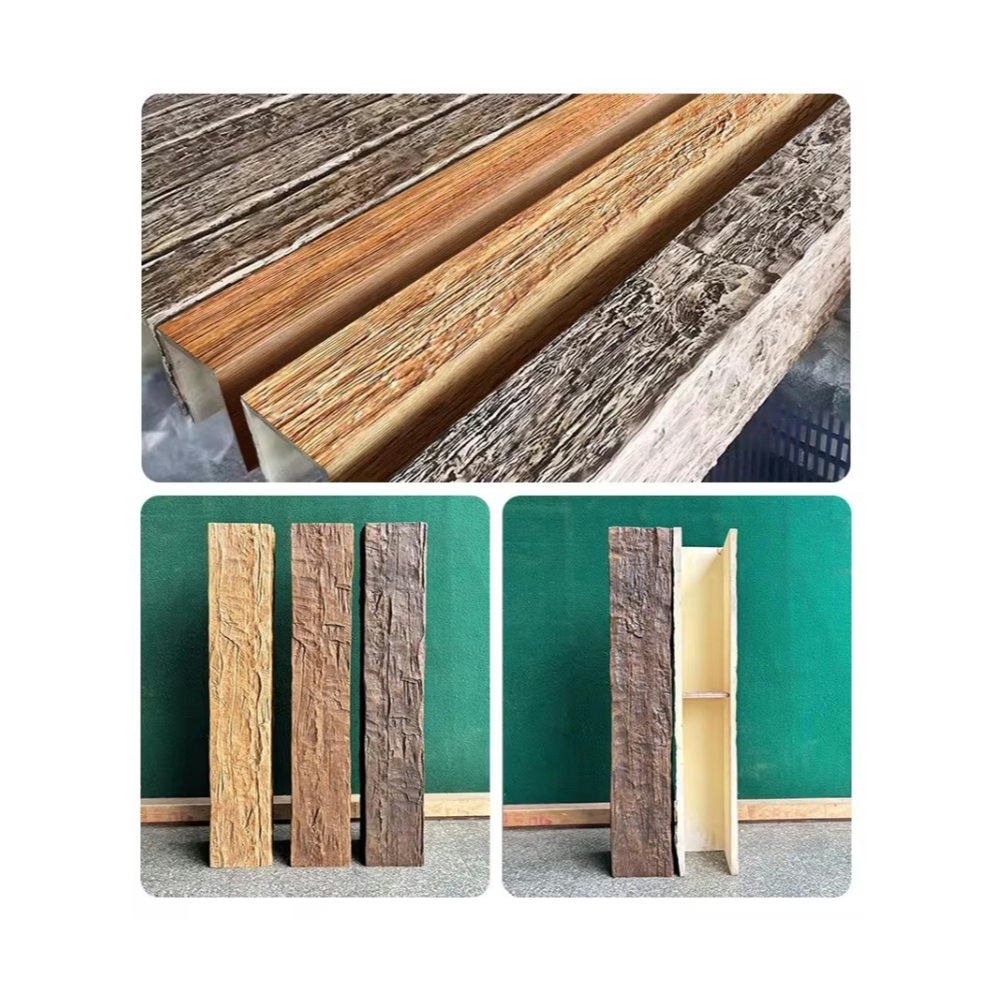
Protecting beams during shipping requires packaging that prevents impact damage, moisture intrusion, and surface scratching. Most manufacturers use a combination of cardboard wrapping, foam cushioning at contact points, and wooden pallet bases that allow forklift handling. The quality of this packaging directly affects how many beams arrive in saleable condition.
Standard packaging configurations work well for domestic shipments and sea freight in standard containers. For extended transit or increased handling, enhanced packaging with corner protection, reinforced strapping, and weather-resistant barriers becomes necessary. When ordering for overseas delivery, confirm with your supplier what packaging standards apply and whether upgrades are available for particularly valuable or fragile beam profiles.

Container Loading Strategies
How beams load into shipping containers affects both the quantity that fits and the safety of the load during transit. Professional loading for beam shipments typically involves:
Orientation matters significantly. Beams loaded vertically occupy different floor space than those positioned horizontally. For long, slender beams, vertical loading in specialized racks might maximize container utilization, but this requires appropriate securing measures to prevent toppling during transit.
Separation between beams prevents surface contact that could cause finish damage. Cardboard dividers, foam strips, or paper wrapping between beams provide this protection economically. Confirm what separation measures your supplier includes in standard packaging and whether additional protection is warranted for high-end finishes.
Weight distribution within containers affects handling safety and shipping rates. Concentrated weight at one end of a container creates balance issues during loading and unloading. Strategic loading places heavier packages toward the center and lower in the container, with lighter items toward the top and ends.

Domestic Ground Freight Considerations
Within a country, beams typically ship via less-than-truckload (LTL) or full truckload carriers depending on volume. LTL shipping works for smaller orders but involves multiple handling events as cargo moves through carrier networks. Each handling event creates potential for damage, making strong packaging essential.
Truckload shipping becomes economical when your order reaches a quantity that fills or nearly fills a standard 53-foot trailer. At that volume, per-unit shipping costs drop substantially, and your cargo travels directly from origin to destination with minimal handling. For large commercial projects, consolidating orders to achieve truckload quantities often makes sense despite the inventory implications.
Height restrictions affect which trailers can carry your beams. Standard dry van trailers provide 8.5 feet of interior height, which accommodates most vertically loaded beam arrangements. If your beams require horizontal loading or the beams themselves are particularly tall, you might need high-cube equipment that provides additional height at increased cost.
Air Freight: When Speed Justifies the Premium
Some situations call for air freight despite its significantly higher cost per unit. A project facing critical deadlines might justify the premium for rapid delivery. A small quantity of specialty beams needed to complete an installation could ship via air when waiting for sea freight consolidation would cause unacceptable delays.
Air freight imposes stricter dimensional limits than ocean or ground shipping. Cargo aircraft have specific dimensional constraints based on cargo door sizes and interior configurations. Before committing to air freight, confirm that your packaged beams will actually fit the aircraft intended for your shipment. In some cases, you might need to break your order into multiple shipments or select shorter-length beams to accommodate air freight constraints.
Customs and Import Regulations
For international buyers, customs clearance represents a critical step in the shipping process that can introduce delays if not properly managed. Required documentation typically includes commercial invoices with detailed product descriptions, packing lists showing contents and quantities, certificates of origin, and bills of lading or air waybills.
Polyurethane architectural products may face specific regulatory requirements depending on the destination country. Fire retardancy standards, material composition certifications, and environmental compliance documentation are commonly required in developed markets. Ensure your supplier can provide all documentation your customs authority requires before placing international orders.
Import duties vary by country and product classification. Your customs broker can advise on current duty rates and any applicable trade agreements that might reduce costs. For buyers making regular international purchases, establishing a relationship with an experienced customs broker typically pays dividends across multiple shipments.
Planning Your Procurement Timeline
Accounting for shipping realities in your project schedule prevents unpleasant surprises. International shipments by sea typically require 3 to 6 weeks for transoceanic transit, plus time for port handling, customs clearance, and inland transportation to your location. Air freight reduces this to days but multiplies costs.
Build realistic buffers into your procurement timeline to accommodate:
- Order processing and production at the manufacturer (typically 2 to 4 weeks)
- Consolidation and container loading at origin (1 to 2 weeks)
- Ocean transit to destination port (2 to 6 weeks depending on route)
- Port handling and customs clearance (1 to 2 weeks)
- Inland transportation to your location (days to weeks depending on distance)
For projects with fixed completion dates, work backward from that date to establish order deadlines. When supply chain volatility makes exact timing uncertain, ordering additional beams beyond your calculated needs provides insurance against transit damage or measurement discrepancies that require replacement pieces.
Cost Reduction Strategies
Several approaches can reduce shipping costs without compromising beam quality or delivery reliability. Consolidating orders to fill containers completely or nearly completely typically yields better rates than shipping partial containers. If your project can accommodate phased delivery, consolidating multiple project shipments into single larger orders often proves more economical than frequent small orders.
Negotiating freight contracts for recurring shipments rewards buyers with predictable volume. Carriers and freight forwarders value steady business and often provide better rates and service levels to reliable customers versus one-time shippers. If your projects regularly require beam shipments, establishing standing arrangements with preferred carriers simplifies logistics and often reduces costs over time.
Understanding the full landed cost of your beams—including shipping, duties, insurance, and handling—helps you make accurate project budget comparisons between suppliers and shipping methods. The lowest quoted beam price doesn't necessarily yield the lowest actual cost once logistics are fully accounted for.
Technical References
ASTM standards cited in every specification
Test Data
Lab results from internal testing program
Updated 2026
Reviewed against current product specs