Few things frustrate a project manager more than receiving expensive architectural elements with damage that could have been prevented. When polyurethane faux wood beams arrive at your job site bent, scratched, or broken, you've lost time, money, and potentially face with your client. The irony is that most shipping damage to long beams results from preventable causes—improper support during transport, insufficient packaging protection, or handling procedures that ignore the material's physical characteristics.
Understanding how beams get damaged during transportation, and more importantly, how to prevent that damage, represents a practical investment that pays dividends across every project you complete. This knowledge helps you specify proper handling requirements, evaluate supplier packaging standards, and train your teams on procedures that protect your investment from order placement through installation.

Why Long Beams Are Vulnerable
The physics of long, slender objects makes them inherently susceptible to damage during handling and transport. A 20-foot beam has significant leverage—the further from the support point, the less force required to cause deflection. Under its own weight, a horizontally positioned beam experiences internal stress that increases toward the center, the point farthest from any support. This stress can cause permanent deformation if the beam lacks adequate support or is subjected to unexpected loads.
Polyurethane, while an excellent material for replicating wood aesthetics, behaves differently than timber in some important ways. Natural wood has grain structure that provides directional strength. Polyurethane is more homogeneous, meaning it responds more uniformly to stress but also lacks the natural reinforcement that wood grain provides. The result is a material that looks beautiful but requires more careful handling than casual observers might expect.
Temperature affects polyurethane differently than wood as well. Extreme heat can soften the material temporarily, making it more susceptible to deformation under load. Extreme cold can make it more brittle. For shipments traveling through regions with significant temperature variation, these effects compound across transit duration, potentially creating damage that becomes apparent only when beams are unpacked far from the origin point.
Understanding Load Dynamics During Transport
Trucks vibrate continuously during transit. This vibration is rarely violent—modern suspension systems smooth out most road irregularities—but the cumulative effect over thousands of miles creates forces that work on cargo in subtle ways. Loosely secured beams can shift, collide with each other, or hammer against container walls. Each movement creates opportunities for impact damage.
Acceleration and braking forces affect cargo differently depending on how it's positioned. Sudden stops create forward momentum that pushes unsecured loads toward the front of the trailer or container. Tight turns generate lateral forces. Even climbing grades produces subtle weight redistribution that stress cargo at different points throughout the journey.
Shipping by sea introduces additional dynamics. Vessels roll and pitch in ocean swells, sometimes dramatically in rough conditions. Container ships stow cargo in holds where motion might be less pronounced, but on deck shipments experience the full effect of maritime movement. Understanding these forces helps everyone in the supply chain appreciate why adequate securing measures matter so much.
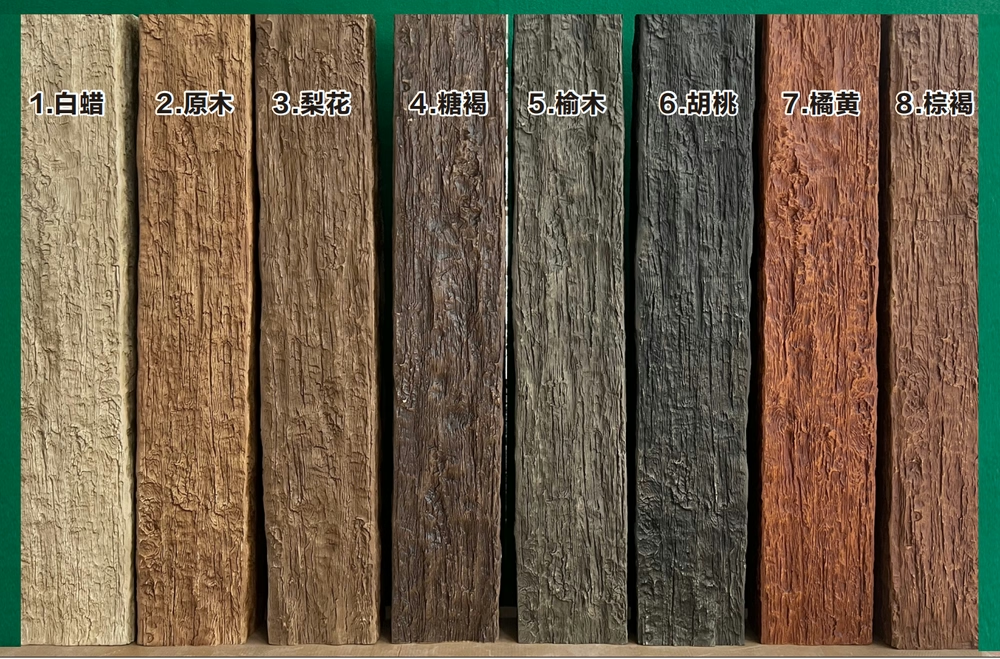
Packaging Solutions That Work
Effective beam packaging addresses multiple protection needs simultaneously. Impact protection prevents damage from collisions with other cargo or container walls. Moisture barriers prevent water damage from condensation or incidental exposure. Surface protection guards against scratching and abrasion. Structural support maintains beam geometry and prevents deflection under load.
Foam-based packaging systems offer excellent protection per unit weight. Expanded polyethylene or polyurethane foam conforms to beam surfaces, providing cushioning while minimizing added bulk. Closed-cell foam resists moisture absorption and provides thermal insulation. For high-value beams or extended transit, multi-layer foam packaging with alternating densities provides superior protection through graduated energy absorption.

Rigid packaging components serve different functions. Wooden pallet bases provide a stable foundation for forklift handling and keep beams elevated above warehouse floor moisture. Cardboard tubes or corner protectors shield vulnerable edges and corners that would otherwise take the brunt of impact forces. Stretch wrap and strapping hold multiple pieces together as a unit, preventing individual beams from shifting independently.
For the longest beams, custom crating becomes worth the investment. A wooden crate designed around specific beam dimensions provides superior protection against impact and deflection. Crates can incorporate internal support structures—blocks, cradles, or straps—that actively resist the tendency toward deformation. The cost premium for custom crating often pays for itself in reduced damage claims and improved customer satisfaction.
Proper Handling Procedures
Training your receiving team on proper handling procedures prevents damage that packaging alone cannot address. The first principle: never lift long beams by the center. Always support beams at multiple points, with the lifting force applied as close to the ends as practical while maintaining control. Lifting by the middle, especially with heavy beams, creates immediate bending stress that can cause visible deflection or hidden structural compromise.
When moving beams from transport vehicle to storage, use appropriate equipment. For short beams, two-person carry works adequately. For beams over 10 feet, mechanical handling becomes essential—forklifts, beam trolleys, or multiple people positioned to support along the beam's length. Attempting to save time by cutting corners on handling invites damage that costs far more than the minutes saved.
Avoid dragging beams across surfaces, even short distances. The friction created by dragging generates heat and pressure that can scratch surfaces or damage finish coatings. If you must move a beam without lifting it, use rollers or skids that allow controlled sliding without surface contact.
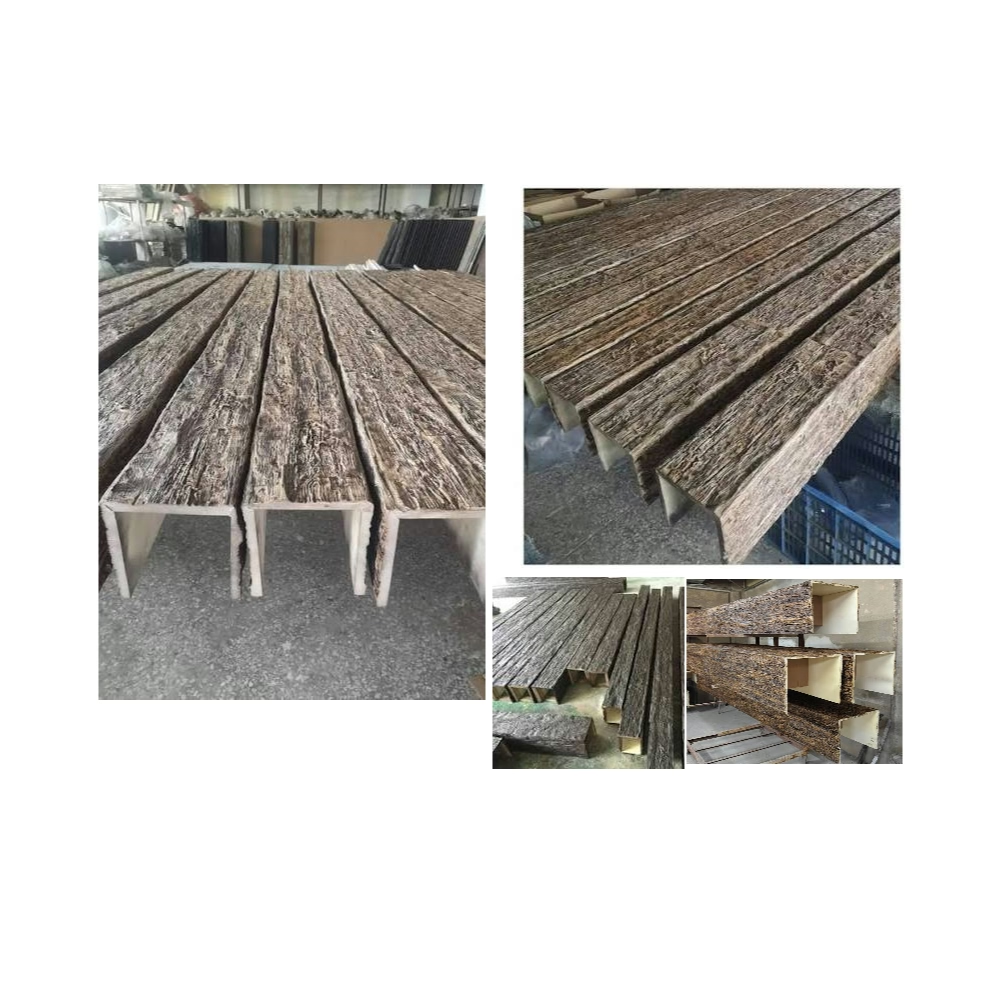
Freight Mode Selection
Different freight modes offer different protection levels, and matching mode to cargo characteristics makes sense. Flatbed trucking provides minimal environmental protection but allows direct loading and unloading without the constraints of container dimensions. For very long beams that exceed container lengths, flatbed or step-deck trailers might be the only practical option.
Enclosed van trailers provide environmental protection against weather and road debris but constrain length and require careful loading to prevent cargo shift. When using van trailers, ensure beams are loaded with adequate blocking and bracing to resist transit forces. The enclosed space means beams cannot be secured against the sides as they might on a flatbed, so internal bracing becomes even more critical.
Ocean containers fall between these extremes. Closed containers protect against weather and wave action but constrain dimensions. Open-top containers or flat racks accommodate longer pieces but expose cargo to weather and require superior waterproofing. For international shipments, working with an experienced freight forwarder helps match shipping mode to cargo requirements.
Inspection Protocols at Delivery
Establishing clear inspection procedures at delivery catches damage before it's too late to file claims. Train receiving staff to inspect packaging condition before accepting delivery. Any signs of packaging compromise—wet cardboard, crushed corners, broken strapping—indicate potential cargo damage that needs investigation before signing for receipt.
Document everything. Take photos of packaging condition upon arrival, before unpacking. Photograph any visible damage to packaging or cargo. Note exceptions clearly on the delivery receipt before signing. This documentation supports damage claims with carriers and establishes the condition of cargo at delivery for any disputes that arise later.
Develop a systematic inspection process. Check dimensions against order quantities and specifications. Inspect each beam for visible damage including dents, cracks, surface abrasions, and finish defects. For the most critical applications, consider a sampling inspection protocol where a percentage of beams receive detailed examination for defects that might not be immediately apparent.
Storage Best Practices
How you store beams between arrival and installation affects their condition. Keep beams elevated off the floor on pallet boards or shelving. This prevents moisture absorption from concrete floors and allows air circulation that reduces condensation risk. In humid environments, consider dehumidification or climate control for sensitive storage areas.
Store beams in their shipping orientation whenever possible. Horizontally stored beams should rest on continuous support across their length, not on discrete supports at the ends. This prevents the deflection that occurs when long beams sag under their own weight over storage periods. Vertical storage works well for some beam profiles but requires secure bracing to prevent toppling.
Protect beams from direct sunlight during storage. UV exposure can cause surface degradation and color changes in some polyurethane formulations. If outdoor storage is unavoidable, cover beams with opaque tarps that block light while allowing air circulation. Indoor storage in controlled environments remains ideal for maintaining beam quality through the supply chain.
Working with Suppliers on Protection Standards
Establishing clear protection requirements with your suppliers prevents misunderstandings about what level of packaging and handling you expect. Specify packaging standards in purchase orders, including requirements for impact protection, moisture barriers, and structural support. Reference industry standards when applicable to provide objective benchmarks.
Ask potential suppliers about their damage rates and claim processes. Suppliers with low damage rates likely have effective protection protocols; those with high rates might be cutting corners on packaging to reduce costs. The lowest price rarely represents the best value when damage claims and project delays are factored in.
Consider visiting supplier facilities or requesting virtual tours to observe their packaging and handling procedures firsthand. Seeing how beams are packed, loaded, and secured provides confidence that your orders will arrive in the condition you expect. Many suppliers welcome such visits and view them as opportunities to demonstrate their quality commitment.
Cost-Benefit Analysis of Protection Investment
Protection measures cost money—there's no way around that. Premium packaging, custom crating, and specialized handling all add to the per-unit cost of beams. The relevant question isn't whether protection costs, but whether those costs represent a good investment relative to the alternatives.
Damage costs include more than just the value of damaged beams. Replacement beams require additional shipping, potentially on expedited timelines that command premium rates. Project delays while waiting for replacements can trigger contract penalties or client dissatisfaction. And damaged beams that must be used anyway might require repair work or result in compromised installations that affect the final aesthetic.
For most commercial projects, investing in adequate protection represents a small premium relative to the total project value and the potential costs of damage. The calculation becomes even clearer when you consider the relationship between consistent quality delivery and customer relationships. Projects that complete without incident build reputations; those plagued by damage claims erode them.
Technical References
ASTM standards cited in every specification
Test Data
Lab results from internal testing program
Updated 2026
Reviewed against current product specs


