There's a particular satisfaction in selecting materials that look better with time rather than worse. Homeowners who choose natural wood floors understand this appeal—the way a well-used floor develops a patina that tells stories of family life while remaining structurally sound. The same appeal exists in beam selection, though many people don't realize it until they encounter a product that delivers on the promise of graceful aging without the maintenance burden that typically accompanies it.
Polyurethane faux wood beams represent a different approach to this age-old desire. Rather than genuine wood that requires ongoing care to age well, these beams use modern materials science to achieve the aesthetic of aged timber while eliminating the tending that natural wood demands. The result is a product that maintains its original beauty indefinitely, resisting the weathering that affects natural materials while requiring essentially no maintenance.
Understanding how polyurethane beams achieve this performance, and what it means for your home design, helps you make selections that will continue to satisfy decades after installation.

The Problem with Natural Wood Aging
Natural wood ages in ways that can be beautiful or problematic depending on conditions and care. The aging process involves oxidation that darkens some species, UV exposure that fades others, moisture absorption that causes swelling and contraction, and physical wear from contact and use. Each of these factors contributes to the character of aged wood—but only if the wood receives appropriate care to manage the aging process constructively.
Unmanaged wood aging often looks less like character and more like deterioration. Left unfinished, wood surfaces collect dust and grime in the grain, developing an uneven appearance. Surfaces absorb moisture unevenly, creating blotchy coloration. Sun exposure fades exposed areas while protected areas retain their original color. Physical wear creates marks and scratches that accumulate into a tired-looking surface.
The care required to age natural wood gracefully includes periodic cleaning, refinishing, and protection from environmental factors. This maintenance must continue indefinitely to maintain the desired appearance. For a project like exposed beams that are difficult to access, this maintenance becomes especially challenging and expensive. The beams that should provide decades of beauty become a recurring cost and hassle instead.
How Polyurethane Changes the Aging Equation
Polyurethane faux wood beams avoid the fundamental vulnerability of natural wood: the organic material that responds to environmental factors and degrades over time. The polyurethane core doesn't absorb moisture, doesn't oxidize, and doesn't provide food for insects or organisms that cause wood decay. The surface finishes are specifically formulated to resist the environmental factors that affect natural wood.
The aging characteristics of quality polyurethane beams involve stability rather than change. The color you see at installation remains the color you'll see years later. The surface texture that felt right initially continues to feel the same. There are no finish failures to repair, no grain raising to address, no weathering patterns to manage. The beam simply remains as installed, decade after decade.
This stability doesn't mean the beams look frozen in time. On the contrary, the consistent appearance creates the impression of timelessness that natural wood achieves only through careful, ongoing maintenance. A room with polyurethane beams looks as fresh and well-maintained after ten years as it did after one year—without anyone having to climb a ladder to refinish anything.
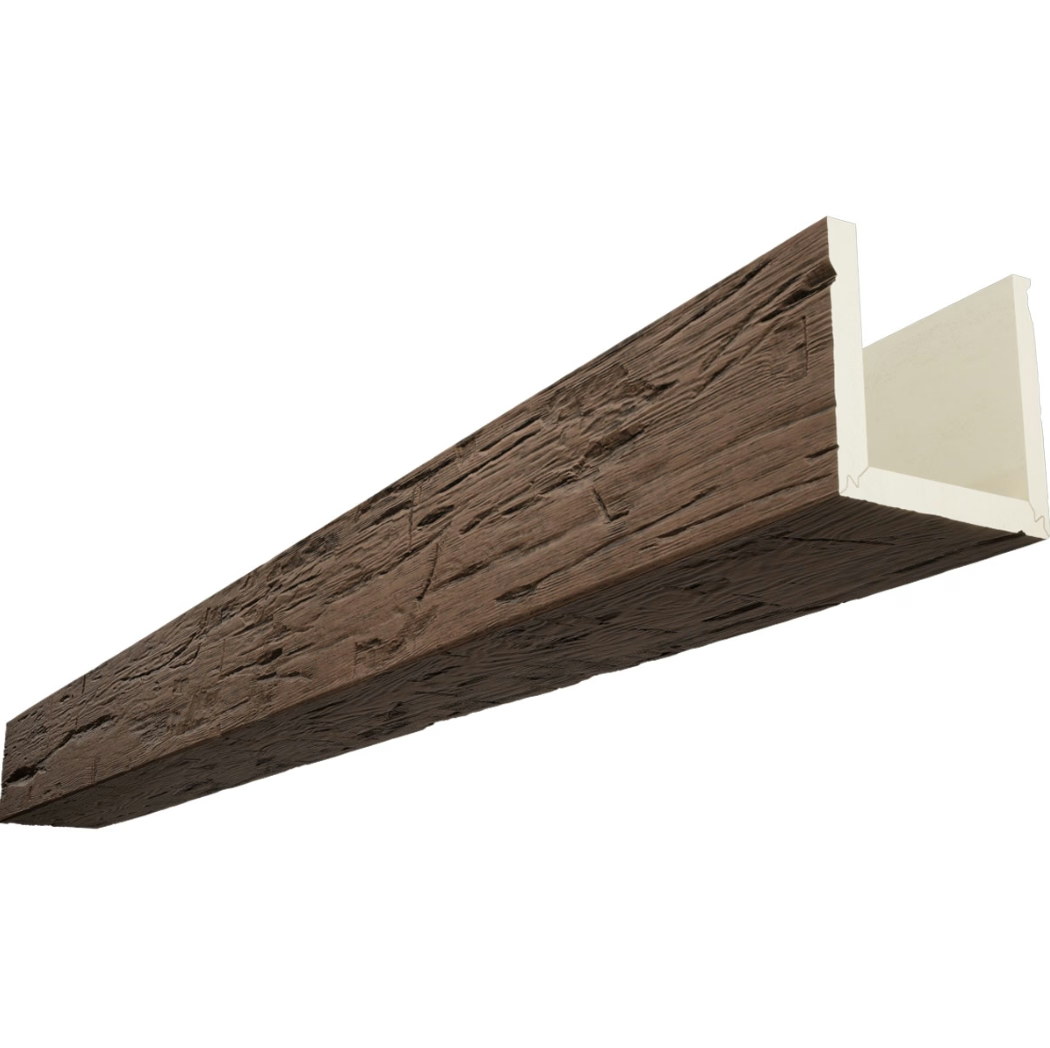
Designing for Timelessness
Timeless design transcends trends, creating spaces that remain appealing regardless of changing fashion. This timelessness comes partly from the design itself—avoiding overly trendy elements that will look dated in a few years—but also from the materials selected. Materials that age poorly date a space as surely as outdated furniture or finishes.
Polyurethane beams support timeless design in several ways. First, they replicate classic wood species and traditional beam profiles that have remained appealing across design generations. The reclaimed wood aesthetic, for example, draws from a long tradition of using weathered timber that continues to resonate in contemporary design. Second, the consistent appearance ensures that the beams continue contributing positively to the space rather than becoming liabilities that date the overall design.
When selecting beams for timeless applications, consider how they'll interact with changing decor over time. A room decorated today in contemporary style will likely see style evolution over the years. Beams that match current trends might clash with future decor; beams with classic proportions and traditional wood aesthetics will accommodate change more gracefully.

The Patina Question
Wood enthusiasts often cite patina as a key reason for choosing natural materials. The idea is that genuine wood develops character through use and exposure that synthetic materials cannot replicate. This is true of natural wood—but the character that develops isn't always the character you want.
Polyurethane beams don't develop patina in the traditional sense because they don't age. But they also don't develop the problems that patina sometimes masks. Water stains, pet damage, sun fading, and other forms of degradation that affect natural wood don't occur with polyurethane. The beam that looked beautiful at installation looks identically beautiful years later.
Some homeowners initially resist this predictability, fearing that beams without patina will look artificial or fake. This concern dissipates once they see quality installations in person. The realism achievable with modern polyurethane technology is remarkable—texture, color variation, and surface detail that convincingly replicate natural wood. The difference is that this appearance remains consistent indefinitely rather than evolving unpredictably.
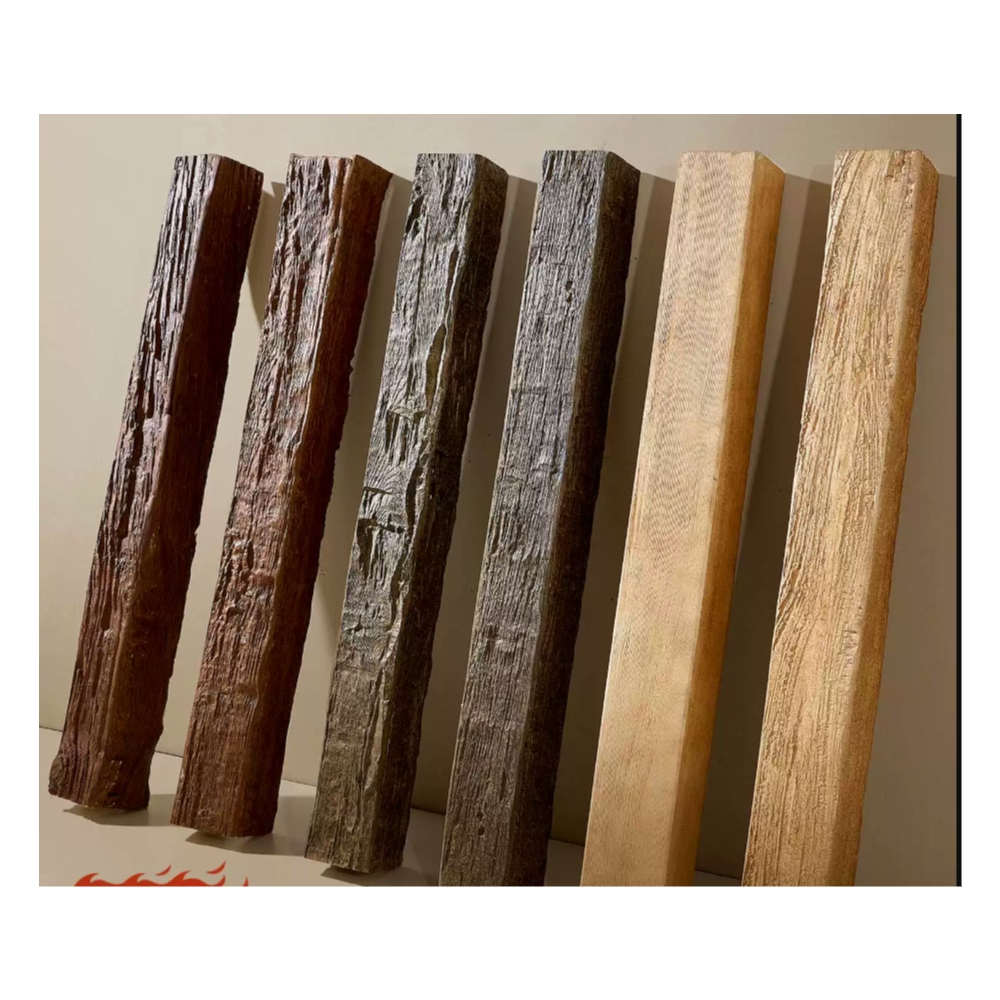
Maintenance for Perpetual Beauty
The maintenance routine for polyurethane beams is simple almost to the point of being unremarkable. Periodic dusting removes accumulated particles that might affect appearance in dusty environments. Occasional cleaning with mild soap and water addresses any buildup that dusting doesn't handle. That's essentially it—no refinishing, no sealing, no treatment schedules.
This minimal maintenance requirement represents a fundamental shift from wood care thinking. Homeowners accustomed to wood maintenance sometimes struggle to accept that beams really don't need anything beyond occasional cleaning. They keep waiting for the refinishing that never comes, the weathering that doesn't occur. Once they fully accept this reality, they typically appreciate the freedom it provides.
The practical benefit extends beyond time savings to include accessibility. Ceiling beams in homes with high ceilings might be difficult or dangerous to access for maintenance. Faux beams that require only occasional dusting from the ground level—using extension poles, long-handled tools, or professional cleaning services that don't require ladder work—solve this problem elegantly.
Real Homes, Real Results
Seeing polyurethane beams in homes that have been installed for years provides the best evidence of how they age. These installations demonstrate that the theoretical benefits translate to real-world performance. Beams that were installed a decade or more ago in family homes look remarkably similar to recently installed products.
Pay attention to how beams have held up in challenging conditions. Homes with large windows that admit significant sunlight show minimal fading. Family rooms with active children and pets show minimal wear. Kitchens with cooking grease and occasional splatter show cleanable surfaces rather than stained wood. These real-world results provide confidence that the products perform as promised.
When evaluating beam options, ask suppliers for examples of installations at various ages. Seeing a beam that's been in service for fifteen years alongside a newly installed beam demonstrates the consistency that polyurethane provides. The comparison often proves more persuasive than any marketing claim.
Investment Value Over Time
The value proposition of aging gracefully beams becomes clearer when examined over extended time periods. Compare the total cost of ownership between polyurethane beams and natural wood alternatives over a twenty-year period. Include initial purchase and installation costs, ongoing maintenance costs, and any repair or replacement costs that might occur.
Natural wood beams might cost less initially, but the maintenance costs accumulate. Refinishing every few years, potential repairs from damage or deterioration, and the value of time spent managing these issues all contribute to total cost. By the end of twenty years, the math often favors polyurethane despite its higher initial price.
There's also value in avoiding the disruption that wood maintenance creates. Refinishing ceiling beams typically requires furniture moving, room clearing, and days of work while finishes cure. For families who use their spaces continuously, this disruption has real costs beyond the direct expenses of the work itself.
Creating Spaces That Endure
The homes we create should serve us well over years and decades. This longevity goal applies to architectural elements like beams as much as to structural systems or mechanical equipment. Selecting materials that age gracefully contributes to homes that remain attractive and functional without constant attention.
Timeless design isn't about resisting change—it's about creating a foundation that accommodates change gracefully. Beams that maintain their appearance regardless of what happens around them provide this foundation. They allow you to refresh paint colors, update furniture, and evolve your style without worrying about architectural elements that no longer match or have deteriorated.
The decision to invest in aging gracefully beams reflects a mature perspective on home ownership. It's acknowledging that the best materials aren't necessarily the cheapest upfront or the most authentic in origin—they're the ones that continue providing value over the long term with minimal intervention. When you choose beams that age gracefully, you're building for the future while enjoying the present.
Technical References
ASTM standards cited in every specification
Test Data
Lab results from internal testing program
Updated 2026
Reviewed against current product specs


