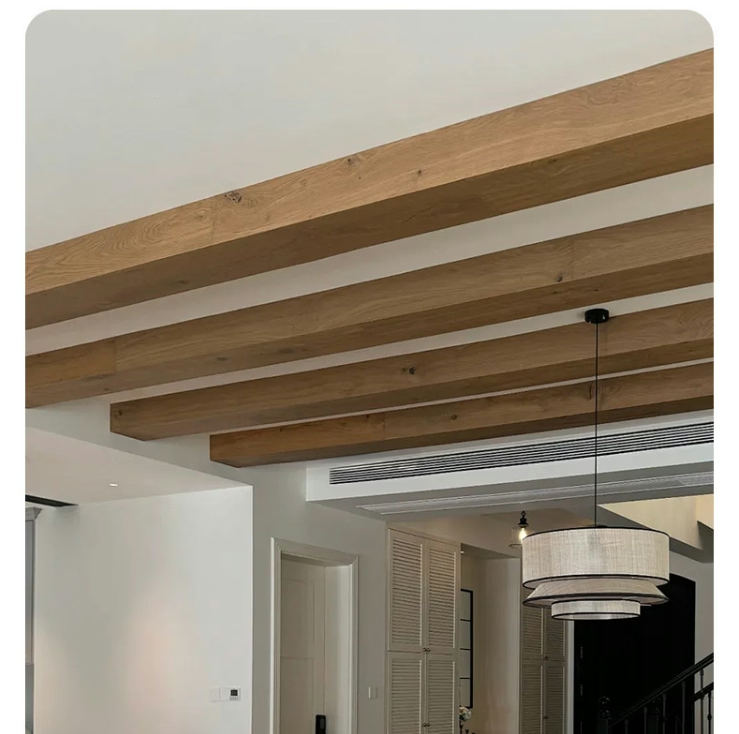
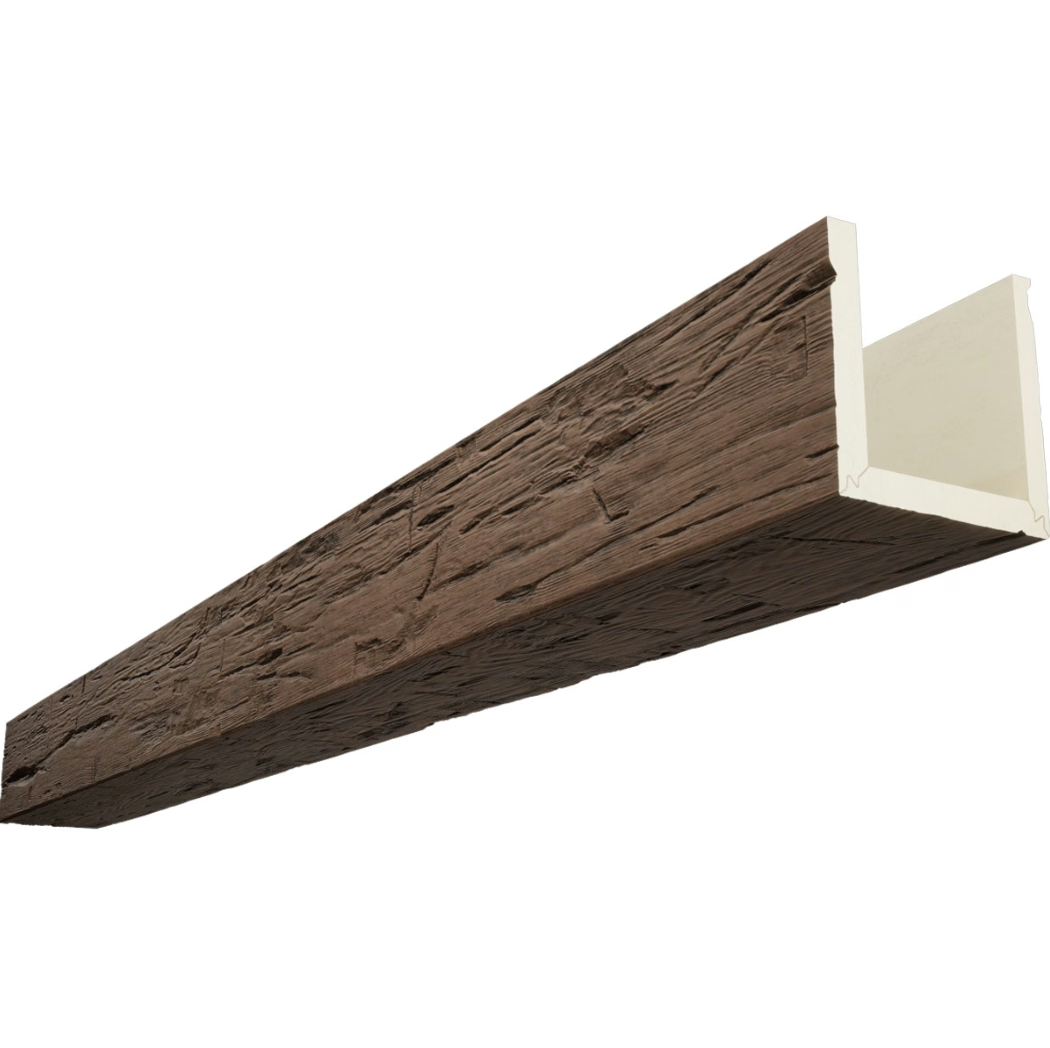
Commercial spaces face demands that residential installations never encounter. The constant flow of people, the inevitable contact with furniture and equipment, the extended operating hours, and the expectation that everything will look pristine despite heavy use—these conditions require materials that are genuinely up to the challenge. When it comes to decorative beams in commercial environments, not every product qualifies as commercial grade, and the difference matters enormously to building owners, designers, and the guests who experience those spaces.
Understanding what distinguishes commercial-grade polyurethane beams from their residential counterparts helps professionals make selections that perform reliably in demanding applications. The investment in quality appropriate to the application pays dividends through reduced maintenance, fewer replacements, and spaces that consistently present their best face to the public.

What Makes Beams Commercial Grade
The term "commercial grade" encompasses several characteristics that together define fitness for demanding applications. It's not simply a marketing label—genuine commercial-grade products undergo testing and quality control processes that residential products might skip. Understanding these characteristics helps you evaluate whether a product truly qualifies for commercial use.
Impact resistance represents a primary differentiator. Commercial spaces experience far more physical contact than residential ones. Guests brush past beams with luggage and bags. Furniture movers磕碰到 beam surfaces. Cleaning staff work around beams with equipment and supplies. A beam that dents or marks under this contact creates maintenance problems and aesthetic degradation. Commercial-grade formulations resist impact better, maintaining appearance despite regular contact.
Surface durability affects how beams handle cleaning and environmental exposure. Commercial spaces require frequent cleaning that might involve stronger detergents than residential settings use. Beams must resist the cleaning agents without surface damage or finish degradation. They must also handle the low-level but constant exposure to skin oils, food residues, and other substances that accumulate in public spaces.
Dimensional stability becomes more important in larger commercial installations. While a slight warp in a home beam might be unnoticeable, the same warp in a hotel corridor where dozens of beams are visible simultaneously becomes glaringly obvious. Commercial-grade products maintain their shape through temperature fluctuations, humidity changes, and the stress of installation better than standard products.
Applications in Hospitality Design
The hospitality industry has embraced polyurethane beams extensively because they deliver the warmth and character guests expect while handling the realities of high-traffic operation. Hotels, restaurants, resorts, and entertainment venues use these beams throughout their properties in applications ranging from guest room accents to grand ballroom ceilings.
Lobby and common area installations see the heaviest use in most hospitality properties. These spaces must project an image of quality and comfort while handling constant foot traffic, luggage, and the general activity of hundreds or thousands of guests annually. Beams in these locations must look stunning at arm's length and from across the grand space, maintain that appearance despite daily abuse, and clean up easily when incidents occur.
Restaurant installations present specific challenges including food service proximity, cleaning frequency, and the potential for grease or moisture exposure. Beams above dining tables catch everything that rises—including grease vapor that can accumulate on surfaces over time. Commercial-grade beams in restaurants should have finishes that resist grease absorption and clean without special treatments. The ability to maintain appearance between deep cleanings affects both aesthetics and operational efficiency.
Guest room applications, while less demanding than public areas, still see regular use and occasional abuse. Beams in these spaces frame the bed area, add character to otherwise standard ceiling planes, and contribute to the overall design narrative that differentiates the property. Commercial-grade quality ensures these beams maintain their contribution to guest experience throughout the property's operational life.

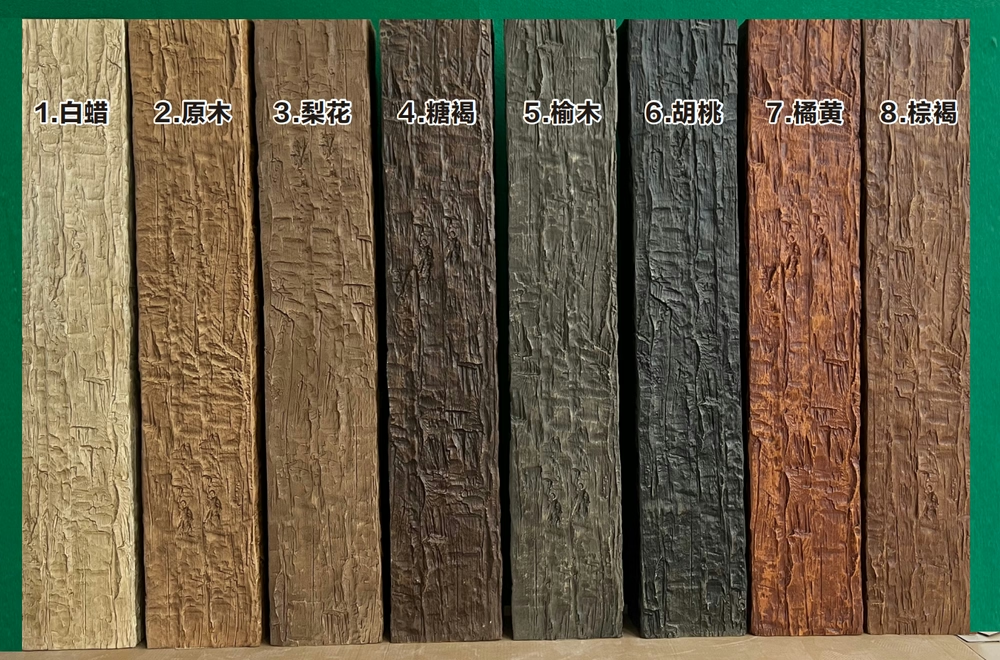
Retail Environment Considerations
Retail spaces use beams to create atmosphere, define areas within larger stores, and add architectural interest to what might otherwise be generic ceiling planes. These applications require beams that contribute positively to the shopping experience while handling the realities of retail operations including frequent merchandise rearrangement, equipment movement, and constant foot traffic.
Boutique and specialty retailers often use beams as key design elements that reinforce their brand identity. A rustic-themed store might feature beams that suggest craftsmanship and authenticity. A modern boutique might use sleek, minimal beam profiles that emphasize contemporary aesthetics. In either case, the beams must maintain their appearance through the daily activity of retail operation without appearing worn or dated.
Large-format retail and department stores present different challenges due to scale. Beams visible from distance must maintain consistent appearance across large installations. Beams in high-traffic areas near entrances and checkout zones face the most demanding conditions. The consistency and durability requirements of large retail installations favor commercial-grade products that can be specified with confidence.
Office and Corporate Applications
Corporate environments increasingly use beams as design elements that humanize workspace aesthetics. Modern offices strive to balance professional appearance with warmth and comfort, goals that wooden beams help achieve. The challenge in corporate applications is maintaining design quality across potentially thousands of square feet while ensuring the installation handles normal office activity.
Executive areas and boardrooms often feature more elaborate beam installations that serve as focal points in spaces where impressions matter. These high-visibility installations should use premium commercial-grade products that project quality appropriate to their setting. The cost difference between standard and premium products becomes negligible when spread across the impression they create on clients and executives.
Open office areas with exposed beam ceilings require beams that don't demand attention while providing subtle architectural interest. These installations benefit from clean, simple profiles that complement the workspace without competing for attention. Durability requirements remain important—office equipment, furniture rearrangement, and regular activity all challenge beam installations.
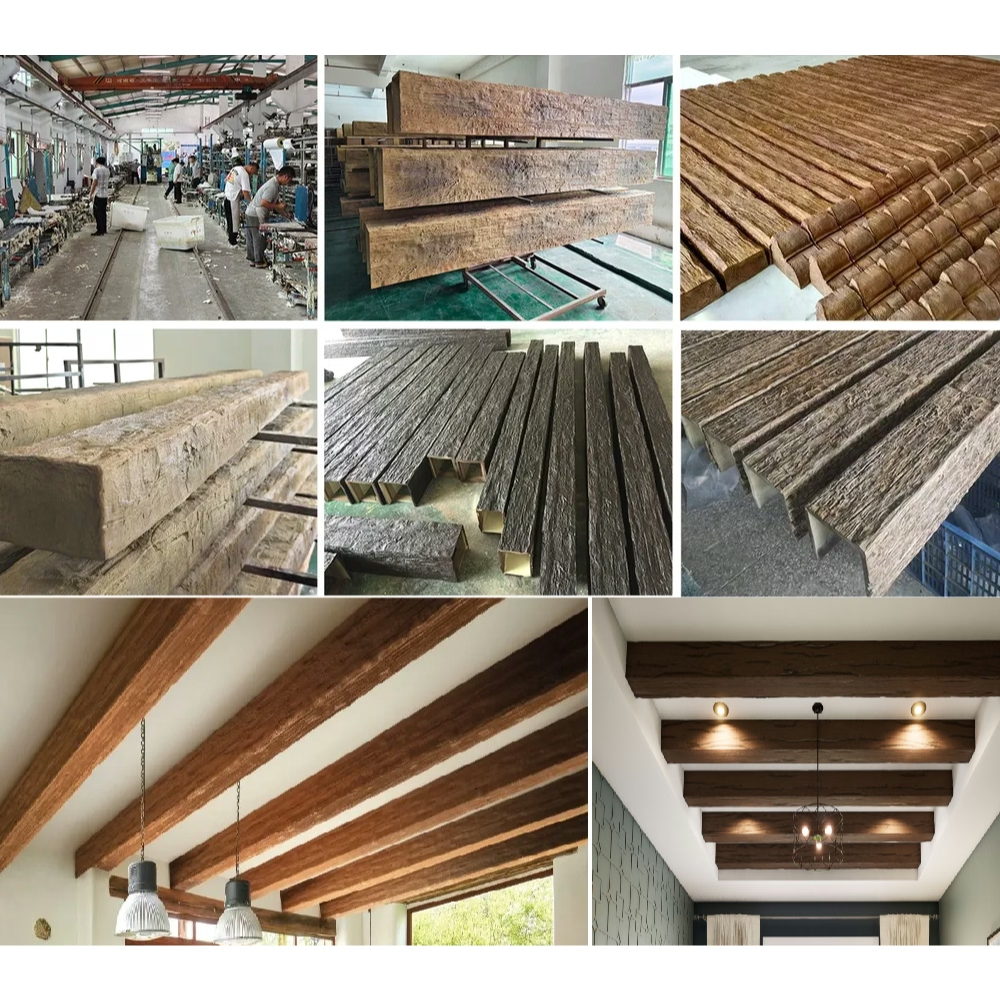
Specifications for Commercial Performance
Translating commercial-grade requirements into product specifications helps ensure selections perform as expected. Several key specifications differentiate products suitable for demanding commercial applications.
Impact resistance testing provides objective measures of how products handle physical contact. Look for products that meet or exceed impact resistance standards for architectural products. While specific test methods vary, higher performance numbers indicate better resistance to dents, scratches, and other physical damage.
Finish adhesion and durability specifications indicate how surface treatments will hold up over time. Cross-hatch adhesion tests, Taber abrasion testing, and similar evaluations provide data on finish performance. Products designed for commercial use should show excellent finish adhesion and minimal degradation under abrasion testing.
Fire performance becomes critical in commercial applications where building codes impose requirements. Many jurisdictions require architectural products in commercial buildings to meet specific flame spread and smoke development ratings. Commercial-grade beams should carry appropriate certifications that satisfy code requirements while maintaining aesthetic quality.
Working with Commercial Suppliers
Commercial projects benefit from supplier relationships that understand the unique requirements of professional installations. Look for suppliers with demonstrated experience in commercial applications, including the ability to provide reference projects that can be visited or reviewed.
Lead times and availability become more critical in commercial contexts where project schedules might involve penalties for delays. Suppliers with adequate inventory, production capacity, and logistics capability can respond to commercial timelines more effectively than those oriented toward residential project sizes.
Warranty and support provisions deserve careful attention in commercial contexts. A residential warranty that covers a few beams in a home has limited relevance when you're specifying hundreds of beams for a hotel or retail chain. Look for warranties that address commercial use patterns and support relationships that can respond if issues arise.
Total Cost of Ownership Analysis
Commercial project budgets require total cost of ownership analysis rather than simple initial price comparison. The initial cost difference between commercial-grade and standard products represents a small portion of the true cost over the product's service life.
Maintenance requirements affect ongoing operational costs. Products that require frequent cleaning, touch-up, or repair generate labor costs that compound over time. A beam that requires thirty minutes of maintenance annually costs $30-50 per year per beam at typical commercial cleaning rates. Over a ten-year period, this adds significantly to the true cost of ownership.
Replacement costs include not just the beam itself but also the labor to remove the old beam, potentially repair adjacent finishes, and install the replacement. In commercial spaces where business interruption has real costs, replacement creates impacts beyond the direct expense. Avoiding premature replacement through quality product selection represents a genuine cost savings.
Making the Grade
The designation "commercial grade" isn't a suggestion—it's a commitment to performance standards that ensure products meet the demands of professional applications. When you're specifying beams for any commercial project, from a small restaurant to a major hotel chain, insist on products that genuinely qualify.
The investment in commercial-grade beams pays for itself through reduced maintenance, extended service life, and spaces that consistently present the quality image the project requires. Your clients—property owners, brand managers, and the public who experience these spaces—will benefit from the thoughtfulness of your product selections.
Commercial spaces deserve commercial-grade solutions in every material selection, including decorative beams. When you choose products designed for the demands of professional use, you're building spaces that serve their purposes effectively while providing the aesthetic warmth that makes them welcoming to everyone who enters.
Technical References
ASTM standards cited in every specification
Test Data
Lab results from internal testing program
Updated 2026
Reviewed against current product specs