Large ceiling spaces present both opportunities and challenges for designers. The opportunity lies in dramatic visual impact—spaces with generous height and volume that can achieve effects impossible in standard-height rooms. The challenge lies in selecting and specifying architectural elements that scale appropriately, maintaining visual proportion while delivering the aesthetic contribution the design requires.
Decorative beams in large ceiling applications must accomplish more than their counterparts in standard spaces. They must define scale, create visual anchors, and provide the warmth that makes vast spaces feel intimate rather than cavernous. Meeting these requirements demands attention to both the visual characteristics of beams and their practical performance across long spans.
Understanding how long-span decorative polyurethane beams address these challenges helps designers achieve impressive results in grand spaces.

The Scale Challenge in Large Ceilings
Large ceiling spaces create visual challenges that smaller rooms never encounter. Proportion becomes critical—elements that seem appropriately scaled in standard spaces might disappear in rooms with 20-foot or 30-foot ceilings. The eye needs visual anchors to comprehend scale, and beams serve this function effectively when properly sized and detailed.
The relationship between beam size and ceiling height follows principles of visual proportion. As ceiling height increases, beam dimensions should increase correspondingly to maintain visual weight. A six-inch beam that looks substantial in an eight-foot room looks trivial in a twenty-foot space. Selecting beams sized for actual ceiling heights ensures the contribution designers intend.
Spacing affects proportion as much as size. Beams placed too closely create visual clutter; too far apart and the ceiling feels empty. Traditional design offers guidelines for spacing relative to beam size and ceiling height, but contemporary work often experiments with non-traditional proportions. The key is achieving balance that serves the overall design intent.
Visual Impact in Grand Spaces
The goal of decorative beams in large spaces is creating visual impact that justifies their presence. This impact comes from several sources that quality installations leverage effectively.
Scale itself creates impact when beams are sized appropriately for their surroundings. A beam that appears substantial and significant, rather than puny and inadequate, contributes positively to the space's character. The sense of weight and permanence that appropriately scaled beams provide affects how people experience the room emotionally.
Pattern and rhythm create additional impact through repetition and arrangement. Parallel beams crossing a large ceiling create rhythm that organizes the space. Crossing patterns, radial arrangements, or grid configurations establish different rhythms that affect spatial perception. The choice of pattern should serve the overall design intent while respecting the scale of the space.
Detail at large scale affects impact. Proportionally larger beams allow proportionally larger details—deeper shadows, more prominent textures, bolder profiles. These details contribute to the overall impression of a space, creating richness that simple, minimal treatments cannot achieve. Decorative beam profiles designed for large-scale applications make appropriate use of these opportunities.
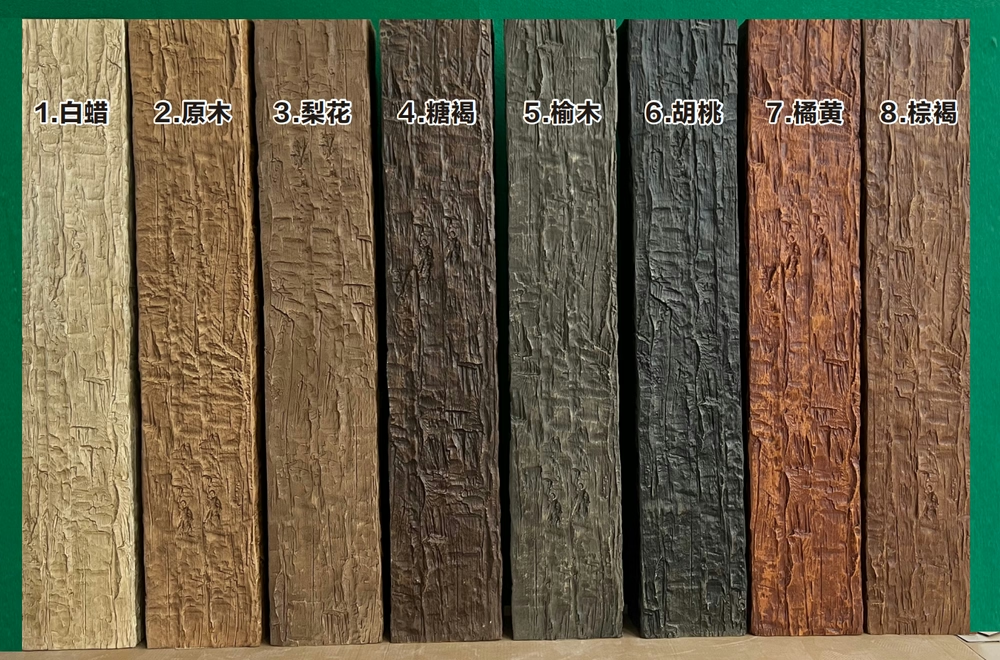
Structural Approaches for Long Spans
Achieving long spans with decorative beams requires attention to practical considerations that affect both appearance and performance. Understanding these approaches helps specify appropriate solutions.
Truly long beams present practical challenges regardless of material. Timber beams of significant length might require lamination or engineering to prevent warping; natural wood's inherent variability creates additional concerns. Polyurethane beams avoid these structural concerns but still require appropriate mounting to perform correctly.
Appearance of continuous long spans can be achieved through several approaches. Single-piece beams up to practical shipping and handling limits provide seamless appearance. Longer runs can achieve apparent continuity through careful splicing techniques, using internal reinforcement and detail matching to create invisible joints. The choice depends on span requirements, budget, and aesthetic preferences.
Support spacing affects both appearance and practical mounting. Beams might appear to float between wall points while actually mounting to structural elements at closer intervals. The mounting system design must balance structural requirements with visual intent, creating the appearance the design requires while meeting engineering requirements.

Profile Selection for Large-Scale Applications
Beam profile affects how successfully installations read at large scale. Some profiles suit grand spaces better than others, and understanding these relationships helps make appropriate selections.
Deep profiles with substantial visible thickness create more impressive visual impact than shallow ones. The shadow lines cast by deep beams add dimensionality that enhances the three-dimensional quality of the ceiling plane. At large scale, this shadow play becomes a significant design element rather than a subtle detail.
Wide faces provide additional surface area for texture and detail. Beams with substantial face width display wood grain patterns more prominently, creating the impression of genuine timber. The additional surface also provides room for more elaborate detailing in architectural applications.
Compound profiles with multiple elements—main beams plus secondary details, corbels, or decorative trim—work well at large scale. These compound elements read as designed complexity rather than excessive busyness because the scale provides room for the detail. The opportunity to incorporate these elements distinguishes quality large-scale beam installations.
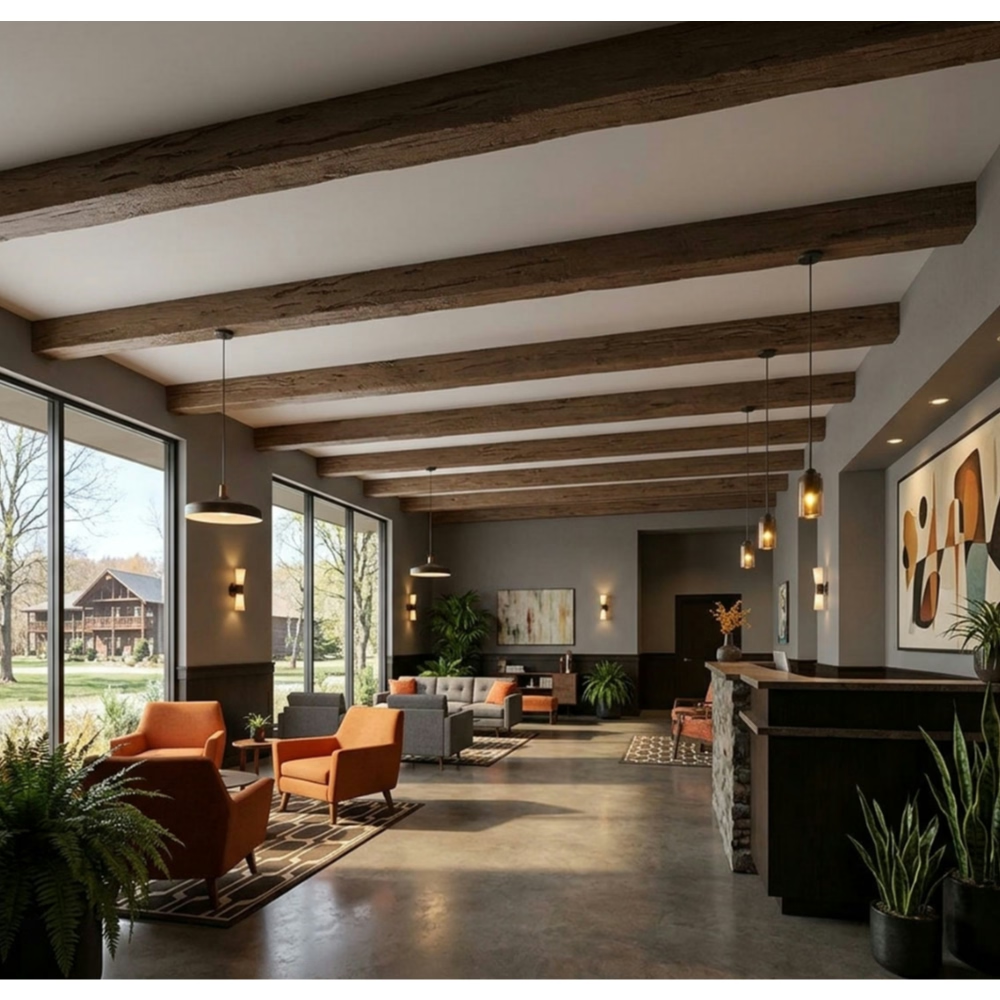
Mounting Systems for Extended Height
Installation at significant height requires mounting systems that ensure security while accommodating accessibility limitations. The mounting approach affects both initial installation quality and long-term performance.
Concealed mounting systems that hide structural connections contribute to authentic appearance. These systems use brackets, channels, or other hardware that remains invisible once beams are installed. The challenge is ensuring concealed systems provide adequate support and allow adjustment for alignment during installation.
Access considerations affect installation method selection. At significant heights, scaffolding or lifts might be required for installation and any future maintenance. Mounting systems that minimize future access requirements—through superior initial security and durability—reduce long-term operational concerns.
Wind load might affect exterior applications or buildings with significant air movement at ceiling height. Beams in these conditions might require additional fastening to resist uplift forces. Interior applications typically face no wind loads, but significant air pressure differences between floors might create unexpected forces.
Lighting Integration for Dramatic Effect
Large ceiling installations benefit enormously from thoughtful lighting integration. The interplay between beams and light creates effects that enhance both elements, transforming ceiling planes into focal points.
Uplighting directed at beam surfaces from below creates dramatic shadow patterns on ceiling planes above. This approach emphasizes beam depth and texture while creating visual interest in the previously plain ceiling surface. The effect can be stunning in formal spaces where evening events showcase the architecture.
Downlighting positioned between beams provides functional illumination while emphasizing beam placement. This approach integrates ambient and task lighting with architectural elements, reducing the visual clutter that separate light fixtures might create.
The color temperature and quality of light affects how beam surfaces appear. Warmer light temperatures enhance wood tones; cooler temperatures might make wood appear washed out. Lighting design should coordinate with beam finishes to achieve the intended atmosphere.
Coordinating Design Elements
Large ceiling beams must coordinate with other architectural elements to create cohesive spaces. This coordination requires attention to proportions, materials, and overall design language.
Other wood elements in the space—flooring, millwork, furniture—should relate to ceiling beams in terms of species appearance, color tone, and finish character. The ceiling and floor represent major opposing surfaces that either create harmony or compete for attention. Coordinated selection ensures the relationships work.
Architectural details at other scales—moldings, trim, hardware—should relate appropriately to beam scale. Large beams in a space with delicate trim create disproportion; substantial beams with similarly substantial details create coherence. The relationship between these scales affects the overall perception of the space.
Furniture and human-scale elements provide additional reference points. The relationship between beam scale and furniture scale affects how the room feels—beams that dwarf furniture create discomfort; beams that feel too small relative to furniture feel inadequate. Appropriate scaling creates balance that supports the intended atmosphere.
Achieving Grandeur Without Compromise
The goal of long-span decorative beam installations is achieving grandeur without compromise. Grand spaces should feel impressive, substantial, and memorable—but they should also feel right. The beauty of quality decorative beams lies in their ability to create this sense of appropriateness while delivering impressive visual impact.
Working with experienced professionals—architects who understand large-scale aesthetics, manufacturers who produce beams appropriate for the application, installers who have handled significant heights—helps ensure results that meet expectations. The coordination required for successful large-scale work rewards thoughtful collaboration.
When long-span decorative beams work successfully, they transform spaces completely. What might have been a cavernous void becomes a room with presence, warmth, and character. The investment in appropriate beam selection and installation pays dividends in spaces that serve their purposes beautifully for decades.
Technical References
ASTM standards cited in every specification
Test Data
Lab results from internal testing program
Updated 2026
Reviewed against current product specs


