The commercial millwork industry operates in a relationship-driven market where success depends significantly on the quality and reliability of supply partnerships. Millwork shops, custom woodworkers, and architectural woodwork firms depend on material suppliers who understand their needs, deliver reliably, and contribute to their competitive positioning. Building strategic partnerships—rather than mere transactional supplier relationships—creates advantages that pure market competition cannot provide.
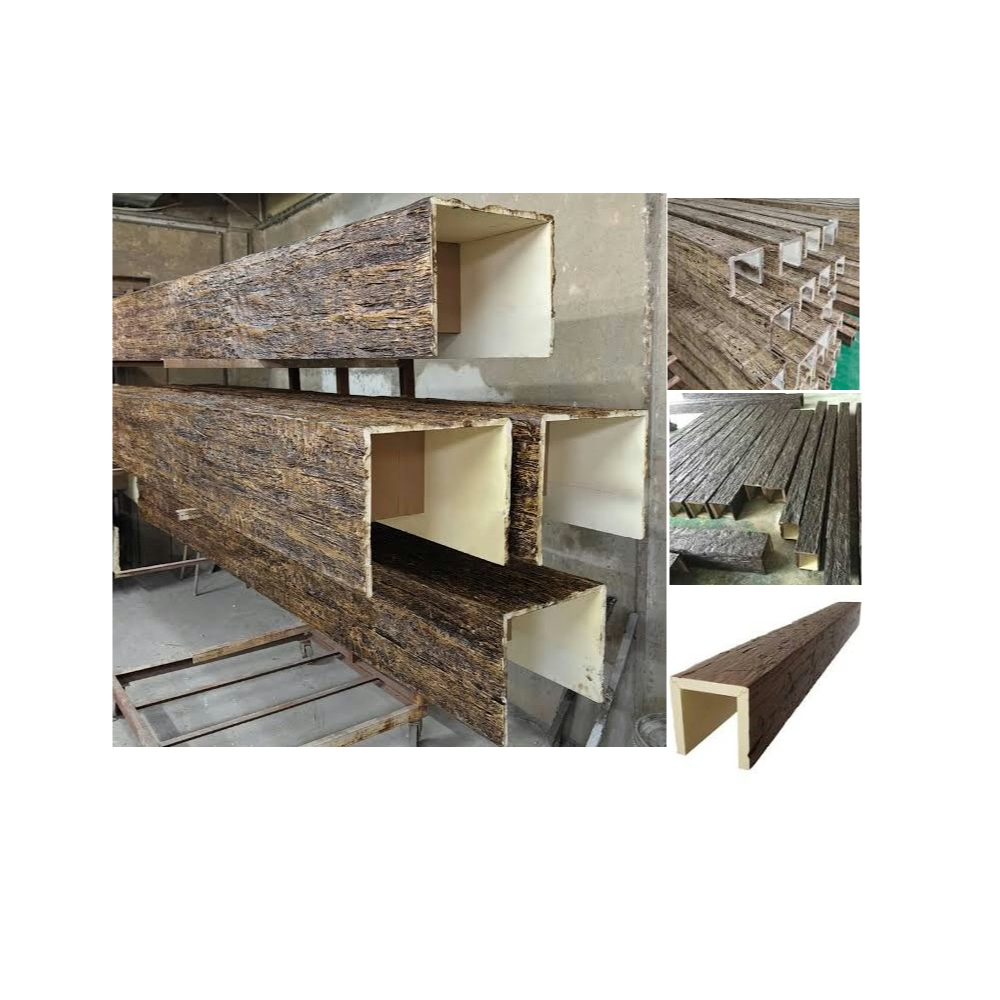
For polyurethane faux wood beam manufacturers, millwork suppliers represent not just customers but partners who translate manufactured products into installed architectural elements. The relationship between these parties shapes how well faux wood beams serve the built environment. Understanding how to structure and nurture strategic partnerships benefits everyone involved.

Understanding Millwork Market Dynamics
Commercial millwork suppliers operate in a distinctive business environment that shapes their supplier relationships. Understanding this environment helps beam manufacturers structure partnerships that serve millwork needs effectively.
Project-based demand creates variable purchasing patterns that challenge suppliers accustomed to consistent demand. Millwork shops bid projects, win contracts, and then need materials for specific installations during defined timeframes. This project-driven demand requires flexibility from suppliers who must scale production and delivery to project requirements.
Customization expectations mean that millwork suppliers often need modified or custom-specified products rather than standard catalog items. A project might require non-standard lengths, special finishes, or unique profiles that require manufacturing coordination. Suppliers who can accommodate these customization needs earn stronger partnerships than those rigidly offering only standard products.
Quality requirements in commercial millwork exceed typical residential expectations. The visibility of commercial installations, the scrutiny of architects and designers, and the professional standards of commercial construction all demand superior quality. Material suppliers must meet these elevated expectations consistently.
The Strategic Partnership Value Proposition
Strategic partnerships create value for both parties that transactional relationships cannot achieve. The value proposition differs between partners but centers on mutual benefit through collaboration.
For millwork suppliers, strategic partnerships provide reliable material supply, technical support, and competitive advantages that help win and serve projects. Partners who understand millwork needs and respond to them become invaluable resources that millwork shops depend on.
For beam manufacturers, strategic partnerships provide consistent demand, market access through established relationships, and collaborative product development that improves offerings. Millwork partners become channels through which manufacturers reach the commercial market effectively.
The mutual investment in partnership success creates alignment that benefits both parties. When partners succeed, the relationship deepens and the benefits expand. This positive dynamic distinguishes strategic relationships from arm's-length transactions.

Partnership Structure Options
Strategic partnerships between beam manufacturers and millwork suppliers can take various forms depending on the parties' needs, capabilities, and relationship goals. The appropriate structure depends on specific circumstances.
Preferred status arrangements designate specific suppliers as preferred for participating millwork shops. This status typically brings pricing benefits, priority fulfillment, and enhanced support. The commitment runs both ways—preferred suppliers receive volume commitments while preferred customers receive preferential treatment.
Exclusive territory arrangements grant millwork suppliers exclusive rights to specified territories or market segments. This exclusivity protects partners' investments in developing local markets while providing manufacturers with reliable distribution. The scope of exclusivity must balance partner protection with manufacturer flexibility.
Collaborative development partnerships engage millwork partners in product development activities. Partners provide input on product requirements, test new offerings, and help refine specifications. This collaboration produces products better suited to actual market needs while building partner investment in product success.
Benefits for Millwork Partners
Millwork suppliers who establish strategic partnerships with beam manufacturers gain advantages that support their competitive positioning and operational effectiveness.
Supply security through partnership guarantees access to materials that spot market availability cannot ensure. During supply constraints, partnership customers receive priority allocation that enables them to serve projects while competitors struggle with availability. This reliability becomes a competitive advantage in project bidding.
Technical support from manufacturing partners helps millwork shops address installation challenges, resolve technical questions, and develop expertise that benefits their projects. Manufacturers with strong technical support become resources that millwork partners rely on throughout project execution.
Marketing support through partnership programs helps millwork shops promote their capabilities. Manufacturers might provide product imagery, specification support, co-marketing programs, or referral networks that help partners reach potential customers. This support extends millwork marketing reach without requiring significant partner investment.

Benefits for Manufacturing Partners
Beam manufacturers who establish strategic partnerships with millwork suppliers gain market access, demand stability, and competitive advantages that support their business growth.
Channel relationships through millwork partners provide access to commercial markets without the expense of direct sales organizations. Millwork shops already serve the customers beam manufacturers want to reach; partnership enables manufacturers to benefit from these established relationships.
Demand forecasting through partnership relationships enables better production planning. Partners who commit to volume or share project pipelines provide manufacturers with insight into future demand that supports efficient operations. This forecasting accuracy reduces waste and improves customer service.
Market intelligence flows from millwork partners to manufacturing partners, providing insight into market needs, competitive activity, and product opportunities. This intelligence informs product development and marketing decisions that keep manufacturers competitive.
Building Effective Partnerships
Effective strategic partnerships require investment from both parties and attention to relationship health over time. Several practices support partnership success.
Clear communication ensures that both parties understand expectations, commitments, and performance standards. Ambiguity in partnership terms creates problems that damage relationships; clarity supports productive collaboration.
Regular engagement between partners maintains relationship health and enables course corrections before problems become serious. Quarterly business reviews, annual planning sessions, and ongoing communication between operational contacts all contribute to partnership vitality.
Mutual benefit orientation ensures that both parties see value in the relationship. Partnerships that favor one party over time become unstable as the disadvantaged party seeks alternatives. Sustainable partnerships distribute benefits appropriately and evolve as circumstances change.
Managing Partnership Challenges
Even strong partnerships face challenges that require attention and resolution. How partners address these challenges affects relationship longevity and value.
Demand fluctuations affect both parties and require flexibility from partnership arrangements. Partners should discuss volume variations openly and work collaboratively to address short-term fluctuations without damaging long-term relationships.
Quality issues occasionally arise despite manufacturing quality systems. Partnership agreements should address quality concerns constructively, focusing on resolution and prevention rather than blame. Partners who work together to address quality issues build stronger relationships than those who assign fault and demand remedies.
Market changes—economic conditions, competitive pressures, industry evolution—create challenges that partnerships should address together. Partners who view market challenges as shared problems find solutions that work for both parties better than adversarial approaches that might benefit one party at the other's expense.
Growing Partnership Value
The most valuable partnerships are those that grow over time, expanding benefits for both parties. Several approaches support partnership growth.
Joint business planning develops strategies that align partner capabilities with market opportunities. When both parties contribute to planning, the resulting strategies leverage both partners' strengths and address both partners' needs.
Product and service innovation through partnership collaboration produces offerings that neither party could develop alone. Manufacturing innovation combined with market insight creates products that serve market needs more effectively than either party working independently.
Market expansion through partnership enables growth that neither party could achieve alone. Manufacturers gain market access; millwork partners gain product breadth; end customers gain better solutions. This expansion creates value that all parties share.
Making Partnership Decisions
Millwork suppliers evaluating partnership opportunities with beam manufacturers should assess several factors that indicate partnership potential.
Manufacturer capabilities—production capacity, product quality, technical support, and reliability—determine whether partnership would provide meaningful value. Suppliers should evaluate manufacturers thoroughly before committing to partnership arrangements.
Relationship compatibility between partners affects partnership success significantly. Partners should share values around quality, service, and business conduct. Misaligned partners face ongoing friction that undermines partnership benefits.
Market alignment ensures that partnership serves both parties' market positions. Partnerships that create conflicts or overlaps might benefit neither party; partnerships that complement market positions create mutual advantage.
When these factors indicate strong partnership potential, engaging manufacturers in partnership discussions reveals the specific opportunities available. The best partnerships often emerge from exploratory conversations that identify mutual interests and develop into structured arrangements that formalize the relationship.
Technical References
ASTM standards cited in every specification
Test Data
Lab results from internal testing program
Updated 2026
Reviewed against current product specs


