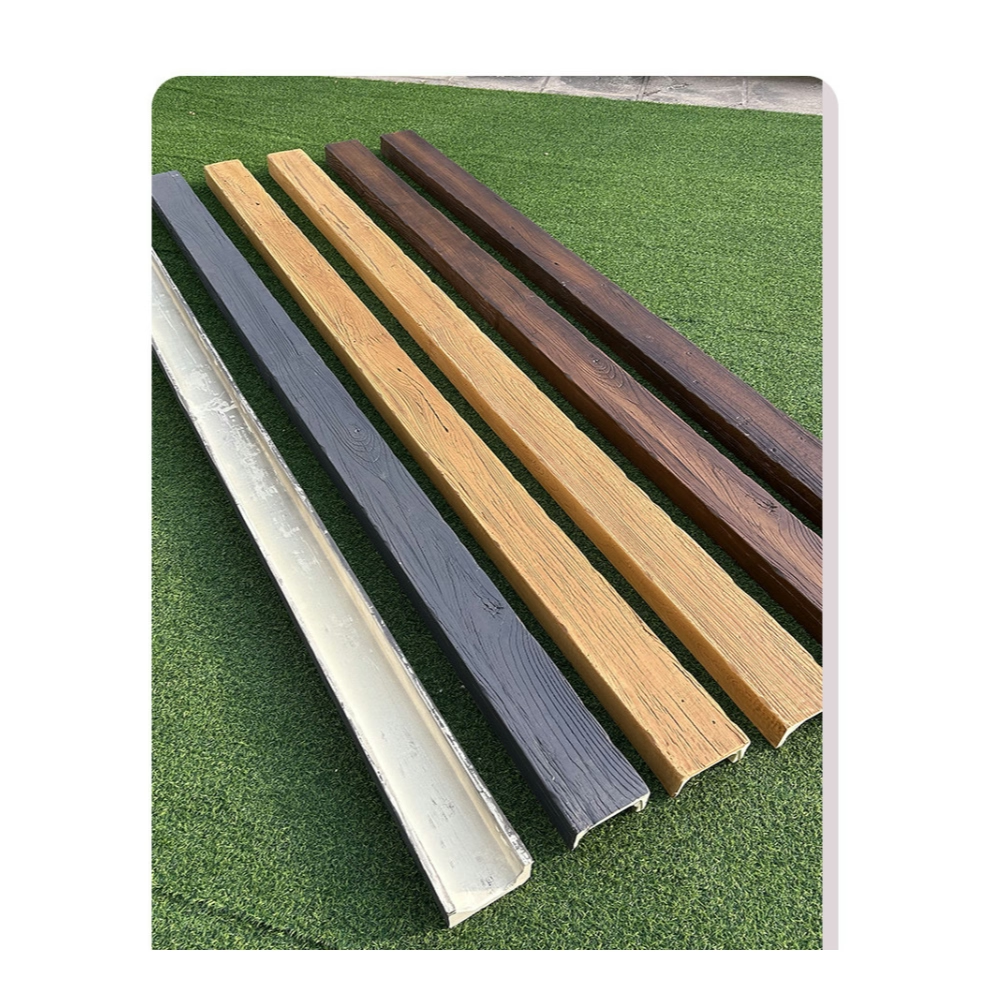
Before committing to a full ceiling beam order, every prudent buyer should validate their selection. What looks perfect in a catalog photograph might disappoint in actual room lighting. A profile that seems ideal in showroom samples might feel wrong when scaled to the actual ceiling dimensions. Installation methods that seem straightforward might reveal complications when attempted with the actual structure.
Sample ordering addresses these validation needs, but traditional minimum order quantities often make sampling impractical. A full beam order might start at fifty or a hundred pieces—far more than needed for genuine evaluation. This sampling barrier creates risk: projects proceed with unvalidated selections, leading to disappointment when installed products don't meet expectations.
Low minimum order quantity programs eliminate this barrier. By offering sample quantities of just a few beams, manufacturers enable thorough validation without inventory commitment. This flexibility benefits everyone—designers confirm selections confidently, contractors reduce project risk, and suppliers build relationships that lead to larger orders.
What Sample Orders Enable
Physical samples allow evaluation that photographs and specifications cannot provide. Color accuracy becomes verifiable under actual project lighting conditions rather than assumptions based on digital images. Texture depth and character can be assessed by touch. Weight and handling characteristics become known rather than imagined.
Profile and proportion validation requires seeing actual beams in context. Catalog images present beams in ideal lighting, often cropped to flattering angles. A beam that looks perfectly proportioned in a photograph might appear chunky or insubstantial when installed over an eight-foot ceiling. Samples let designers make these discoveries before committing to full orders.
Finish quality reveals itself through physical examination. Surface uniformity, edge detail, color consistency between pieces—these characteristics vary between manufacturers and even between production batches from the same manufacturer. Sample inspection identifies quality issues before they affect entire project installations.

Installation Compatibility Testing
Samples enable practical installation testing that specifications cannot address. Actual handling reveals how beams respond to cutting, drilling, and fastening. Mounting bracket compatibility with specific ceiling structures becomes verifiable. Joint fitting and alignment behavior can be confirmed against real architectural conditions.
Structural considerations also benefit from sample testing. Beams may need to accommodate existing conditions—electrical conduit, HVAC ductwork, light fixtures, ceiling irregularities. Physical samples reveal whether planned positions will work or whether interference problems will require redesign. Discovering these issues during sampling prevents expensive mid-project changes.
Weight and mounting requirements can be validated practically. While polyurethane beams are lighter than genuine timber, their specific weight affects mounting hardware selection. Samples let installers confirm that planned attachment methods will work, that support structures are adequate, and that installation procedures are correct before committing to full project execution.
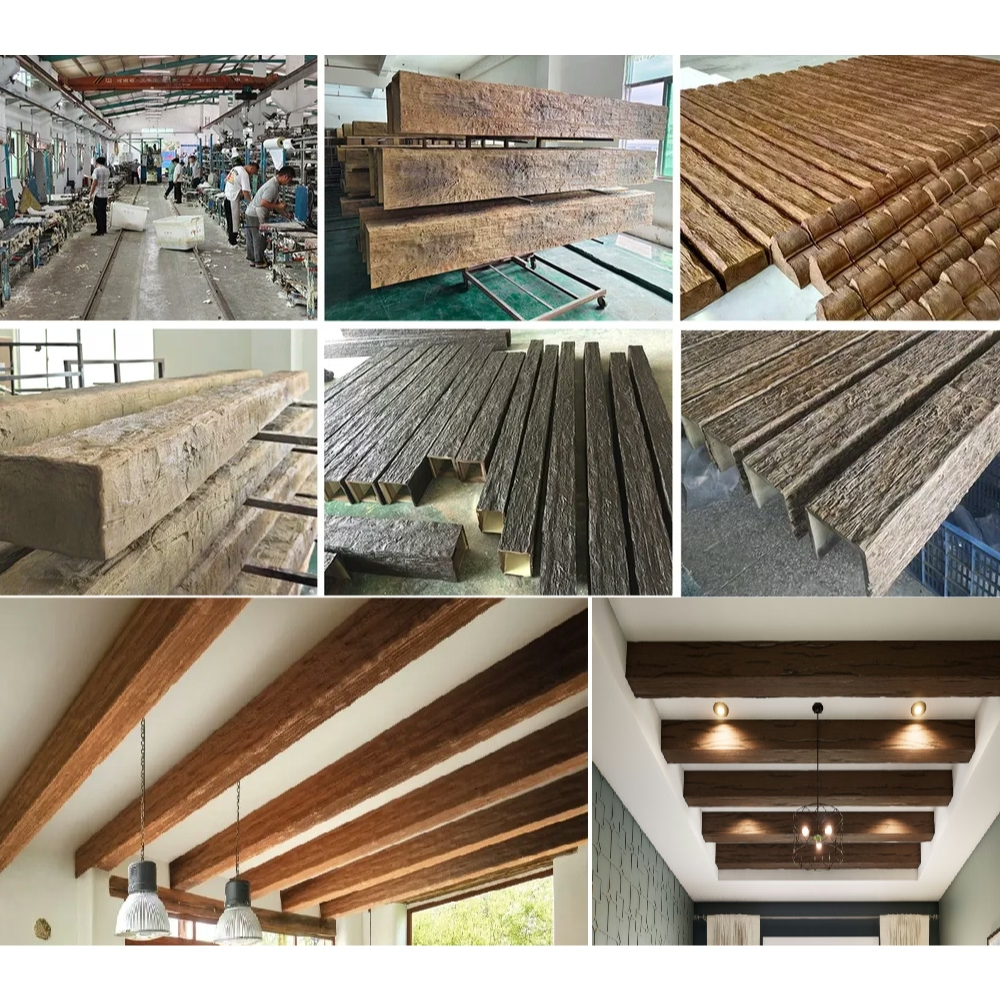
Quality Verification Processes
Sample evaluation should follow systematic processes that maximize the information gathered. Visual inspection under project lighting conditions provides the first validation. Compare samples against existing finishes, adjacent materials, and overall design intent. Note any discrepancies that might affect satisfaction with the final installation.
Physical testing reveals durability characteristics that affect long-term performance. Press firmly on surfaces to verify they resist denting adequately. Flex beams slightly to confirm structural integrity. Examine texture depth and edge definition for consistency. These observations predict how installed beams will perform over time.
Dimensional verification against specifications ensures that received products match what was ordered. Measure length, width, and depth precisely. Check squareness of cuts. Verify that mounting provisions align with intended hardware. Any deviation from specifications should be documented and discussed with the supplier before proceeding.
Working with Suppliers on Samples
Clear communication with suppliers improves sample order outcomes. Specify exact products, finishes, and quantities needed. Request shipping to the actual installation location when possible—evaluating beams in their destined environment provides the most accurate validation. Ask about lead times and any conditions attached to sample pricing.
Many manufacturers offer sample programs with varying terms. Some provide free samples with shipping charges. Others offer samples at nominal cost with credit toward subsequent orders. Some require sample purchases at standard pricing with no subsequent credit. Understanding these terms helps set appropriate expectations and budget for evaluation activities.
Technical support availability affects sample order value. Manufacturers who can answer questions about their products, recommend alternatives when samples reveal issues, and provide installation guidance add value beyond the physical products. This support proves particularly valuable when sample evaluation reveals that selected products won't work and alternatives need identification.

Sample-Driven Decision Confidence
Projects that incorporate sample validation consistently achieve better outcomes than those proceeding without physical evaluation. The small investment in sample orders prevents expensive problems—wrong colors, incompatible profiles, quality issues, or installation difficulties that would otherwise disrupt projects and damage relationships with clients or customers.
Design professionals report that sample evaluation often leads to specification changes. A sample that looked perfect in catalogs might seem too heavy, too light, too warm, or too cool when experienced in actual context. These discoveries, made during sampling rather than after full installation, enable adjustments that improve final project results.
Contractors similarly benefit from installation testing. The confidence gained from working with actual materials, in actual conditions, translates into accurate project bids, proper scheduling, and smooth execution. Problems that might otherwise surface during installation get addressed during the sample phase, when changes cost far less.
Technical References
ASTM standards cited in every specification
Test Data
Lab results from internal testing program
Updated 2026
Reviewed against current product specs