Property management professionals understand that every material choice carries long-term implications beyond initial installation costs. A ceiling treatment that looks stunning during the grand opening can become a liability if it demands constant attention, expensive repairs, or premature replacement. When evaluating options for commercial spaces, the operational demands of each material deserve as much scrutiny as its aesthetic qualities.
Faux wood beams constructed from polyurethane have emerged as a compelling option for commercial applications precisely because they eliminate the maintenance burdens that plague natural wood while delivering visual authenticity that satisfies design expectations. Understanding why requires examining both the inherent vulnerabilities of timber and the performance characteristics that make polyurethane an increasingly preferred alternative.
The Hidden Costs of Natural Wood in Commercial Environments
Natural wood beams carry romantic appeal that designers and property owners often find difficult to resist. The material warmth, unique grain patterns, and authentic character seem to justify the premium pricing that quality timber commands. Yet these aesthetic advantages come with operational realities that commercial properties struggle to accommodate.
Moisture represents wood's primary adversary in most commercial settings. Restaurants, health clubs, swimming facilities, and spaces with high humidity experience constant challenges keeping wood stable. Even sealed timber absorbs atmospheric moisture, causing expansion that stresses finishes and joints. Over time, this cycle produces checking, splitting, and delamination that demands ongoing remediation. Commercial kitchens face additional challenges from grease accumulation and cleaning chemicals that accelerate deterioration.
Temperature fluctuations create similar problems. Buildings where HVAC systems cycle frequently, or spaces adjacent to exterior walls, subject wood to dimensional stress that compounds over years of operation. The thermal expansion and contraction that occurs seasonally or even daily produces gaps, warping, and structural weakening that eventually necessitates replacement.
Insect activity presents risks that insurance and inspection requirements increasingly cannot ignore. Termites, carpenter ants, and wood-boring beetles can compromise beam integrity without immediately visible signs. Regular pest management adds to operational costs, while discoveries of active infestation trigger treatment requirements and sometimes mandatory repairs that disrupt business operations.
Polyurethane Performance Characteristics
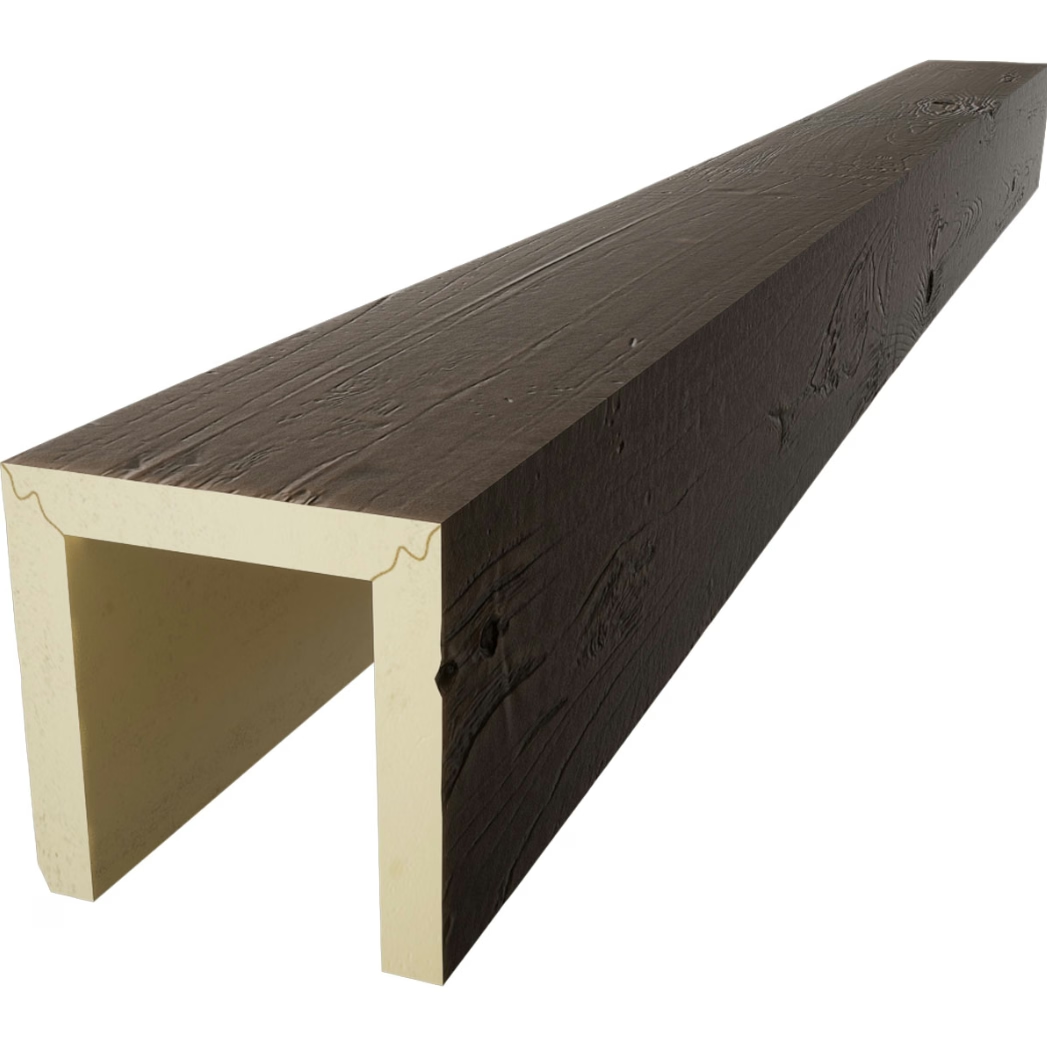
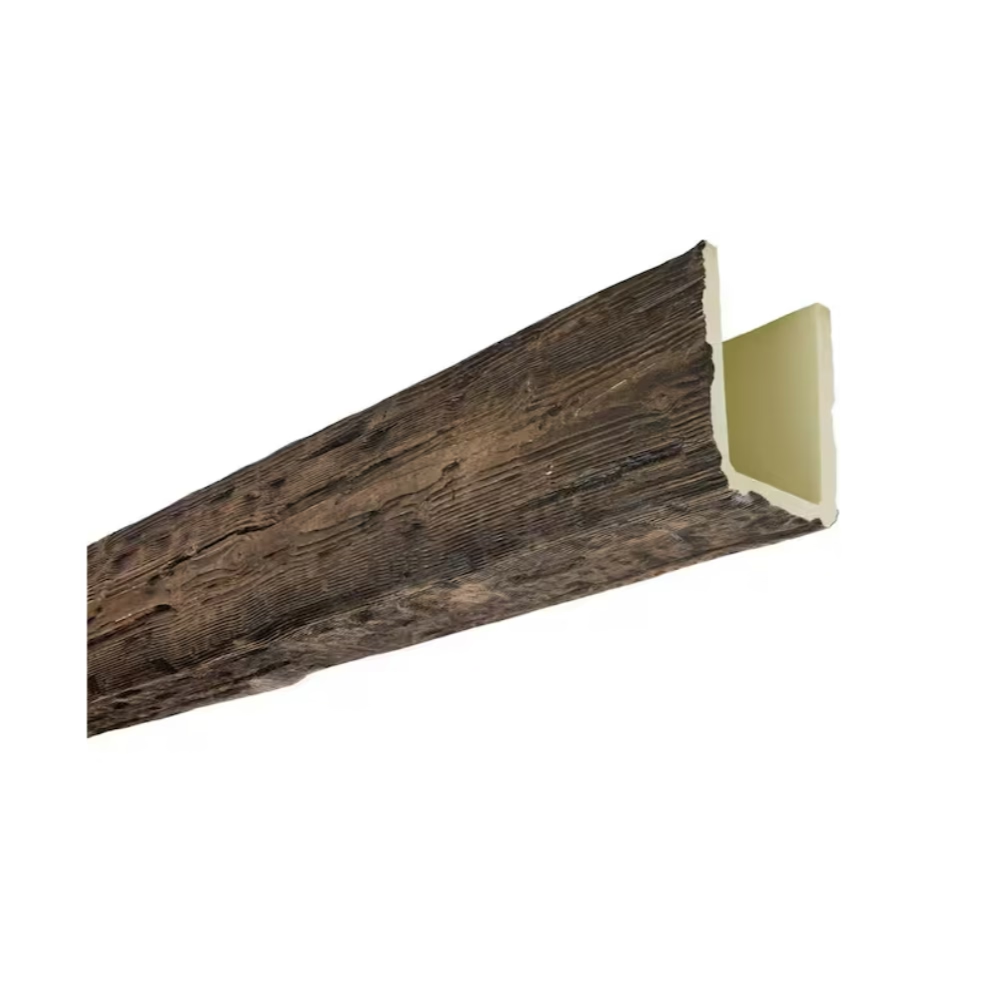
Polyurethane faux beams sidestep these challenges through material properties developed specifically to resist the conditions that damage natural wood. The closed-cell foam structure absorbs virtually no moisture, maintaining dimensional stability regardless of atmospheric humidity. Temperature changes produce no expansion or contraction effects, eliminating the cyclic stress that fatigues timber over time.
The material presents no nutritional value to insects, effectively immunizing installations against pest-related failures. This characteristic proves particularly valuable in regions where termite activity creates ongoing risk, and where building codes increasingly require documentation of termite-resistant materials in commercial construction.
Surface durability meets or exceeds natural wood in commercial applications. High-density polyurethane accepts factory-applied finishes that resist scratching, scuffing, and UV degradation. Unlike wood, which shows impacts as dents or gouges, polyurethane absorbs minor impacts without visible damage. The material does not splinter, crack, or chip under normal use conditions, maintaining appearance through years of traffic and cleaning.
Cleaning requirements simplify dramatically with polyurethane. Grease, dust, and common contaminants wipe clean with mild detergent solutions. Harsh chemicals that damage natural wood finishes rarely affect polyurethane surfaces, enabling the aggressive cleaning protocols that commercial spaces demand. This chemical resistance proves especially valuable in food service environments where health codes require frequent sanitation.
Application Categories and Selection Criteria
Different commercial categories present distinct requirements that influence beam specification. Understanding these category-specific needs guides selection toward products and configurations that perform optimally in each application.
Hospitality venues prioritize aesthetic impact and durability in equal measure. Hotel lobbies, restaurants, and entertainment spaces see variable traffic patterns and must maintain appearance through peak periods and overnight cleaning cycles. Beam installations in these spaces benefit from factory-finished products that arrive with factory-warranted durability, reducing on-site quality control requirements and ensuring consistent appearance across large installations.
Retail environments face different challenges centered on lighting interaction and visual merchandising coordination. Beams in retail spaces must complement merchandise presentation without competing for attention. The color consistency of polyurethane eliminates the variation that occurs in natural wood batches, ensuring that replacement sections match original installations precisely. This consistency matters when stores undergo remodel or expansion years after initial construction.
Office buildings and professional spaces typically prioritize understated elegance over dramatic statement. Beams in these applications often appear in reception areas, conference rooms, and executive suites where refined appearance supports brand positioning. The dimensional consistency of polyurethane simplifies installation in these environments, where architectural precision signals organizational professionalism.
Educational and healthcare facilities face stringent cleaning and sanitation requirements that polyurethane addresses effectively. The material's resistance to moisture and chemicals enables the aggressive protocols that these environments mandate without compromising appearance or requiring protective treatments that natural wood would require.
Installation Approaches for Commercial Projects
Commercial installation requirements differ from residential applications in several important ways. Code compliance, fire ratings, and warranty provisions all influence acceptable installation methods, making professional specification essential for projects requiring permitting and inspection.
Structural attachment specifications often appear in commercial building codes, particularly for installations in public assembly spaces. While polyurethane beams weigh substantially less than equivalent timber products, code requirements may mandate mechanical fastening regardless of adhesive capability. Understanding these requirements before material selection prevents costly redesigns or substitution compromises during construction.
Fire performance represents another critical consideration for commercial applications. Polyurethane foam is inherently flammable, which creates challenges for spaces subject to fire codes. Manufacturers address this through flame-retardant formulations that achieve varying degrees of fire resistance. Product listings, test reports, and code evaluation reports document the fire performance characteristics that building officials review during permitting. Spaces with strict fire requirements may need specifically rated products or alternative materials.
Acoustic performance occasionally influences specification decisions in commercial environments. Natural wood provides some sound absorption that reduces echo and reverberation in large spaces. Polyurethane beams, being denser and smoother, offer less acoustic benefit. In spaces where sound management proves critical, complementary acoustic treatments may be necessary regardless of beam selection.
Lifecycle Cost Analysis
Sophisticated property managers evaluate material decisions through lifecycle cost analysis that accounts for all expenses incurred over the expected service life. This approach reveals the true economics of maintenance-intensive versus maintenance-free materials, often favoring polyurethane despite higher initial costs.
Initial acquisition and installation costs favor natural wood in some applications, particularly for smaller projects where polyurethane's tooling costs spread across limited units. However, this initial advantage diminishes as project scale increases and the complexity of wood installation (including finishing, sealing, and handling of heavy material) adds to labor costs.
Ongoing maintenance costs tell a different story. Natural wood requires regular inspection, cleaning, refinishing, and occasional repair thatPU products simply do not need. A wood beam installation might require professional attention every three to five years, with costs that accumulate substantially over a twenty-year service life. Polyurethane installations typically need nothing beyond routine cleaning, reducing maintenance budgets for other building needs.
Replacement costs eventually favor polyurethane as well. Wood beams that fail from moisture damage, insect activity, or simple wear typically require complete removal and replacement, with associated labor costs that approach original installation expense. Polyurethane rarely requires replacement due to material failure, though physical damage from extraordinary events might necessitate section repair.
Insurance and liability considerations also influence the analysis. Properties with reduced fire risk and eliminated pest exposure present lower insurance profiles that translate to premium savings. While difficult to quantify precisely, these savings compound over time and contribute to the overall economic case for maintenance-free materials.
Long-Term Appearance Retention
Beyond financial considerations, commercial properties must maintain aesthetic appeal to support their brand positioning and market value. A tired, worn appearance undermines customer perception and can accelerate facility obsolescence, making appearance retention a legitimate business concern.
Polyurethane beams maintain original appearance through their service life without the refinishing cycles that natural wood requires. UV-stable finishes resist the yellowing and chalking that plague painted wood, while stain finishes maintain color depth that natural wood gradually loses. This appearance stability proves particularly valuable in spaces where renovation cycles extend beyond typical timeframes, as the installed beams continue looking fresh long after other finishes begin showing their age.
The consistency of factory finishing also contributes to long-term appearance. On-site finishing, even when professionally executed, introduces variables that affect durability and appearance. Spray equipment calibration, environmental conditions, and applicator technique all influence results. Factory finishing eliminates these variables, producing consistent coverage and durability that on-site application rarely matches.
For commercial properties where appearance directly impacts business performance, the maintenance advantages of polyurethane faux beams translate directly to sustained customer experience and maintained property values. The initial premium for these products pays dividends through years of trouble-free service that natural wood simply cannot provide.
Technical References
ASTM standards cited in every specification
Test Data
Lab results from internal testing program
Updated 2026
Reviewed against current product specs


