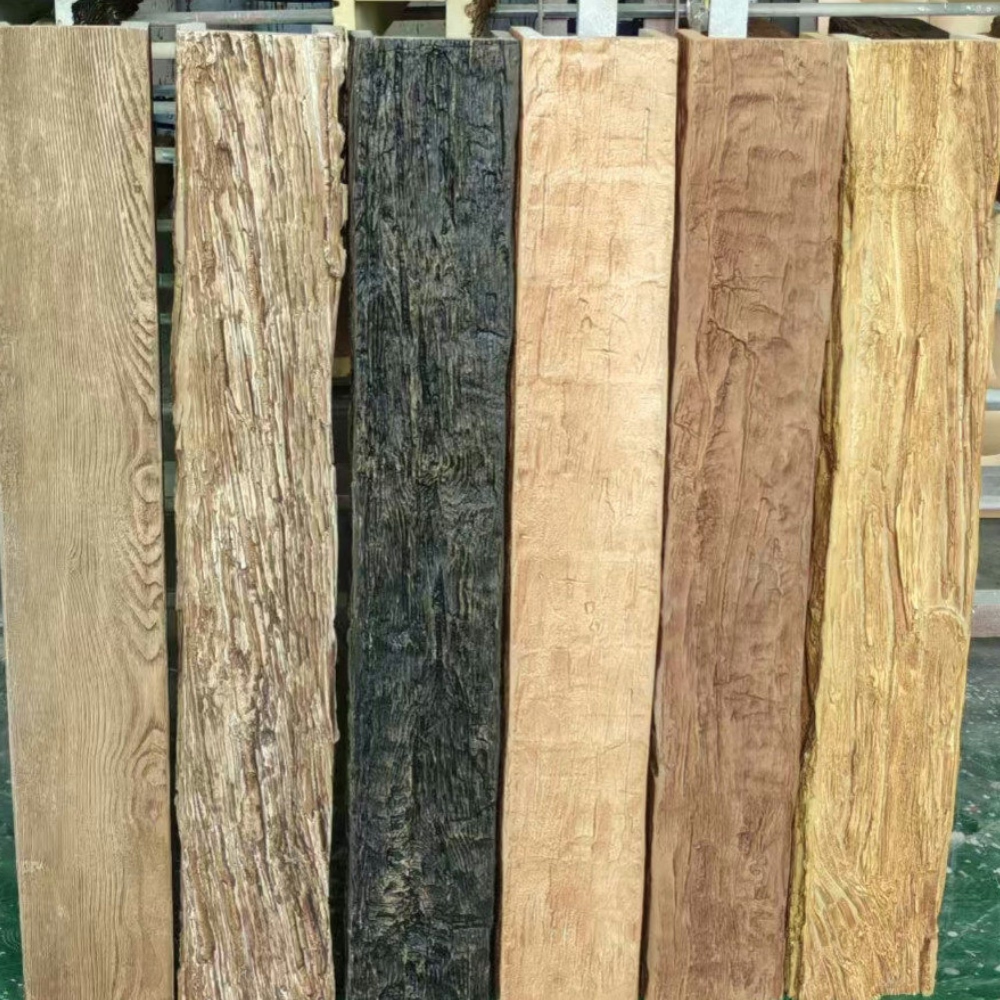
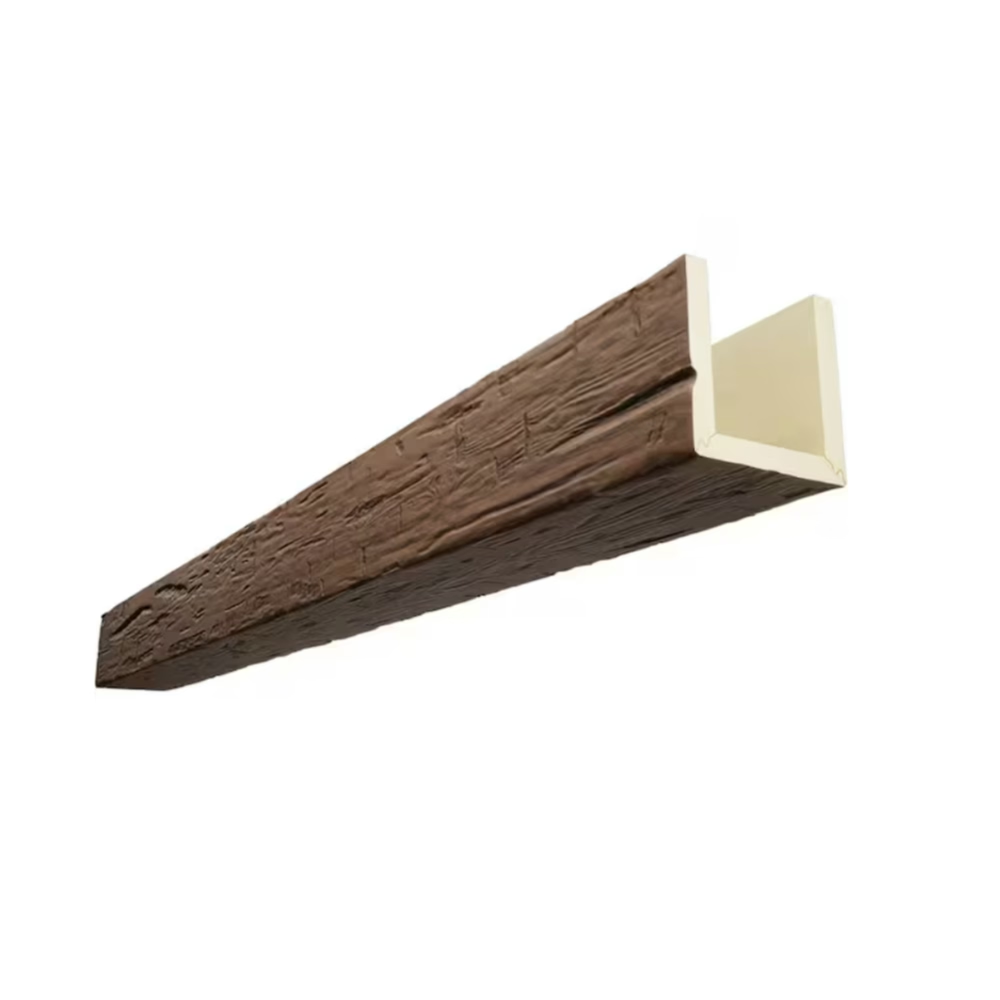
Mahogany occupies a unique position in the hierarchy of fine woods. From the writing desks of eighteenth-century authors to the paneled libraries of prestigious institutions, this species has adorned the spaces where significant work occurs and important decisions get made. Its rich reddish-brown color, interlocked grain patterns, and remarkable durability have made it the preferred material for furniture and interiors that aspired to permanence and refinement.
Antique mahogany specifically refers to wood that has aged naturally over decades or centuries, developing the deep, harmonized tones that only time produces. New mahogany furniture may display the same basic color range, but lacks the nuanced warmth that decades of light exposure create. The distinction matters to those who can perceive it, making antique finishes a premium category that commands substantial prices.
Replicating antique mahogany in polyurethane enables ceiling beam installations that would otherwise prove impractical or impossibly expensive. The foam substrate accepts finishing treatments that produce convincing reproductions of aged mahogany appearance, while providing practical performance that natural wood cannot match. This combination of aesthetic fidelity and practical advantage has made antique mahogany faux beams increasingly popular in high-end residential and commercial applications.
The Character of Antique Mahogany
Understanding what distinguishes antique mahogany requires examining both the wood's inherent qualities and the transformation that aging provides. These characteristics inform the reproduction process that produces convincing faux alternatives.
Freshly milled mahogany displays reddish-brown tones that range from pale pink in light samples to deep brick red in the most saturated pieces. This color base provides the foundation that aging transforms. The species' characteristic interlocked grain produces the subtle ribbon figuring that distinguishes it from similar species, creating visual interest that casual observation might miss but that contributes to overall perceived quality.
Natural aging deepens and harmonizes mahogany's color in ways that accelerated finishing cannot fully replicate. Decades of light exposure drive chemical changes in the wood surface, producing richer tones that approach chocolate in the deepest samples. Simultaneously, variation between pieces moderates, creating more uniform overall appearance. The result is wood that feels established and complete rather than new and potentially raw.
Surface patina develops through handling and cleaning over the wood's service life. Antique pieces often exhibit wear patterns that reveal their use history—subtle smoothing where hands repeatedly touched surfaces, slight dimpling where moisture accumulated, gentle luster where polishing occurred. These marks of age contribute to authenticity that pristine reproductions cannot achieve.
Reproduction Through Modern Technology
Manufacturing techniques have advanced substantially in their ability to capture antique mahogany's character in polyurethane substrates. Understanding these techniques explains how faux beams achieve convincing appearance.
Surface texture reproduction begins the process by capturing authentic wood grain with precision. Craftspeople select antique mahogany samples that exemplify the characteristics that specifiers value—interlocked grain, distinctive figure, appropriate texture. Mold-making preserves these details down to the microscopic level, ensuring that reproductions include every identifying feature.
Color development in finishing stages builds on the textured surface to create authentic appearance. Multiple staining applications create the depth that genuine mahogany exhibits, with color penetrating differently in grain valleys versus surface peaks. The reddish-brown base receives tonal adjustments that suggest the warming that aging provides, producing finishes that read as aged rather than merely colored.
Aging treatments accelerate what nature accomplishes slowly. Controlled UV exposure, chemical treatments, and thermal processes produce some of the tonal changes that decades would provide naturally. While no artificial treatment fully replicates natural aging, these techniques narrow the gap substantially, producing results that satisfy all but the most discriminating observers.
Finish application completes the process with protective coatings that enhance appearance while providing durability. The combination of authentic texture, convincing color, and appropriate surface sheen produces beams that even experts might mistake for genuine antique mahogany upon casual observation.
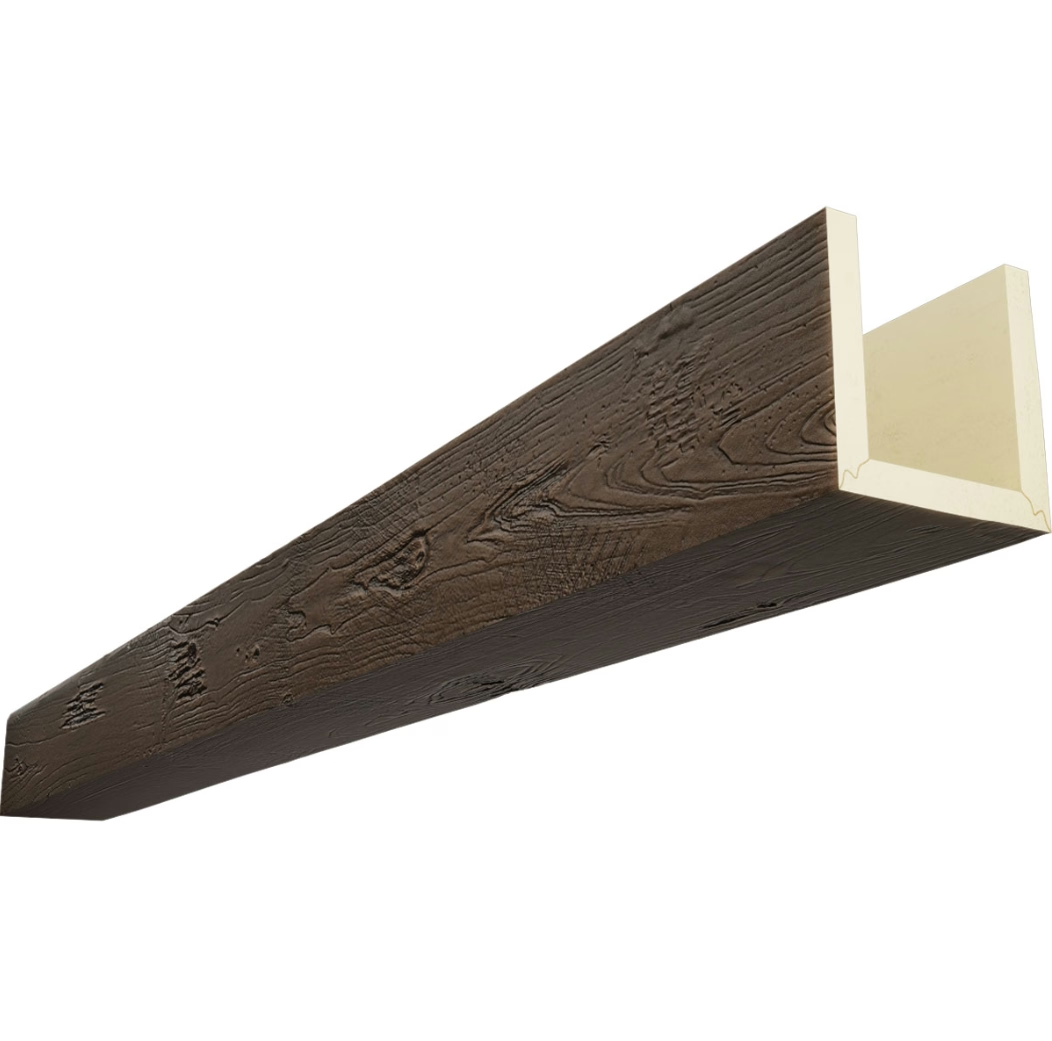
High-End Space Applications
Antique mahogany faux beams serve various high-end applications where their rich character enhances overall design quality. The species' formality and refinement limit its appropriate applications but make it ideal for those spaces.
Studies and libraries represent mahogany's traditional domain, where the wood's serious character supports focused work and contemplation. Ceiling beams finished in antique mahogany reinforce these associations, creating environments that feel appropriate for serious intellectual activity. Combined with bookshelves, leather furniture, and brass lighting, these installations complete the traditional library aesthetic that many homeowners desire.
Formal dining rooms benefit from mahogany's capacity to establish refined atmosphere. The warmth that mahogany provides creates intimacy appropriate for shared meals, while its sophistication elevates the dining experience above everyday eating. Beams overhead reinforce this refinement, adding architectural interest that supports the room's formal character.
Executive offices and professional suites can incorporate antique mahogany beams to communicate success and stability. The wood's historical associations with power and permanence translate to business contexts where such associations matter. Reception areas, conference rooms, and private offices all accommodate mahogany's dignified presence.
Coordination with Complementary Materials
Successful mahogany beam installations coordinate with surrounding materials in ways that create unified, intentional design. Several coordination principles guide this integration.
Leather materials complement mahogany's warmth exceptionally well. The combination has characterized formal interiors for centuries, creating associations that modern applications can leverage. Leather-upholstered furniture, leather-bound books, and leather accessories all enhance mahogany's presence while benefiting from its warmth.
Brass and other warm metals provide hardware and lighting material that integrates with mahogany aesthetics. The reddish-gold tones of brass harmonize with mahogany's color range, creating combinations that feel unified rather than discordant. Alternative metals—chrome, nickel, black iron—can work but require more careful coordination to prevent jarring contrasts.
Stone materials in warm tones—limestone, travertine, certain granites—complement mahogany's organic character. The contrast between wood's warmth and stone's cool solidity creates visual interest while maintaining overall harmony. Cold gray stones tend to conflict with mahogany's warm palette, requiring either mahogany selection with less warmth or alternative material choices.
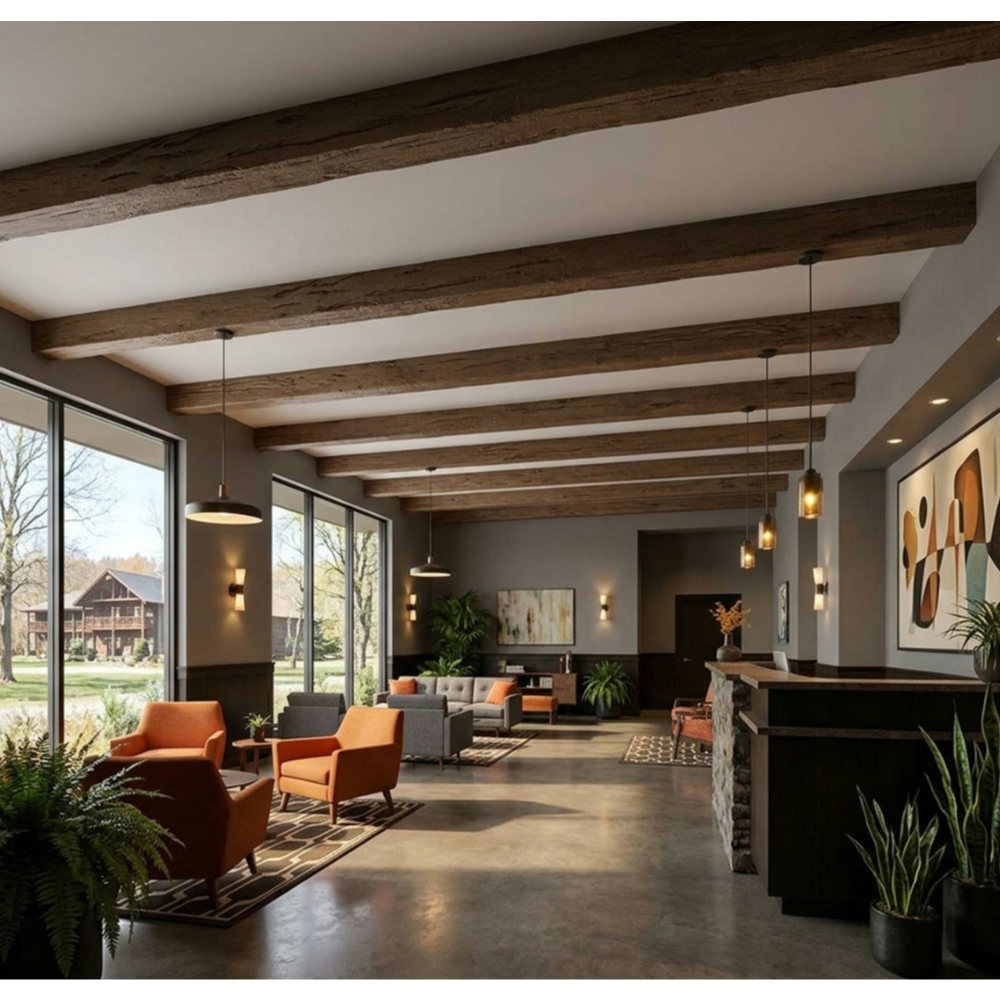
Scale Considerations for Formal Spaces
Formal spaces typically accommodate larger, more dramatic beam installations than casual rooms require. Understanding appropriate scaling helps ensure that installations achieve their intended impact without overwhelming their settings.
Ceiling height provides the primary determinant for beam sizing. Formal spaces typically feature higher ceilings than casual rooms, providing more room for substantial beams. A twelve-inch beam that would overwhelm a standard eight-foot ceiling often proves appropriate for a ten or twelve-foot ceiling in formal rooms.
Room proportions influence the rhythm that beam installations establish. Wide rooms can accommodate widely spaced beams that cross the space dramatically. Narrower rooms may require closer spacing or smaller beams to prevent overwhelming proportions. The goal is creating balance where beams enhance the space rather than dominating it.
The relationship between beam size and room volume should create appropriate visual weight. Large rooms with high ceilings can support substantial beams that provide significant visual mass. Smaller formal rooms—intimate dining spaces, private studies—require more restrained sizing that preserves the formal character without creating oppressive atmosphere.
Practical Advantages for Discriminating Owners
Beyond aesthetic considerations, antique mahogany faux beams offer practical advantages that discerning owners appreciate. These advantages affect ownership experience in ways that influence overall satisfaction.
Weight reduction compared to genuine mahogany proves substantial. Natural mahogany beams of comparable size might weigh three to four times their faux equivalents, requiring structural accommodations that increase installation complexity and cost. Faux beams mount with standard techniques that require no structural modification in most applications.
Maintenance requirements drop dramatically with polyurethane construction. No periodic refinishing, no moisture management, no insect prevention—the practical burdens that natural mahogany imposes simply disappear. Owners appreciate the beauty without accepting the ongoing responsibilities that genuine wood would require.
Consistency across large installations ensures that all beams match, something impossible with natural mahogany where each piece exhibits unique variation. This consistency proves particularly valuable in commercial applications or large residential installations where visual unity matters. Replacement beams match original installations perfectly, eliminating the variation that would occur with timber replacement.
Antique mahogany faux beams represent an evolved approach to luxury ceiling treatment that serves contemporary needs without sacrificing the character that has made mahogany desirable for centuries. For high-end spaces where mahogany's rich warmth belongs but where practical considerations limit natural wood's appropriateness, these products deliver genuine luxury.
Technical References
ASTM standards cited in every specification
Test Data
Lab results from internal testing program
Updated 2026
Reviewed against current product specs