Villa architecture evokes images of Mediterranean splendor, Tuscan warmth, and the gracious proportions that characterized great country houses throughout history. These structures typically feature ceiling heights that permit architectural treatments impossible in standard residential construction—vaulted spaces, generous spans, and volume that creates genuine grandeur rather than mere size. The challenge lies in completing these grand volumes with details worthy of their scale.
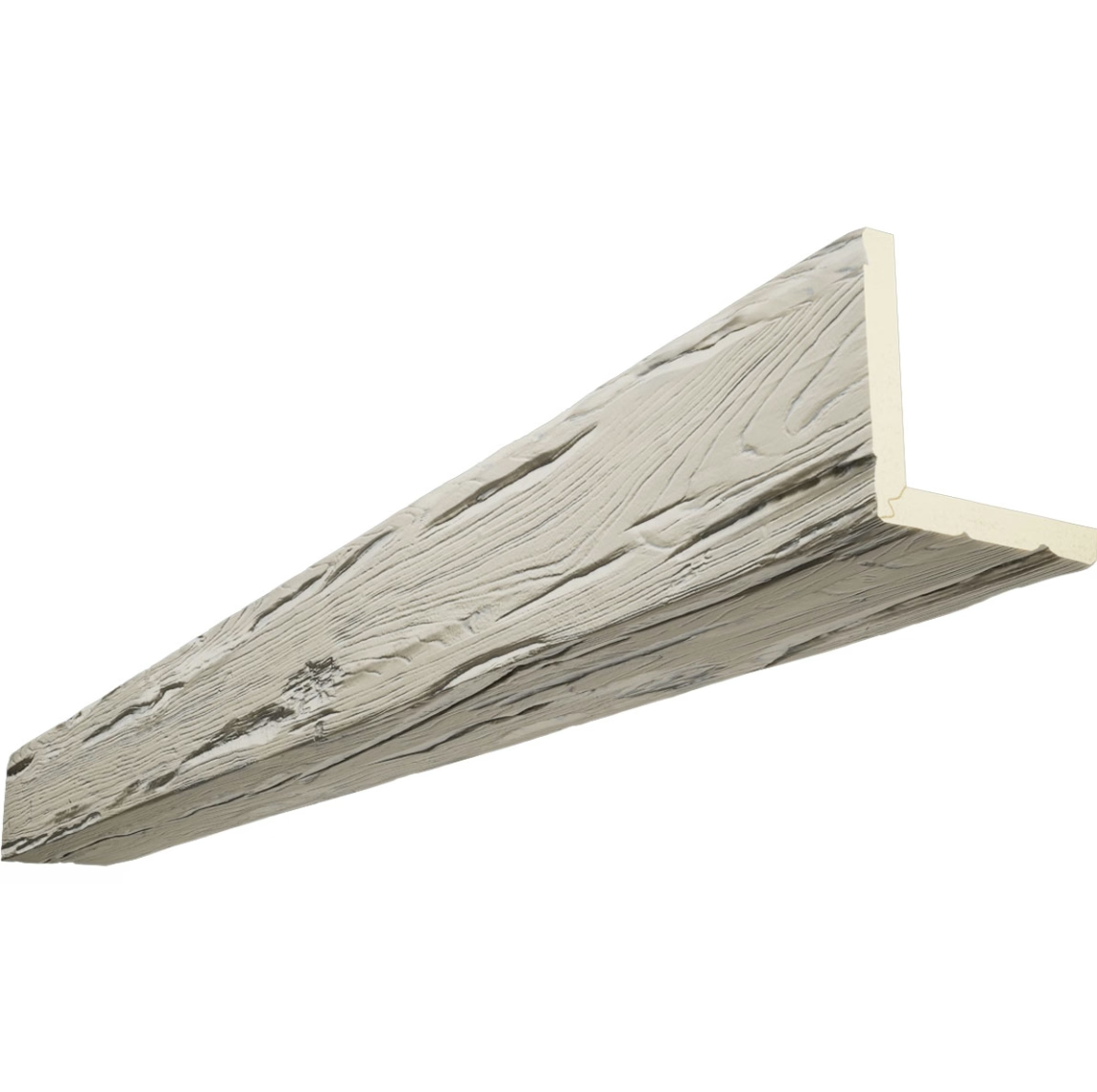
Faux decorative beams have emerged as essential tools for achieving villa ceiling designs that fulfill their spatial promise. These products bring the warmth and character of timber to contemporary interpretations of classical forms, enabling ceiling treatments that would prove impractical or impossible with genuine timber. Understanding how designers deploy these elements helps aspiring villa builders and renovators envision what becomes possible.
The Villa Ceiling Opportunity
Villa interiors present ceiling design opportunities that standard homes simply cannot accommodate. The spatial volumes that define villa architecture create canvases for architectural expression that modest ceiling heights would overwhelm. Treating these spaces appropriately requires understanding both their potential and the approaches that have historically succeeded.
Great ceilings have historically communicated the aspirations of their builders. Baroque churches used elaborate painted ceilings to suggest heavenly realms above mortal congregants. Renaissance palaces featured coffered ceilings that referenced ancient Roman precedents and signaled the learning of their owners. American Beaux-Arts mansions included ornamental plasterwork that proclaimed the wealth and taste of their commissioners. In each case, the ceiling treatment expressed cultural values through architectural language.
Contemporary villa construction can learn from these precedents while adapting their lessons to modern sensibilities. The goal need not be historical reproduction but rather creating spaces that feel appropriately grand for their intended purpose. Faux decorative beams contribute to this goal by adding texture, pattern, and the warmth of wood tones to ceiling volumes that might otherwise feel austere.
Beam Configurations for Grand Spaces
Different beam configurations create distinct spatial effects that villa designs can leverage. Understanding these effects guides configuration selection that serves overall design intent.
Single dominant beams create focal points that organize expansive spaces. A substantial beam crossing the center of a grand living room establishes a reference line that other elements align to. The beam's presence creates visual anchor in spaces where bare ceiling might feel overwhelming, providing the architectural detail that makes grand scale feel intentional rather than merely large.
Grid patterns establish rhythm across large ceiling planes. Crossing beams at regular intervals divide expansive ceilings into panels that relate to human scale despite their overall dimensions. This approach works particularly well in rectangular rooms where the grid reinforces architectural geometry. The resulting ceiling reads as designed rather than empty, with the beam pattern providing visual interest throughout.
Radial configurations suit circular or octagonal spaces that classical villa architecture often features. Beams radiating from a central decorative element create perspectives that draw occupants toward the center, establishing hierarchy that the architecture can develop around. This approach requires more complex installation but produces results that justify the additional effort.

Material Pairings That Enhance Luxury
Faux decorative beams coordinate with other materials in ways that either reinforce or contrast their wooden warmth. Successful villa designs typically establish clear relationships between materials that create unified aesthetic statements.
Stone complements wood with the permanence and solidity that classical architecture values. The contrast between warm wood tones and cool stone surfaces creates visual interest while suggesting the natural world in its various forms. Fireplace surrounds in stone gain additional presence when beams above introduce wood's organic warmth. Flooring and wall surfaces in stone establish foundations that beams overhead complete.
Plaster provides smooth surfaces that beams can contrast against effectively. The seamless, refined character of plaster ceilings or walls establishes quiet backgrounds that allow beam textures to command attention. This approach proves particularly effective in contemporary interpretations of villa forms, where clean surfaces set against warm timber create the layered interest that modern taste appreciates.
Metal accents in brass, bronze, or antique-finished hardware coordinate with beam warmth through shared metallic qualities. Light fixtures, hardware, and decorative elements in these materials reinforce the traditional elegance that villa interiors typically pursue. The combination has characterized sophisticated interiors for centuries, providing precedents that contemporary applications can reference.
Scale Relationships in Grand Rooms
Achieving appropriate scale relationships ensures that ceiling treatments enhance rather than overwhelm their settings. Several principles guide successful scaling in villa applications.
Ceiling height provides the fundamental reference for beam sizing. The taller the ceiling, the larger beams can become without creating oppressive atmosphere. Villa ceilings often reach ten, twelve, or even higher dimensions, permitting beam sizes that would overwhelm standard eight-foot ceilings. These generous proportions enable treatment choices that would be impossible in more modest construction.
Room width influences the rhythm that beam spacing establishes. Wide rooms can accommodate wider beam spacing, with individual beams serving as substantial design elements. Narrower rooms may require closer spacing or reduced beam sizes to prevent configurations that feel top-heavy. The goal is creating balance where beam installations feel proportional to their settings.
Furniture scale should relate to beam sizing in ways that create visual conversation rather than competition. Oversized furniture in great rooms can accommodate substantial beams above, with both elements reinforcing each other's importance. More modest furniture selections may require correspondingly restrained beam sizing to prevent the furniture appearing swamped by overhead architecture.
Lighting Integration for Dramatic Effect
Lighting design substantially affects how ceiling beams perform visually throughout the day and evening. Integration strategies ensure that installations achieve their potential across changing conditions.
Natural light creates ever-changing effects as sun position shifts throughout the day. Beams positioned to catch south-facing windows cast dramatic shadows that animate ceiling surfaces. The interplay between light and shadow creates interest that static architectural elements alone cannot provide. This consideration should influence beam positioning decisions, as placements that maximize light interaction produce more dynamic results.
Artificial lighting provides opportunities for intentional atmosphere creation. Recessed fixtures between beams create pools of light that accentuate depth and texture. The beam shadows against the ceiling create pattern that单纯 lighting cannot achieve. Track lighting or adjustable fixtures allow beam faces to be highlighted, emphasizing wood grain and architectural detail.
Chandeliers and statement fixtures can integrate with beam installations in ways that create visual hierarchies. Fixtures can hang between beams, with the beams framing rather than competing with the lighting element. Alternatively, fixtures can mount directly to beams, with the beam providing mounting surface and the fixture contributing to overall composition. Both approaches can succeed, with the choice depending on fixture style and overall design intent.
Achieving Authenticity in Contemporary Construction
Contemporary villa construction need not reproduce historical forms to achieve authentic grandeur. Understanding what made historical ceilings successful guides adaptation to contemporary needs.
Proportion remains as important in contemporary applications as in historical precedents. The relationship between ceiling height, room width, and beam sizing that characterized successful historical spaces provides guidance that transcends specific stylistic choices. Contemporary interpretations that maintain these proportional relationships typically succeed; those that ignore them often produce spaces that feel awkward despite their size.
Material honesty, though challenging to achieve with faux products, can be approximated through quality construction and appropriate detailing. Beams that suggest timber through authentic texture and convincing finish invite acceptance that purely decorative elements might not achieve. The goal need not be fooling observers but rather creating ceiling treatments that feel appropriate to their settings.
Craft tradition influences how contemporary applications read. Attention to detail in joints, connections, and transitions distinguishes quality construction from ordinary execution. Even faux products benefit from installation approaches that suggest the craft tradition that genuine timber construction historically exhibited. These details influence how installations are perceived despite their material origins.
The Faux Advantage in Villa Applications
The practical advantages that faux beams provide prove particularly valuable in villa applications, where scale amplifies the challenges that natural materials present.
Weight considerations become critical in larger applications. Genuine timber beams of the sizes appropriate for villa ceilings might weigh thousands of pounds, requiring structural engineering and support systems that substantially increase project costs. Faux alternatives weigh a fraction of these amounts, mounting with techniques that require no structural modification in most applications.
Consistency across large installations ensures visual unity that timber cannot provide. Villa ceilings often require dozens of beams spanning substantial distances, with visual coherence essential to overall success. Faux products manufactured to consistent specifications ensure that every beam matches, eliminating the variation that timber inevitably exhibits.
Weather resistance proves valuable in structures that often feature large windows and significant solar exposure. UV-stable finishes on faux products resist the degradation that would affect natural wood in such conditions. Temperature and humidity fluctuations that would stress timber connections cause no issues with dimensionally stable polyurethane.
Villa ceiling design with faux decorative beams represents an evolved approach to luxury interior architecture that serves contemporary building practices without sacrificing the grandeur that villa living should provide. These products enable ceiling treatments worthy of the spaces they complete.
Technical References
ASTM standards cited in every specification
Test Data
Lab results from internal testing program
Updated 2026
Reviewed against current product specs


