Architecture has always embraced curves as expressions of creativity and craftsmanship that straight lines cannot achieve. From Gothic cathedrals with their arched vaults to Art Deco landmarks with sweeping forms, curved elements signal design ambition and structural ingenuity. Ceiling beams present natural opportunities for curved expressions, yet traditional timber construction struggles to produce the complex shapes that designers envision.
Curved faux wood beams constructed from polyurethane resin have transformed what ceiling design can achieve. The material's workability enables radii and compound curves that timber cannot replicate without expensive custom milling and the structural challenges that curved solid wood presents. Combined with rich dark oak finishes, these beams bring sculptural presence to interiors that would otherwise rely on conventional straight elements.
Understanding what curved beams offer helps designers envision applications that push beyond standard ceiling treatments. The organic forms that these products enable create spaces with character that distinguishes them from ordinary interiors.
The Appeal of Curved Architecture
Curved architectural elements affect how spaces feel in ways that straight lines cannot achieve. Understanding these effects guides appropriate application of curved beam technology.
Organic quality distinguishes curved elements from the mechanical precision that straight lines communicate. Natural forms rarely exhibit true straightness; instead, growth patterns and natural processes produce curves that feel alive. Curved ceiling beams introduce this organic quality to interior architecture, creating spaces that feel more natural than purely rectilinear environments would allow.
Visual flow results from curves that guide the eye through spaces without the abrupt direction changes that corners create. A curved beam crossing a room draws attention along its length, creating journey rather than destination. This flow proves particularly valuable in larger spaces where straight sightlines might seem to extend endlessly without purpose.
Sculptural presence makes curved beams read as art objects rather than mere architectural elements. The three-dimensional form that curves create captures light and shadow in ways that flat surfaces cannot, animating ceiling treatments throughout the day. This artistic quality distinguishes spaces where curves appear from those where only straight beams fill the ceiling.
Polyurethane Resin Capabilities
Polyurethane resin technology enables curved beam production that traditional materials cannot achieve. Understanding these capabilities explains the design freedom that these products provide.
Mold flexibility allows production of virtually any curved profile that designers specify. Unlike wood, which must be bent through steam treatment or kerfing techniques that limit achievable radii, polyurethane fills molds that capture even complex curves consistently. The manufacturing process produces pieces that match specifications exactly, batch after batch.
Structural integrity throughout curved sections ensures that beams maintain their intended forms permanently. Natural bending processes introduce stress that can cause wood to move or fail over time. Polyurethane resin maintains its shape indefinitely, eliminating the dimensional changes that wood curved elements might exhibit.
Surface quality in curved sections matches straight section production, with consistent grain texture and finish coverage throughout. Some materials exhibit surface defects in bent areas that require repair or appear inconsistent. Polyurethane curved sections maintain the same quality as straight pieces, producing installations where curves read as continuous with the overall beam surface.
Dark Oak Finish Characteristics
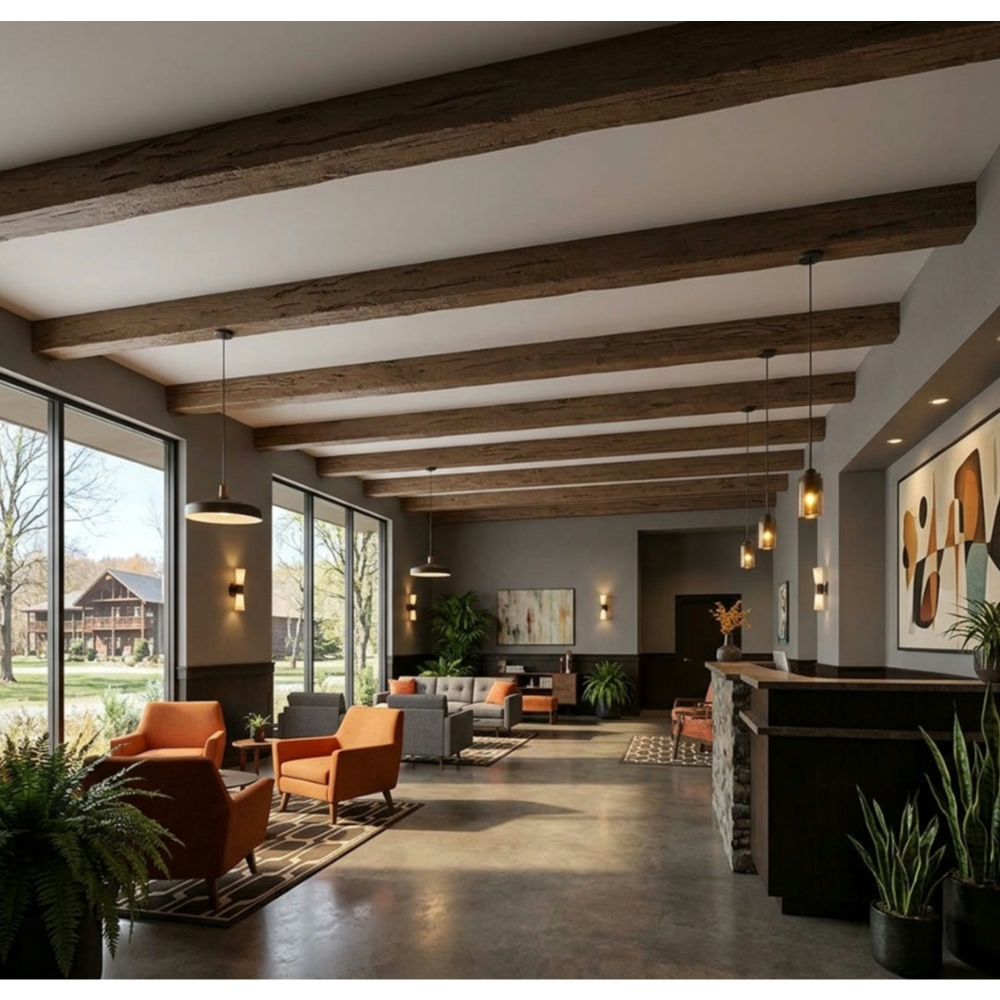
Dark oak finish on curved beams combines the warmth and grain character that oak provides with depth that supports sculptural presence. These characteristics enhance the overall effect that curved forms create.
Oak grain visibility provides visual interest throughout curved surfaces, with grain patterns bending and flowing as the beam's form changes. This continuity between grain and curve creates cohesive appearance that contrasting textures would undermine. The natural variation that oak grain exhibits also helps curves read as organic rather than mechanical.
Color depth in dark oak finishes produces richness that flat surfaces cannot achieve. The multiple stain applications and careful technique that quality finishing requires create depth that seems to emanate from within the wood rather than sitting on its surface. This depth enhances the sculptural presence that curves provide, creating surfaces that reward extended observation.
Finish flexibility accommodates the varying angles that curved surfaces present to light sources. Some areas receive direct illumination while others remain in shadow depending on curve geometry. Dark oak finishes maintain consistent appearance across these varying conditions, avoiding the highlights and dark areas that lighter finishes might exhibit.
Applications for Sculptural Impact
Curved dark oak beams serve applications where sculptural impact justifies the additional complexity that curved elements require. Several space types particularly benefit from this treatment.
Grand entrances make immediate impressions through curved beam installations that announce architectural ambition. A curved beam sweeping across an entry hall ceiling establishes the quality that visitors can expect throughout the residence. Combined with complementary curved millwork and furniture, these entries create anticipation that prepares visitors for the spaces beyond.
Great rooms with vaulted or curved ceiling structures accommodate curved beams that follow and enhance the architectural form. Rather than contrasting with the structure, beams can echo the ceiling's curvature, creating layered complexity that rewards extended observation. The sculptural quality that results distinguishes these spaces from those where standard beams merely span between walls.
Hospitality venues seeking distinctive environments find curved beams invaluable for creating memorable spaces. Restaurants, hotel lobbies, and entertainment venues benefit from the artistic presence that curved elements provide, creating environments that guests remember and return to experience again.
Structural Integration Considerations
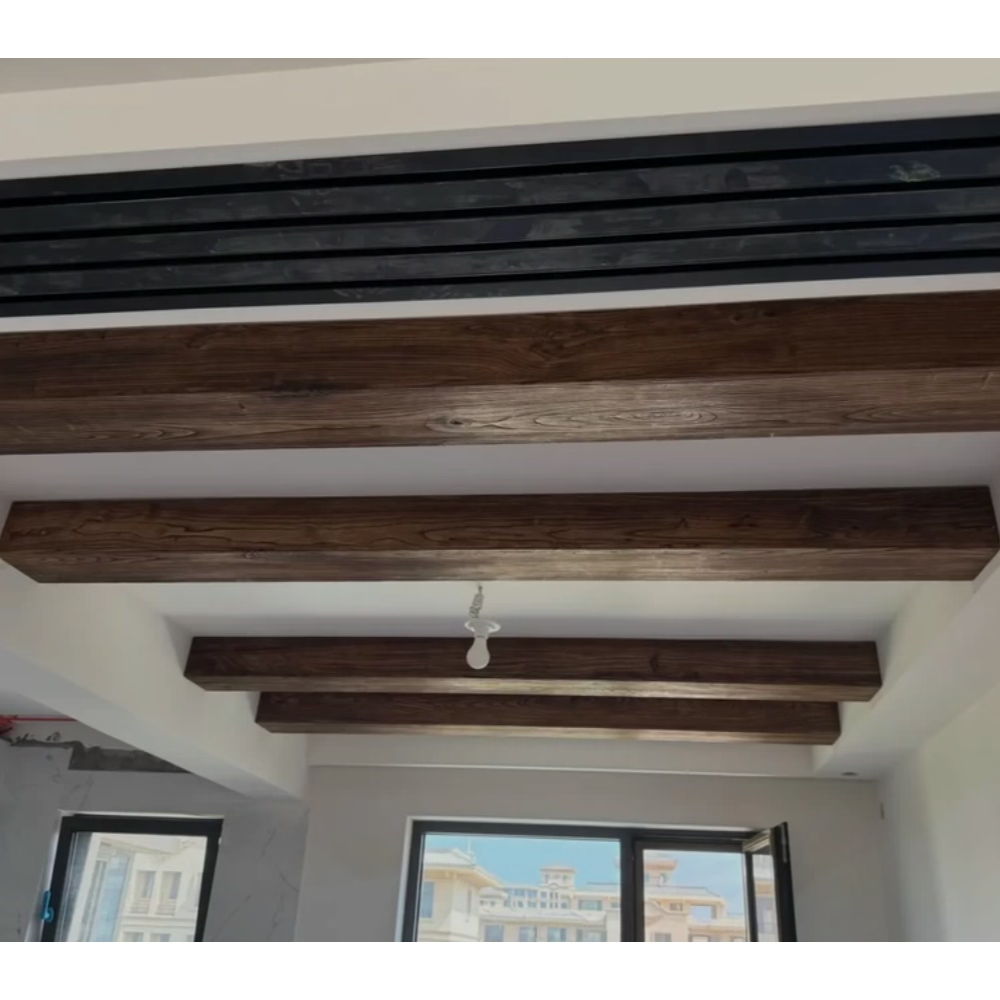
Successful curved beam installations require attention to structural integration that ensures both aesthetic success and safe performance. Several considerations guide appropriate specification.
Support requirements for curved beams differ from straight elements, with loads potentially distributing differently across curved spans. Engineering consultation may be appropriate for large-scale or complex curved installations, ensuring that mounting approaches and support structures accommodate the forces that curved elements generate.
Mounting approaches must address the varying angles that curved surfaces present. Standard mounting clips designed for straight beams may not accommodate curved profiles, requiring custom mounting solutions that the manufacturer or installer develops. Clear specification of curved geometry enables appropriate hardware selection.
Connection details between curved and straight elements require particular attention. Where curved beams meet walls or intersect with straight runs, the transitions should appear intentional rather than awkward. Careful detailing and quality craftsmanship ensure that these connections enhance rather than undermine the overall sculptural effect.
Design Coordination
Curved beams coordinate with surrounding elements through principles that differ somewhat from straight beam installations. Several considerations guide successful coordination.
Complementary curves in other elements reinforce the organic quality that curved beams establish. Curved staircases, arched doorways, and rounded furniture pieces contribute to overall environments where straight lines become exceptions rather than norms. This comprehensive approach creates spaces with coherent design logic.
Minimal surrounding detail prevents competition with the sculptural beams. When beams make strong visual statements, quieter backgrounds allow them to command attention appropriately. Smooth walls, simple trim, and restrained ornamentation ensure that curved beams remain focal points rather than contributing to visual confusion.
Lighting design should enhance rather than overwhelm curved beam presence. Fixtures positioned to graze curved surfaces emphasize the sculptural form, creating highlights and shadows that animate the beams throughout the day. Diffuse ambient lighting that washes the ceiling uniformly misses the opportunity to showcase the curves' three-dimensional quality.
Practical Benefits
Beyond sculptural advantages, polyurethane resin construction offers practical benefits that support curved beam ownership. These advantages affect both installation and long-term satisfaction.
Weight reduction simplifies handling and mounting of curved elements that would be prohibitively heavy in solid wood. The lighter weight also reduces structural demands, potentially eliminating support modifications that curved timber would require.
Consistency across curved sections ensures that the intended form achieves expression throughout the installation. Natural variations that might affect bent wood do not occur with polyurethane production, producing pieces that match specifications precisely.
Durability ensures that sculptural presence persists through years of service without deterioration. The material's resistance to moisture, temperature changes, and impact maintains appearance that justifies the investment that curved elements typically require.
Luxury dark oak curved polyurethane resin faux wood ceiling beams enable ceiling treatments that transcend ordinary architectural expression. For spaces where sculptural impact serves design intent, these products deliver forms that timber simply cannot achieve.
Technical References
ASTM standards cited in every specification
Test Data
Lab results from internal testing program
Updated 2026
Reviewed against current product specs


