The grand residences of the Middle East represent some of the most ambitious interior design projects in the world. Villas in Dubai, Riyadh, Doha, and Abu Dhabi routinely span thousands of square meters, with ceiling heights that would be impractical — or structurally impossible — to finish with genuine timber at the scale required. Yet the desire for warmth, texture, and architectural character that timber beams provide remains strong among the region's most discerning homeowners. Faux timber beams bridge this gap elegantly, delivering the visual impact of structural timber while respecting the realities of modern construction and regional climate conditions.
Understanding Middle East Villa Architecture
Villa architecture in the Gulf region draws from a fascinating blend of influences: traditional Arabic mashrabiya screens and geometric ornament, Moorish arches and courtyard planning, contemporary Western minimalism, and the grandeur of European palaces. The result is an architectural vocabulary that is simultaneously global and distinctly regional — spaces that feel both impressively international and deeply connected to local cultural identity.
Ceilings play an outsized role in this architectural conversation. With floor areas routinely exceeding 500 square meters in primary living spaces, ceiling design becomes the primary determinant of whether a space feels intimate or overwhelming, warm or cold, personal or impersonal. Bare plaster ceilings at heights of 8, 10, or even 14 meters communicate nothing. Timber beams transform those same volumes into spaces with character, rhythm, and a sense of human scale despite their enormous dimensions.
The psychological effect of beams in these large spaces is profound. A beam running the length of a majlis or formal living room divides the ceiling plane into comprehensible segments, giving the eye a structure to follow and making the vast space feel more approachable. This is not merely an aesthetic observation — it is a principle that experienced interior designers working in the Gulf region have validated across hundreds of projects.
Climate-Driven Material Decisions
The climate of the Middle East presents unique challenges for interior materials. Summer temperatures outside can exceed 45 degrees Celsius while air conditioning maintains interior temperatures in the low 20s. This creates significant temperature differentials and humidity variations that affect building materials in ways that builders and designers must anticipate.
Natural timber, even when kiln-dried and properly finished, responds to these conditions. Expansion and contraction cycles, even minor ones, can eventually manifest as visible gaps, slight warping, or finish checking — cosmetic issues that undermine the quality perception that luxury interiors must maintain. Polyurethane faux timber beams are dimensionally stable across the full range of temperatures and humidity levels encountered in climate-controlled Gulf villas.
Insulation properties also favor lighter-weight materials in this region. Real timber beams, with their substantial thermal mass, can create localized cool spots where their surfaces face exterior roof or terrace elements. Polyurethane's lower thermal conductivity contributes to more uniform temperature distribution across ceiling surfaces, which is particularly important in open-plan villa layouts where the living room flows directly into shaded terrace areas.
Design Approaches for Formal and Family Spaces
The distinction between formal entertaining spaces and private family areas in Middle Eastern villas is often more pronounced than in Western residential design. The majlis — the formal reception room — is a cultural institution that demands a specific aesthetic register: grandeur, formality, and a clear demonstration of the homeowner's resources. Timber beams in these spaces benefit from larger scale, darker finishes, and more elaborate detailing.
Beams in the majlis might span 12 meters or more in premium villa designs. Box beams with decorative corbels and deep coffers create a ceiling landscape that commands attention and establishes the room's importance within the overall villa hierarchy. Dark walnut, mahogany, or ebony-toned finishes reinforce the gravity of the space without feeling oppressive when paired with the generous proportions and abundant natural light that Gulf villa designs typically incorporate.
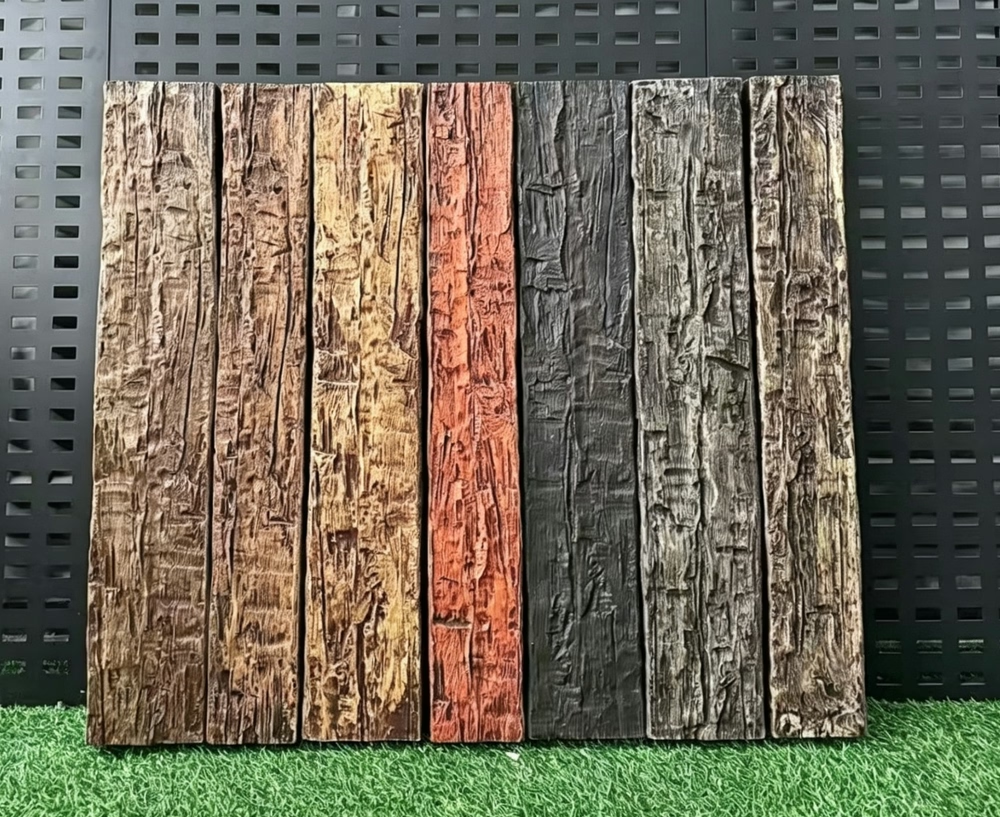
Family living areas within villas allow for warmer, more relaxed interpretations. Beams in lighter oak or honey-toned finishes paired with plush upholstered furniture, area rugs, and family photographs create an atmosphere of comfortable luxury. The beams provide architectural interest and a sense of crafted quality without competing with the lived-in warmth that makes family spaces feel welcoming rather than showroom-perfect.
Integration With Traditional and Contemporary Arabic Design
Faux timber beams integrate remarkably well with both traditional Arabic design elements and the contemporary aesthetics that dominate new Gulf villa construction. In traditional interiors, beams can be detailed to echo the rhythm of mashrabiya screens or the geometry of Islamic tile patterns, creating a visual conversation between ceiling and wall that feels culturally rooted rather than borrowed.
The spacing of beams, their exposed end details, and the profiles of associated moldings can all reference specific regional craft traditions. This kind of cultural specificity elevates the design from generic luxury to something that feels genuinely connected to place and heritage. Designers working in this region have found that clients respond powerfully to these references, recognizing them as signs of thoughtfulness and care.
In contemporary Gulf interiors, timber beams provide organic texture against the clean lines and smooth surfaces that define the modernist aesthetic. A cantilevered concrete ceiling softened by warm-toned beams, polished marble floors, and brushed metal fixtures creates a layered, sophisticated interior that feels of its moment while avoiding the sterile quality that can plague purely minimal spaces.
Specification and Customization for Gulf Projects
Middle East villa projects frequently require customization that goes beyond standard product offerings. Beam lengths may need to accommodate spans found in few other markets. Finish colors may need to coordinate with locally sourced stone, imported marble, or hand-knotted rugs that arrive with their own color logic. Ornamental metalwork — a hallmark of Gulf decorative tradition — may need to be integrated into beam installations as corbels, straps, or finials.
Manufacturers serving the Middle East market have responded to these requirements with increasing flexibility. Custom beam lengths, non-standard finishes, and bespoke ornamental elements are available through specialty suppliers, though lead times and cost premiums must be factored into project planning. The most ambitious villa projects often work directly with manufacturers to develop signature finishes or profiles that are unique to the project — a detail that becomes a selling point when the villa is eventually resold.
Color matching to other interior finishes is particularly important in Gulf interiors, where clients often select stone, tile, and textile materials during construction rather than from finished samples. Mock-up installations that allow the client to see beam finishes in situ against the actual surrounding materials are strongly recommended for high-value projects.
The Competitive Advantage of Faux Timber in Luxury Projects
For interior designers and architects working in the Gulf region, specifying faux timber beams offers practical advantages beyond aesthetics. Installation speed is significantly faster than with natural timber — a beam that would require a crane and a team of four installers over an entire day can often be placed by two installers in an hour. In projects where construction schedules are compressed and multiple trades are working in sequence, this efficiency is commercially significant.
The consistency of polyurethane products also simplifies quality control. Natural timber varies from piece to piece, sometimes dramatically, which can result in visible mismatches when multiple beams are installed in the same space. Polyurethane beams are manufactured to consistent specifications, ensuring that all beams in an installation match precisely in profile, finish, and dimension.
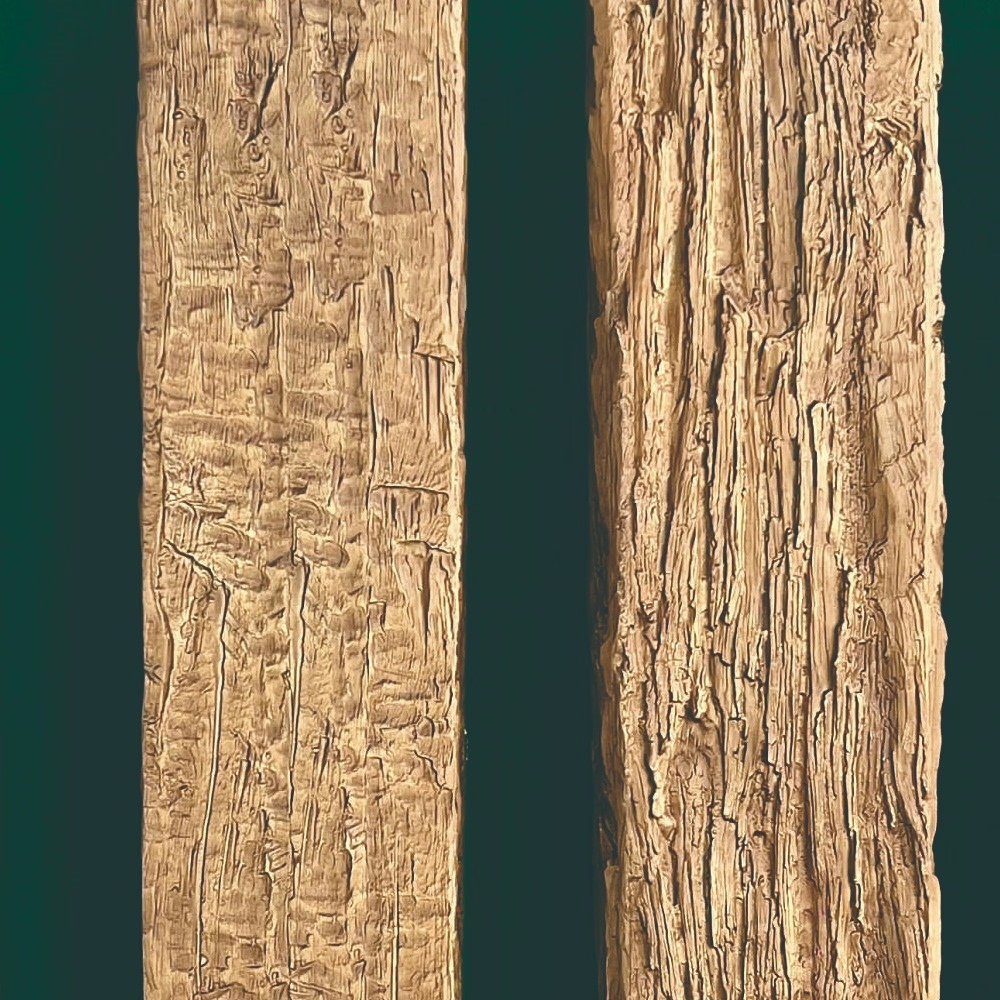
These practical advantages do not come at the cost of visual quality. Modern polyurethane faux timber beams are virtually indistinguishable from real timber to all but the most expert eye, and their performance characteristics — moisture resistance, dimensional stability, lightweight construction — make them better suited to Middle East climate conditions than the natural material they replicate.
Technical References
ASTM standards cited in every specification
Test Data
Lab results from internal testing program
Updated 2026
Reviewed against current product specs


