Renovation projects carry a different kind of creative charge than new construction. The designer works within an existing context — existing bones, existing materials, existing compromises — and must find ways to honor what is worth preserving while introducing the new qualities that the client seeks. In high-end villa renovations, this tension between old and new is often the central design problem, and it is rarely solved through a single gesture. Rather, it accumulates through dozens of material choices, each one contributing to an overall atmosphere that feels both refreshed and coherent.
Ceiling beams belong to that category of renovation decisions that disproportionately affect the overall result. They change the vertical dimension of every room, add warmth to spaces that may feel cold or generic, and introduce the kind of crafted texture that signals genuine quality rather than the superficial gloss of newly applied finishes. In villa renovations, where clients often have high expectations shaped by previous properties or extensive travel, beams can be the element that transforms a renovation from competent to exceptional.
The Renovation Advantage of Faux Timber
Natural timber beams are structurally honest — they carry loads, span distances, and perform a genuine structural function. This honesty is part of their appeal, but it is also a significant constraint in renovation contexts. Installing real structural timber beams in an existing villa ceiling typically means working with the actual ceiling structure, which may not have been designed to support the additional weight, or making substantial modifications to ceiling joists and bearing walls that drive costs upward and extend timelines unpredictably.
Faux timber beams sidestep these structural complications entirely. Because they are purely decorative — they carry no structural load — they can be mounted to existing ceiling surfaces using a variety of concealed attachment systems. The existing structure does not need to be reinforced. The installation does not require structural engineering sign-off. The risk profile of the project drops substantially.
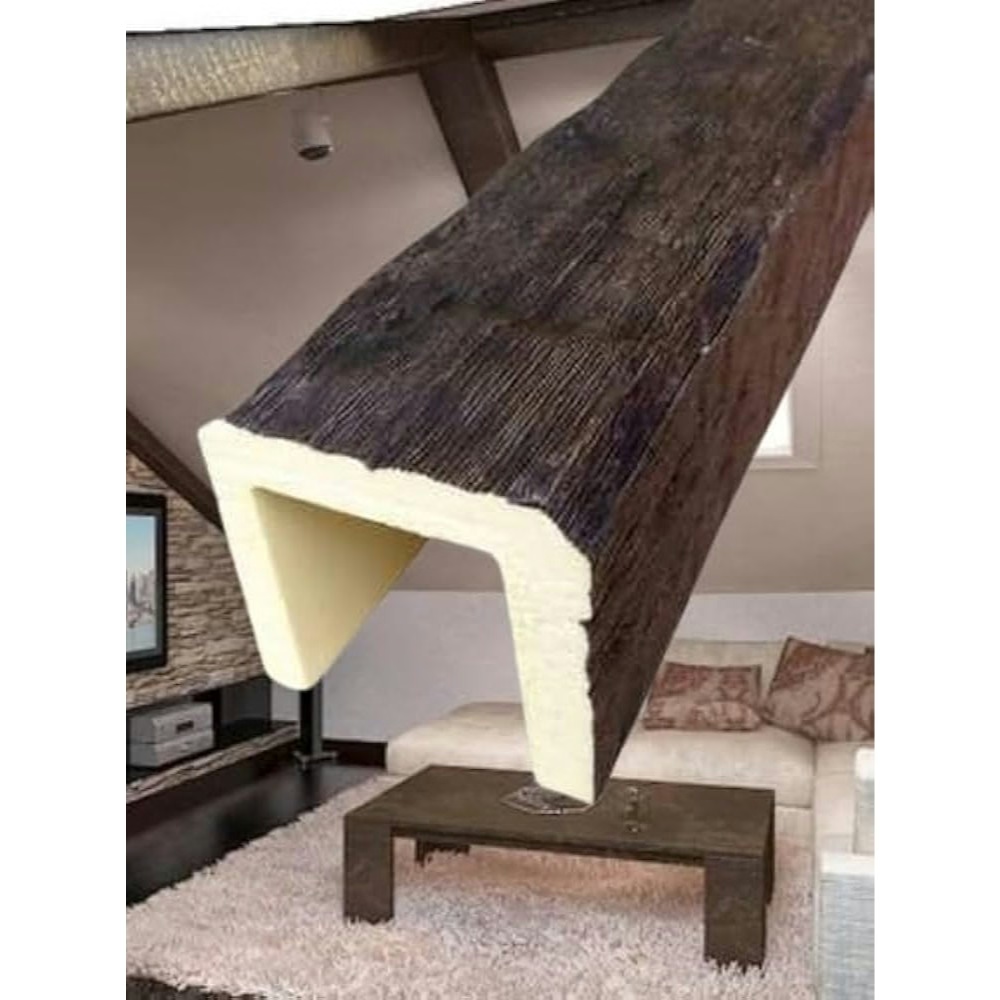
This is not to say that faux beams lack visual substance. On the contrary, well-made polyurethane beams read as entirely genuine from any viewing distance. Their cross sections can match or exceed the visual presence of real timber beams, and their finishes replicate the color, grain, and texture of natural wood with a fidelity that satisfies the most detail-oriented clients.
Planning the Beam Installation in an Existing Space
Successful beam installations in renovated villas begin with a careful survey of the existing ceiling. Plaster ceilings may have inconsistencies — slight variations in level, previous repairs, areas where the substrate has degraded. These conditions must be identified and addressed before beam installation begins, either through repairs or through installation techniques that accommodate the variations.
The ceiling's existing infrastructure also needs assessment. Light fixtures, HVAC grilles, sprinkler heads, and fire alarm devices that penetrate the ceiling plane may need to be relocated or may interact visually with the new beam layout. Planning the beam arrangement around these existing elements is always preferable to discovering conflicts during installation.
Lighting integration deserves particular attention in renovation contexts. The existing electrical plan was designed for a flat ceiling, and introducing beams changes the way light behaves in the room. Recessed fixtures may need to be repositioned or their beam angles adjusted. New accent lighting may be warranted to take advantage of the beam surfaces as reflective elements. This lighting review should happen before the beams are specified so that the beam layout can accommodate any new fixture locations.
Coordinating Beams With Existing Finishes
Villa renovations typically retain some existing finishes while replacing others. Hardwood floors, marble surfaces, or existing millwork may remain as reference points that the new beam design must harmonize with. This coordination is more nuanced than simply matching colors — it involves understanding the overall design language of the existing space and determining whether the beams will function as a unifying element that ties disparate finishes together, or as a contrasting element that establishes a new visual direction.
In many renovation scenarios, the existing finishes represent the most expensive and irreplaceable elements in the room. A marble floor that took weeks to install and cost tens of thousands of dollars cannot easily be changed if the beams clash with it. This means the beam specification must be driven by the existing materials rather than the other way around. Collect samples of the existing stone, wood, or tile and evaluate beam finishes against them in the actual room lighting before committing to a product.
The ceiling itself may have existing details worth preserving or incorporating. Original moldings, coffer patterns, or plasterwork can interact productively with new beams. A beam that intersects an existing cornice at a right angle, for example, creates a more finished appearance than a beam that simply terminates against a plain wall — a detail that requires advance planning but adds significantly to the final result.
Budget Considerations and Value Engineering
High-end villa renovations typically operate within substantial but defined budgets, and value engineering is often part of the design process even when the overall budget is generous. Faux timber beams offer excellent value compared to natural timber in renovation contexts because the installed cost — which includes material, labor, and structural preparation — is substantially lower while the visual result is comparable or identical.
The elimination of structural preparation costs alone can represent significant savings. Reinforcing ceiling joists for real timber, installing additional bearing points, and engineering the connections for a load-bearing beam system can add tens of thousands of dollars to a project budget. Faux beams require none of this preparation, and the mounting hardware is relatively inexpensive.
Durability also factors into long-term value. Natural timber beams in interior applications may require refinishing every 10 to 15 years as their surfaces accumulate wear, UV exposure, and the inevitable micro-damage of daily life. Polyurethane beams maintain their appearance for decades with minimal maintenance, reducing the total cost of ownership over the life of the installation.

Managing Client Expectations in Renovation Contexts
Clients who have lived in a villa for years often have strong attachments to the space as they know it. Introducing a transformative element like ceiling beams requires careful communication about what the finished result will look and feel like. Before-and-after imagery, material samples, and mock installations can help clients visualize the change and provide informed feedback.
The authenticity question arises frequently. Some clients, when told that the beams are faux rather than genuine timber, express concern about the visual result. Showing them physical samples alongside genuine timber pieces — or, better yet, pointing to an existing installation — is the most effective way to address this concern. Modern polyurethane faux beams have come a long way from earlier generations of the product, and the visual quality is genuinely impressive.
For clients who specifically want the real thing, it is worth having an honest conversation about the practical trade-offs. The weight, cost, installation complexity, and maintenance requirements of genuine timber are all legitimate factors in the decision. In many renovation scenarios — especially those involving upper floors, suspended ceilings, or existing structures with limited load capacity — genuine timber is simply not a viable option. Framing the choice as "the right material for this project" rather than "a compromise" typically resonates better with clients.
The Lasting Impact of Well-Executed Renovations
A villa renovation that incorporates ceiling beams thoughtfully creates a space that feels refreshed without feeling foreign. The beams add warmth, texture, and architectural interest in a way that wallpaper, paint, or new furniture simply cannot achieve. They change the fundamental character of the ceiling — the fifth wall that designers so often neglect — from a passive surface into an active element of the interior design.
For clients who plan to remain in the property, this transformation represents a genuine improvement in their daily living experience. For clients who view the property as an investment, well-executed renovations with premium finishes like faux timber beams typically command higher resale values and shorter marketing periods. Either way, the investment in quality beam design pays dividends that extend well beyond the construction phase.
Technical References
ASTM standards cited in every specification
Test Data
Lab results from internal testing program
Updated 2026
Reviewed against current product specs


