Dubai has established itself as a global center for luxury interior design, with a market that demands and rewards exceptional quality. Projects in this city attract the world's top designers, use the finest materials from every continent, and set aesthetic standards that reverberate through the international design community. Against this backdrop of relentless ambition, the details matter enormously — and ceiling design is one of the most impactful details a designer can address.
Faux wood ceiling beams have found a natural home in Dubai's interior design landscape. The climate presents challenges for natural wood that polyurethane elegantly sidesteps. The design expectations demand visual richness that lighter-weight materials struggle to deliver. And the pace of construction in this market rewards materials that install quickly and predictably without sacrificing quality. All three of these factors favor faux wood beams as a specification choice in Dubai's most demanding interior projects.
Dubai's Climate and Its Influence on Material Selection
The external climate in Dubai represents one of the most demanding environments for building materials in the world. Summer temperatures regularly exceed 45 degrees Celsius, while interiors are maintained at comfortable temperatures through powerful air conditioning systems. This creates significant temperature differentials across building envelopes, with roof and upper-floor structures experiencing substantial thermal cycling as systems cycle on and off.
Natural wood responds to these conditions in ways that compromise its appearance and performance over time. Even kiln-dried hardwood timber can experience subtle movement as humidity levels fluctuate between the dry desert exterior and the climate-controlled interior. Over years of thermal cycling, this movement can manifest as visible gaps, surface checking, or finish separation — cosmetic failures that luxury clients find unacceptable.
Polyurethane faux beams are dimensionally stable across the full range of temperatures and humidity levels encountered in Dubai's buildings. The material does not absorb moisture, does not expand or contract perceptibly with temperature changes, and maintains its finish integrity indefinitely under normal interior conditions. For Dubai projects, where clients expect perfection and construction defect disputes are costly, this dimensional stability is a significant practical advantage.
Design Excellence in Dubai's Residential Market
Dubai's luxury residential market encompasses everything from opulent villas on Palm Jumeirah and Emirates Hills to sleek apartments in Downtown Dubai and Business Bay. Each neighborhood and property type carries its own design expectations, and the beam specification must respond to these specific contexts rather than applying a generic solution.
Villa interiors in Dubai typically feature generous ceiling heights, large open-plan living areas, and extensive glazing that blurs the boundary between interior and exterior living. In these spaces, beams serve to anchor the interior design against the surrounding glass and desert landscape. Darker beam finishes — walnut, mahogany, or espresso tones — provide visual weight that balances the transparency of the surrounding facade, creating interior spaces that feel substantial rather than exposed.
Apartment interiors in premium Dubai towers face different constraints. Ceiling heights are typically lower, and the surrounding architecture is often already finished with premium materials by the building developer. In these contexts, faux beams work as accent elements rather than primary architectural features — perhaps a single exposed beam crossing a living room ceiling, or a series of beams in a compact dining area that adds warmth to what might otherwise feel like a conventionally finished space.
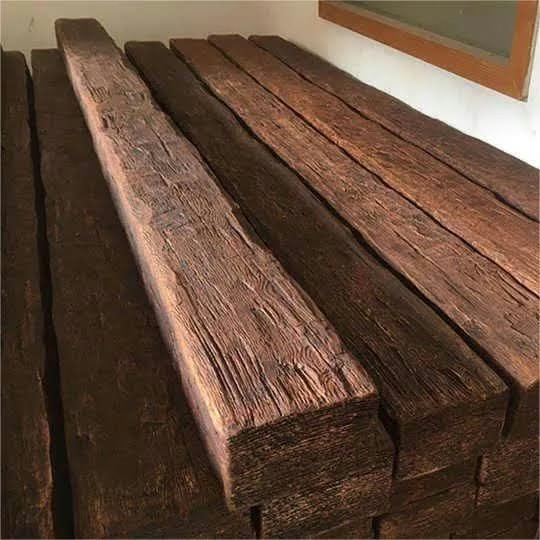
Commercial and Hospitality Design in Dubai
Dubai's commercial interior design market is equally demanding, with hospitality projects, corporate headquarters, and luxury retail environments competing for recognition in a city where design awards and architectural accolades carry real business value. Faux wood ceiling beams feature prominently in many of the city's most celebrated commercial interiors.
Hotel lobbies, restaurants, and resort facilities in Dubai frequently incorporate beams as primary design elements. The scale of these projects — often featuring ceiling heights of 10 meters or more in public areas — demands beams that can span significant distances without structural support while maintaining proportional visual presence. Polyurethane beams, manufactured to custom lengths and specifications, meet these requirements without the engineering complexity that genuine timber spanning would entail.
Retail environments in Dubai's luxury shopping destinations — The Dubai Mall, Mall of the Emirates, and the emerging premium retail corridors — use faux beams to create distinctive spatial identities that differentiate individual stores from the generic mall environment. A fashion boutique with exposed timber beams overhead communicates a different brand identity than one with a smooth plaster ceiling, and the beam specification contributes directly to the store's brand positioning.
Customization and the Dubai Market Expectation
Dubai's luxury clients have come to expect customization as standard rather than premium. Off-the-shelf products, even high-quality ones, are perceived as compromises that reflect insufficient design investment. Faux wood beam manufacturers serving this market must offer substantial customization capabilities to remain competitive.
Custom finish development is particularly important. Dubai's interior design palette frequently includes materials sourced from around the world — Italian marble, Brazilian granite, French linens, hand-knotted Persian rugs — and the beam finish must coordinate precisely with this diverse material composition. Manufacturers who can develop custom finish colors to match specific material references, rather than offering a fixed color palette, command premium positioning in this market.
Profile customization, while less frequently required, matters in specific contexts. Curved beam installations for spaces with vaulted or domed ceilings require bending capabilities that standard straight beams do not offer. Beams with integrated ornamental metalwork — corbels, straps, and decorative end caps — appeal to clients who want the full complexity of traditional timber craftsmanship without the structural limitations of natural wood.
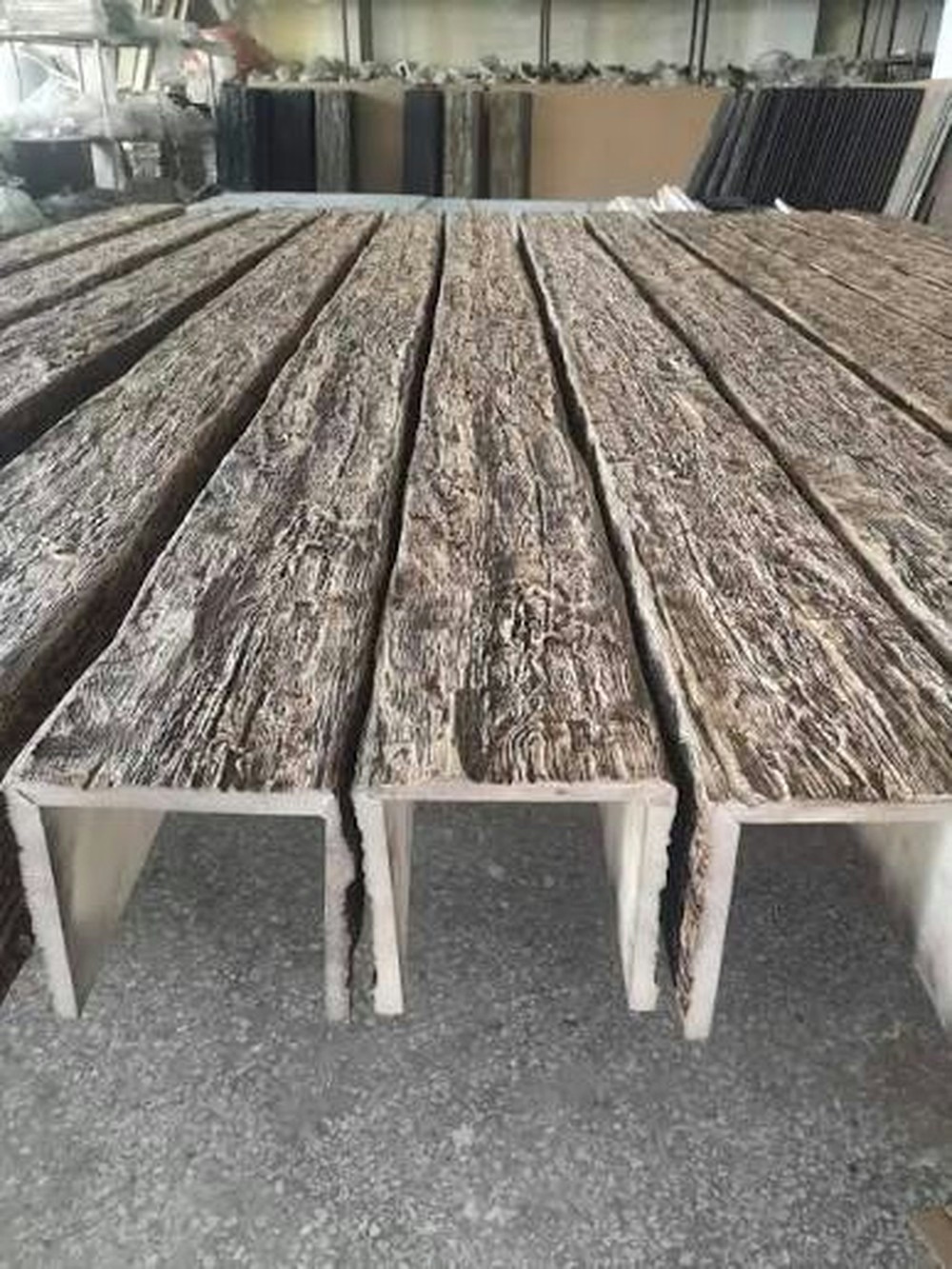
Installation Efficiency in Fast-Paced Dubai Projects
Construction timelines in Dubai are notoriously compressed. Projects that would take years in other markets are routinely delivered in months, with multiple trades working simultaneously and material deliveries scheduled to the hour. In this environment, installation efficiency is not merely convenient — it is often a project requirement.
Polyurethane faux beams install substantially faster than genuine timber. A single beam installation that would require multiple installers, lifting equipment, and careful structural connection detailing with real timber can be completed by two installers with basic hand tools in a fraction of the time. This efficiency reduces labor costs, compresses the construction schedule, and minimizes the risk of installation damage that can occur when heavy timber is maneuvered into position.
The predictability of polyurethane also supports schedule management. Natural timber arrives with inherent variability — slight differences in moisture content, minor variations in dimension, occasional pieces that do not match the specified grade. These variabilities require inspection, selection, and sometimes replacement that introduces delays. Polyurethane beams are manufactured to consistent specifications, arriving on site ready to install without additional selection or preparation.
Long-Term Performance in Dubai's Interior Climate
The long-term performance of interior materials in Dubai deserves particular attention given the extreme conditions that characterize the region's climate. Materials that perform adequately in temperate climates may fail in ways that are expensive to remedy and disruptive to occupants when they do.
Polyurethane beams have demonstrated excellent long-term performance in Dubai's interior environments. The material maintains its dimensional stability, color consistency, and surface integrity across years of continuous climate control operation. Unlike natural wood, which may require refinishing or repair as it ages in this environment, polyurethane beams remain essentially maintenance-free throughout their service life.
This long-term reliability has made polyurethane beams a preferred specification among property managers and facilities teams in Dubai's commercial sector. The absence of ongoing maintenance requirements, the predictability of the installed product's appearance over time, and the ease of individual beam replacement when damage occurs all contribute to lower total cost of ownership over the life of the installation.
Technical References
ASTM standards cited in every specification
Test Data
Lab results from internal testing program
Updated 2026
Reviewed against current product specs


