There is a moment in every well-designed luxury interior when the eye discovers an unexpected harmony — two materials that should, by logic, clash, but instead create something more interesting than either could achieve alone. The pairing of marble floors with timber ceiling beams is one such combination. The cool, polished permanence of stone below and the warm, textured grain of wood above create a vertical dialogue that gives a room depth and dynamism that a single material palette cannot achieve. With modern faux wood beams, this classic combination is more accessible than ever, allowing designers to explore the contrast between stone and wood without the structural limitations that natural timber introduces.
Why Material Contrast Works in Interior Design
The most memorable interiors are rarely monochromatic. Depth and visual interest emerge from the juxtaposition of different materials, each contributing qualities that the other lacks. Stone brings permanence, coolness, and a sense of geological weight. Wood brings warmth, organic texture, and the living quality of a natural material. When these two are placed in close proximity — stone underfoot, wood overhead — they frame the inhabited space between them, creating an environment that feels simultaneously grounded and elevated.
This contrast operates on multiple levels simultaneously. The thermal contrast is perhaps the most intuitive: stone floors feel cool to the touch, while wood ceilings create a sense of warmth above. In practice, this thermal perception is largely psychological rather than actual — the air temperature is the same throughout the room — but the sensory impression of warmth and coolness at different heights creates a spatial richness that uniform surfaces cannot achieve.
The visual weight of the two materials also balances in a way that satisfies the eye. Stone carries visual weight through its density, its reflectivity, and its scale. Wood carries complementary weight through its texture, its color depth, and its architectural presence. When properly proportioned, these weights balance each other, creating a spatial composition that feels complete.
Selecting Marble for Beam-Adjacent Applications
The choice of marble or stone for floors in a room with timber beams influences the beam specification significantly. The two materials should relate to each other through color temperature, pattern scale, and overall visual weight.
Polished marble in neutral tones — white Carrara, Grigio Carnico, Crema Marfil — provides the cleanest canvas for a timber beam installation. These stones are light enough in value that the beam finish becomes the dominant warm element in the room, and the stone remains a calm, supportive surface rather than a competing element. The veins and patterns in these stones introduce natural variation without the visual complexity that some exotic marbles carry.
Darker marbles — Nero Marquina, Verde Guatemala, Emperador Dark — create more dramatic contrast with timber beams. The stone itself carries warmth or visual weight that must be considered when selecting the beam finish. Dark wood beams over dark stone can create excessive visual weight unless the wall finishes are sufficiently light to provide balance. The relationship between three surfaces — floor, ceiling, and wall — must be resolved as a composition, not element by element.
Honed or leathered stone finishes introduce texture into the floor surface, which can either complement or compete with the textured surface of wood beams. In most cases, the contrast between a smooth polished floor and a textured beam surface creates productive tension. If the stone floor is already heavily textured, a smoother beam finish may be more appropriate to avoid textural overload.
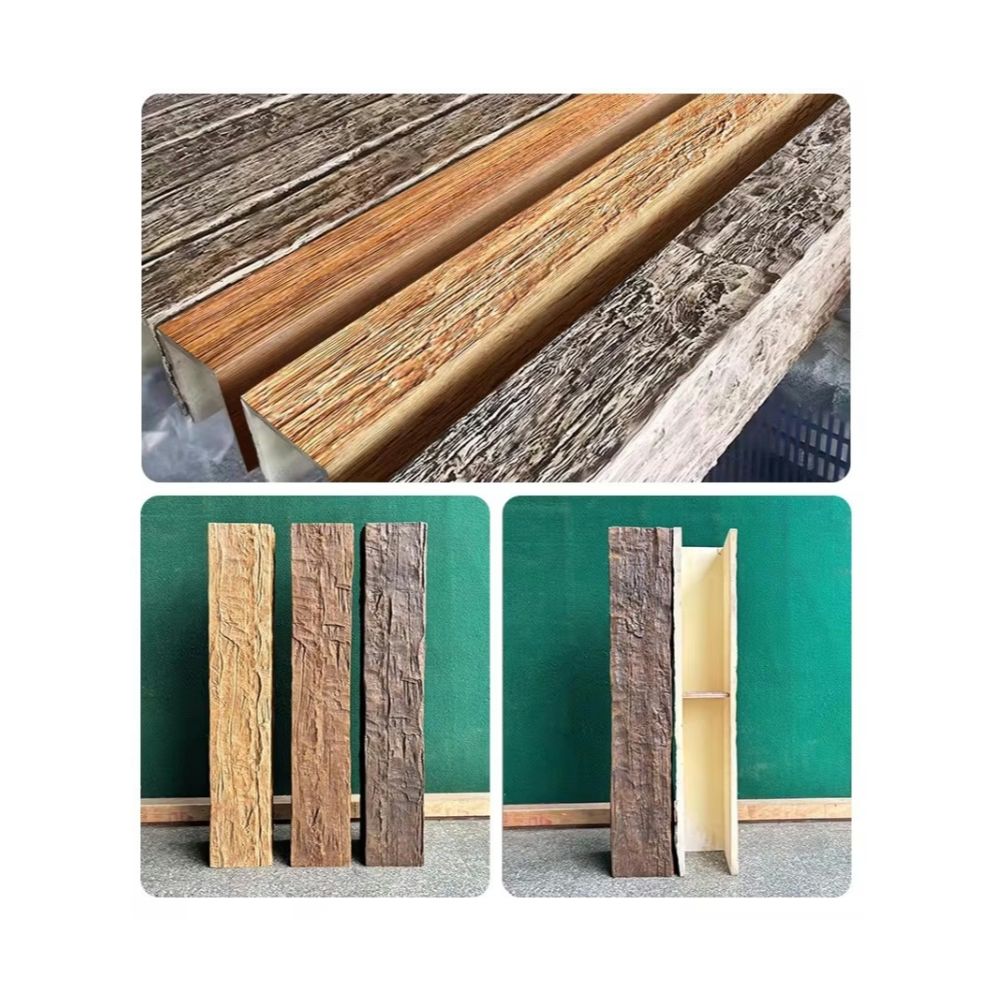
Choosing Beam Finishes That Complement Stone Floors
The beam finish must be selected with the specific stone in mind. The goal is a relationship between floor and ceiling that feels intentional — where the warm wood above feels like a deliberate response to the cool stone below rather than an unrelated choice.
Light stone floors — white, cream, or light gray — pair well with both light and medium-toned wood beams. Natural oak, honey maple, and wheat-toned finishes create a harmonious, low-contrast relationship that feels airy and bright. Dark walnut or mahogany beams over light stone create higher contrast, introducing visual drama and definition that light stone alone cannot provide.
The vein color in the stone floor can inform beam finish selection in subtle ways. A stone with warm gray veins might pair better with a cool-toned oak beam than a warm honey finish, while a stone with cream or gold veining suits warm-toned wood finishes more naturally. This level of color coordination is subtle but important — it is the kind of detail that separates a composed interior from one that feels assembled.
The Role of Area Rugs in the Stone-and-Beam Composition
In most rooms with marble floors and timber beams, an area rug is not optional decoration but a necessary design element. The rug bridges the material contrast between floor and ceiling, introducing a third texture and color that unifies the composition.
Rugs with warm tones — terracotta, rust, gold, or cream — reinforce the warmth of the timber beams and prevent the room from reading as cold despite the stone floor. Rugs with cool tones — navy, silver, or slate — can provide contrast that makes the beam warmth feel more pronounced, a choice that works particularly well in contemporary interiors seeking deliberate material tension.
The scale of the rug relative to the room and the beam arrangement matters. A rug that is too small for the seating area feels inadequate; one that extends to or near the walls provides the grounding effect that the stone floor cannot. In rooms with parallel beam arrangements, the rug can be positioned to align with the beam rhythm, creating a visual connection between the ceiling structure and the floor composition.
Wall Finish Coordination
The walls in a marble-and-beam interior must resolve the tension between cool floor and warm ceiling without resolving it too cleanly. If the walls are too close in tone or temperature to either the floor or the ceiling, they will either deaden the contrast or amplify it beyond what is comfortable.
Neutral wall colors — warm whites, greiges, and light taupes — work universally in stone-and-beam interiors. These colors are sufficiently warm to prevent the room from feeling cold (thanks to the stone floor) without being so warm as to compete with the beam ceiling. The beams remain the primary warm element, and the walls serve as a transition rather than a destination.
In more dramatic applications, the walls can introduce a third material — plaster, shiplap, or even stone cladding — that adds another dimension to the composition. A limewashed plaster wall, for example, introduces subtle texture and a slight warmth that enriches the room's material complexity without disrupting the floor-ceiling dialogue.
Lighting Strategy for Stone-and-Beam Interiors
The reflective quality of polished marble floors changes how light behaves in a room, and this change must be accounted for in the lighting design. Marble reflects light upward, illuminating the ceiling and the underside of beams in ways that a matte floor would not. This reflection is generally beneficial — it adds life and luminosity to the space — but it can also emphasize inconsistencies in the beam finish or create unwanted glare in certain areas.
Lighting that grazes the beam surfaces from a low angle — either from floor-mounted uplights or from fixtures positioned between beams — emphasizes the wood grain texture and creates dramatic shadow patterns. This grazing technique works particularly well in evening and nighttime lighting scenarios, when the reflected glow from the polished floor enhances the beam visibility without additional fixtures.
Pendant fixtures in stone-and-beam interiors should be selected with the material palette in mind. Fixtures in warm metallic finishes — brass, bronze, copper — reinforce the wood's warmth and complement the stone's neutrality. Glass or crystal pendants add sparkle and dimension without introducing competing textures.
Furniture Selection for Contrast-Driven Interiors
The furniture in a marble-and-beam room inherits the material tension between stone and wood and must resolve it in the inhabited zones of the room. Upholstered furniture in warm tones — camel leather, cream linen, rust velvet — introduces comfort and approachability that both materials lack on their own. The organic softness of upholstery against both the hardness of stone and the rustic texture of wood creates a resolution that makes the room feel complete.
Metallic accents in warm tones — brass hardware, bronze table bases, gold-framed mirrors — reinforce the material story without adding new complexity. Cool metals — chrome, nickel, stainless steel — introduce a third temperature register that can feel jarring in this particular combination unless the overall room palette is sufficiently warm to absorb them.
The overall effect of a well-executed marble-and-beam interior is one of considered richness. Every material choice is purposeful, and the contrast between floor and ceiling creates a spatial dynamism that makes the room feel alive rather than static. The beams overhead feel like a gift from the architecture, and the stone below feels like the earth itself — and between them, the living space feels both grounded and elevated.
Technical References
ASTM standards cited in every specification
Test Data
Lab results from internal testing program
Updated 2026
Reviewed against current product specs


