The modern farmhouse has evolved from a niche aesthetic into a dominant force in residential design. Its appeal is intuitive: the warmth and approachability of farmhouse tradition combined with the clean lines and considered restraint of contemporary design creates interiors that feel both timeless and thoroughly current. Exposed beams are practically synonymous with this style — they provide the texture, the warmth, and the rustic authenticity that the farmhouse aesthetic demands. For high-end homeowners who want this look without the complications of genuine reclaimed timber, modern farmhouse style polyurethane faux beams offer an elegant solution.
What Defines the Modern Farmhouse Aesthetic
Understanding what makes a farmhouse interior "modern" rather than merely traditional is essential for selecting beams that support the design rather than undermining it. Traditional farmhouses were built with whatever materials were locally available, and the resulting aesthetic was one of practical necessity — exposed structural timber, rough plaster walls, wide-plank floors, and simple hardware. The look was authentic but often uncomfortable by contemporary standards.
Modern farmhouse design takes the visual vocabulary of the traditional farmhouse — the beams, the wide proportions, the honest materials — and refines it for contemporary sensibilities. Surfaces are smoother, proportions are more considered, and the color palette is cleaner and more restrained. The result is a farmhouse that is comfortable and approachable without feeling rough or provincial.
In this aesthetic context, the beams must be substantial enough to read as genuine structural elements while being refined enough to align with contemporary taste. Beams that are too rough, too knotty, or too obviously distressed will feel like a costume rather than a design choice. Beams that are too smooth and perfect will feel like a suburban tract home trying to pretend. The right specification lands in the space between: beams that feel authentically farmhouse without being authentically old.
Choosing Beam Finishes for Farmhouse Interiors
The finish selection for modern farmhouse beams should err toward warmth and naturalism rather than polish and refinement. The goal is beams that look like they came from a barn or a timber frame rather than a showroom, while maintaining the quality standards that luxury homeowners expect.
Reclaimed oak finishes — those that replicate the appearance of barn-sourced timber with their silver-gray weathering and pronounced grain — work well in modern farmhouse contexts that lean toward the rustic end of the spectrum. These finishes have an immediate, obvious farmhouse identity that is difficult to achieve with other materials. The weathering pattern, where the beam edges show the characteristic silver-gray of naturally aged oak, adds authenticity that clean-sawn timber cannot match.
For more refined modern farmhouse interiors, natural oak or honey-finished beams provide warmth without the full rustic impact of reclaimed appearance. These finishes read as warm and natural without feeling rough or aged. They work particularly well in farmhouse kitchens and living rooms where the overall material palette is already quite busy — wide-plank floors, shaker cabinets, subway tile backsplashes — and additional texture from heavily weathered beams might create visual overload.
Whitewashed or limed beam finishes represent a more contemporary interpretation of the farmhouse aesthetic. These treatments — whether applied to genuine timber or replicated in polyurethane — lighten the wood's natural tones, creating beams that feel fresh and modern while retaining the warmth and grain texture that distinguish them from plain plaster. Whitewashed beams work well in farmhouse interiors with predominantly white or cream color palettes, where they provide warmth without darkening the overall room tone.
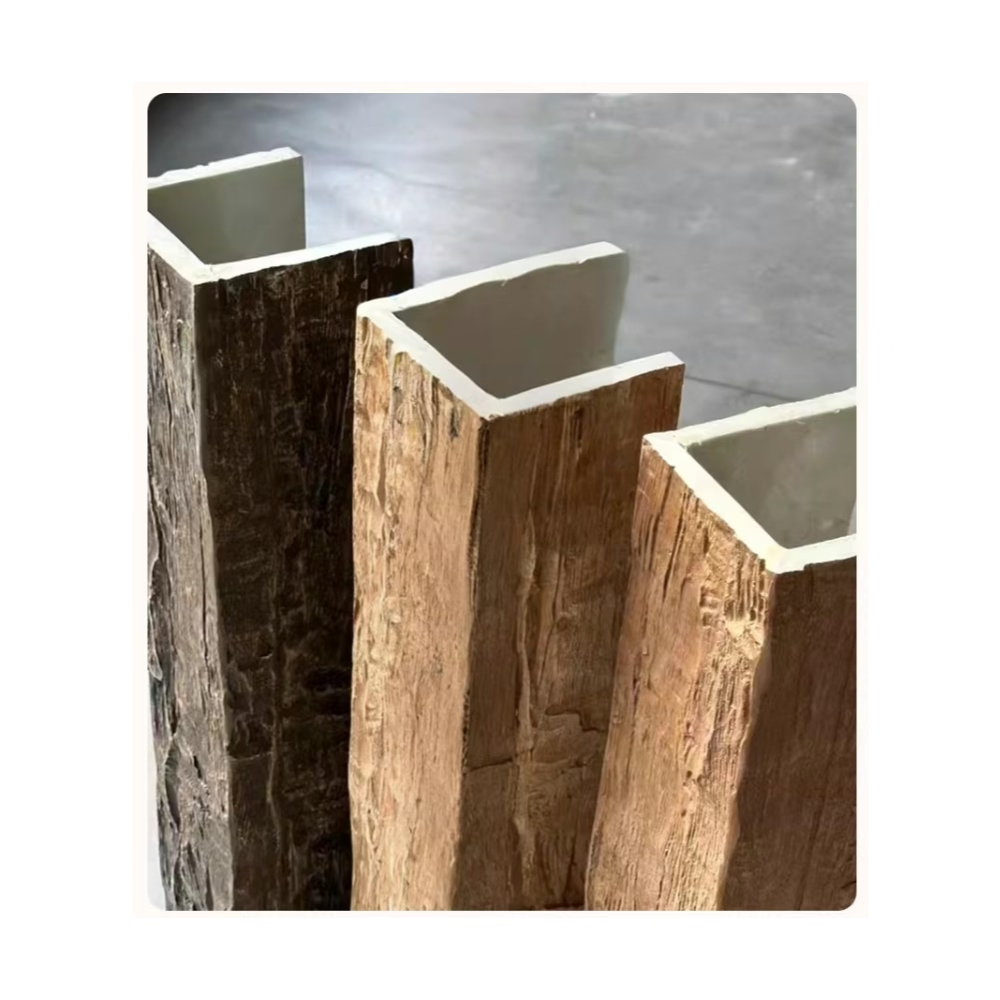
The Practical Farmhouse Advantage of Polyurethane
Genuine reclaimed timber beams carry the complications of reclaimed material: variable dimensions, uncertain provenance, potential pest or mold issues, and the environmental concerns associated with salvaged wood from unknown sources. For luxury homeowners who want the farmhouse aesthetic without these complications, polyurethane faux beams offer a practical alternative that does not compromise the visual result.
Reclaimed timber beams, despite their authenticity, often require significant preparation before installation. Old nails, bolt holes, and surface contamination must be addressed. The beams may be warped, twisted, or dimensionally inconsistent in ways that complicate installation and affect the finished appearance. Polyurethane beams arrive pre-finished and dimensionally consistent, ready for installation without preparation.
The weight difference is also significant. Reclaimed beams of substantial size can weigh hundreds of pounds, requiring structural support, specialized installation, and multiple installers. Polyurethane beams of equivalent visual presence weigh a fraction as much, allowing installation by two people without structural reinforcement or specialized equipment. For renovation projects where the existing ceiling was not designed to support heavy timber, this weight advantage is often decisive.
Farmhouse Style Room by Room
The modern farmhouse aesthetic applies differently across different rooms in a home, and the beam specification should respond to these room-specific requirements.
Farmhouse kitchens — arguably the most important room in the modern farmhouse home — benefit from beams that introduce warmth into what is often a predominantly white or light-toned color scheme. Beams crossing a white-plastered kitchen ceiling provide the contrast and texture that prevents the room from feeling clinical, while the farmhouse finish complements shaker-style cabinets, open shelving, and farmhouse sinks without competing for attention.
Living rooms and great rooms with farmhouse styling can accommodate larger, more dramatic beam installations. Exposed truss systems, multiple parallel beams, or beams combined with tongue-and-groove ceiling sheathing create a more substantial farmhouse statement in these larger spaces. The key is to ensure that the beam scale is proportional to the room — beams that are too small will feel inadequate, while beams that are generously scaled make the room feel properly designed.
Bedrooms in modern farmhouse homes benefit from a softer, more restrained beam application. A single exposed beam crossing the ceiling at mid-span, or a pair of beams running parallel above the bed, introduces the farmhouse aesthetic without overwhelming the intimate scale of a sleeping space. Lighter finishes work particularly well in bedrooms, where the goal is warmth and comfort rather than the dramatic farmhouse statement appropriate to living spaces.

Maintaining the Farmhouse Aesthetic Over Time
One of the practical advantages of polyurethane farmhouse beams is their ability to maintain their appearance indefinitely. Reclaimed timber, despite its aged appearance, continues to age and change after installation — sometimes in ways that are desirable and sometimes not. Surface checking, further weathering, and finish degradation can alter the beam's appearance significantly over the years.
Polyurethane beams, by contrast, are dimensionally and visually stable. They do not continue to weather, warp, or degrade. The farmhouse finish is permanent, maintaining its authentic appearance without the ongoing evolution that characterizes genuine reclaimed material. For homeowners who want a consistent, predictable aesthetic that will look the same in ten years as it does today, this stability is a genuine advantage.
The easy-clean surface of polyurethane also supports the practical realities of busy households. Farmhouse living involves real life — children, pets, cooking, entertaining — and surfaces that can be wiped clean without specialized treatment make that reality more manageable. Spills, scuffs, and accumulated dust are addressed with routine cleaning rather than requiring refinishing or repair.
Technical References
ASTM standards cited in every specification
Test Data
Lab results from internal testing program
Updated 2026
Reviewed against current product specs

