Boutique hotels occupy a distinctive position in the hospitality landscape. Smaller than their chain counterparts, they compete not through brand recognition or standardized product but through personality — the accumulated effect of design decisions that communicate a specific point of view about what hospitality should feel like. This personality is expressed through every surface, every fixture, and every material choice. The ceiling, often neglected in standard hotel construction, becomes a significant opportunity for boutique hotel designers to demonstrate the care and intentionality that distinguish their properties from the competition.
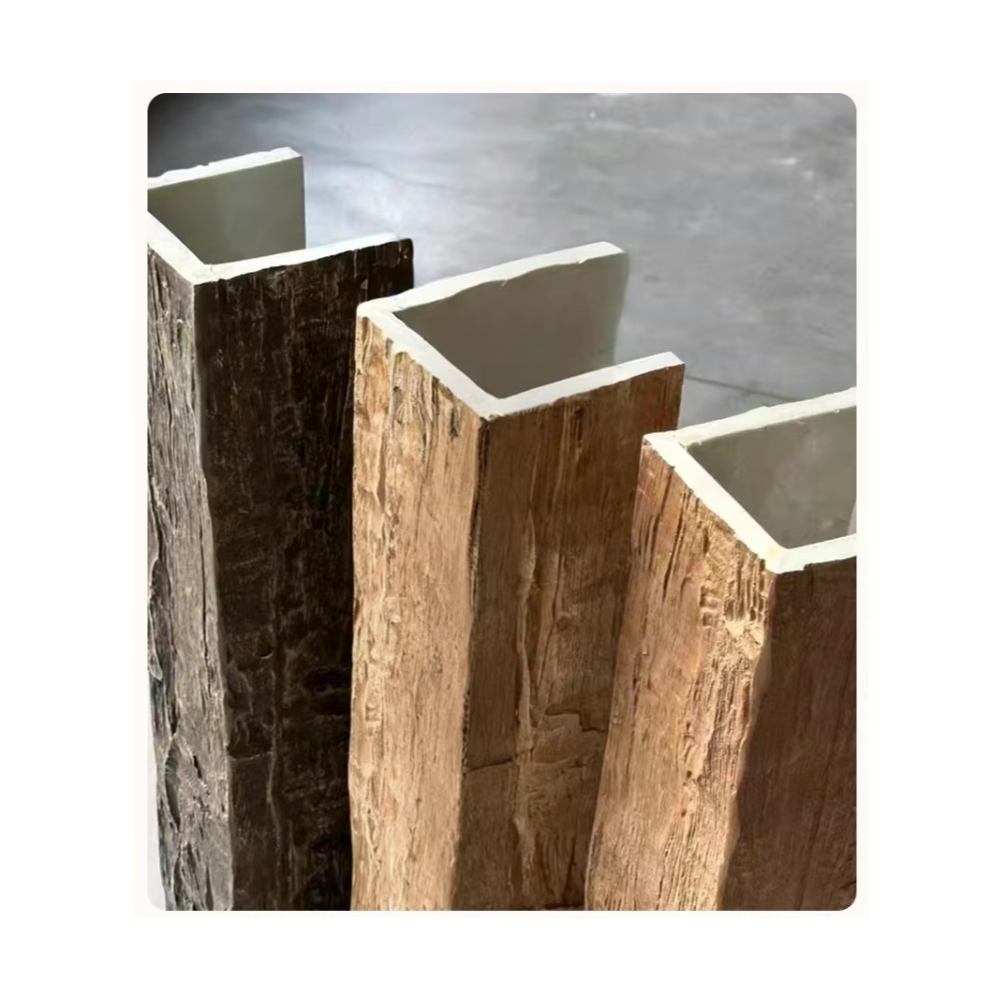
PU faux beams are particularly well-suited to boutique hotel applications. They offer the visual warmth and crafted character that boutique hotels seek, combined with the practical performance characteristics — durability, fire safety, maintenance simplicity — that commercial hospitality environments demand. They install cleanly and quickly, supporting the compressed construction schedules that boutique hotel projects typically operate under. And they are available in enough variety to support the design diversity that is essential to the boutique hotel identity.
Ceiling Design as Brand Expression
Boutique hotel brand identity is often expressed through design details that larger properties overlook. The ceiling is one such detail — visible from the bed, from the desk, from every position in the room, and present in every photograph a guest takes of their accommodation. A ceiling that contributes positively to the room's design reinforces the property's brand identity; a ceiling that is simply painted plaster misses an opportunity to communicate design quality.
PU faux beams transform the ceiling from a passive surface into an active element of the room's design. The warm wood texture creates an immediate impression of quality and intentionality. The architectural rhythm introduced by the beam arrangement adds visual interest that rewards extended observation. The shadows and depth created by the beam profiles animate the room throughout the day as light conditions change.
This ceiling-level design investment also photographs exceptionally well. In an era where social media presence directly influences boutique hotel marketing success, design elements that create compelling photographs represent genuine marketing assets. Beams add visual interest and depth to room photography in ways that flat ceilings simply cannot match.
Guest Room Applications and Considerations
Guest rooms present specific challenges for ceiling beam installations that must be addressed in the design and specification process. The primary concern is headroom: standard guest rooms typically have ceiling heights of nine to ten feet, which limits the beam profile that can be used without creating a sense of compression.
Low-profile beams — those with minimal depth relative to their width — work best in standard-height guest rooms. These beams introduce texture and warmth without significantly reducing the perceived ceiling height. The key is proportion: a beam that is too deep will make the room feel shorter, while a beam that is appropriately scaled will enhance the room's sense of proportion without visual intrusion.
Beam finish selection for guest rooms should consider the room's overall color palette and the property's brand standards. Warm oak or honey-toned finishes work in a wide range of room palettes and tend to photograph consistently well across different lighting conditions. Darker finishes like walnut or mahogany create more dramatic rooms but require more deliberate color coordination to avoid feeling heavy or overly dark.
Guest room beam installations should also account for the practical realities of housekeeping and maintenance. Beds must be made, rooms must be cleaned, and maintenance must be performed in spaces with ceiling beams. The mounting system should be robust enough to withstand incidental contact from housekeeping carts, luggage, and cleaning equipment without visible damage.
Corridor and Common Area Applications
Boutique hotel corridors and common areas offer opportunities for larger-scale beam installations than guest rooms typically allow. Higher ceilings, larger room dimensions, and more generous design budgets in public areas create space for more dramatic beam treatments.
Corridor ceilings are often overlooked as design opportunities, but they are experienced by every guest on every trip through the property. Beams running the length of a corridor create a sense of journey and progression, guiding guests from the elevator to their rooms with architectural interest rather than bare plaster. The beam arrangement can also provide subtle wayfinding cues — different beam finishes or patterns on different floors, for example, helping guests orient themselves within the property.
Lobby, lounge, and restaurant areas in boutique hotels typically feature the most ambitious beam installations. These spaces have the ceiling height, the design budget, and the design intent to support substantial ceiling treatments. Double-beam arrangements, coffered beam systems, or beams combined with other ceiling details like exposed structure or decorative plasterwork create focal points that anchor the public area design.
Fire Safety and Commercial Compliance
Boutique hotel projects must comply with the same fire safety regulations that govern all commercial hospitality buildings. These regulations, which vary by jurisdiction, typically establish minimum performance requirements for interior finish materials based on their location and the building's occupancy classification.
PU faux beams manufactured with fire-retardant additives can meet the most demanding commercial fire performance ratings. Class A ratings, which certify minimal flame spread and smoke development, are typically achievable and are required in many jurisdictions for corridor and public area installations. Guest room requirements are often less stringent but still demand fire-retardant materials.
The manufacturer's fire test documentation should be reviewed early in the design process to ensure that the specified product meets the project jurisdiction's requirements. This documentation — typically third-party test reports from recognized testing laboratories — confirms that the product's fire performance has been independently verified rather than merely claimed by the manufacturer.

Coordinating Beams With Hotel Brand Standards
Boutique hotel groups and independent properties that operate multiple locations face the challenge of maintaining design consistency across their portfolio. If the property's identity is built partly on its distinctive design, that design must be reproducible across new projects and renovations.
PU faux beams support this reproducibility because they are manufactured to specification rather than selected from available inventory. The profile, finish, and mounting details can be documented as part of the brand design standards, and every subsequent project can specify beams that match those standards exactly. This documentation ensures that the design integrity of the original property is maintained as the portfolio grows.
For independent boutique hotels that do not operate multiple properties, the reproducibility consideration shifts to renovation and refresh projects. A well-documented beam specification ensures that future renovations can match the existing installation, maintaining the property's design character even as other elements are updated.
Practical Installation in Operational Properties
Boutique hotel renovation projects in operational properties present installation challenges that new construction does not face. Guest rooms cannot be taken out of service for extended periods, construction activities must minimize guest disruption, and the installation process must not compromise the cleanliness and safety standards that guests expect.
PU faux beam installation supports these operational constraints through its speed and cleanliness. A guest room beam installation can often be completed within a single working day, allowing the room to return to service quickly. The installation process generates minimal dust compared to plasterwork or tile installation, reducing the cleaning burden and the risk of disturbing adjacent occupied rooms.
The lightweight nature of polyurethane beams also simplifies logistics in operational properties. Materials can be transported through corridors and elevators without the specialized equipment that heavy timber would require. Installers can handle beams without assistance, reducing the number of personnel needed on-site and the corresponding impact on hotel operations.
Delivering Boutique Hotel Design Excellence
The boutique hotel industry's fundamental proposition is that smaller, individually designed properties can deliver better guest experiences than larger, standardized alternatives. This proposition is won or lost through design detail — through the accumulated quality of hundreds of material choices, each one reflecting the designer's commitment to excellence.
Ceiling beams in boutique hotel applications are part of this commitment. They are visible, lasting, and memorable in ways that most ceiling treatments are not. They contribute warmth, texture, and architectural character to spaces that would otherwise feel generic. And they are available in premium polyurethane specifications that deliver genuine timber aesthetics alongside the practical performance that commercial hospitality demands.
For boutique hotel designers seeking to differentiate their properties through design quality, PU faux beams represent one of the most cost-effective investments available. The impact per dollar spent is exceptionally high, and the long-term value — in guest satisfaction, brand identity, and maintenance simplicity — extends far beyond the initial installation.
Technical References
ASTM standards cited in every specification
Test Data
Lab results from internal testing program
Updated 2026
Reviewed against current product specs


