Private clubs occupy a unique niche in the hospitality landscape. Unlike hotels or restaurants that must appeal to transient visitors, these establishments cultivate repeat patronage from members who return week after week, year after year. The design challenge extends beyond initial impressiveness to sustained comfort and visual interest that rewards familiarity. Members should discover new subtleties over years of attendance, finding the space consistently engaging without ever feeling dated.
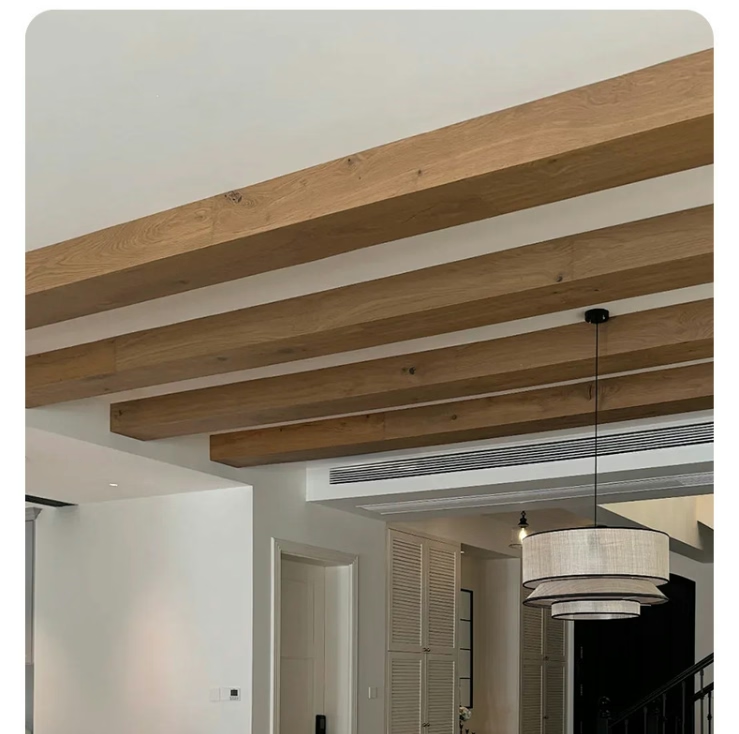
Ceiling architecture plays a crucial but often overlooked role in achieving this balance. The overhead plane defines spatial volume, absorbs sound, and establishes visual hierarchy that guides movement through complex floor plans. In club environments where distinct areas serve different purposes—intimate card rooms, lively bar spaces, formal dining chambers—the ceiling treatment becomes a unifying element that ties disparate functions into a cohesive whole.
Luxury polyurethane faux beams address these requirements with particular elegance. They provide the warmth and authenticity that club members expect from exclusive establishments while offering practical advantages perfectly suited to commercial environments with demanding maintenance schedules and high turnover of cleaning staff.
Acoustic Performance in Social Spaces
Club interiors must manage competing acoustic demands. Intimate conversation requires sound absorption that prevents cross-table eavesdropping, while bar areas benefit from livelier acoustics that support energetic social interaction. Traditional wood-beam construction contributes to acoustic complexity, with beams creating ceiling voids that trap and reflect sound in unpredictable ways.
Polyurethane faux beams can be specified with built-in acoustic properties when manufactured with open-cell formulations or integrated sound-absorbing cores. These specialized versions manage reverberation without sacrificing visual warmth, creating spaces where conversation flows naturally without excessive noise buildup. The acoustic performance remains consistent over time, unlike fabric panels that may require replacement or professional cleaning to maintain effectiveness.
In multi-level club spaces, beams serve additional acoustic functions by breaking up large ceiling planes that would otherwise create echoing volumes. The visual texture introduced by beam patterns helps scatter sound energy across multiple reflection angles, reducing standing waves and flutter echoes that plague large, hard-surfaced rooms.
Design Cohesion Across Club Spaces
Private clubs typically occupy multiple rooms with distinct functions, yet members should experience a coherent environment as they move between spaces. Ceiling beams provide an ideal unifying element because they read consistently from room to room while accommodating functional variations in treatment and scale.
Consider a club with a formal dining room, casual lounge, and outdoor terrace. The dining room might feature substantial exposed beams with intricate corbels, establishing grandeur appropriate to its function. The lounge, designed for relaxed conversation, could employ lighter beam profiles with integrated task lighting—continuing the visual theme while adapting to different needs. The terrace might incorporate beams into covered structures, extending the indoor aesthetic to transitional spaces without exposing natural wood to weather concerns.
This spatial continuity reinforces member familiarity with the environment, creating a sense of place that transcends individual room functions. The club becomes more than a collection of amenities—it becomes a coherent world that members navigate confidently, knowing how each space relates to the whole.
Material Durability in High-Traffic Environments
Club interiors face wear patterns distinct from residential settings. Hundreds of different people pass through weekly, each bringing varying awareness of their surroundings and concern for maintaining them. Accidental impacts from drink trays, luggage, golf bags, or service equipment create collision risks that residential designers rarely consider. Moisture from wet umbrellas, perspiring glasses, and climate-controlled condensation threatens materials near floor level and can migrate upward through capillary action.
Polyurethane faux beams resist these challenges with characteristic resilience. The surface resists scratching and denting from accidental contact better than natural wood, which mars easily and requires refinishing to restore appearance. Spilled beverages wipe clean without staining or watermarking that would necessitate professional attention.
The material's dimensional stability proves particularly valuable in club environments with fluctuating occupancy. Weekend crowds generate heat and humidity that dissipate during weekday lulls. This thermal cycling stresses building structures, creating subtle movements that real wood absorbs through expansion and contraction—eventually leading to gaps, cracks, and fasteners that work loose. Polyurethane accepts these movements without distress, maintaining tight joints and secure mounting indefinitely.
Aesthetic Flexibility for Evolving Design Trends
Private clubs must balance tradition with contemporary relevance. Long-standing establishments risk appearing dated if they cling too rigidly to nostalgic aesthetics, yet aggressive modernization alienates members who value the establishment's historical character. Ceiling beams offer a strategic solution by providing timeless architectural vocabulary that adapts easily to shifting stylistic preferences.
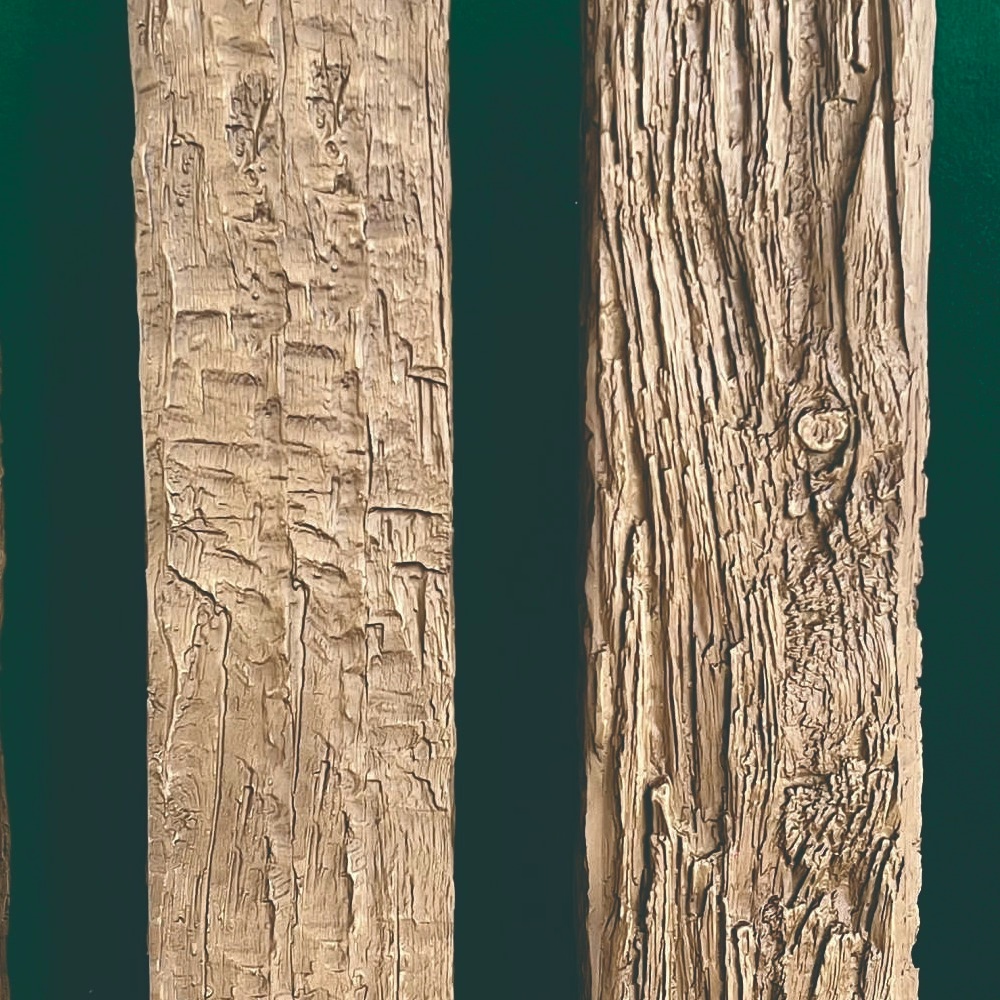
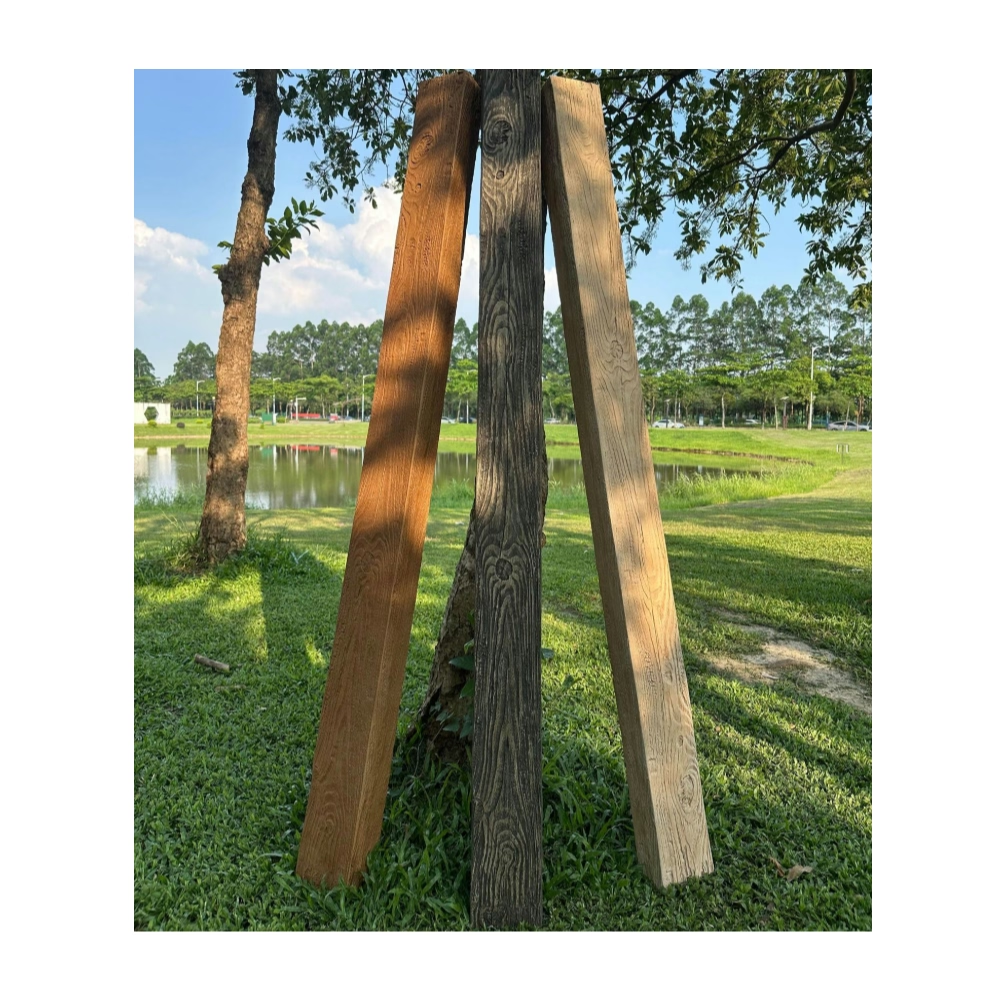
Traditional club environments benefit from beams finished to suggest aged oak or rich mahogany, with optional distressing treatments that imply generations of use without compromising structural integrity. The same beam profile in a matte black finish suits contemporary spaces seeking industrial sophistication. Neutral primed beams accept custom paint matching, allowing gradual color evolution as design directions shift.
This flexibility proves valuable during renovation phases when clubs modernize select spaces while maintaining others. New installations can reference existing beam vocabulary while incorporating updated finishes or configurations, creating dialogue between old and new that feels intentional rather than incongruous.
Integration with Climate and Lighting Systems
Modern clubs require sophisticated environmental systems that earlier establishments never anticipated. Heating, cooling, and ventilation infrastructure demands ceiling space, while lighting design has evolved from simple ambient illumination to complex layered systems supporting multiple atmospheres within single rooms.
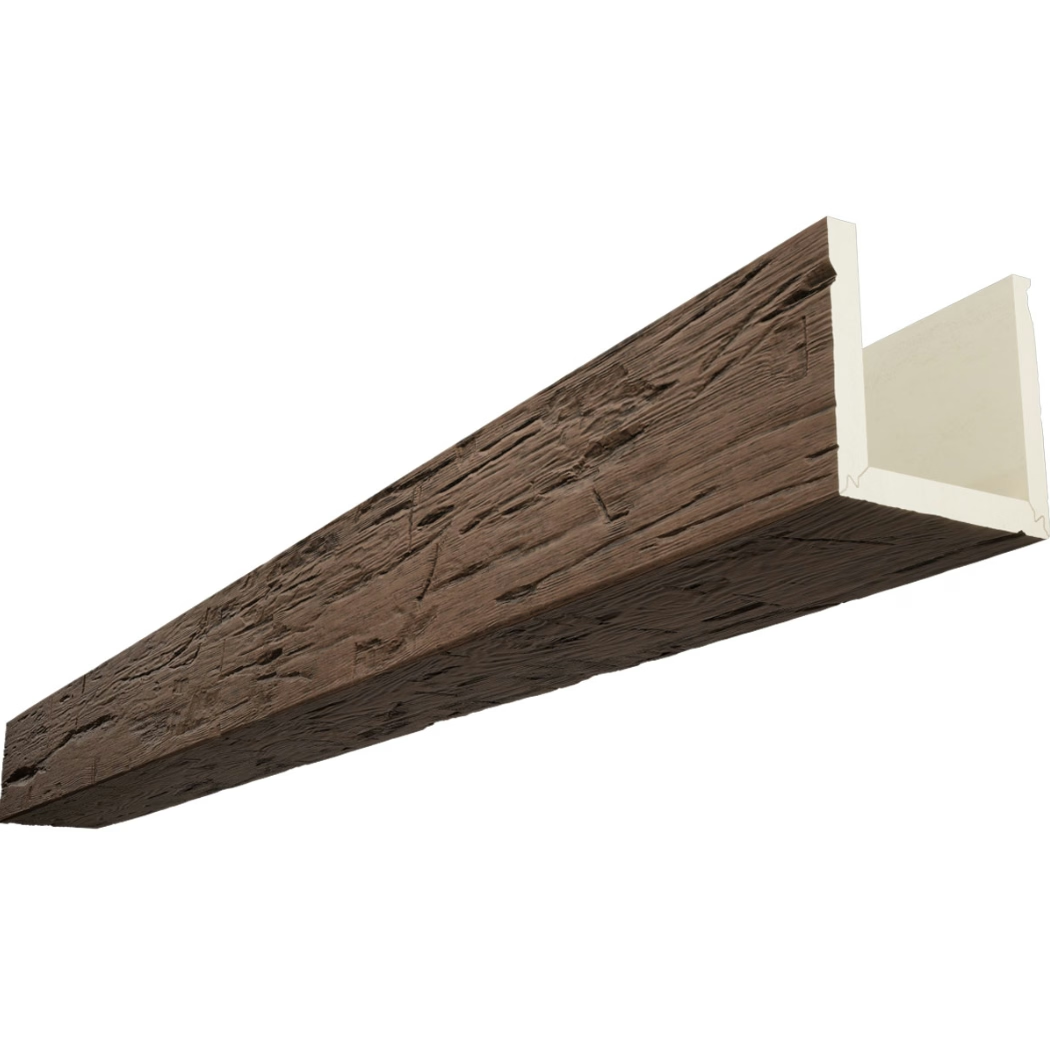
Faux beams accommodate these requirements with thoughtful integration options. Hollow beam profiles conceal ductwork, electrical conduit, and low-voltage cabling that would otherwise compromise ceiling appearance. This built-in raceway functionality simplifies installation and allows future reconfiguration without ceiling demolition.
Lighting integration extends beyond basic power supply to include thermal management for fixture housings and proper clearance from combustible materials. Polyurethane's heat resistance exceeds building code requirements for most residential and commercial lighting applications, though manufacturers provide specific guidance for fixture types that generate significant thermal output.
Customization for Brand Identity
Many private clubs cultivate distinct visual identities that reinforce membership value and distinguish them from competing establishments. While architectural elements should generally avoid overt branding, subtle customization through beam specifications can reinforce identity without becoming cartoonish or corporate.
Custom beam profiles, proprietary finish formulations, and signature corbel designs create recognizable elements that members associate with their club. These distinctive touches reward attention to detail while remaining subordinate to the overall design composition. The investment in custom fabrication amortizes across the beam installation's lifespan, becoming part of the club's permanent visual character.
Consider commissioning custom-molded beam textures that capture local wood species or historical architectural details specific to the region. These unique elements create authenticity that generic catalog products cannot match, reinforcing the club's connection to place and tradition.
Staff Training and Maintenance Procedures
Commercial environments require maintenance protocols that staff can execute consistently regardless of experience level or tenure. Polyurethane faux beams simplify training by reducing the specialized knowledge required for wood care—staff need only understand basic cleaning procedures rather than wood-specific treatments.
Develop simple protocols for routine maintenance: dusting with soft brushes or microfiber attachments, spot cleaning with mild detergent solutions, and inspection checkpoints during regular cleaning cycles. Document these procedures in visual format accessible to all staff regardless of language background.
For more substantial cleaning requirements, polyurethane tolerates pressure washing in commercial settings where access permits, a capability that natural wood absolutely prohibits. This flexibility allows clubs to maintain beam installations as part of comprehensive cleaning schedules without scheduling specialized treatment sessions.

The private club interior must serve dual masters: immediate visual impact that justifies membership investment and sustained aesthetic quality that rewards long-term patronage. Luxury faux beams meet these requirements with uncommon grace, delivering architectural presence that endures through years of service without demanding the constant attention that natural materials require.
Your members deserve an environment that reflects their expectations of excellence. Let ceiling architecture carry its share of that responsibility, establishing atmosphere and character that distinguish your establishment from ordinary spaces.
Coordinating Beam Design with Furniture Procurement
Club interiors typically unfold through phased procurement rather than single purchasing events. The beam installation establishes architectural context that furniture selection should complement rather than compete with. Consider establishing beam specifications early in design development, using beam samples as references during furniture selection.
Heavier, more substantial beams call for correspondingly substantial furniture—large-scale case pieces, generously proportioned seating, and substantial table designs that balance the overhead mass. Lighter beam profiles accommodate more delicate furniture selections, preventing visual top-heaviness that occurs when furniture seems dwarfed by ceiling treatment.
Establish finish relationships between beams and other wood elements in the space. Matching species exactly often produces monotony, while dramatic contrast creates discord. Seek complementary relationships where beam finishes share tonal qualities with furniture while differing in grain pattern and application scale.
Historic Preservation Considerations
Some private clubs occupy landmarked buildings where modifications require regulatory approval. Polyurethane faux beams often qualify for approval where real timber might be prohibited due to structural concerns in historic buildings not designed for contemporary loading. The lightweight nature of polyurethane reduces point loads that might stress historic joists or ceiling structures.
The realistic appearance satisfies preservation officers who may object to obviously contemporary materials in historic contexts. Unlike some synthetic alternatives, quality faux beams render convincingly in architectural settings where authenticity matters. Historic review boards increasingly accept these materials as appropriate alternatives when installation would otherwise be infeasible.
Document the installation thoroughly for future reference, including specifications that would allow matching repairs or extensions decades hence. This documentation protects the club's design investment and ensures future renovation work can proceed coherently.
Seasonal and Event Styling
Private clubs host diverse programming throughout the year, from casual happy hours to formal galas. Beam installations should accommodate temporary styling without permanent commitment or damage risk. Consider permanent attachment points for seasonal elements—garland hooks, lighting clips, or bracket receivers that accept various accessories.
Holiday installations present particular opportunities for clubs seeking festive atmosphere. Wrap beams with greenery, drape ornamented garland, or string lights along beam spans to establish seasonal identity without permanent alteration. Staff can install and remove these elements efficiently when attachment points simplify the process.
Corporate events may require more understated styling—minimal floral arrangements, subtle lighting adjustments, or branded elements positioned to reinforce company identity without overwhelming the architectural environment. Plan for these requirements during initial design, ensuring beams accommodate potential future uses beyond traditional club programming.
Budget Allocation and Cost Management
Commercial beam installations warrant careful budgeting that accounts for total project costs rather than material unit prices alone. Professional installation, finish preparation, integration with building systems, and contingency reserves for unforeseen conditions often exceed material costs significantly.
Develop detailed specifications that balance aesthetic goals against budget constraints. Premium finishes and custom fabrication increase upfront costs but may reduce long-term maintenance expenses. Simple catalog selections minimize initial investment but may require more frequent attention to maintain appearance.
Consider lifecycle costs when evaluating bids. The lowest-cost installation may carry higher maintenance requirements or shorter service life, ultimately costing more than a higher-initial-investment approach emphasizing durability.

Private clubs represent significant membership investments, and their interiors should reflect that value consistently. Luxury faux beams provide architectural substance that elevates every space they occupy, supporting the club's mission to deliver exceptional environments for discerning members.
Whether renovating a historic property or building new, consider how ceiling architecture contributes to the complete member experience. The investment pays dividends through member satisfaction, referral generation, and the establishment of a visual identity that endures for generations.
Technical References
ASTM standards cited in every specification
Test Data
Lab results from internal testing program
Updated 2026
Reviewed against current product specs