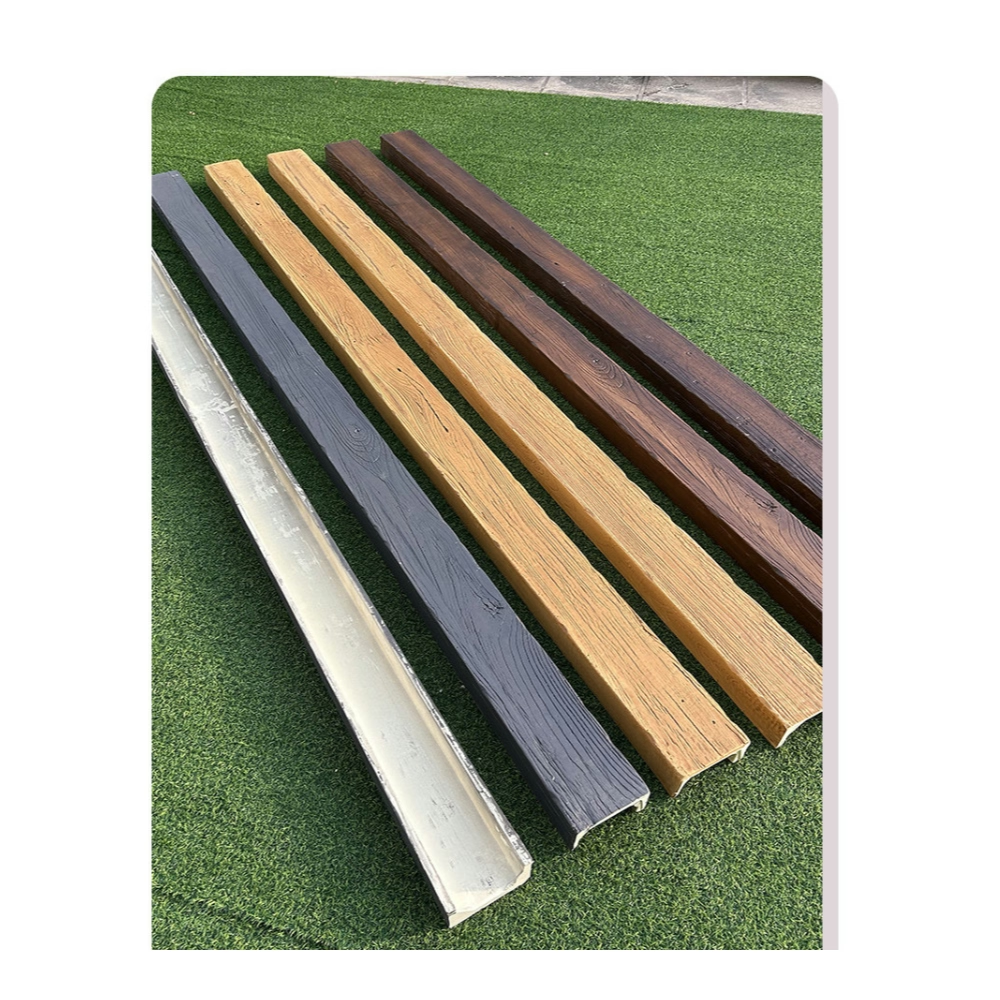
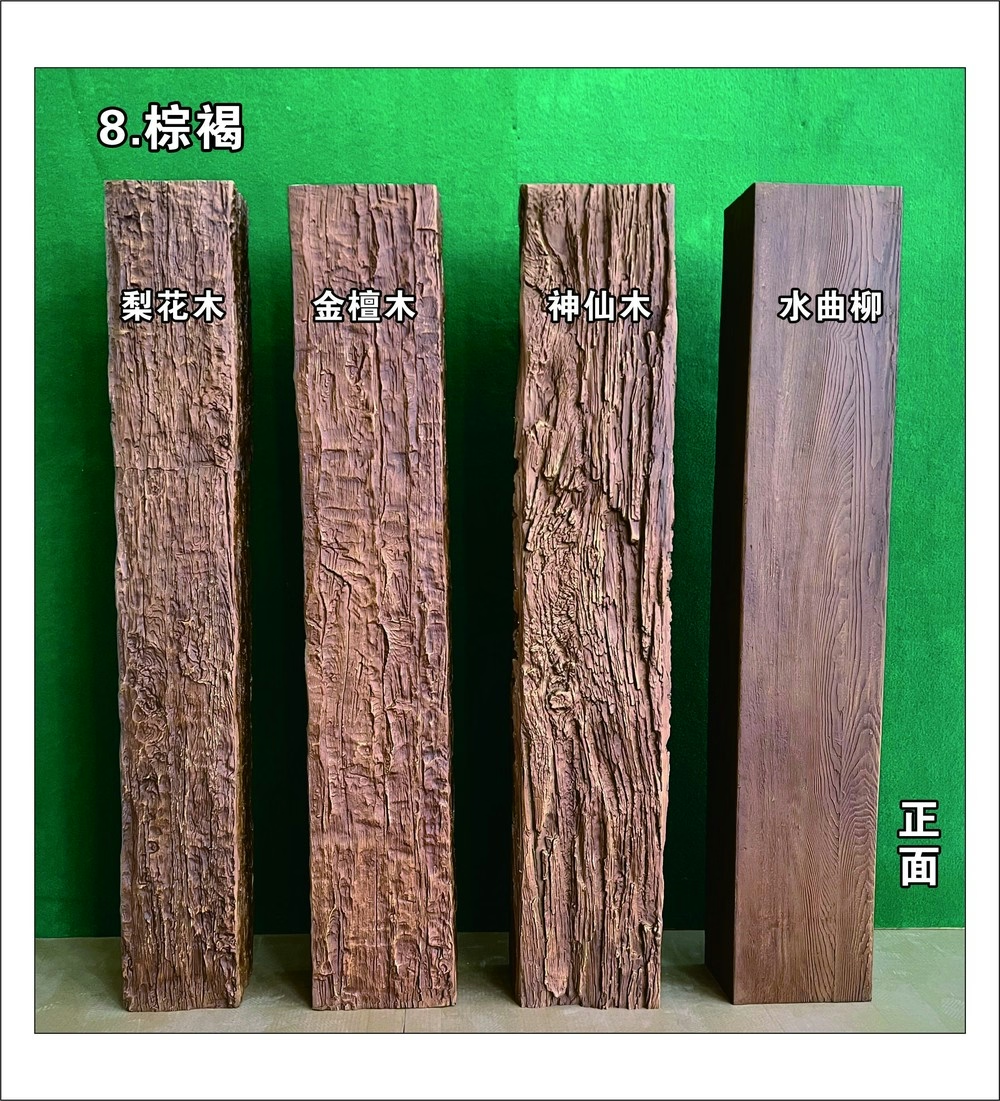
Standard sizing exists for practical reasons—it streamlines manufacturing, reduces inventory costs, and allows products to reach market at accessible price points. These efficiencies benefit consumers in most applications, where standard dimensions accommodate common requirements adequately. Yet architectural spaces rarely conform to standard dimensions, and the compromises required to fit off-the-shelf beams into non-standard spaces often undermine design intentions in ways that observant viewers immediately recognize. Made-to-measure custom beams eliminate these compromises, providing precision fit that honors design vision regardless of spatial complexity.
Polyurethane faux beams prove particularly well-suited to custom sizing, with manufacturing processes that accommodate non-standard dimensions without the challenges that natural timber presents. The material's consistent characteristics, uniform density, and predictable working properties enable fabrication to exact specifications that timber's natural variability makes unreliable.
The Limitations of Standard Sizing
Standard beam dimensions developed from common construction requirements, with popular sizes reflecting typical ceiling heights, room spans, and aesthetic preferences. These standards serve the majority of applications adequately, yet leave significant gaps for projects with non-standard requirements.
Ceiling heights vary significantly across construction types and eras. Historic buildings may feature twelve-foot ceilings or higher, while modern construction often provides nine feet or less. Neither extreme accommodates standard beams well—the tallest standard beams disappear overhead in grand spaces, while the smallest standard options overwhelm intimate rooms.
Room proportions create additional challenges. Long, narrow spaces may require beam spans that exceed standard lengths, forcing spliced installations that compromise visual continuity. Wide rooms may accommodate standard spans but demand beam counts that create either overcrowded or underwhelming ceiling treatments.
Architectural features complicate standard sizing further. Beams that must navigate around skylights, HVAC components, or structural elements require non-standard dimensions that catalog products cannot provide. The compromises required to fit standard sizes often produce awkward results that distract from otherwise successful designs.
Advantages of Custom Fabrication
Custom beam fabrication addresses the limitations of standard sizing through precision manufacturing to exact project specifications. This precision eliminates the visual compromises that characterize fitted-standard installations.
Exact dimension matching ensures beams fill intended spaces perfectly, with no gaps requiring cover plates, no excess requiring trimming, and no awkward relationships between beams and surrounding elements. The installation appears intentional rather than adapted, professional rather than improvised.
Custom length production eliminates the spliced joints that standard-length beams require for longer spans. These joints, even when expertly executed, remain visible under close inspection and may telegraph through finishes over time. Single-piece custom beams provide uninterrupted visual continuity that spliced installations cannot match.
Profile customization enables architectural coordination that standard profiles cannot achieve. Corners, transitions, and special conditions receive appropriate treatment when beams are fabricated to match specific requirements rather than adapting standard sections.
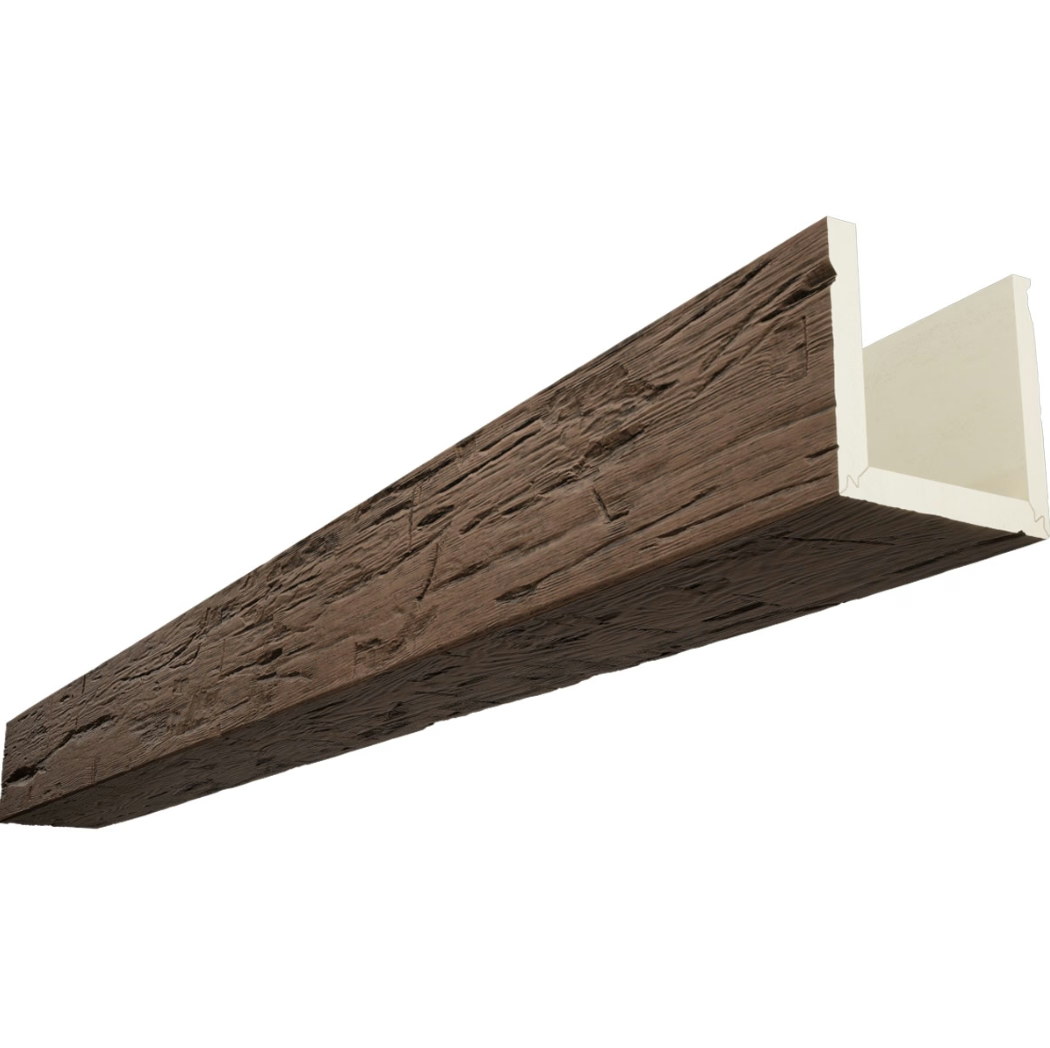
The Custom Fabrication Process
Quality custom beam fabrication follows established processes that ensure accurate production matching client specifications. Understanding these processes helps in planning custom projects and evaluating fabricator qualifications.
Specification development begins with detailed measurement of installation spaces. Professional fabricators often provide measuring services or detailed guidelines that ensure accurate dimension capture. Every relevant measurement—length, width, depth, angles, and clearance requirements—should be documented comprehensively.
Design review follows measurement, with fabricators and clients reviewing specifications before production begins. This review catches potential issues before manufacturing commitment, allowing corrections that would prove expensive once production starts. Clear communication during this phase prevents costly errors.
Production uses precision manufacturing techniques that ensure dimensional accuracy. Computer-controlled cutting and shaping provide consistency that manual methods cannot achieve, while finishing processes add surface quality that complements dimensional precision.
Quality inspection verifies that finished products match specifications before shipping. Experienced inspectors examine dimensions, surface quality, finish consistency, and packaging adequacy. This inspection protects against shipping errors and manufacturing defects that would compromise installation.
Common Custom Sizing Scenarios
Certain installation scenarios recur frequently in custom beam projects, with experienced fabricators prepared to address each effectively.
Sloped ceilings present common custom requirements where beams must match roof pitch angles. Standard beams assume level installation, requiring significant modification for angled applications. Custom fabrication produces beams with appropriate end cuts and mounting preparations that simplify angled installation.
Vaulted and cathedral ceilings often exceed standard beam lengths, requiring custom production for spans that catalog products cannot address. Custom longer beams eliminate the spliced joints that would otherwise compromise these dramatic ceiling treatments.
Non-standard room dimensions create situations where standard beam counts produce either overcrowded or sparse ceiling treatments. Custom sizing enables appropriate beam selection for specific dimensions, ensuring consistent spacing that standard products cannot achieve.
Architectural transitions—between beam directions, around structural elements, or along irregular walls—benefit from custom fabrication that produces precisely shaped pieces. These transition elements often determine installation success, with custom production ensuring proper fit.
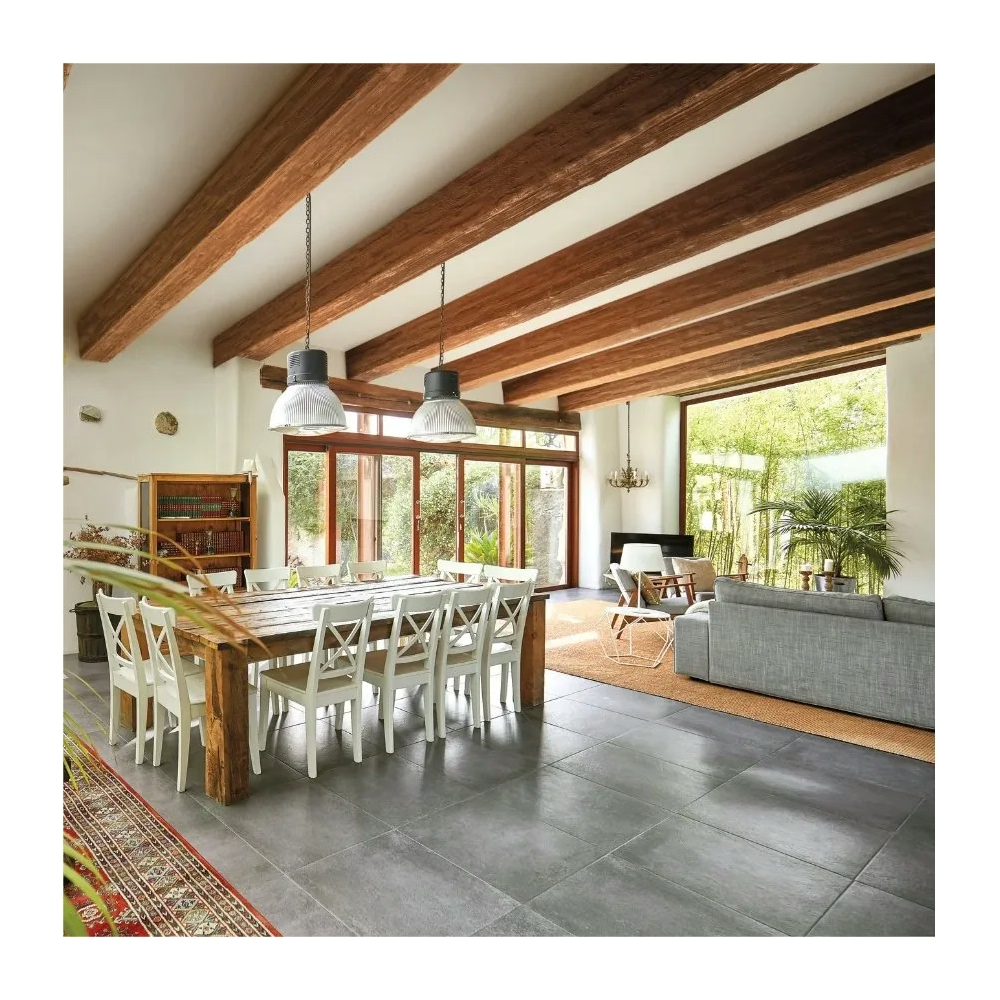
Profile Customization Options
Beyond simple dimensional customization, custom fabrication enables profile modifications that standard products cannot provide.
Custom cross-sections create entirely original beam shapes that express specific design visions. Whether referencing historical profiles, matching unique architectural details, or developing original forms, custom profile development expands available options dramatically.
Decorative end treatments—capped, corbelled, or shaped terminations—customize beam ends that standard products leave unfinished. These details contribute significantly to overall appearance, and custom treatment ensures appropriate execution.
Integrated features—built-in lighting channels, concealed mounting provisions, or specialized connection points—may be incorporated into custom beam designs. These features simplify installation while hiding infrastructure that would otherwise require visible elements.
Finish Customization for Custom Beams
Custom beams benefit from finish customization that coordinates precisely with specific project requirements.
Color matching to existing elements—adjacent woodwork, furniture, or decorative items—ensures visual continuity that standard finish options cannot achieve. Provide reference samples during specification to enable accurate matching.
Custom finish development creates proprietary colors that become part of project identity. Work with finish specialists to develop colors that cannot be achieved through standard options, creating distinctive results that distinguish the installation.
Surface texture customization complements dimensional and color customization. The combination of unique dimensions, matched colors, and appropriate texture creates beams that integrate seamlessly with surrounding elements while providing the architectural presence that justifies custom investment.
Lead Times and Production Scheduling
Custom fabrication requires extended lead times compared to standard product availability, and project planning should account for these requirements.
Typical custom beam production requires four to eight weeks from specification approval through shipping, depending on complexity and current production volume. Complex projects with multiple custom elements may require longer periods.
Rush production options may be available for urgent requirements, though expedited service typically carries premium pricing. When possible, build adequate lead time into project schedules to avoid rush charges.
Shipping transit time adds to production duration, with international delivery requiring extended periods. Plan for these additional requirements when establishing project timelines.
Cost Considerations for Custom Fabrication
Custom beams cost more than equivalent standard products due to the specialized manufacturing they require. Understanding cost factors enables appropriate budget planning.
Dimensional customization typically adds modest premium to equivalent standard products, with per-unit cost increases based primarily on material quantity rather than complexity of dimension changes.
Profile customization increases costs more significantly, with custom molds or significant tooling modifications adding setup charges that amortize across production quantities. Smaller quantity orders bear proportionally higher tooling costs per unit.
Finish customization costs vary based on the complexity of requested treatments. Standard finishes may carry minimal premium, while elaborate custom finishing may approach the cost of premium standard products.
Quantity economics apply to custom production, with larger orders reducing per-unit costs through more efficient setup utilization. When multiple spaces require matching custom beams, consolidating orders may prove more economical than separate small orders.
Working with Custom Beam Suppliers
Successful custom beam projects benefit from clear communication and collaborative relationships with fabricators.
Provide comprehensive specifications that eliminate ambiguity. Include dimensions with clear orientation, reference any existing elements for coordination, and specify finish requirements in detail. Clear specifications prevent misinterpretation that could produce incorrect products.
Request samples before full production when unfamiliar with a fabricator's work. Small sample pieces demonstrate finish quality, dimensional accuracy, and surface texture before large commitments.
Maintain communication throughout production, addressing questions promptly and requesting progress updates for longer projects. Early identification of potential issues enables resolution before they become expensive problems.
Installation Considerations for Custom Beams
Custom beams require installation approaches that respect their precision-crafted nature.
Handle custom beams with care that prevents damage to precisely dimensioned surfaces. The exact fit that custom production enables requires corresponding care during transport and positioning.
Verify fit before permanent mounting, checking that dimensions match requirements and that beam positioning achieves intended visual results. Minor adjustments may still be possible during this verification phase.
Secure mounting appropriately for custom weight and profile. The specific characteristics of custom beams may require mounting approaches that differ from standard beam installation.
Quality Assurance and Warranty
Quality custom fabricators stand behind their products with meaningful warranty coverage and responsive support.
Verify warranty terms before ordering, understanding coverage scope, duration, and claim processes. Quality fabricators provide clear warranty documentation that protects buyer interests.
Inspect custom beams upon delivery, verifying that received products match ordered specifications. Any discrepancies should be reported immediately for resolution.
Retain documentation—specifications, correspondence, samples—for future reference. This documentation supports warranty claims, enables matching repairs, and facilitates future orders.

Made-to-measure custom size polyurethane faux wood beams eliminate the compromises that standard sizing imposes, providing precision fit that honors design vision regardless of spatial complexity. The investment in custom fabrication returns through installations that appear professionally designed rather than adapted, with results that justify the additional cost and lead time.
Your space deserves beams that fit perfectly rather than beams that merely approximate requirements. Custom fabrication makes this precision possible.
Evaluating Custom Fabricators
Not all custom beam suppliers deliver equivalent quality, and supplier selection significantly affects project outcomes.
Request portfolios demonstrating custom work, examining finish quality, dimensional accuracy, and variety of completed projects. Quality fabricators should demonstrate range and consistency across multiple installations.
Verify manufacturing capabilities, understanding whether products are produced in-house or outsourced. In-house production typically provides better quality control and more responsive problem resolution.
Assess communication quality during initial inquiries. Responsive, clear communication suggests similar attention during production, while vague or delayed responses may indicate problems ahead.
Customization Beyond Beams
Custom fabrication capabilities often extend beyond basic beam production, enabling comprehensive architectural millwork solutions.
Custom corbels, brackets, and support elements complement custom beams, providing consistent quality and coordinated design across all architectural wood elements.
Built-in millwork—shelving, cabinetry, and architectural trim—may be available from fabricators with broader manufacturing capabilities. Consolidating suppliers may simplify coordination while ensuring consistent quality.
Accessories—beam caps, end treatments, and transition pieces—often require custom development to integrate seamlessly with custom beam installations. Verify that suppliers can provide complete solutions rather than partial offerings.
Planning Your Custom Beam Project
Successful custom beam projects begin with thorough planning that addresses all relevant requirements.
Document existing conditions comprehensively, including measurements, photographs, and notes regarding architectural features that affect beam design. This documentation supports accurate specification development.
Develop clear design intent, understanding exactly what custom beams should accomplish in the overall project. Share this intent with fabricators to enable appropriate recommendations and avoid misunderstanding.
Establish realistic timelines that account for custom fabrication requirements. Rushed projects risk quality compromises that thorough planning prevents.
The Value of Precision Fit
Precision-fitted custom beams provide benefits beyond mere aesthetics, though visual quality remains the primary justification for custom investment.
Installation efficiency improves with custom precision, as beams that fit perfectly require less adjustment and modification during mounting. This efficiency may partially offset higher material costs through reduced labor requirements.
Long-term performance benefits from proper fit, as beams that align precisely with mounting surfaces distribute weight appropriately and maintain position without shifting or settling.
Design confidence comes from knowing that beams will achieve intended results, eliminating the anxiety that approximation-based selection produces when results remain uncertain until installation.

Made-to-measure custom size polyurethane faux wood beams represent the ultimate expression of architectural precision, eliminating the compromises that standard sizing imposes on non-standard spaces. The investment in custom fabrication returns through installations of exceptional quality that honor design vision completely.
Consider custom beams for your next project where standard sizing falls short of requirements. The precision fit, unlimited customization options, and design confidence that custom production provides distinguish exceptional installations from merely adequate ones.
Technical References
ASTM standards cited in every specification
Test Data
Lab results from internal testing program
Updated 2026
Reviewed against current product specs