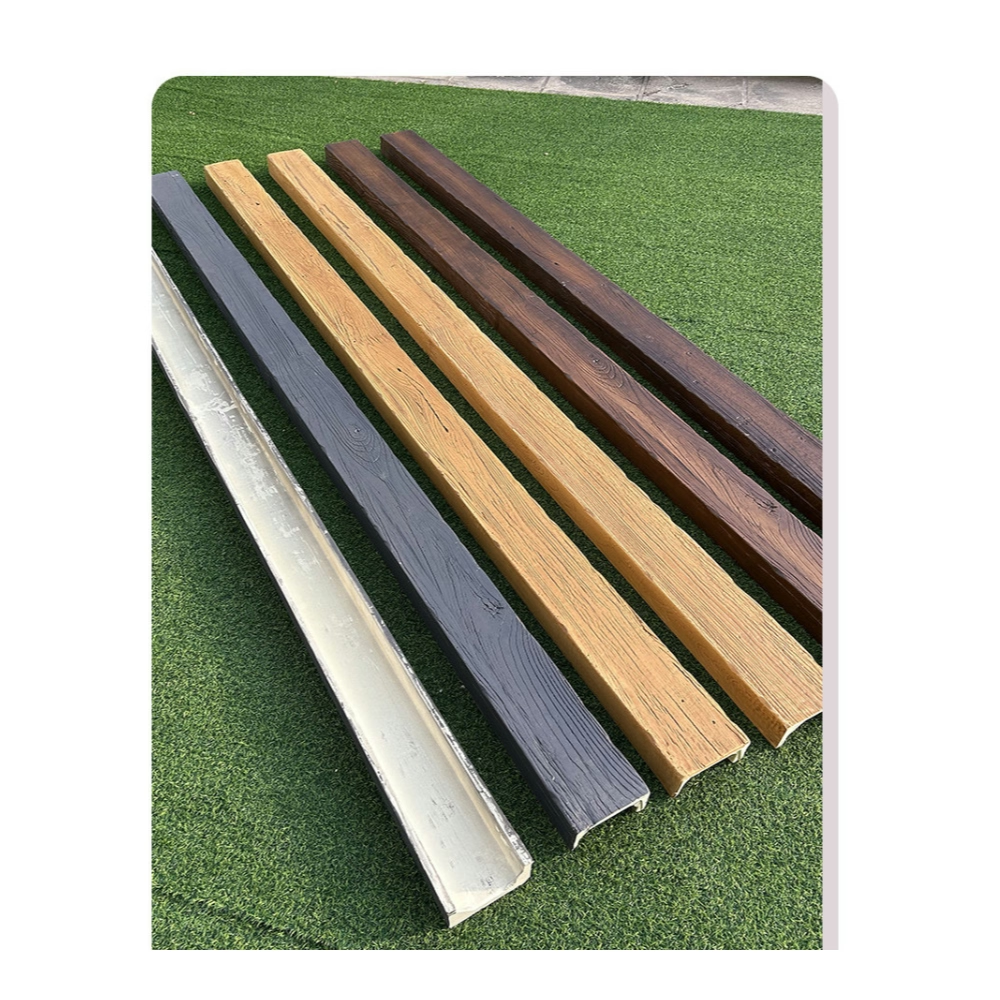
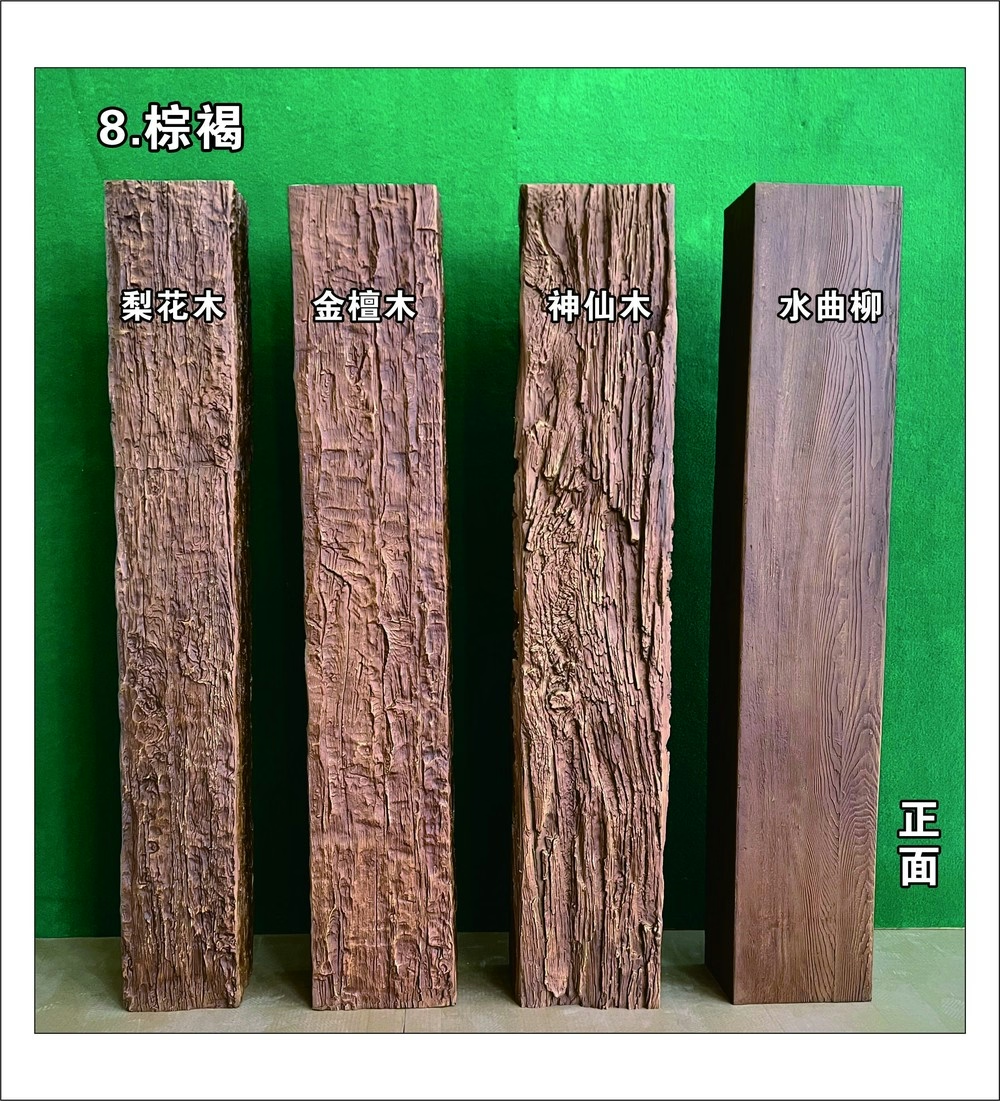
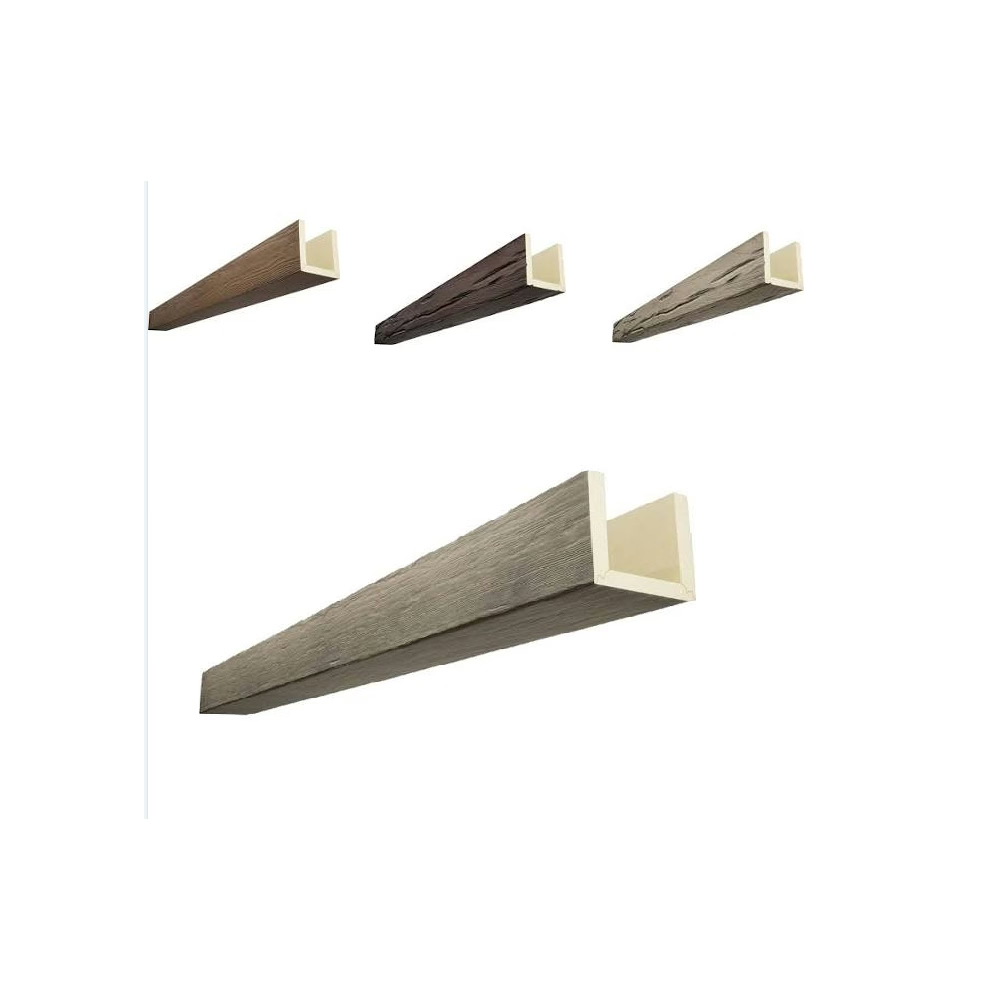
Corner pieces represent the detail work that separates amateur beam installations from professional-quality results. When ceiling designs require beams running in multiple directions or wrapping around architectural features, corner pieces handle the geometric transitions smoothly. Polyurethane faux beams paired with matching corner components create the impression of solid, continuous timber construction—the kind of finish that makes observers assume they're seeing authentic reclaimed beams rather than lightweight polyurethane reproductions.
The availability of matching corner pieces varies by manufacturer and product line. Premium lines typically offer comprehensive accessory programs including inside corners, outside corners, mitered returns, and decorative finial options. Budget or economy product lines may offer limited corner options, requiring creative solutions or accepting visible seam workarounds that compromise the finished appearance. Understanding corner piece availability before specifying products prevents installation challenges.
Types of Corner Pieces and Their Applications
Inside corners connect beams meeting at interior angles, typically where ceiling beams extend from walls or meet at room corners. These pieces feature profiles that complement beam profiles while providing clean transition surfaces where pieces meet. Inside corner pieces may be designed for tight corner installations requiring minimal gap-filling, or for eased corners with visible return details.

Outside corners address convex transitions where beams turn outward, such as vaulted ceiling edges or beam runs continuing down wall surfaces. These pieces must withstand potential impact exposure while maintaining visual continuity with adjoining beam sections. Outside corner pieces typically feature fuller profiles providing visual weight appropriate for exposed transitions.
Mitered corners represent a different approach where beam ends are cut at precise angles to meet cleanly without separate corner pieces. This technique suits modern installations where minimal detail is preferred and skilled installers can achieve precise cuts. Mitered installations require careful measurement and potentially specialized cutting equipment, making them less forgiving than piece-assisted approaches.
Selecting Compatible Corner Components
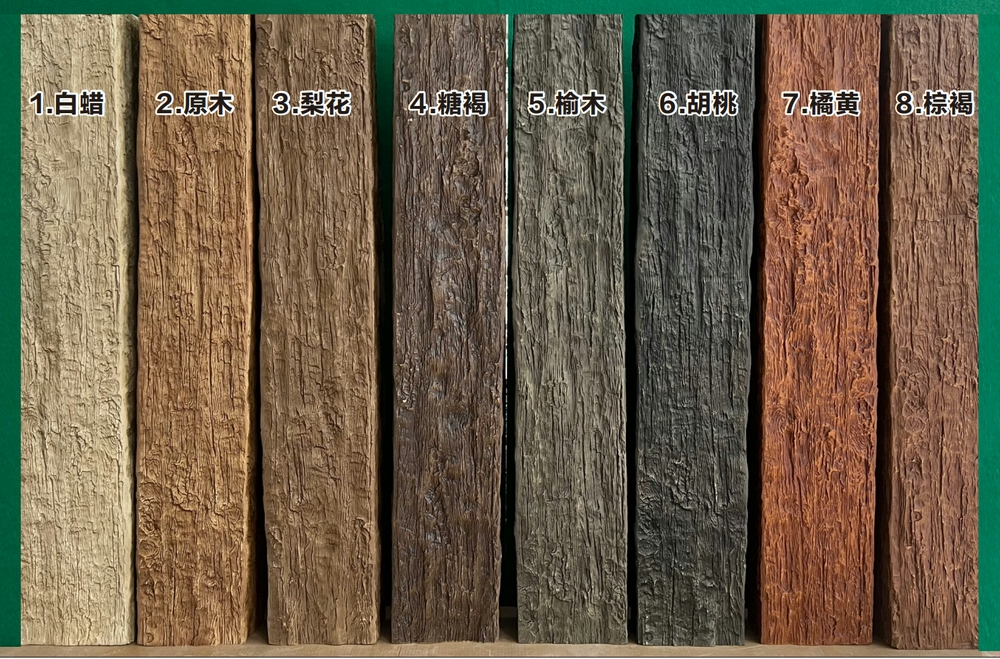
Profile matching ensures corner pieces blend seamlessly with beam bodies. Corners from different manufacturers or mismatched product lines create visible seams where profile differences become apparent. Even subtle variations in texture depth, grain pattern scale, or edge detailing catch viewer attention and undermine the authentic appearance that faux beams aim to achieve.
Color consistency matters equally when corners must match beam finishes. Polyurethane products may exhibit slight color variations between production batches, making it advisable to purchase corner pieces from the same production batch as beam bodies when possible. Requesting samples before major purchases allows color evaluation and ensures acceptable matching.
Size compatibility ensures corners accommodate beam dimensions properly. Mismatched dimensions result in corners that sit too deep or protrude beyond beam surfaces, creating alignment problems that prove difficult to conceal. Confirming dimensions across all components before purchase prevents installation surprises.
Installation Techniques for Professional Results
Surface preparation for corner installation mirrors beam installation requirements. Corners mount to clean, dry, structurally sound surfaces capable of supporting the combined weight of beams and corner pieces. Stud or joist locations should be marked for fastener placement, and any uneven surfaces should be addressed before mounting to prevent gaps.
Dry fitting allows adjustments before permanent attachment. Positioning corner pieces against beam ends before applying adhesive reveals any fitting issues while confirming alignment. Small gaps or misalignments can often be addressed through repositioning or minor trimming, while significant issues may require replacement components.
Adhesive selection affects long-term performance. Polyurethane-compatible construction adhesives provide strong bonds while allowing for the slight material movement that temperature changes create. Applying adhesive to both mating surfaces, spreading evenly, and pressing firmly ensures complete contact. Temporary bracing during adhesive curing prevents shifting that creates gaps.
Finishing and Seaming Techniques
Seam concealment transforms potentially visible joints into invisible transitions. Quality caulk matching the beam finish color fills minor gaps effectively, particularly when applied carefully and tooled smooth before curing. For gaps exceeding caulk capacity, wood filler or epoxy wood filler provides more substantial fills that accept sanding and finishing.
Color matching between components sometimes requires on-site finishing. Priming all surfaces uniformly before applying finish coats ensures consistent color absorption across different components. Multiple thin coats provide better coverage than single heavy applications, with light sanding between coats for smooth results.
Texture blending may be necessary when corners exhibit factory textures slightly different from beam surfaces. Light abrading with fine sandpaper or synthetic steel wool followed by consistent priming and painting creates unified texture across all components. This blending work proves easier when all pieces receive identical finishing treatment from the start.
Common Installation Mistakes to Avoid
Rushed measurement results in misaligned corners requiring remedial work or replacement components. Taking time to measure twice, marking clearly, and double-checking before cutting or drilling prevents frustration and waste. Complex corner layouts may benefit from cardboard mockups confirming fit before committing materials.
Insufficient adhesive or fastener spacing creates weak joints vulnerable to movement and separation. Corners experience more stress than straight beam runs due to changes in direction and potential impact exposure. Following manufacturer fastener spacing recommendations and using appropriate adhesive quantities ensures durable connections.
Ignoring expansion and contraction creates problems in environments with significant temperature variation. Polyurethane materials expand and contract with temperature changes, and corner installations must accommodate this movement without creating visible gaps or joint failures. Expansion gaps at corner connections, concealed behind beams, prevent buckling and separation.
Planning Corner Installations for Complex Layouts
Complex ceiling designs with multiple beam directions require systematic planning that maps each component's location before beginning installation. Drawing installation sequences helps identify the optimal order for assembly—typically starting from a fixed reference point and working outward to ensure alignment continuity.
Coordinating corner placement with lighting, HVAC registers, and ceiling access panels prevents conflicts that require remedial work. Identifying potential interferences during planning allows adjustment before installation commitment. Where conflicts prove unavoidable, repositioning beams slightly often provides workable solutions without major redesign.
Coordinating corner installation with other trades prevents conflicts and ensures clean results. Electricians running wiring through beam areas, painters finishing surrounding surfaces, and other contractors all affect beam installation timing and conditions. Communicating installation sequences and protection requirements prevents damage and rework.
Technical References
ASTM standards cited in every specification
Test Data
Lab results from internal testing program
Updated 2026
Reviewed against current product specs