
The journey toward an authentic-looking faux timber beam installation involves countless decisions, each contributing to the overall impression of craftsmanship and attention to detail. Among these decisions, corbel selection carries particular significance because corbels occupy visually prominent positions where beams meet walls and other structural elements. When custom beam installations call for non-standard configurations or unique aesthetic expressions, finding and specifying matching decorative polyurethane corbels becomes a creative challenge requiring systematic evaluation of available options.
Custom installations differ from standard applications by definition—they don't follow conventional patterns or fit catalog-specified configurations. This differentiation creates both opportunities and challenges. Opportunities arise from the freedom to create exactly what's envisioned. Challenges emerge when standard components don't obviously satisfy unique requirements.
Principles of Corbel and Beam Matching
Visual weight relationship between corbels and beams establishes the foundational matching principle. Heavy, substantial beams require corbels capable of supporting their visual mass without appearing inadequate. Conversely, lighter beam profiles need correspondingly scaled corbels that don't overwhelm through excessive presence. Evaluating visual weight before selecting corbels prevents mismatched proportions that undermine authentic appearance.

Style alignment ensures corbels and beams speak the same design language. Traditional beam profiles suggest corbels featuring period-appropriate detailing—carved details, architectural moldings, and decorative brackets characteristic of historical construction. Modern beams call for simplified corbel forms with clean lines and minimal ornamentation. Mixing style periods within a single installation creates visual confusion rather than the layered interest that period mixing can sometimes achieve.
Material and finish compatibility completes the matching trinity. Polyurethane corbels should accept the same finishing treatments as polyurethane beams, allowing unified color and texture across all components. When mixing materials—for example, wood corbels with polyurethane beams—consider how different materials will weather, age, and respond to environmental conditions differently over time.
Corbel Profile Categories and Applications
Bracket-style corbels feature open designs where decorative arms extend from a central mounting point toward the beam above. These lighter-weight corbels suit applications where visual interest matters more than structural implication. Traditional designs drew inspiration from shipbuilding and furniture construction, creating distinctive silhouettes still popular today.
Solid corbels present continuous material from mounting surface to beam contact point, suggesting greater load-bearing capability. These substantial pieces create strong visual presences appropriate for prominent installations. Modern interpretations of solid corbels sometimes incorporate geometric forms while maintaining the fundamental visual weight of traditional designs.
Scroll and decorative corbels incorporate flowing curves, carved details, and ornamental flourishes that maximize visual interest. These elaborate corbels work best in traditionally styled interiors where detailed ornamentation enhances rather than conflicts with surrounding architectural elements. Careful selection prevents decorative corbels from competing with other ornate details in the space.
Sourcing Non-Standard Corbel Configurations
Multiples of identical corbels create symmetry when beams run in parallel or when balanced compositions require matching elements. Finding sufficient quantities of identical corbels sometimes challenges custom installations requiring numerous matching pieces. Checking inventory availability before design commitment prevents later substitutions that compromise visual consistency.
Asymmetrical corbel configurations suit installations where balanced proportions matter more than symmetry. These applications might feature different corbel styles on opposing walls or varying corbel sizes responding to different beam scales in various room areas. Asymmetrical approaches require strong design confidence or professional guidance to execute successfully.
Custom corbel fabrication addresses situations where existing options fail to satisfy specific requirements. Urethane casting services can reproduce custom designs or modify existing corbel patterns to meet unique specifications. While custom fabrication involves higher costs and longer lead times, it provides solutions impossible through catalog selection alone.
Coordinating Corbel Placement with Room Elements
Fireplace mantels frequently incorporate corbel-supported beam elements, creating focal points where careful corbel selection carries particular importance. Mantel corbels must balance supporting the mantel shelf while complementing surrounding trim work and fireplace surrounds. Coordinating corbel style with mantel design and adjacent millwork creates integrated architectural statements.
Kitchen island applications pair corbels with beams spanning above food preparation and gathering areas. These installations benefit from corbels providing support while enhancing the gathering-space atmosphere that islands create. Island corbels often receive more casual treatment than formal living room corbels, reflecting the different functions of these spaces.
Built-in shelving units sometimes feature corbel-supported beam headers, integrating ceiling beams with storage elements. Corbel selection for these applications must coordinate with shelving style, door and drawer hardware, and surrounding room finishes. The challenge increases in open-plan spaces where shelving units must relate to multiple adjacent design zones.
Finishing Custom Corbel and Beam Installations
Factory-finished corbels and beams simplify finishing requirements but limit customization possibilities. When custom installations require specific colors or finishes unavailable from manufacturers, field finishing becomes necessary. Understanding finishing requirements before purchasing prevents discovering finish limitations after commitment.
Color matching across multiple components requires systematic finishing approaches. Breaking down finishing into discrete steps—priming, base coat, glaze or toner application, and topcoat—allows refinement at each stage while maintaining consistency. Testing finishing approaches on scrap pieces or hidden areas before committing to complete installations identifies potential problems.
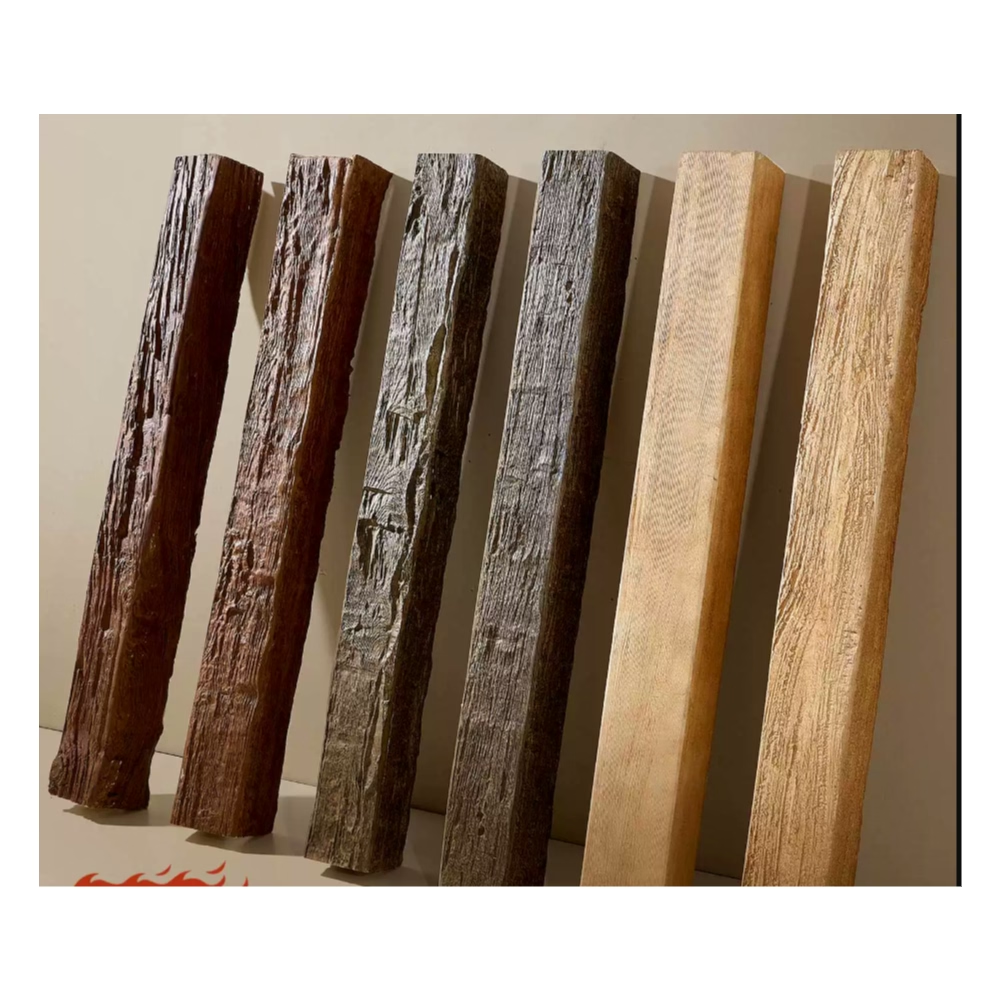
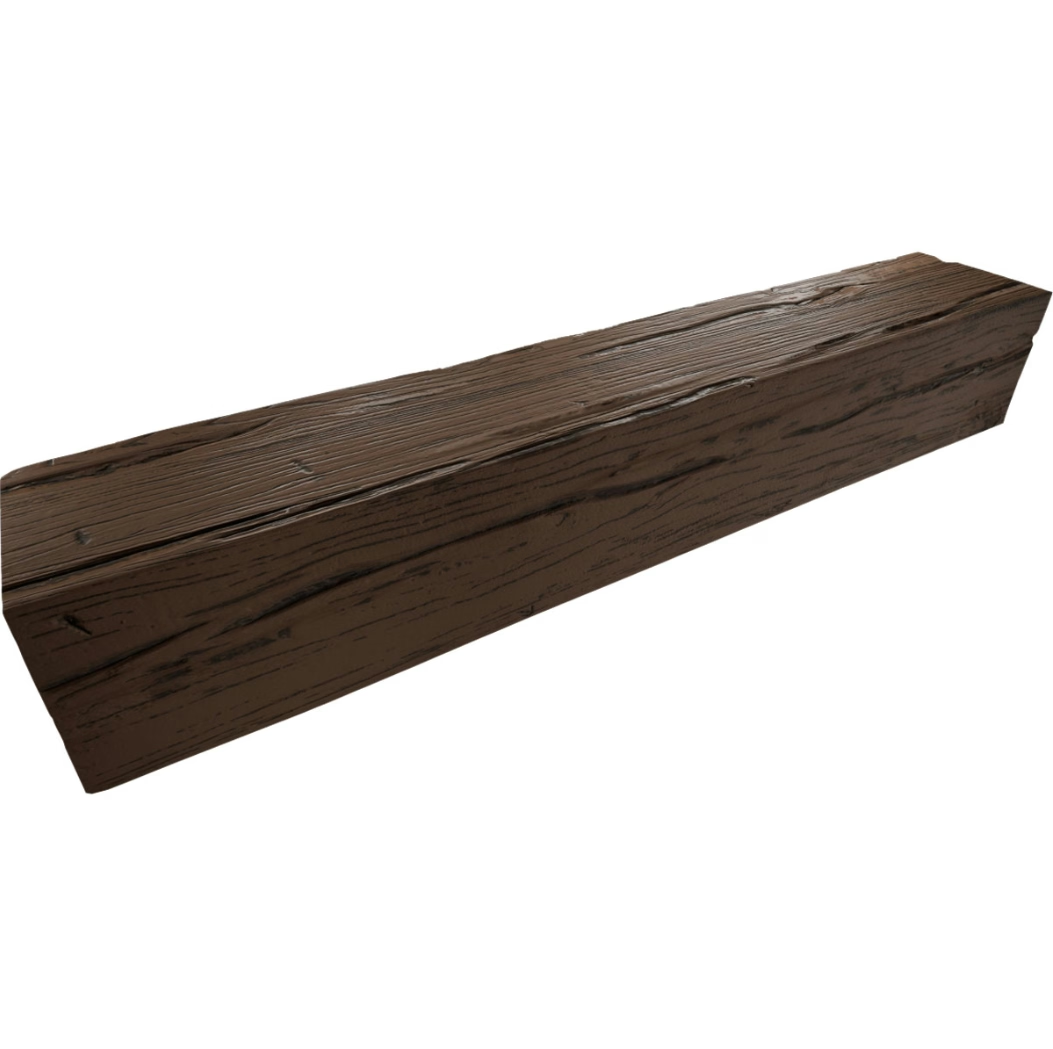
Aging and distressing techniques add character appropriate for rustic installations. These finishing approaches require balancing authenticity with durability—the goal is convincing appearance suggesting years of character accumulation without creating finishes that look artificial or deteriorate prematurely. Professional finishing services specialize in achieving these results for clients without finishing expertise.
Technical References
ASTM standards cited in every specification
Test Data
Lab results from internal testing program
Updated 2026
Reviewed against current product specs


