
The dining room stands apart from other household spaces through its concentrated purpose—gathering for meals, conversation, and connection. When designing these spaces around modern farmhouse tables, ceiling beams offer opportunities to reinforce the warmth and approachability that farmhouse aesthetics celebrate. The key lies in complementing rather than competing with table styling, creating rooms where architectural and furniture elements enhance each other through thoughtful coordination.
Modern farmhouse tables present design challenges unique to their position as dining room anchors. These substantial pieces often command significant visual attention through their scale, materials, and prominent placement. Ceiling beams must establish relationships with these tables without creating visual overload or redundant statements.
Scale and Proportion Fundamentals
Table width establishes the first proportion consideration for beam planning. Beams should generally span the table's width or length, creating alignment that ties furniture to architecture. Crossing beams at right angles over tables create focal points that anchor dining spaces without overwhelming table presence.

Clearance between table surface and beam undersides affects both practical usability and visual proportion. Standard ceiling heights allow eighteen to twenty-four inches of clearance between dining table surfaces and beam undersides for comfortable seating beneath. Lower ceilings may require flush-mounting or shallower beam profiles to maintain usable clearance.
Room proportions influence appropriate beam configurations. Long, narrow dining rooms benefit from beams running across the shorter dimension, visually widening the space. Square or generous rooms accommodate crossing beam patterns that define dining zones without constraining them. Beam orientation should respond to existing architectural features—aligning with windows, doors, or room axes creates intentional compositions.
Material and Finish Coordination
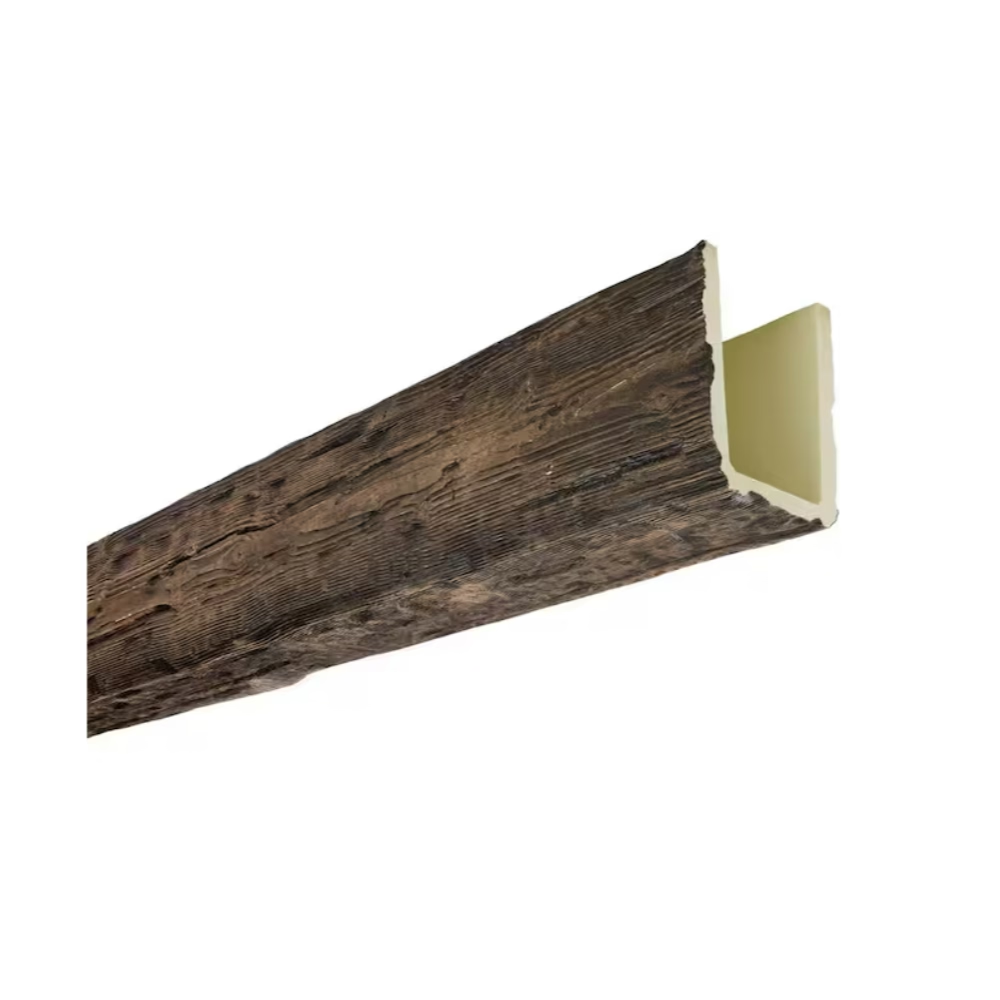
Table material significantly influences appropriate beam treatments. Tables featuring reclaimed or salvaged wood beams benefit from beams that complement or echo the authenticity of salvaged materials. Polyurethane beams in authentic reclaimed finishes capture similar character while providing dimensional consistency and installation convenience.
Painted tables—common in modern farmhouse settings—coordinate with either painted beams or natural wood tones depending on overall color schemes. White or cream farmhouse tables work with both painted white beams and natural wood beams, with the choice responding to other room elements. Gray-painted tables may coordinate better with gray-painted beams or cooler wood tones.
Finish intensity should balance between table and beams. Tables featuring dark, dramatic stains pair well with lighter painted beams that prevent excessive visual weight accumulation. Light-finished tables accommodate both lighter and medium-toned beams, with selection responding to ceiling height and overall room darkness.
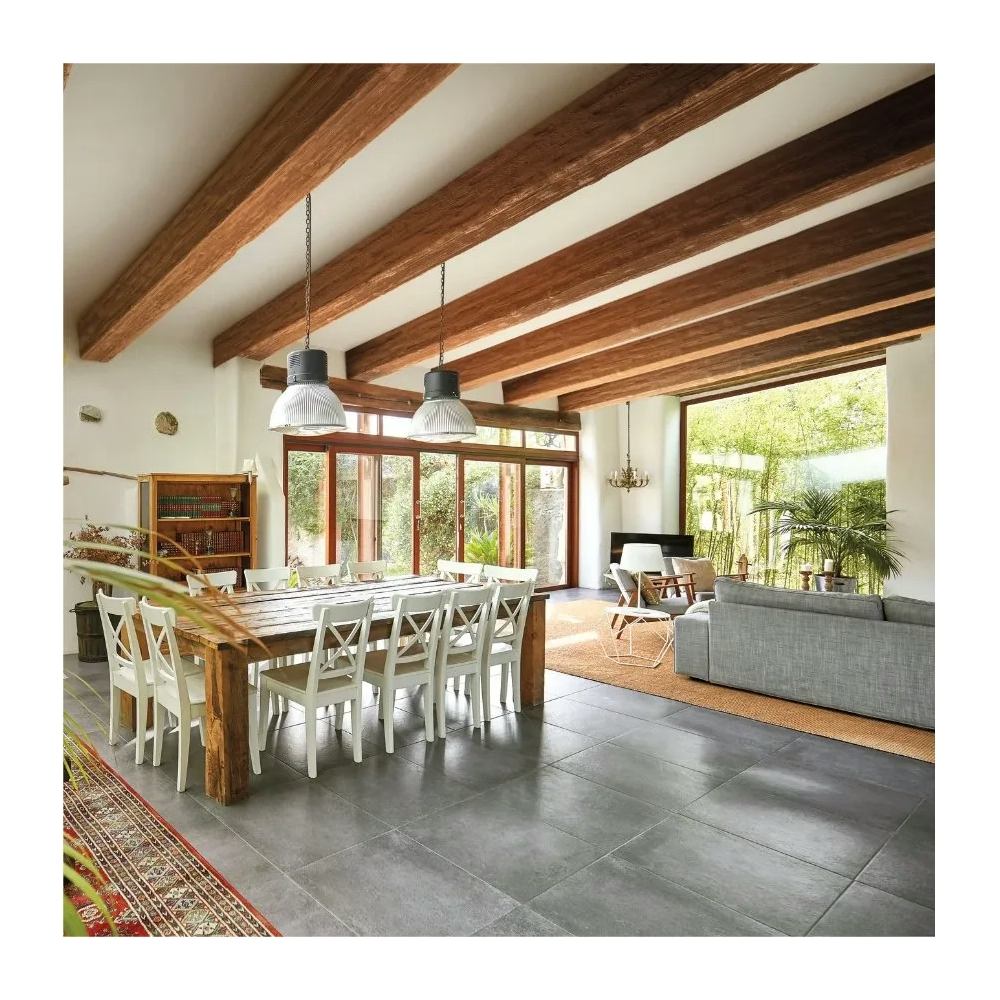
Table Shape Considerations
Rectangular farmhouse tables—the most common configuration—work with single beam runs, double parallel beams, or crossing beam patterns. Single beams work best when tables sit beneath pendant lighting or ceiling fans that create vertical interest. Parallel beam pairs create formal symmetry appropriate for more traditional dining spaces.
Round and oval farmhouse tables challenge beam placement logic designed for rectangular furniture. Single beams over round tables create asymmetric relationships unless tables sit beneath pendant fixtures providing centering. Crossing beam patterns over round tables create interesting geometric intersections that work well in contemporary interpretations of farmhouse aesthetics.
Farmhouse tables with trestle bases or substantial legs may create visual clutter when beams also compete for attention below. In these situations, simpler beam configurations—single beams or minimal patterns—prevent overwhelming visual intensity. The table's architectural qualities should complement rather than compete with ceiling treatments.
Styling for Cohesive Compositions
Coordinating beam profiles with table design vocabulary creates unity. Tables featuring clean, modern lines pair with similarly simplified beam profiles without excessive traditional detailing. Tables with more traditional farmhouse styling—turned legs, apron details, or formal proportions—coordinate with more detailed beam profiles.
Lighting integration between beams and tables affects both function and aesthetics. Pendant fixtures over dining tables create necessary task lighting while adding vertical interest that connects tables to ceiling beams. Fixture selection should coordinate with beam styling—industrial pendants suit modern farmhouse beams, while more traditional fixtures complement traditional beam profiles.
Color sampling helps verify beam-to-table relationships before commitment. Paint chips or finish samples placed near tables allow evaluation in actual room lighting conditions. This verification proves particularly valuable when selecting painted beam finishes that must coordinate with table finishes and surrounding room elements.
Creating Visual Balance
Visual weight distribution throughout dining rooms affects how successfully beams and tables coexist. Heavy beam treatments balance against substantial tables naturally, while lighter table styling may be overwhelmed by heavy beams. The goal is compositions where no single element dominates inappropriately.
Viewing distance affects how intensely design elements read. Dining rooms viewed primarily from table level, while seated, may tolerate bolder beam treatment than rooms where tables are viewed from across open floor plans. Understanding typical viewing distances helps calibrate appropriate design intensity.
Accessory coordination reinforces design themes established by tables and beams. Chair selection, table linens, centerpieces, and wall art should align with the modern farmhouse vocabulary established by architectural and furniture elements. This reinforcement creates cohesive environments rather than assembled collections of individually acceptable pieces.
Technical References
ASTM standards cited in every specification
Test Data
Lab results from internal testing program
Updated 2026
Reviewed against current product specs


