
The quest for unified architectural character in interior spaces leads many designers and homeowners toward complete corbel and beam systems rather than assembled component collections. Polyurethane corbels and beams designed as coordinated sets offer advantages that piecemeal selection struggles to match—consistent styling vocabulary, proven proportional relationships, and simplified selection processes that eliminate guesswork from the equation.
Complete set consideration begins with understanding that these products represent manufacturer investments in design coherence. Manufacturers developing complete sets invest in ensuring that every component works with every other component, creating installations that appear designed rather than assembled. This design investment shows in the finished results.
Design Unity in Complete Sets
Visual language consistency across complete sets ensures that all components speak the same stylistic dialect. When beams feature particular profile characteristics—specific edge treatments, surface textures, or dimensional relationships—coordinated corbels share these characteristics rather than introducing contradictory elements. This unity creates the impression of authentic timber construction rather than decorative imitation.

Scale harmonization between corbels and beams establishes natural-looking proportions that support believable appearance. Authentic timber construction developed proportional relationships over centuries of refinement, and well-designed sets capture these proportions rather than imposing arbitrary scaling. The result appears native rather than contrived.
Finish compatibility ensures that all components accept identical finishing treatments, allowing unified appearance whether products arrive pre-finished or require site finishing. This compatibility proves particularly valuable for projects requiring custom color matching or specific finish systems that must apply uniformly across all components.
Set Component Architecture
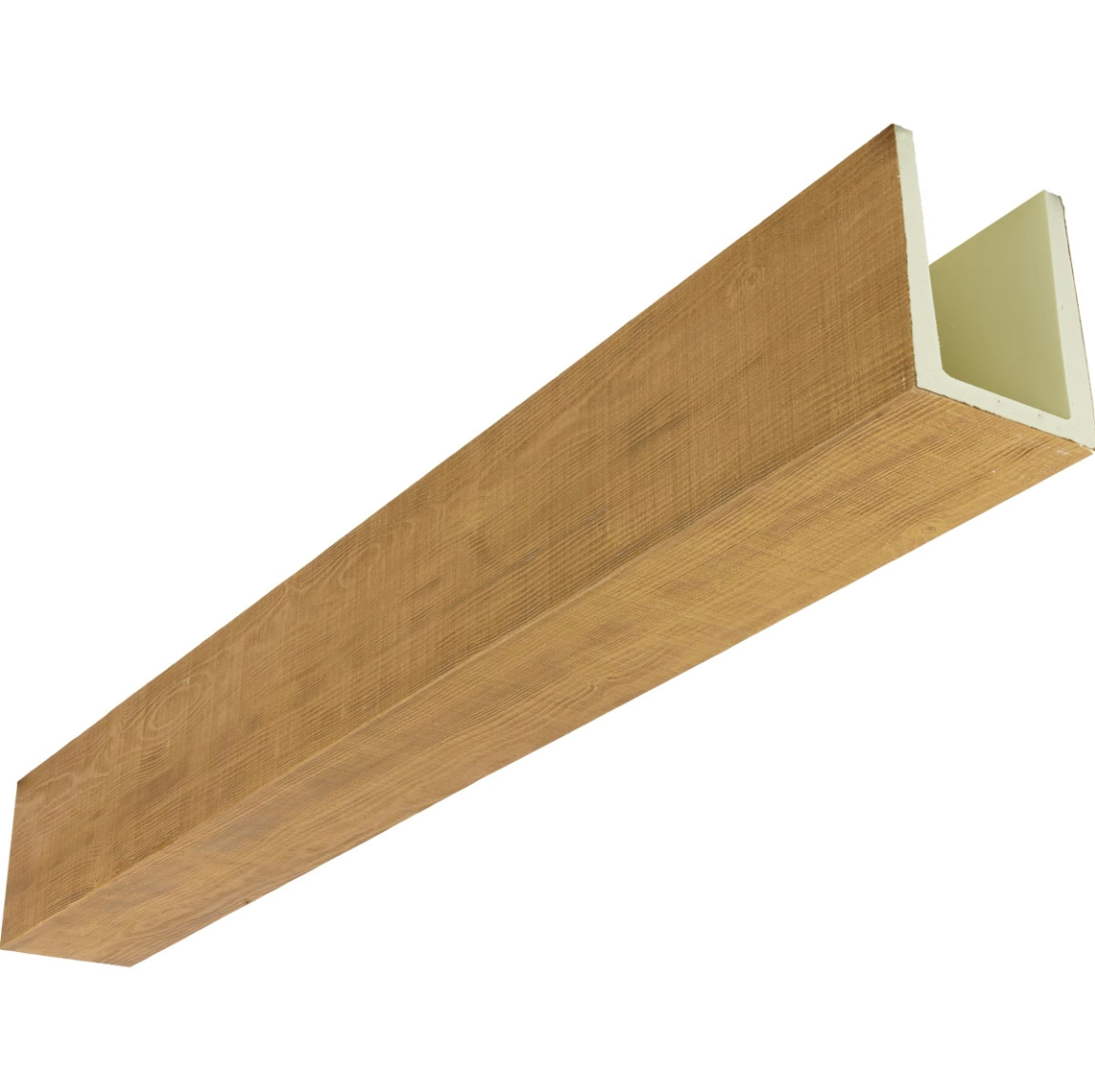
Core beam profiles form the visual foundation of complete sets, available in various scales and styles from minimal contemporary profiles to substantial rustic cross-sections. Selecting beam profiles establishes the overall visual character that corbels must complement. This foundational selection should consider both aesthetic preferences and practical constraints like ceiling height and room scale.
Corbel companions to beam profiles range from minimal brackets to elaborate architectural supports. The relationship between selected beams and available corbels should feel natural—substantial beams require substantial corbels, while lighter beams accommodate lighter support elements. Viewing corbels physically adjacent to beam samples before purchase allows proportion assessment that photographs cannot provide.
Supplementary accessories complete set offerings include mounting hardware, corner transitions, end treatments, and decorative details. These accessories may seem optional, but they often prove essential for achieving the finished appearance that complete sets aim to provide. Understanding accessory roles helps evaluate whether complete set pricing represents good value compared to component purchasing.
Application Categories for Complete Sets
Residential living spaces benefit from complete sets that add character without overwhelming domestic atmospheres. Living rooms, family rooms, and great rooms accommodate substantial beam installations with corbel supports that define conversation zones and add architectural interest. Set selection for these applications should balance visual impact with livability.
Kitchen installations represent the most common residential application for complete corbel and beam sets. Islands, breakfast areas, and cooking zones benefit from beam elements that define spaces while adding the warmth that kitchens benefit from. Kitchen sets should account for humidity, potential grease exposure, and cleaning requirements that affect long-term appearance.
Bedroom applications favor more restrained set selection—smaller scales, lighter detailing, and finishes contributing to restful atmospheres rather than dramatic statements. Canopy structures, reading nooks, and closet transformations provide opportunities for beams and corbels that enhance private spaces without demanding excessive attention.
Quality Indicators in Complete Sets
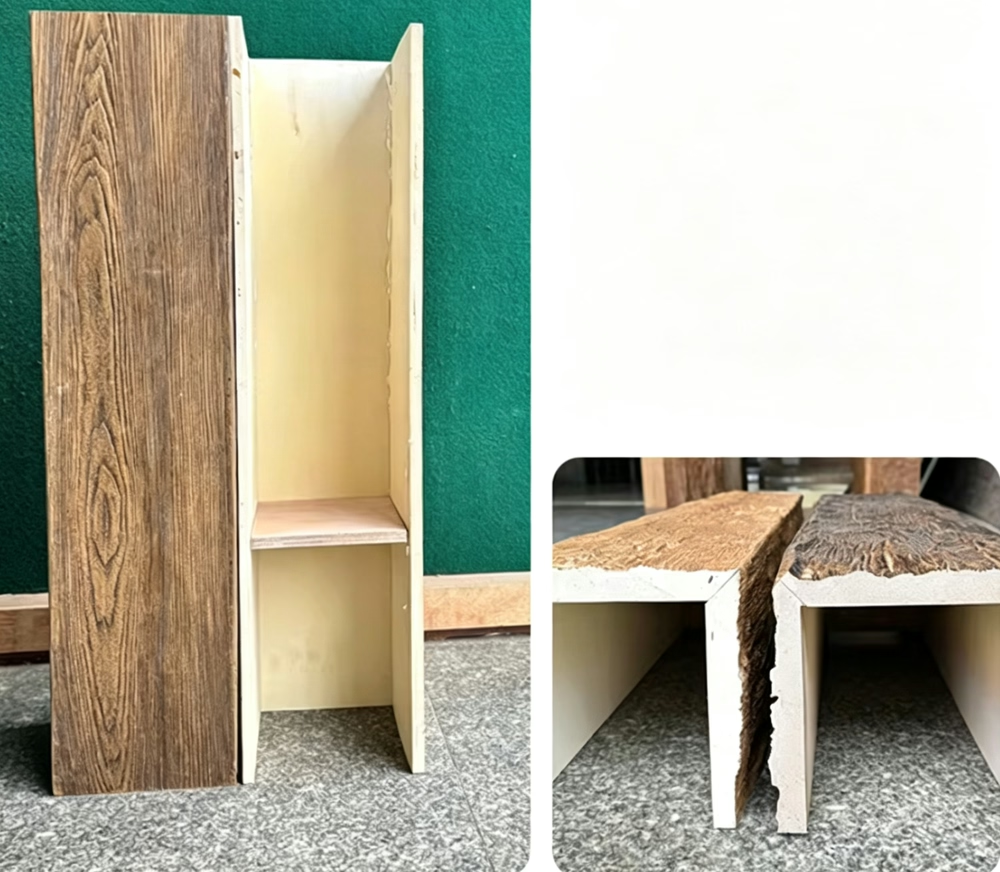
Detail reproduction quality distinguishes premium complete sets from economy alternatives. Carved details should exhibit sharp edges and consistent depth. Surface textures should appear continuous and believable. Profile transitions should flow naturally rather than appearing abrupt or awkward. These details determine whether installations succeed at close inspection.
Material density affects both performance and appearance. Higher-density polyurethane accepts detail more sharply and resists impact damage better than lower-density alternatives. Complete sets from quality manufacturers typically specify density characteristics or demonstrate density through weight comparisons between similarly sized components.
Finish system quality determines how well completed installations maintain appearance over time. Pre-finished sets should exhibit uniform coverage without thin areas, runs, or surface irregularities. Unfinished sets should accept primer and paint evenly without rejection or unusual absorption patterns that could compromise finished appearance.
Selection Guidance for Common Projects
Great room installations benefit from substantial sets featuring full-proportion corbels and beams that can support the visual weight appropriate for large, open spaces. Set selection should consider viewing distances—large rooms viewed primarily from across the space may accommodate bolder sets than intimate rooms where installations receive close examination.
Dining room sets should coordinate with dining furniture styling and scale. Formal dining rooms may benefit from more ornate sets with traditional corbel detailing, while casual dining spaces suit simplified profiles without excessive ornamentation. The table itself establishes a visual anchor that beam and corbel selections should complement.
Home office and study installations may require sets that balance professional appearance with personal comfort. These transitional spaces benefit from beam installations that define work zones within larger rooms while maintaining atmospheres conducive to focused work. Lighter corbel options often work better than substantial supports that might feel oppressive in work-focused environments.
Technical References
ASTM standards cited in every specification
Test Data
Lab results from internal testing program
Updated 2026
Reviewed against current product specs


